
Catching Smallmouths in November

“Andrew, at what point do you stop catching smallmouths in fall?”
We stop whenever I decide it’s time to winterize. Stoppage date varies, according to incoming climate and expected first ice.
This November remains surprisingly fishable and right now smallmouths inhabiting every lake have slid and migrated into deeper waters where they’ll settle for wintering.
To make sense of this movement, imagine draining out an entire lake. The livable space for all fish species will shrink. Those livable spaces will revolve around lake basins and their most attractive and unique deep structures. 90% of the fish will live in 10% of the lake. Wintering holes, their types, and their locations will be dependent on the lake, its topography, its depths, and its configuration. These fish will eventually settle into areas where they will live for the next 5 months. Find these areas, and you’ll be on smallmouths this month until the hard water comes.
Even though feeding windows massively shrink, smallmouths are still going to feed and you’ll want to be exclusively fishing atop deep-water structures and wintering sites with jig baits, fast-sinking lures, and perhaps even rigging with live bait. As water temperatures cool further, bite windows shrink and artificials will lose their effectiveness.
What I’ve learned about November smallmouth fishing is that if you aren’t fishing deep, you’re not hitting the jackpot. If you’re not video game fishing or in tune with your electronics that includes sonar, down imaging, and FFS, you’re screwed. Expect each day to have short midday and afternoon windows with dead periods in between. You’ll also see how one magic bait works one day but won’t the next day.
November’s tackle box will work until first ice comes along. I remember the years when first ice arrived on Veteran’s Day. Nowadays, it’s not until early December.
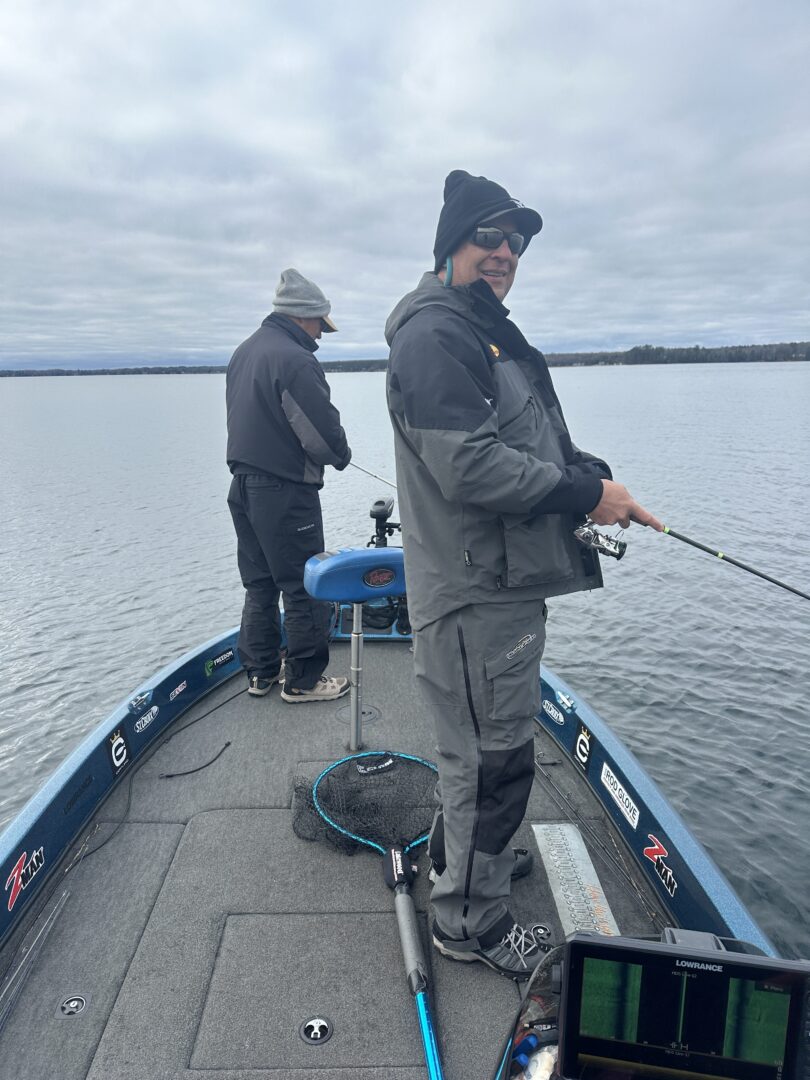
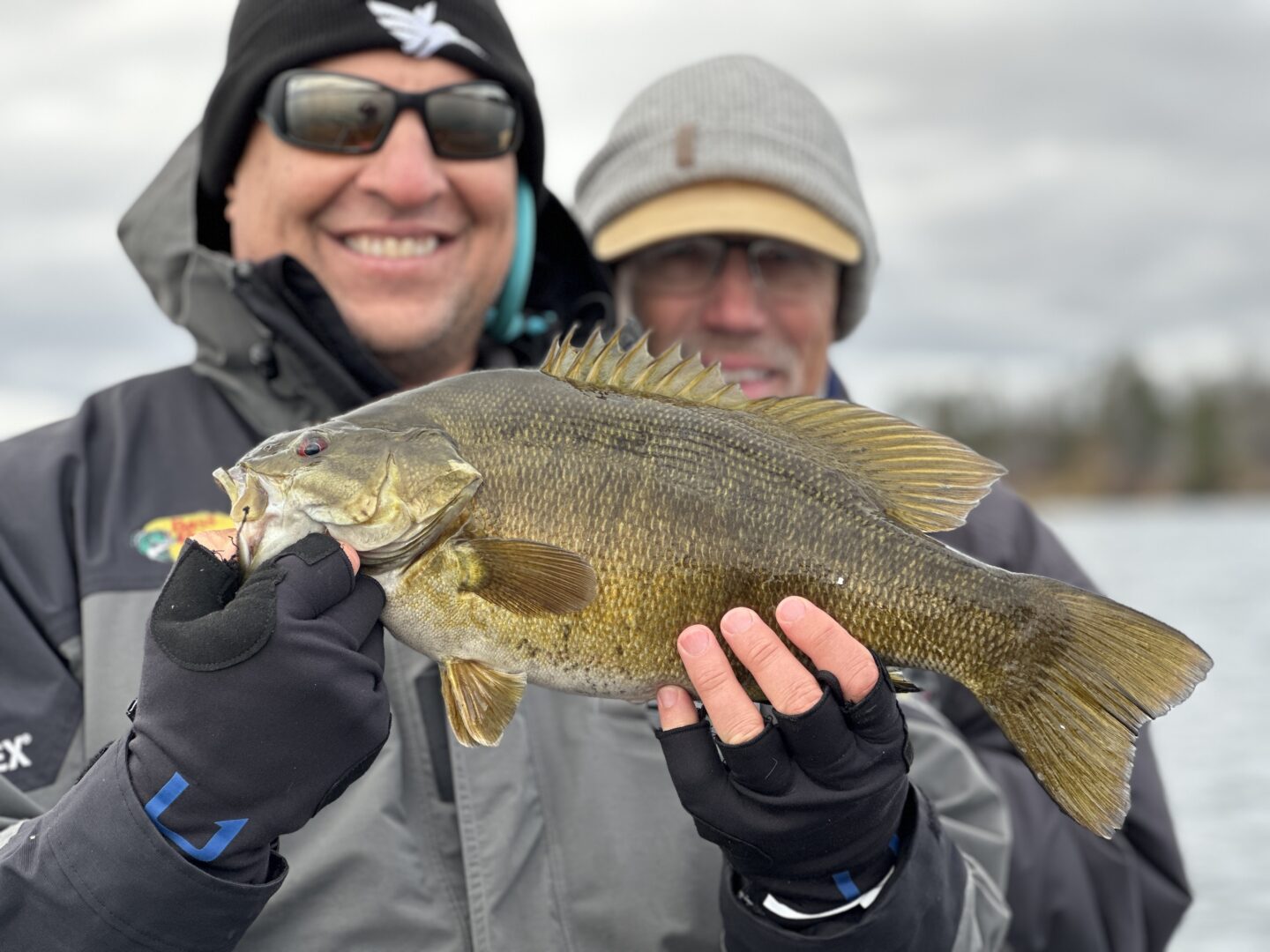
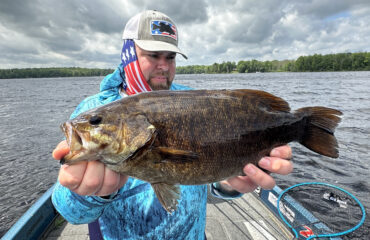
^ November smallmouths, hosting my favorite customers and best fishing friends, Barry and Ron
The Late Fall Window is Now
Despite autumn’s progression being influenced by every passing coldfront or overnight low, the late fall window is short and will only last for so long until first ice and based on that water’s depth and acreage. Whenever it happens varies. In recent years, smallmouth die-hards in Wisconsin have been fortunate to catch fish across the inland lakes through Thanksgiving holiday. Meanwhile, a few others are able to keep it going into early December. Certain lakes cool slower and freeze over less quickly than others, like the largest and deepest oligotrophic lakes and the Great Lakes.
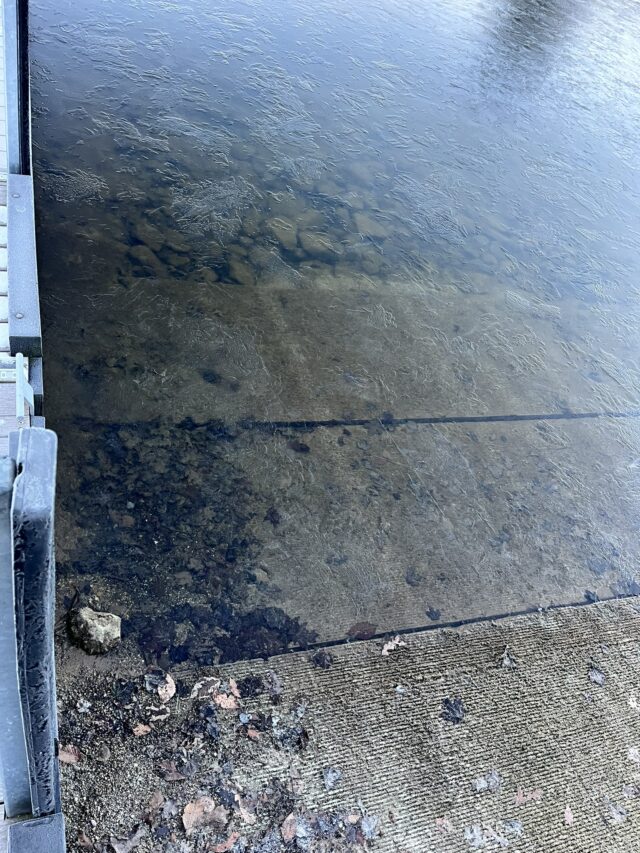 Here in Wisconsin, you won’t find many bass anglers launching boats anywhere past November 1st. And that’s a shame because many of the deepest and coldest waters don’t firmly freeze over until December. Inland options like Big Green, Mendota, Geneva, Winnebago, Lac Courte Oreilles, Grindstone, Fence, Trout, Tomahawk, Pelican, Metonga, and others smaller and located off the map, are solid late fall options whose fall bites actually improve late. Due to their sizes and depths, neither of them ever freezes over early. I can’t speak for Michigan or Minnesota lakes other than the famed Mille Lacs, but many of their similar profiled inland fisheries also stay open late.
In recent years – other than 2017 and 2018 when things were all but done in northern Wisconsin by first week of November those years – we aren’t seeing the brutal cold snaps or early snow storms like we once used to. Both events should make anyone want to winterize their boats or cabins in a hurry like I had to those years. Thanks to recent milder weather, boat landings aren’t getting snowed in completely, and ramps are still accessible. Equipped with a shovel and some kitty litter just in case, I’m able to catch smallmouths later than I ever thought was possible.
Once water temperatures begin plummeting below 50, you need to be tracking smallmouths as they slide progressively deeper through November month. At this point, smallmouths evacuate the flats, weed beds are dying, and baitfish have migrated out too.
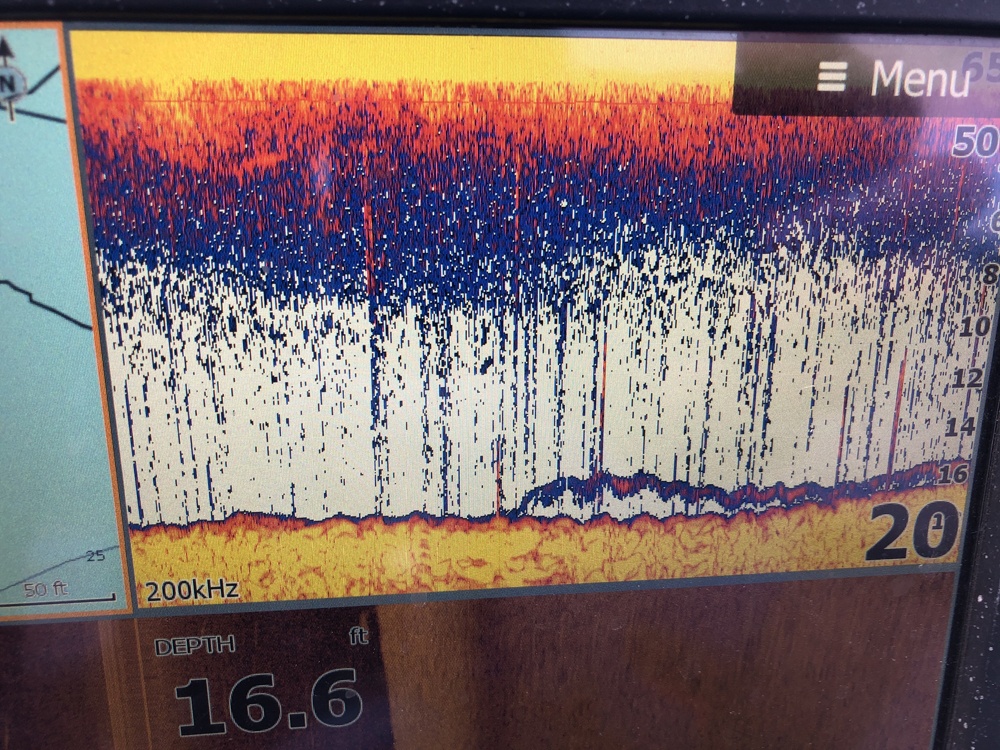
In the upper-40’s, we can still find smallmouths utilizing breaklines and any available structure along the 15 to 20-foot levels. Fish are grouping together along these edges as they gradually descend into deeper water. Often, they want to settle onto something unique to that break line such as tight contours, little finger bars, rock piles, isolated boulders, and cribs.
Because day length is lessening, don’t waste time any time blindly fishing without your electronics confirming smallmouths down below. My boat is presently operating with dual screen Lowrance HDS Live and HDS Pro units, running a combination of side imaging, down imaging, CHIRP, and Active Target-2 forward-facing sonar. Late fall is an electronics game everywhere you go.
I won’t bother fishing deep structure at any time of the year like this unless I mark fish near bottom on chirp sonar and on side imaging zoomed in. However, in autumn I will fish these areas regardless, especially if I am visiting a historically-known wintering area for the lake, or have caught bass from the location in prior seasons. Often, it is possible to catch fall smallmouths from wintering areas even if your screens were unable to confirm their presence prior to fishing – as many fish can be bottom-huggers. If the boat is physically not on top of them when positioned over the wintering area, clusters of wintering fish will be very close by, positioned less than a cast-length away.
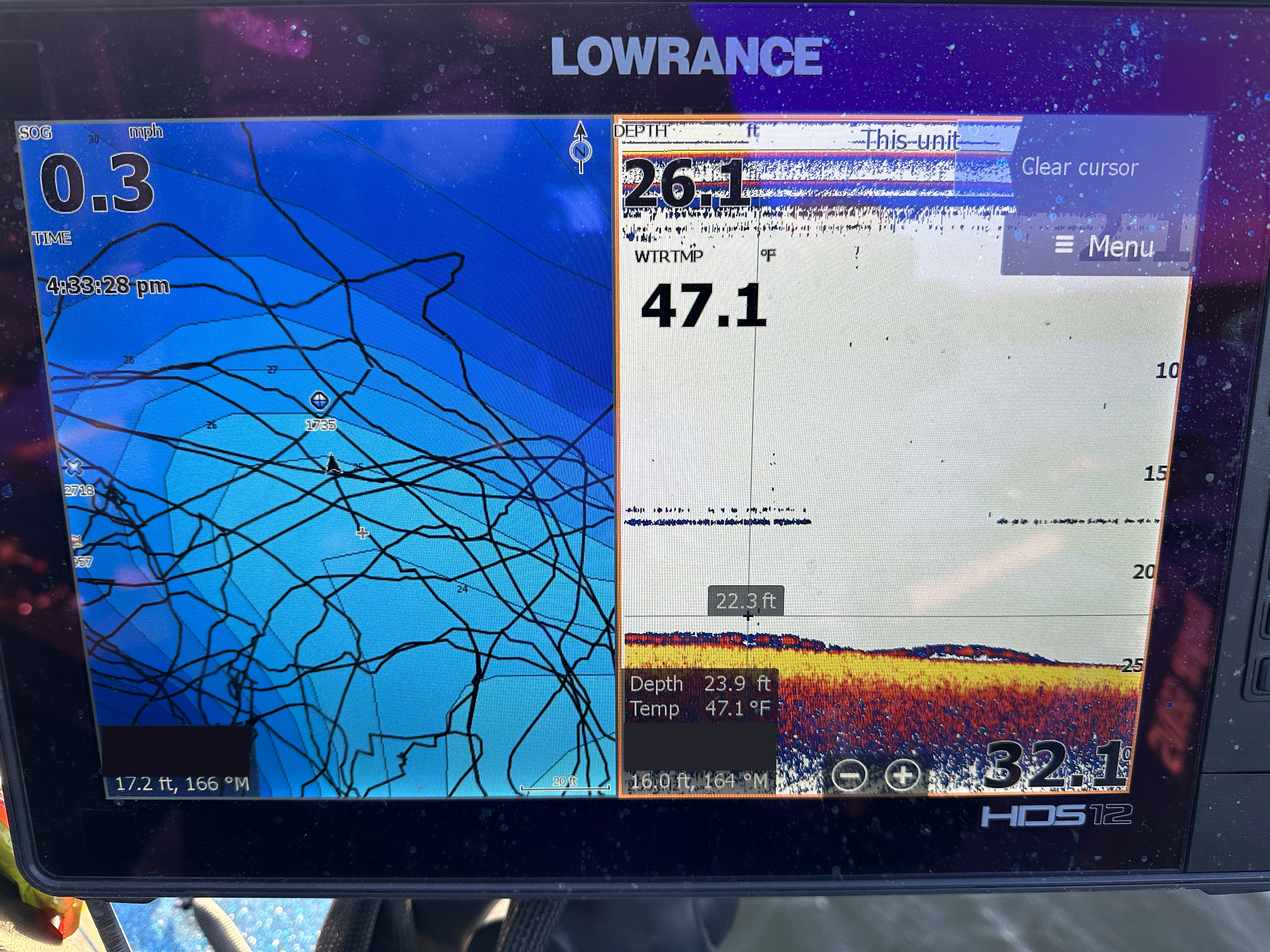
Inland smallmouths don’t group or school as heavily as Great Lakes fish are known to, but a good pod of smallmouths can be 5 fish or more. Once you find them, you can expect to locate other pods throughout the lake at these same depths.
Active smallmouths hover a foot or two off the bottom and appear as wide yellow and orange lines and masses. Fish that suspend are moving and catchable. Multiple fish can appear on screen. Inactive smallmouth meanwhile will be pegged to the bottom, difficult to see unless fish reveal, and chirp sonar settings are activated. Smallmouth that lay on their bellies are generally inactive, and more difficult to catch.
Whether smallmouths are situated along steep breaks, or settled into wintering sites, drop some waypoints on them proceed methodically. Circle through these areas several times. Do the same for all other wintering locations you’ve discovered. Throughout the day revisit these same few areas often, as schools can turn on at any time. Anticipate feeding windows to also take place at any time during the midday and afternoon hours.
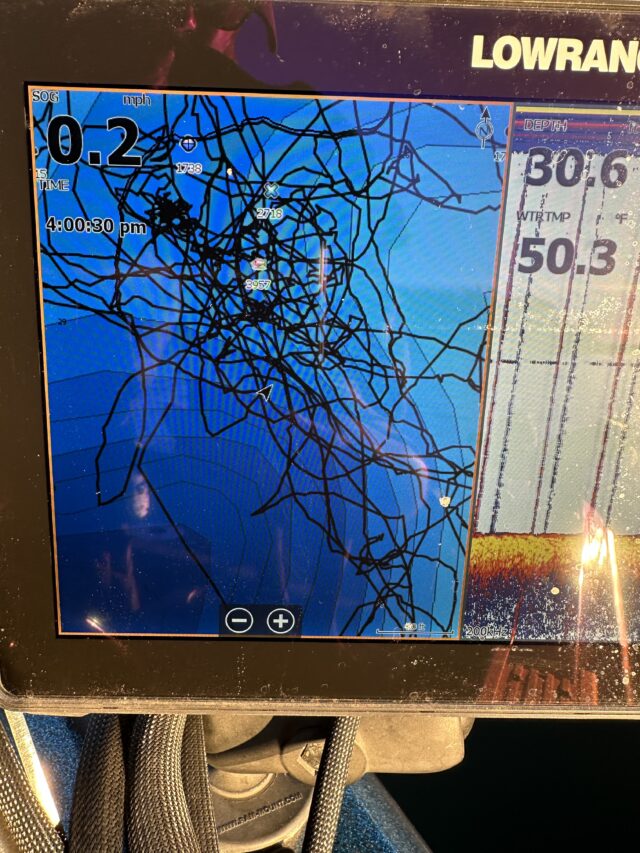
As water temperatures eventually cool into the mid-to-low 40’s, smallmouths slide even deeper and eventually position closer to the bottom and even hug it, occupying smaller and more confined areas.
Wintering depths vary by lake, as on places like Big Green and Geneva, or locally for me on Fence or Trout, smallmouths could be occupying the secondary drop-offs in the 35 to 50-foot range. On most lakes, however, the comfort and survivability level for smallmouths is the 25-to-32-foot range – which is also where I find the most wintering locations and catch the most fish. I won’t target fish any deeper than that due to barotrauma, unless the 40 to 50-feet level is a safe level like at the waters noted above. On the Great Lakes, smallmouths in Lake Michigan have been recently documented to winter in 100-foot depths.
Every year, no matter what, smallmouths eventually settle in the same spots their ancestors previously showed them. Often, it’s the same fish too. Wintering holes are historic to the fishery and to individual fish. They will come back every year.
Once the bottom falls out, smallmouths may still be feeding or go dormant periodically. By then, only wind can be a problem (where you will want speeds at less than 10mph), as will be overnight lows that can potentially lock up landings and skim over the lake. Tolerable fishing will remain if daytime air temps can still linger in the 40’s.
November Cliffs Notes
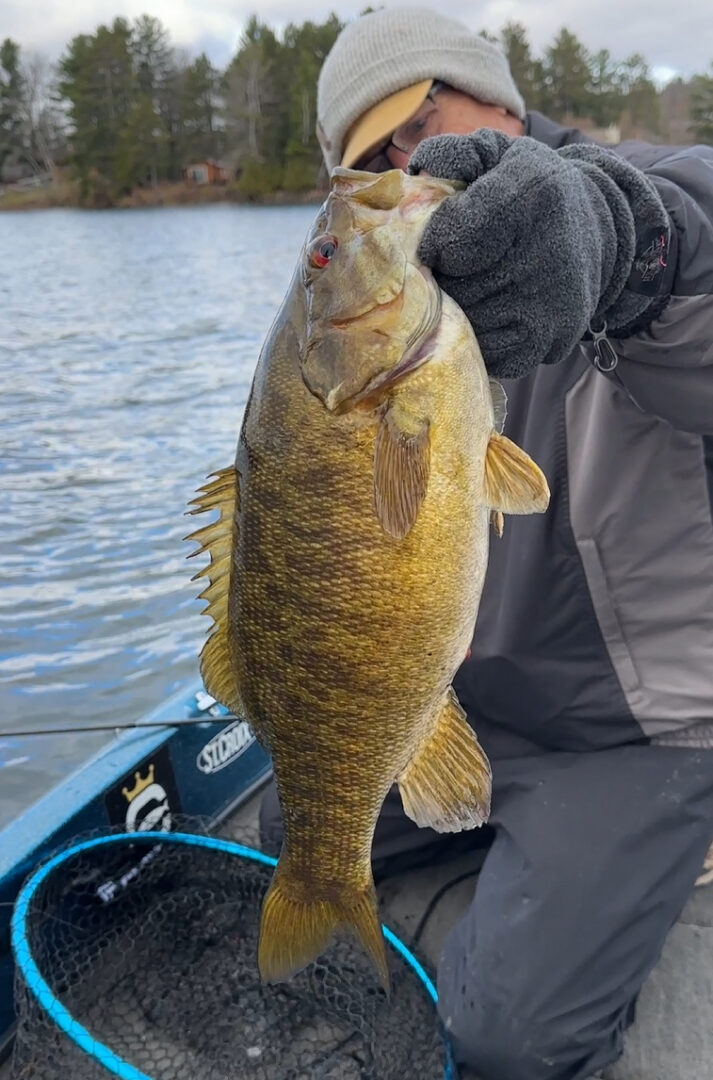
Everything you catch this month will relate to their wintering areas. As water temps drop further into the 40’s and creep into the upper-30’s for first ice, 100% of your efforts should be done over deep water incorporating jigging, casting, and position fishing. Fish slowly. And instead of casting, you will be dropping and hanging baits increasingly more often.
90% of the fish will be found in 10% of the lake.
A minimalist fishing approach and tackle selection will outfish everything.
To catch smallmouths right now, vertically jigging around main lake basins in 20-30ft rock, and due diligence with your electronics will produce best results. They might not be active, but if they appear to be suspending a few feet off the bottom, they’re catchable and hungry.
And when you hook into fish from 25-30ft depths, play each hooked fish up from the depths slowly and methodically to avoid barotrauma injury such as bursting of their swim bladders.
As November progresses, smallmouths will continue to concentrate greater in number.
Feeding windows shorten drastically. Prioritize midday and afternoon fishing hours. You’ll only have time to fish 1 lake per day, so choose wisely and based on your knowledge of wintering sites and that fishery’s trophy potential.
Whether fishing the inland lakes or The Great Lakes this month, there is nothing more special than cracking huge smallmouths (which won’t happen every day) and swinging for late season home runs while snot drips down your face and your hands lose their feeling.
Andrew Ragas splits time between the Chicago area and Wisconsin’s Northwoods. Based in Minocqua, WI, he specializes in trophy bass fishing and offers guided trips from May thru October. While big bass is the passion, he dabbles in multi-species as well. He may be visited online at www.northwoodsbass.com

What you can read next

Articles
 My Shallow Water Playbook for Ice Out LargemouthsPromptly at ice out, largemouths swiftly relocate from their ......
 Finding Trophy Bass LakesIt’s no secret that location is the most critical factor in ......
 The Best Lake Types to Fish by SeasonSo many lakes, such little time. It’s easy to get overwhelmed by ......
 My Best Chatterbaits for Spring LargemouthsMarch and April are Chatterbait-centric months for many of us who ......
 Catching Smallmouths if it’s a Cold SpringCold water and below average temperatures of spring are a byproduct ......
 Proven Presentations Only at Ice OutDepending on where you live, ice out could either be nearing or is ......
 Smallmouth Scenarios by SeasonEvery fish species has a seasonal calendar that in no way resembles ......
 The Best Largemouth Bass Lures of 2025I love fishing for big largemouths, and it’s too bad these ......
 The Cheat Code for Sculpin and Goby BaitsLike gooey and greasy cheese curd appetizers to us, gobies and ......
 Catching Smallmouths in November“Andrew, at what point do you stop catching smallmouths in ......