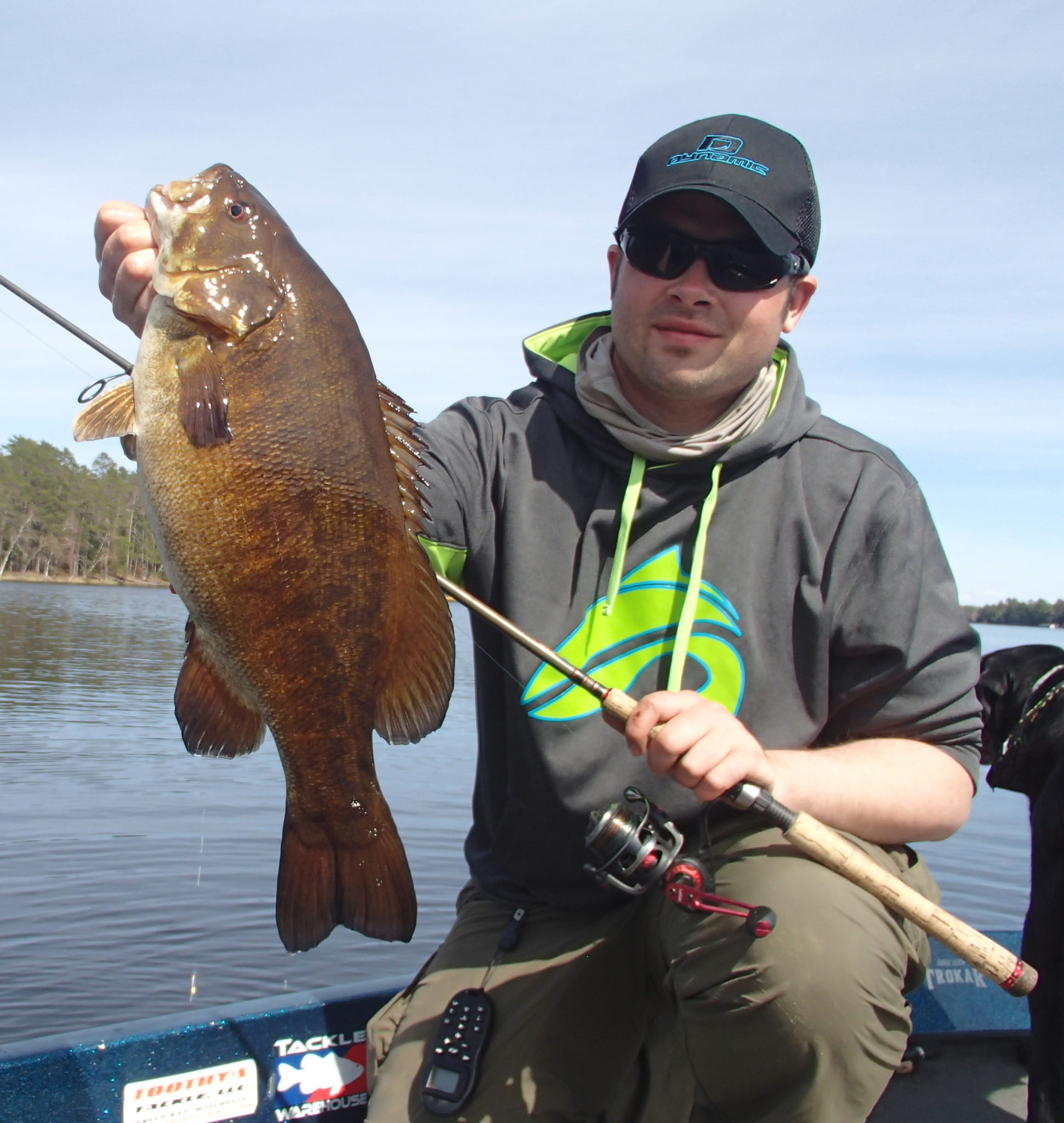

Cold War Smallmouth – Winning the Battle
Andrew Ragas
It’s early May, and we’re just a few days removed from Wisconsin’s gamefish season opener. The snow banks and memories winter left behind are yet to melt, ice-out on many northwoods lakes is only starting, and fish haven’t woken up from their winter slumber. The anticipated future forecast for the month is cold, and water temperatures are unlikely to reach the mid 50’s by Memorial Day weekend.
Given these below-average conditions that will now delay spring spawning movements for several weeks, this has suddenly become a peculiar transitional time for smallmouth as well as other species. Thanks to winter’s unwillingness to relent, smallmouth are confused about when to wake up, when to move, and when to feed.
Bites and catch rates during a cold and below-average spring are unquestionably fewer and slower due to a multitude of reactions.
Causes and Effects of Cold Spring
Cold water and below average temperatures are a byproduct of the cold and record-setting winter that commenced first. Winter 2019 was the epitome of brutality. Cold sub-zero days, heavy snowfall of up to 100 inches, ice buildup of up to 3 ft. resulting in winter kills and


Articles
 My Shallow Water Playbook for Ice Out LargemouthsPromptly at ice out, largemouths swiftly relocate from their ......
 Finding Trophy Bass LakesIt’s no secret that location is the most critical factor in ......
 The Best Lake Types to Fish by SeasonSo many lakes, such little time. It’s easy to get overwhelmed by ......
 My Best Chatterbaits for Spring LargemouthsMarch and April are Chatterbait-centric months for many of us who ......
 Catching Smallmouths if it’s a Cold SpringCold water and below average temperatures of spring are a byproduct ......
 Proven Presentations Only at Ice OutDepending on where you live, ice out could either be nearing or is ......
 Smallmouth Scenarios by SeasonEvery fish species has a seasonal calendar that in no way resembles ......
 The Best Largemouth Bass Lures of 2025I love fishing for big largemouths, and it’s too bad these ......
 The Cheat Code for Sculpin and Goby BaitsLike gooey and greasy cheese curd appetizers to us, gobies and ......
 Catching Smallmouths in November“Andrew, at what point do you stop catching smallmouths in ......