
Conquering Cold Water Smallmouths

Cold weather and water temperatures affect anglers more mentally than physically. Cold affects smallmouths too, but not as drastically as it does to humans.
Isn’t it funny how smallmouths are heartier than people?
As smallmouths are cold blooded, they elect to lay low, eat less, and won’t be as aggressive as they otherwise could be. An adult smallmouth still has got to run through its spring motions from start to finish, rain or shine, hot and cold, and no matter what. Under the improper conditions, they’ll just do everything more behind the scenes, indiscreetly, with their movements, presence, and lake locations each being less obvious to us.
Water temperature often suggests when to fish. Few anglers, ever, want to fish in early spring when water temperature is mid-40 degrees. Barely anyone wants to fish smallmouths if they aren’t concentrating and actively feeding when they should be. And nobody fishes smallmouths during ice-out and relishes it like I do.
On the downside of things, cold water is responsible for having to frequently re-schedule May dates, delay trips, or leads anglers to cancel theirs altogether.
Don’t do it!
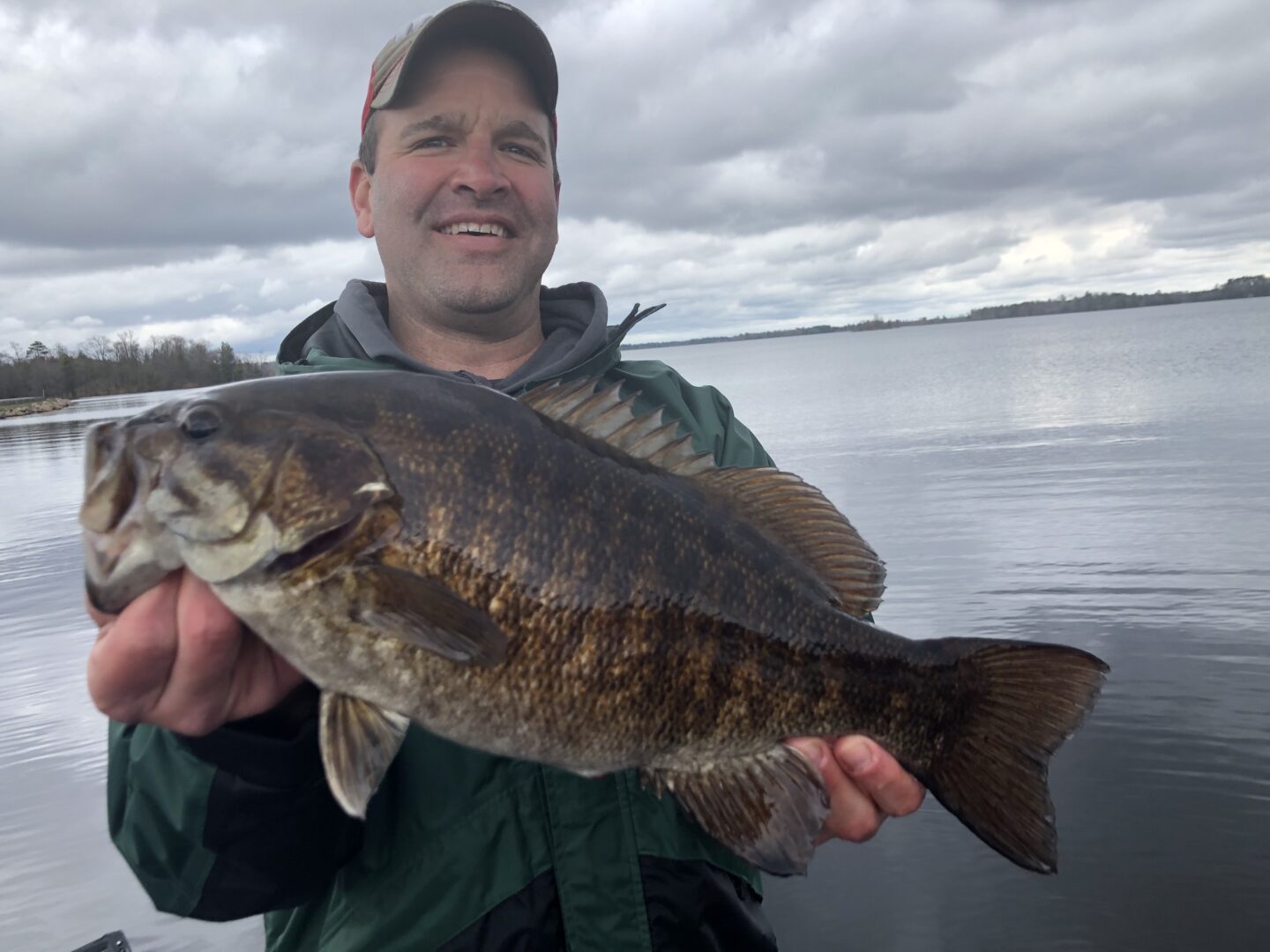
Cold water or below-average temps should never be anyone’s deciding factor, because when you have factored smallmouth locations into the spring planning equation, you’ll have zero trouble catching them as I do. In recent springs, I’ve been on fish immediately at ice-out, catching 4 to 5-pound smallmouths on hair jigs from 42 degree water.
Their loss is my gain.
Cold climates and water temperature makes smallmouths more inactive. As a result, we must slow down our fishing in the process and refrain from the aggressive tactics, fast power, and run and gun approach we are so accustomed to. When the aquatic ecosystem is dormant, so too will be smallmouth. Their behavior, feeding, and activity levels are always a product of their environment and the conditions.
Don’t sit idle, like most anglers do, or cancel your plans, to wait for a perfect water temperature in spring, or one that might feel right to smallmouths. They won’t wait for you.
If it’s a Cold Spring
Cold water and below average temperatures of spring are a byproduct of cold winters that linger, or unrelenting cold fronts.
If chilly weather persists into April and May, plan on making adjustments to your approach and strategy. Water temperatures will barely reach 50 degrees, resulting in much of the lake’s biomass and aquatic ecosystem to stall in stagnation and dormancy.
There are several possible reactions to a delayed spring: 40 degree water temperatures all month long; No sunlight; Clouds and rain each day of the week; No weed growth; Few signs of baitfish activity; Shallows and nearly all shorelines are empty except for known staging locations which might be the only areas concentrating bass; A delayed spawn; Inactive fish, or fish that may be glued and laying along bottom.
Spring stagnations and delays don’t occur every year, but are characteristics to be expected following either (A) very cold winters or (B) unrelenting cold springs that stall on us.
Location will always be the savior and trip-saver under cold spring conditions and water temperatures.
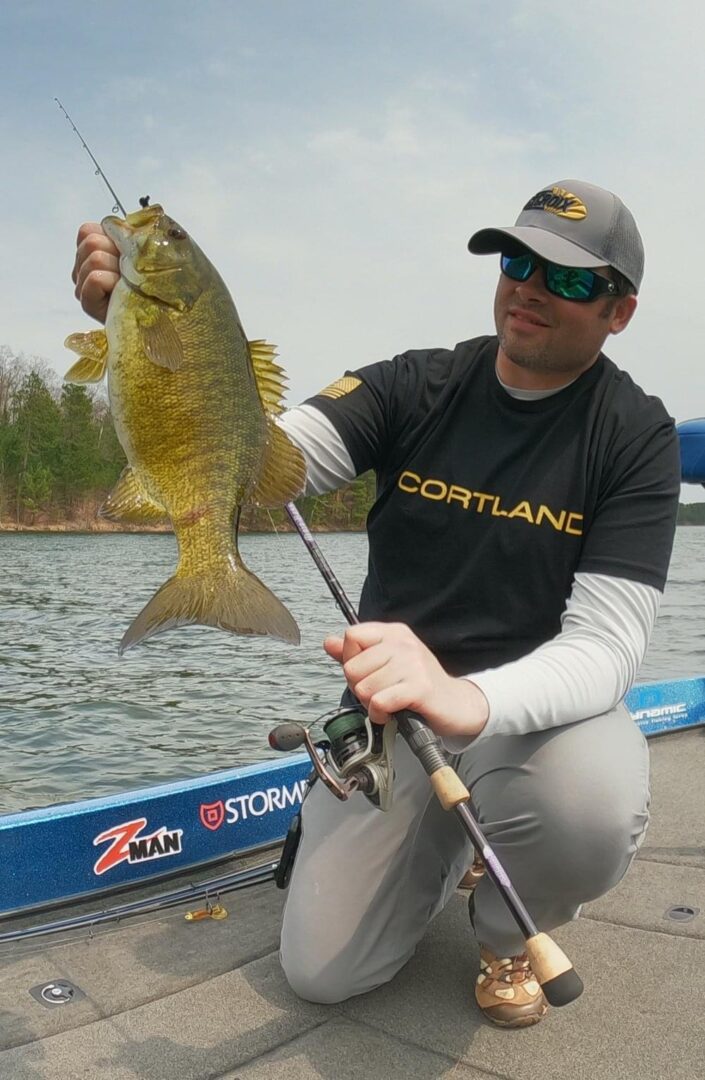
These last few years, thanks to Wisconsin’s new year-round bass regulation, I’m willing to bet that my boat is the first one in the entire region to go smallmouth fishing. In the process, often as early as the third or fourth weeks of April, we still fight and plow through remnant ice drifts, and even cast our lures on top of them. I also find and catch an astonishing number of big smallmouths sun-bathing from 2-foot and shallower depths, and what a unique experience it is!
Water temperature? Who cares.
Prioritizing Location
If you’re not identifying and focusing in on the sweet spots of every lake in the forms of habitat, bottom content, location, and staging areas, then cold water will certainly kick your ass every spring.
On a lake map, and no matter the water temp, identify entrances of shallow bays, shoreline points, sand bars, sand beaches, shoals, spawning flats, and any isolated obvious shallow structure that has been created by the shape and terrain of the lake. Smallmouths will favor rock, boulder and wood habitat, with a bottom of muck, sand, gravel or rock in any combination at these locations, and are known to concentrate in groups along the deeper outskirts of these areas (henceforth a staging site). Then pursue these locations if side imaging confirms presence of fish, the necessary habitat and structure, as well as perfect bottom type.
The most active smallmouths in the lake will attract to lake regions that are warming at a rapid rate. Most depths will be in the 5-foot range or less. The shallows with ideal bottom substrate and exposure to sun warm rapidly. They could be up to 10 degrees warmer than anywhere else on the lake. Smallmouths can gather and loiter around in depths as shallow as 1 foot to as deep as 10 feet if that’s its edge. On some lakes that we fish, it’s common to encounter several dozen large smallmouths sun-bathing in the extreme shallows, tucked up against wood for warmth and protection.
If smallmouths aren’t staging in cold water, they will be holding up tight in the extreme shallows like this. Sand pockets, isolated beaches, and shorelines with exposure to southern skies conduct heat. Smallmouths using these locations will proceed to lie on bottom, absorbing every ray.
Additionally, laydowns and shoreline wood will attract fish as well. It’s remarkable to observe how smallmouths congregate and pin themselves to shoreline wood located in a foot or less of water. Most smallmouths basking on these underwater microwaves are spooky and neutrally behaved, or can be negative uncatchable. But you’d be surprised by the number of desirable 3 to 4 pounders that can hold and lay in inches deep water just to absorb heat when nothing else is warming. Smallmouths frequently lay on their bellies, on bottom, like this. Some of the larger logs and dead heads I’ve pulled smallmouths off of have been capable of holding 20 to 30 fish at a time, as I’ve witnessed.
I run into these scenarios often in 40 to 45 degree water temps. Exposure to sunlight is paramount to the productivity of these areas, and their likely fish availability, but we’ve also caught them under overcast skies and cold wind too.
Smallmouths are no different than the anglers pursuing them. They want to stay warm and be comfortable, however the lake is willing to provide for them.
It’s safe to say that along with numerous staging sites, a good smallmouth lake will also have many near-shore “warming sites” like these where fish will gather and warm themselves up at. Each of these locations get visited annually, and often by the same fish.
Location always precedes strategy in my boat. My slow approach and lake coverage methodology enables us to fish meticulously and efficiently, covering all possible casting angles and approaches. We will stay atop these locations 15 to 30 minutes at a time, then revisit again throughout the afternoon in hopes for more rapid feeding windows.
We must also fish slowly because May feeding windows are rapid but short lived, occurring multiple times throughout the day. Prioritize midday and afternoon hours. The best fishing is expected to happen during periods of sunlight, and when water temperature peaks for the day.
Shallow Bays and Pockets
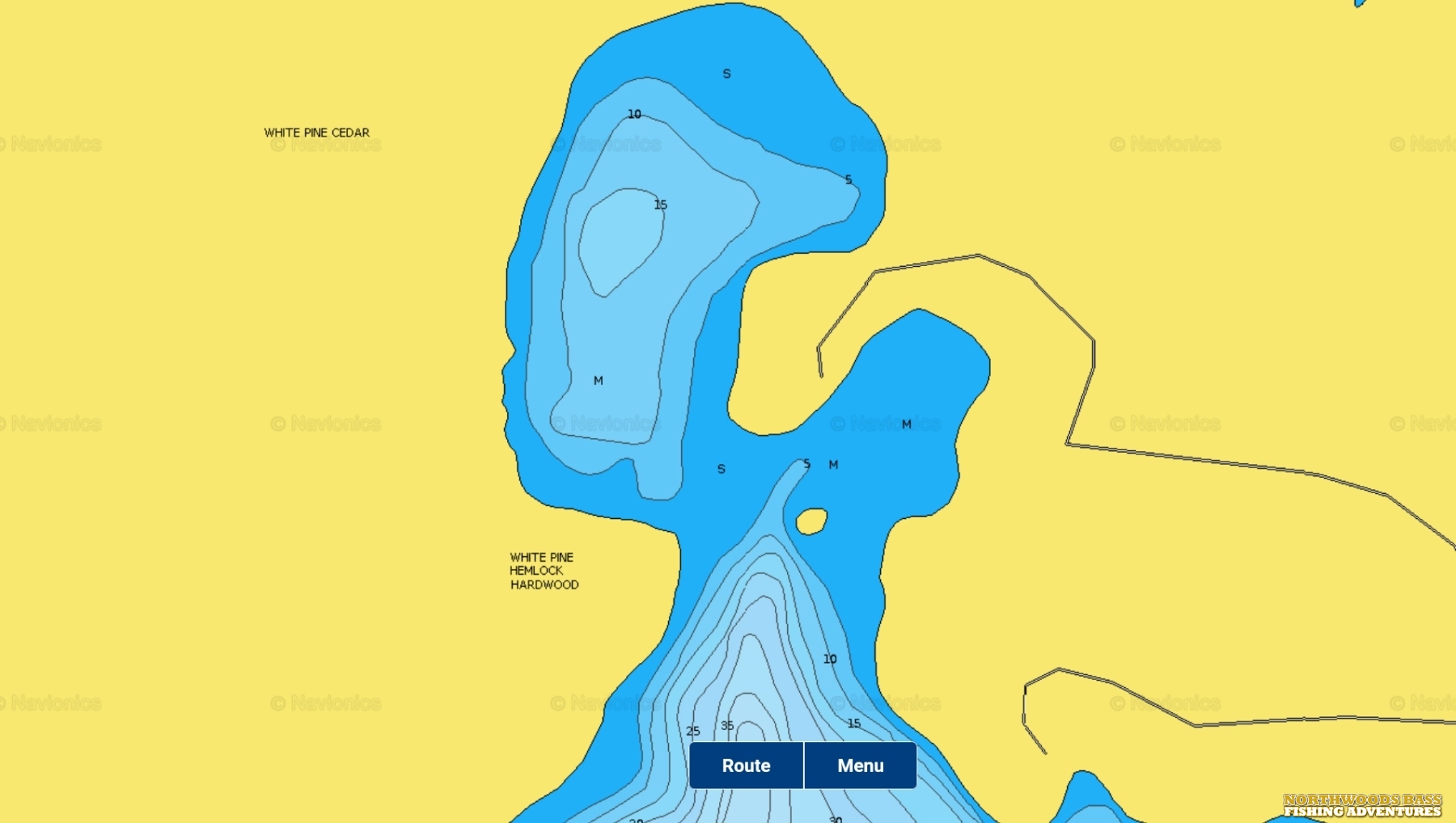
If smallmouths aren’t concentrating near wintering sites, or staging in cold water, they could be holding up tight in the extreme shallows. Sand pockets, isolated beaches, and shorelines with exposure to southern skies conduct heat. Smallmouths using these locations will proceed to lie on bottom, absorbing every ray. These areas are money spots for me on some lakes, even if water temperatures are 39 to 42 degrees.
Slow and Subtle Horizontal Presentations
The most exciting bites of early spring occur in very shallow water, so you’ll need all the subtle and lightweight lures you can get away with to reach these tight quarters. Slow retrieve speed, and hang time within the strike zone are keys to the game.
HAIR JIGS – Today’s generation of fish remain unconditioned to the simplicities of a marabou hair jig. The ultra-light weight and extreme slow fall of the hair jig enables it to hang in range of a smallmouth’s strike zone in the upper water column. With the proper tackle, allow the hair do all the work and slow glide for you.
Many of the best quality hair jigs are hand-crafted by avid fly fishermen, anglers, and independent manufacturers. The best marabou jigs I’ve used to date are hand tied by Gregg Kizewski, of 3G Smallmouth Solutions in St. Germain, WI.
Kizewski’s hair jigs are overdressed with pulsating marabou, benefitting the slow glide and hang time. If the jig doesn’t meet personal preferences, snip and remove excess hair to downsize the jig, and increase the fall rate.
The fluff of his marabou jig is dense, slowing its drop. These puff balls are unbeatable when fish are wary, finesse is required, and conditions are calm. 3/16, 1/8, 1/16, and 3/32-ounce hair jigs that achieve hang time and behave as a slow-falling glide bait will stay in the strike zone longest. The technique relies on long, light-powered rods and 5 lb. braided line with a monofilament.
“Hair jigs are meant to be swimming baits, not a bottom bouncing bait. But really there are few wrong ways to throw them. I start with a heavier 3/16-ounce jig so I can cover water to find fish. That heavier jig is the only one you can truly power fish. Once I get bit, I will slow down and throw a 3/32 or 1/8-ounce, to see what depth and speed they want in an area,” says Kizewski.
Another winner in my boat is Jim DeZurik’s River Bug. The first time I saw this hair jig in use during a spring 2022 smallmouth trip, I was mind-blown. It out-fished every other hair jig I had in my boat.
The River Bug is medium-density bucktail tied on a painted ballhead jig. It features two neck feathers, which is the jig’s greatest attribute. DeZurik says it creates a minnow profile, and the light tail feathers almost move by themselves when it’s on bottom. In the retrieve, both tail feathers collapse. And on the fall, the tail feathers open slowly. Smallmouths are dumbfounded by it.
Lightweight braids such as 5-pound Cortland Masterbraid are advantageous for the deployment of most finesse baits. While this ball of marabou or bucktail might have been too light and impossible to cast with the common set-up of years prior, it’s now possible to launch for extreme distances with 8-foot length rods such as St. Croix’s Victory Crosshair (VTS710MLXF) and my personal favorite, the Legend Tournament Bass Hair Jig (LBTS710MLXF). Reel steady and slow to achieve a natural swim, slow fall and hang time. The long rod will also aid in hook-sets and countering with the power of a 5 pounder.
SWIMMING PLASTICS – Additionally, slow swimming a 5-inch Kalin’s Lunker Grub is a potent combination for smallmouths when they roam shallow or traveling along their deeper structure routes to reach staging areas.
Lunker Grubs fished on exposed ¼ oz. minnow heads are my boat’s fish finders and fish catchers on most smallmouth waters. In most water clarities, smallmouth favor naturals and translucents such as Applejuice, Avocado, and Smoke.
When fishing the cold water, slow rolling and gently swimming a heavy swimming grub produces when not much else will. You can often get a nice flurry of bites along the first breaks in 10 to 15 foot depth and atop shallow staging flats when drifting and covering water. The same can also be accomplished with smaller, subtle, and more compact paddletails that includes Z-Man’s 4-inch Diezel MinnowZ and 3-inch MinnowZ.
Z-Man’s top-selling baits worldwide, the 4-inch DieZel MinnowZ, 3-inch MinnowZ and 2.5-inch SlimSwimZ replicate the look, action and strike-evoking attraction of a live minnow better than any other soft baits manufactured.
Their ElaZtech formulation creates a lifelike swimming action and durability. I am most keen on swimbaits that can pump under any retrieve speed. In this capacity, ElaZtech formulation is a modern marvel.
“I prefer a bait whose tail continues kicking even as you stop the retrieve and let the bait freefall. It’s one minor detail that can make a huge difference, and very few soft plastic paddletails can pull this off because they’re mostly composed of PVC plastics rather than ultrasoft ElaZtech, which offers more freedom to move in the tail,” says Cory Schmidt, Z-Man’s marketing director.
Also benefitting Z-Man’s swimbaits is ElaZtech’s buoyancy, allowing for slower retrieves than other swimbaits. This characteristic is a necessity in my search for these ultra-shallow cold water smallmouths.
For best performance, it’s critical to match the body with a properly corresponding head size, shape, and weight. This will achieve swimming and tail action, as well as hookups. A 1/4-ounce Z-Man Finesse EyeZ Jig enables the paddle tail to swim cleanly above through the shallows without hangups.
The DieZel MinnowZ fishes best for me with water temps in the 40’s. The subtle shimmy of their tails is definitely something most anglers wouldn’t catch or realize to be an enticer for cold water situations.
With this swimmer, I favor a 7 to 7-foot 6-inch MF spinning rod. The longer rod length paired with a size-30 spinning reel with oversize spool with 10 lb. Cortland Masterbraid is advantageous for long-casting. The St. Croix Legend Elite (ES76MF) and St. Croix Victory Open Water (VTS710MMF) are preferred models for this. Their longer lengths, backbone power, and flexibility of these two blanks will serve as a shock-absorber for hook-sets from afar.
Bomb cast along the breaks, and run your swimmer thru the lower water column. Turning your reel 1x every second will maintain it at these depths where fish are gingerly migrating up from the deep along these contours.
SUSPENING JERKBAIT – In conjunction with swimming grubs, you will want to have a few suspending jerkbaits tied onto your preferred lines. On some lakes, log perch are a top attraction in the shallows. Their spring movements and spawn often coincide with smallmouths. Unbeknownst to most, we have lots of them in many northwoods lakes. When they invade the shallows, they are a preferred menu item in early spring and are a top pattern to follow. The X-Rap 08 in hot mustard muddler (or river perch) is most effective.
Never fish spring smallmouths without the Hot Head and Pink X-rap. Both have been a go-to in May these last several years. They excel in cold water, can be manipulated in any manner, and hang motionless in the strike zone for several seconds between jerks.
Hair Jigs
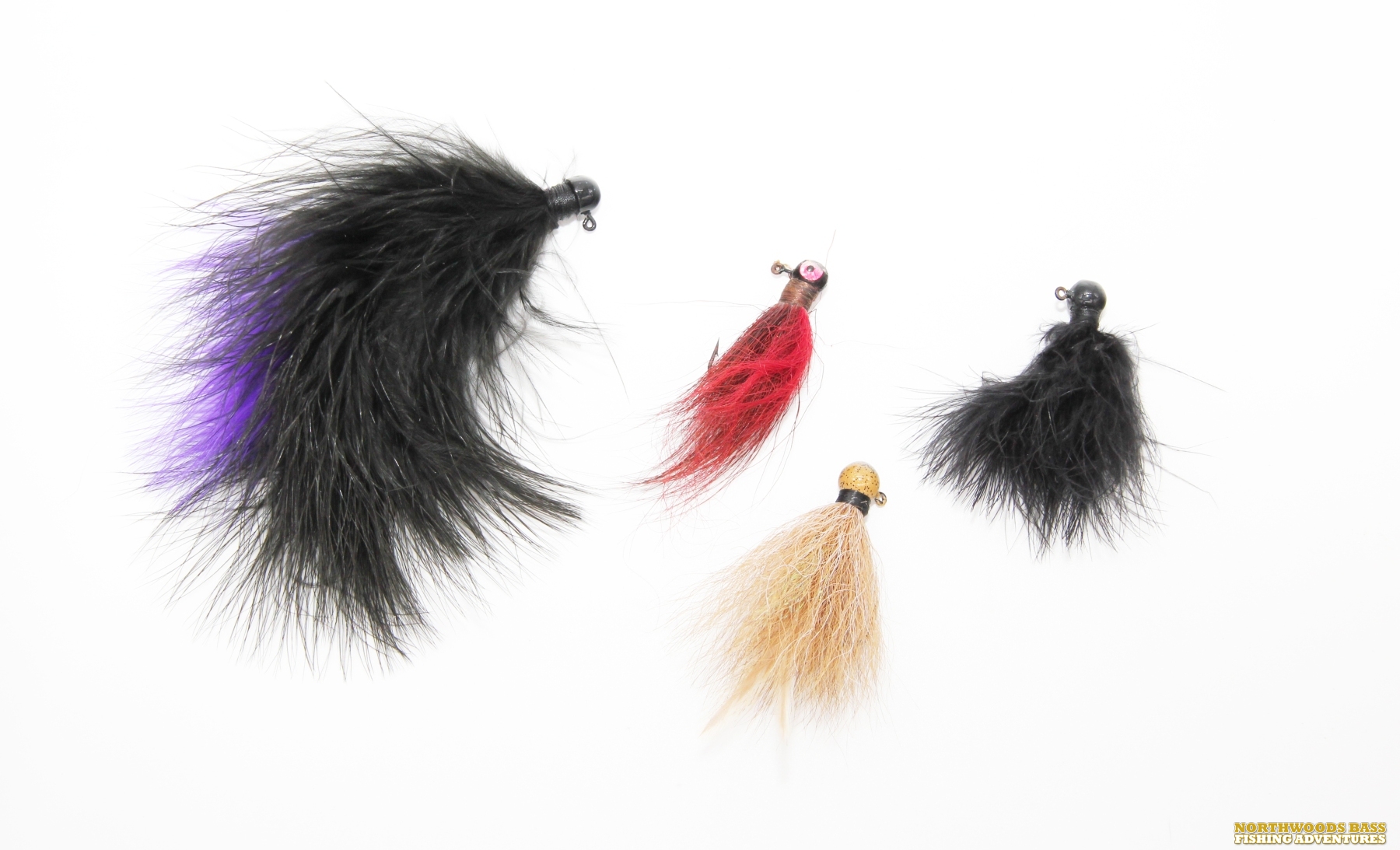
Today’s generation of smallmouth remain unconditioned to the simplicities of a marabou hair jig. The ultra-light weight and extreme slow fall of the hair jig enables it to hang in range of a smallmouth’s strike zone in the upper water column.
Cold Water is Not an Excuse
“We had to put off our spring trip because the water was only 45 degrees when it should have been 55 by now! Aw shucks!”
Excuses are like assholes – everyone has one and they all stink.
Never let forces beyond your control influence and negatively affect your spring fishing plans. The challenge and inconvenience of cold spring climate, in the manner I have shared, shapes smallmouth bass behaviors and feeding habits more so than the timing of their movements to established location. Regardless of cold water, smallmouths are on the biological clock and must proceed with their spring motions regardless of weather delays or water temperature fluctuations.
Remember, most smallmouths can still be lethargic until water temperatures reach their comfort level. A number of smallmouths could likewise be unwilling to commit to your offerings entirely. Unless it’s a search lure, or one that provides hang-time in the strike zone, like these options, everything must be worked repetitively, patiently and slowly.
Seek the warmest water and heat-absorbing habitats available. Smallmouths under cold water conditions are sun-bathers, and are known to go as shallow as nature allows them too, as evidenced by the number of fish my boat’s been pulling from shoreline wood cover and sand during recent springs and immediately during ice-out. Depending on the layout and configuration of the lake, it’s likely to have a shallow bay or two, northern shorelines, sand flats, windblown areas and heat conductors. Every prominent smallmouth fishery has a few of these.
Find shallow bays and shoreline pockets where winds blow inward and that are exposed to sunlight. The more structural elements available in these areas to conduct heat, the better. Think north end, and northern bays also.
Across all fisheries, smallmouths revisit the same staging locations and spawning sites annually (unless they’ve perished or become displaced). Additionally, their activity and behavior are a product of the environment surrounding them.
It’s a wise strategy to revisit the same locations repeatedly, throughout the day. Be patient. If smallmouths aren’t present one hour, come back to the same areas again later in the day. Midday and afternoon hours are known to be the most productive fishing times no matter how cold, or warm the day gets.
Cold water drives smallmouths into the lake’s extreme shallows, forcing them into the most catchable depths and vulnerable positions to seek available warmth. Under no other circumstances and situations throughout the year can anglers potentially catch big smallmouths from inches deep water.
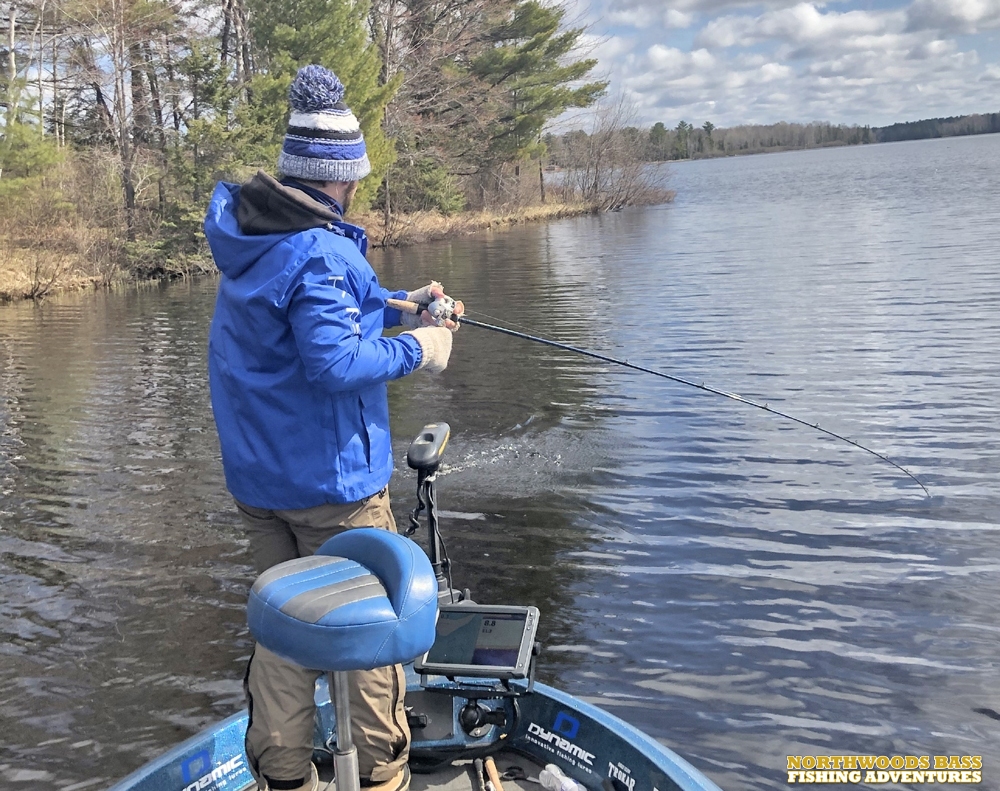
Andrew Ragas splits time between the Chicago area and Wisconsin’s Northwoods. Based in Minocqua, WI, he specializes in trophy bass fishing and offers guided trips from May thru October. While big bass is the passion, he dabbles in multi-species as well. He may be visited online at www.northwoodsbass.com

What you can read next

Articles
 Lakes to Fish and Avoid During Fall TurnoverIt was a hot summer and thermoclines on deep lakes were noticeably ......
 Top Lures for the Early Fall TransitionLate August to early September annually represents the early fall ......
 Fishing Algae Bloom LakesClear in spring and green by late summer, algae blooms are an ......
 Smallmouth Grind-OutsThere’s a great chance that every fishing guide out there has a ......
 Inside Edge LargemouthsLargemouths love edges, and the most desirable fish I catch during ......
 Northern Water Snake PatternsOpportunistic predators with voracious appetites, largemouth bass ......
 Dark Water SmallmouthsWhen thinking about the prototypical and perfect Northwoods ......
 Locating Rip Rap Shorelines on FlowagesWith the local flowages down several feet, use this current drought ......
 Fish CatchersSmallmouth bass fishing has changed immensely over the past decade. ......
 Minimalist Smallmouth Fishing with St. Croix RodsIf you want to catch more fish and learn to be efficient, ......