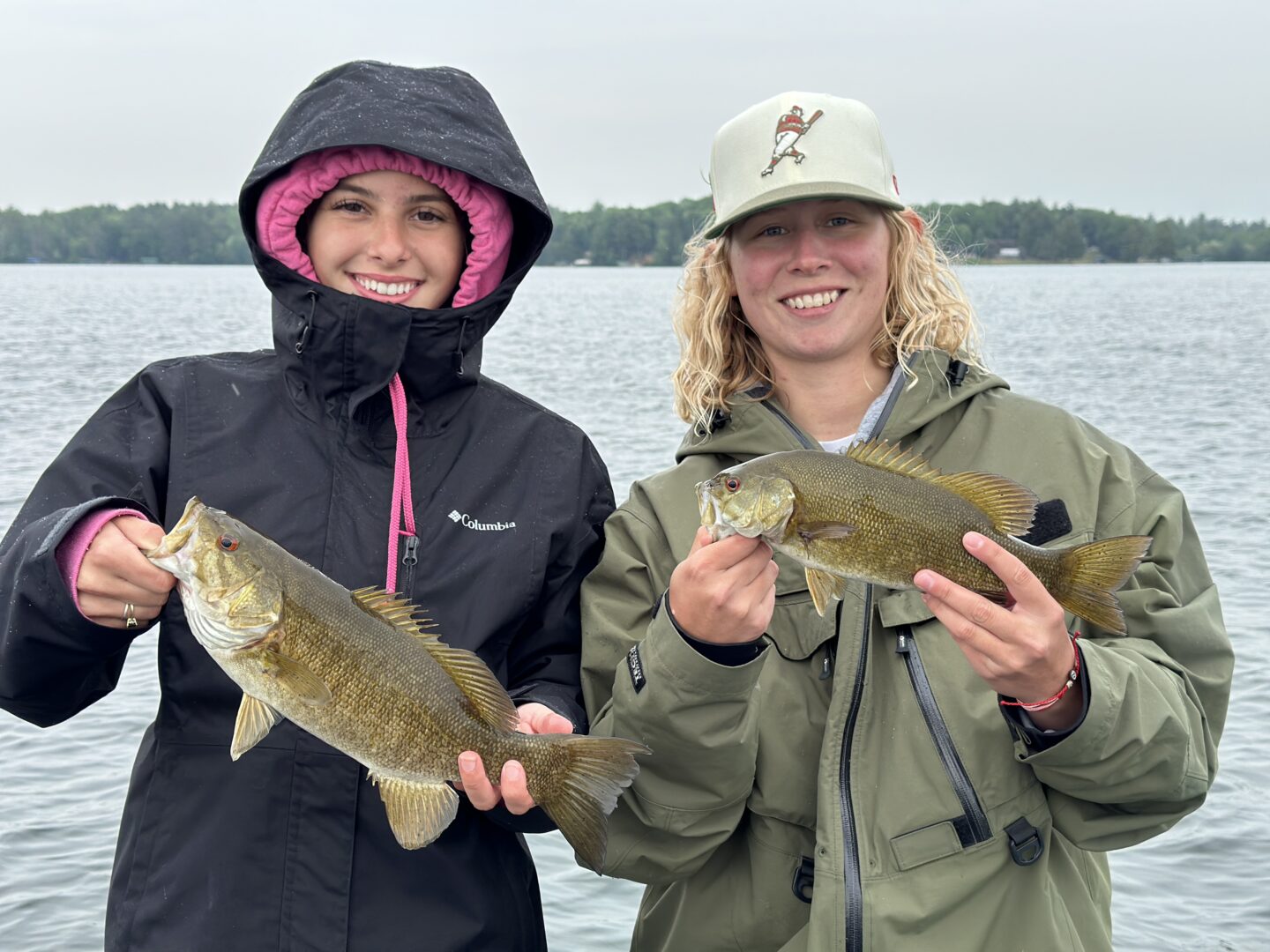


Kid Friendly Smallmouth Lures

Keep lure selection simple, and outfit a child with the simplest options for them to catch fish with. Most smallmouths coming aboard my boat get caught with the most minimalist baits to begin with.
In my boat, I have children outfitted with the same St. Croix Rod and reel set-ups I have every guest angler and myself using. We rotate between the assortment of Victory, Mojo Bass, and Legend Tournament Bass spinning set-ups paired with size 2500 and 3000 SEVIIN GS spinning reels spooled with 10-to-15-pound Cortland Masterbraid, as dictated by lure choice and the strategy.
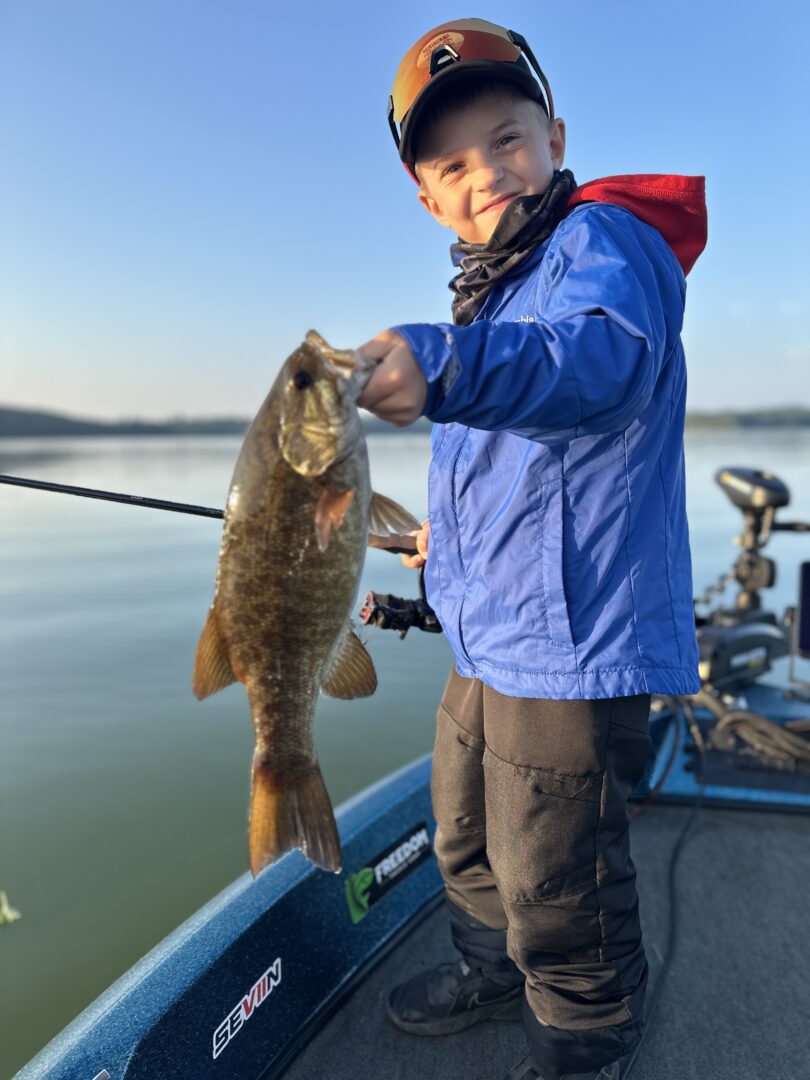
The typical rod length and weight I outfit kids with is between a 66MF to 70MHF. Shorter length rods work best for little anglers, like the 66MF Avid Spinning, 68MXF Victory, and 610MXF Victory. Have no fear of tangles and wind knots.
Conventional wisdom would tell you to outfit a child with a snoopy rod, a close-faced Zebco, or a short 5-foot rod each spooled with heavy monofilament line so that each may be handled without fatigue. I started off with a Snoopy, and there’s no shame in that. However, good luck being able to cast or jig with proficiency and playing any potentially sizeable fish when hooked. These rod and reel types are unsuitable for most fishing you’ll be doing (if you choose to follow this instruction) and will greatly limit a child’s productivity and their level of fishing success.
Children are quick learners. Get them going early with the same equipment you’re using, that they’ll eventually use. It’s how they’ll learn and quickly advance themselves through the ranks. My spinning set-ups always engage children, with the zinging drag of a pulling smallmouth further captivating them. Casting heavier lures with braided line is easy, and they pick up quickly on the fundamentals and their handling. To date, we have never had a mishap with broken rods or losing one overboard from casting misuse.
Lures are Minimalist
The good news about smallmouth fishing with kids are the easy, minimalist lures you’ll be using. My top guideline for lure choice is to give a child a lure that won’t require an advanced retrieving method, thereby quickly fatiguing them.
I remember it taking me a handful of years and patience before growing accustomed to cast and retrieve fishing with artificial lures. By that time, I was around age-10, finally grasped some patience, and already learned to use a baitcaster. So, until any child reaches this level, avoid using spinnerbaits, jerkbaits, crankbaits, topwaters, in-line spinners, other lures with torque and resistance, and really anything requiring an advanced user.
Since most of the kid-friendly smallmouth locations are near-structure, and the strategies involve bottom baits, I like to start children with ned rigs, tubes, and wacky worms. Each is user-friendly for fishability, slower retrieving styles, and catchability.
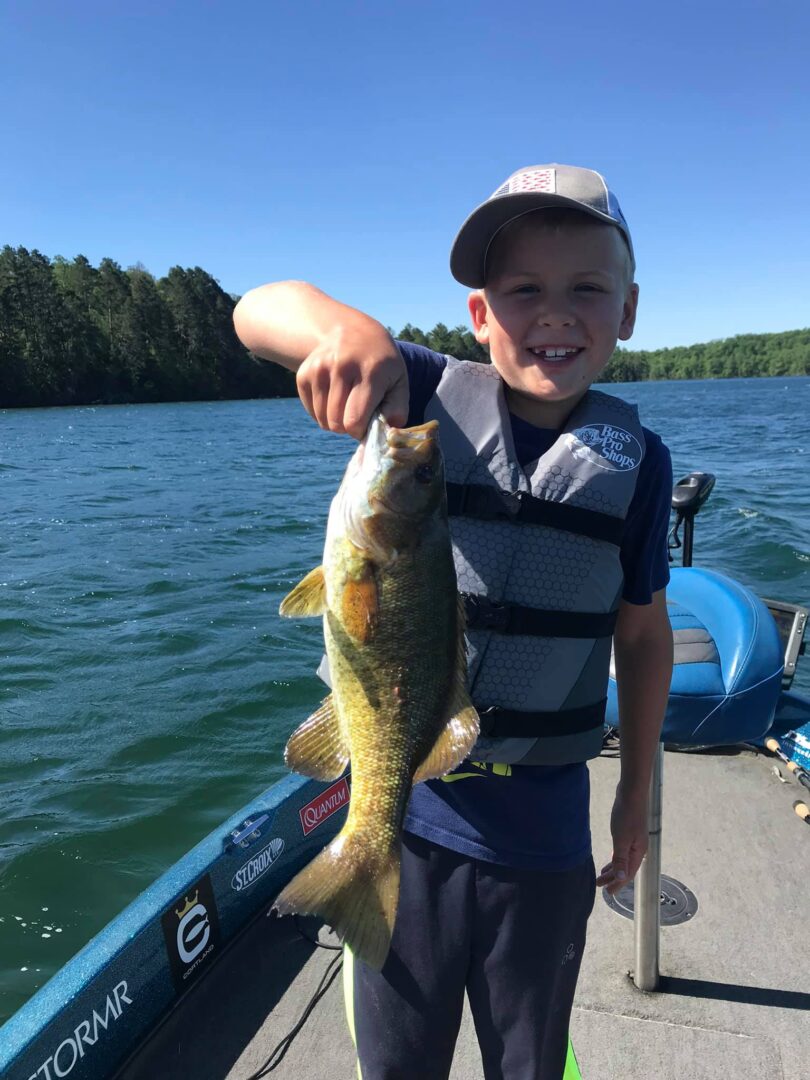
A few seasons ago, I had the privilege of hosting a young father and his 5-year-old boy. At first, skeptical of his abilities to work with artificial lures, I had the father select his son’s lures of choice – homemade ned rigs. What I learned is that anybody can catch a pile of fish with a ned. I was entertained by the young angler catching several smallmouths and a bonus 25-inch walleye that was his biggest fish ever. He outfished the boat. As we neared the 6-hour point, he was more interested in ice cream than bass. It turned out to be one of the easiest guide trips I had ever done.
Note that most ned rigs are rigged on light-weight jig heads to slow the rate of fall. By doing so, it can become difficult to detect subtle strikes and light pickups. One modification I make with my neds is to fish them with larger 5/32-ounce heads with 2/0 sickle hooks. These heads work perfectly with a 2.8 Z-Man Finesse TRD, Hula StickZ, Finesse CrawZ, Missile Baits Ned Bomb, and other similar sized bodies. A heavier weight enables quick bite detection, in order for rapid hooksets. Small smallmouths are notorious for swallowing plastics deep; therefore, weights and larger hooks will greatly help avoid gut hookings resulting in dead fish, and tardy hooksets.

Consider doing the same with jig worms. Rig a 4-inch neutral-colored stick bait or ribbontail worm to an 1/8-ounce head. Z-Man, Kalin’s, Berkley, YUM and Yamamoto each produce excellent varieties. Have them cast and crawl, or slow swim back towards the boat. I like to rig these up with an Owner Bullet Rig Hook. This bait style excels best along deep weedlines.
In lake regions with sparse snags, and atop the deeper structure, I often rig anglers a tube with an exposed hook. It’ll simply connect with more fish and light biters. Lately I’ve been turning more to the “Stupid Rig”, a snag-proof Texas Rigged variation with an EWG tube insert (any tube insert brand is fine). It is universally effective, snag-free on rock piles, wood, and cribs. If you’d like for a child to potentially connect with a big smallmouth, a 3.5-inch Strike King Coffee Tube rigged in this manner is my top recommendation, as well as YUM Craw Bug.
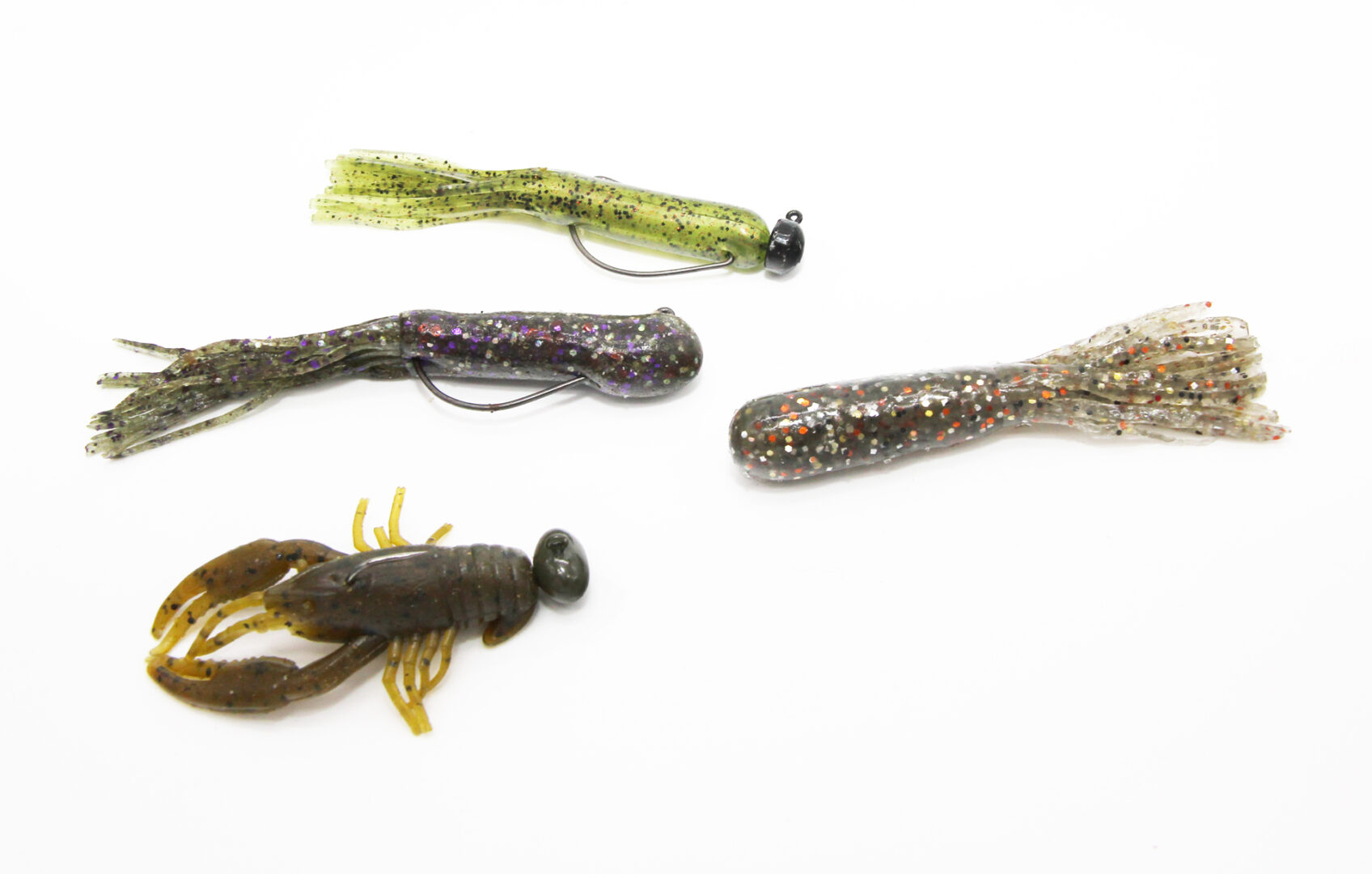
The last bottom bait recommendation to try is a jig and wacky worm. It’s easy to cast, requires little to zero effort on the retrieve, can be fished through structure and deep vegetation, and bite detection is easy. You will want a 4-inch stick worm for smallmouths. I favor leech patterns, with colors being black, green pumpkin, and smoke. Drag slowly, maintaining bottom contact. It may be retrieved upward into the water column before letting it flutter back downward.
When feeling any nibbles or lure pickups with bottom baits, teach them to set the hook. Children won’t initially master the art of jacking fish quickly, therefore swinging the rod upwards or sideways to start is advised. Remind them to always maintain pressure on the line. Train them to also understand hooksets are free.
If by chance moving baits will be the day’s winners, make sure to give frequent demonstrations with them, and emphasize how easy they are to fish with cast and retrieve methods.
Swimming grubs are the best at this and grab the attention of smallmouths everywhere. Whether smallmouths are active or inactive, a grub can always be relied on for catching several smallmouths. Whether slow rolled and retrieved along bottom, or straight-retrieved back to the boat, a swimming grub can do it all for a child. They excel best on the clear-water fisheries.
The grubs we depend on the most are the 3, 4, and 5-inch Kalin’s Lunker Grubs. Working them on an assortment of 1/8 and ¼-ounce exposed ball head jigs and minnow heads are my boat’s fish finders and fish catchers. If downsizing is necessary, in which smallmouths are fixated on smaller prey, consider downsizing to a 3-inch Lunker Grub with 1/8-ounce head. With lighter lines it usually seals the deal. Children have no problem casting and retrieving these.
Likewise, a small paddletail must receive consideration too. These would be the better option for windy days.
Z-Man’s 3-inch MinnowZ and 4-inch Diezel MinnowZ replicate the look, action and strike-evoking attraction of a live minnow better than most soft baits. They are extremely user-friendly under a wide variety of conditions and lake locations. These bite sized paddletails have become clientele favorites, and applicable for every skill level.
We like motor oil, natural minnow, and smelt patterns. For best action, fish them exclusively with Z-Man’s 3/0 ¼ -ounce Finesse EyeZ jigheads. Another great alternative is the 1/4 -ounce Northland Slurp! Jig, and ¼ oz. Freedom Tackle FT swimbait head. A heavier minnow head will produce the most action under slow speed retrieve requirements. These baits will also find lots of walleyes.
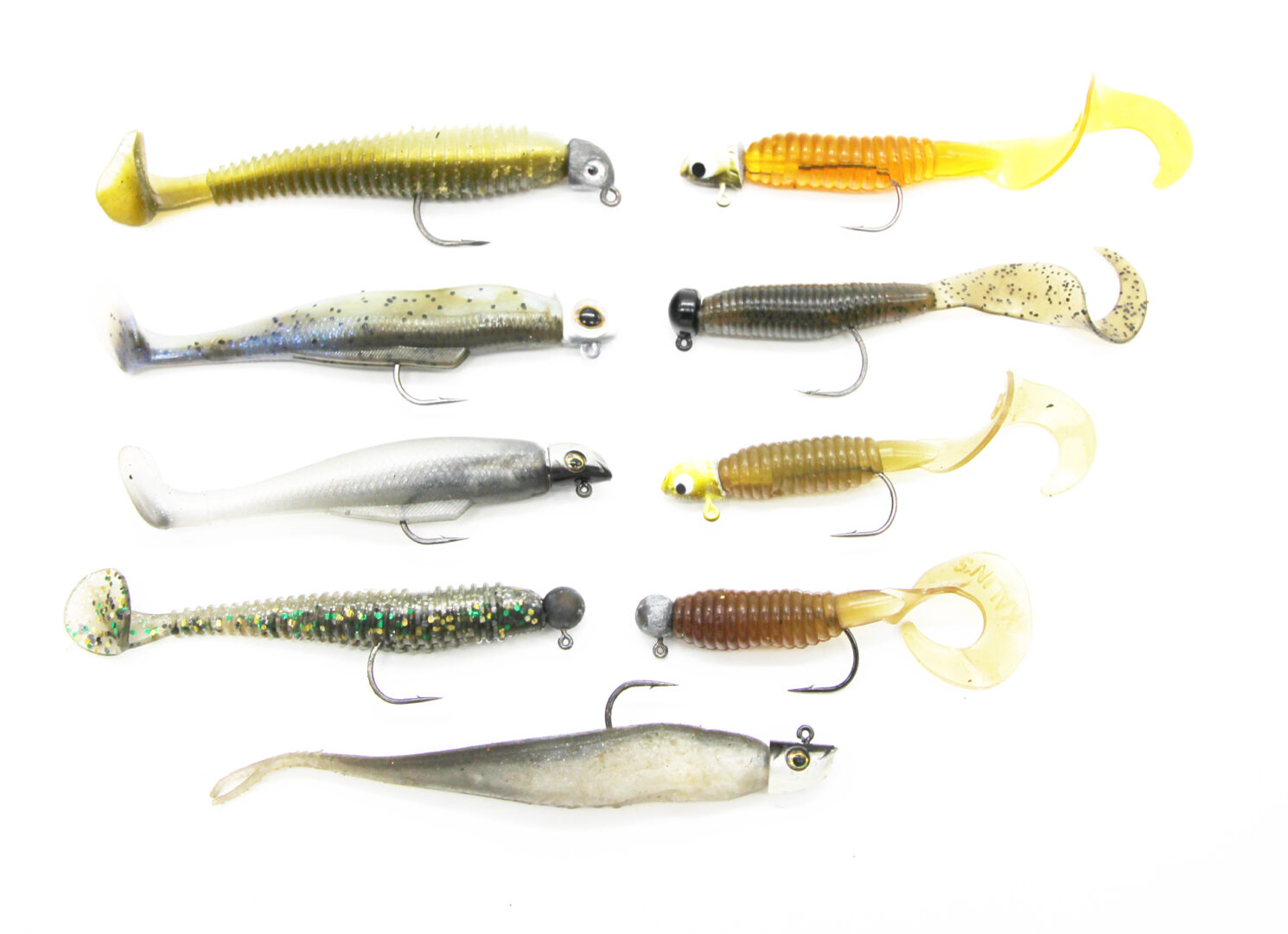
Most smallmouths striking these moving baits will pound them, resulting in mostly automatic hooksets. The strike of a hard-charging smallmouth in mid-retrieve can be life-changing to a child. When in use, be sure to give them warning to hang on. Beyond smallmouths, they’ll catch everything else in the lake from walleyes to even muskies, making trips further memorable.
In summer and fall, smallmouths will tend to become structure-oriented, where fish may suspend or hold near bottom. To tap into these fish, my boat often relies on moping.
Give any child a damiki rig, and they’ll proceed to have a walleye and smallmouth beat-down, providing you’re good at finding them fish to catch. A few years ago, I tested this tactic with my nephew Alex, who was 7-years old at the time. And he crushed the fish.
We go moping with a 4-inch Z-Man Scented Jerk Shad. The scented jerk shad is a super-lifelike, salt-impregnated soft jerkbait with a lively, split-tail design that perfectly emulates erratic baitfish action. Required are cone-shaped head designs with a 90-degree line tie. To jigs are used frequently – Freedom Tackle’s FT Swimbait Head and Northland Tackle Slurp! Heads 1/8 and ¼-ounce sizes.
We drop our baits over the side with the St. Croix Victory Tactical VTS68MXF. Main line is 10 lb. Cortland Masterbraid in high-vis yellow, with a minimum 6 ft. section of 8 lb. Cortland Fluorocarbon leader. Bite detection is easy with this setup. When hanging it horizontally in fishes faces, remind yourself “Less is More”. Jigging cadences and unnecessary movements will deter fish interest and strikes from occurring. Often, the wave action of the boat and your line bouncing with it is all it takes to trigger smallmouths. Never jig it.
My Lowrance HDS 12 Lives find smallmouth and walleye schools very well on side imaging, both in open water idling, and when specifically targeting suspended fish around mid-lake humps, sand grass beds, and above deep structure. I watch my screens both at bow and on console closely and intently, seeing both the bait and fish come within range to strike. Always keep the baits above the fish on screen, and you’ll watch them climb upward to strike. Children have little understanding of marine electronics, so it’ll be important to coach them through this fishing method, make sure their baits are within range of the transducer cone, and for you to pay close attention to their rod and line for when it loads.
The strategy excels with children, as they can vertically target fish at any depth with it.
As we conclude, the final method worth consideration is the good ‘ole slip bobber rig with live leech. Where position fishing takes place, and if you seek relaxation, deploy a spread of rigs for the boat, and set them into the rod holders. This will only help increase catch rates, offering you further chaos, mayhem, and memories to be made.
Unless proficient casting skills and patience are developed, avoid most cast and retrieve fishing until your child reaches an advanced skill level.

What you can read next

Fishing Tips and Short Stories
 Smallmouth Scenarios by SeasonEvery fish species has a seasonal calendar that in no way resembles .....
 Where to Go Fishing During Cold FrontsHere in Wisconsin, largemouth and smallmouth lake types and .....
 Perfect Plants to LargemouthsThe lives and feeding patterns of largemouth bass revolves around .....
 Finding Trophy Largemouth LakesRealize that not every lake is capable of growing and rearing .....
 Kid Friendly Smallmouth LuresKeep lure selection simple, and outfit a child with the simplest .....
 Tracking Midsummer Largemouth Bluegill BitesBluegills are the backbone and lifeblood of all good largemouth .....
 My Dark Brown Water Smallmouth SecretThe Bama Craw Z-Man Fishing Products Chatterbait Elite EVO .....
 Opportunistic Feeding and Junk Weather WindowsUnlike us, big fish don’t read through the phone’s weather apps or .....
 The Best Early Season Largemouth FisheriesWhere to go and what to do in early spring is a calculation, as not .....
 River Patterns, Spring thru FallRiver fisheries continue to be lower-class smallmouth destinations .....