
My Intro to Big Ass Swimbaits

Big swimbaits are trending rapidly in present-day smallmouth fishing. Their origins can be traced back to over 30 years ago in the Western United States where innovative and pioneering anglers like Bill Siemantel, and others, succeed in catching double-digit largemouths with wood and plastic models. As this method of fishing grew and exploded in popularity, the success of it caught on in other parts of the country and the non-typical bass fisheries where it wasn’t intended for.
Much of the U.S.-based swimbait craze stemmed from what early pioneers like Siemantel and other California anglers were catching on the trout-stocked highland reservoirs decades ago. The idea of using a 6 to 12-inch soft plastic forage imitator to target megafishes with captivated the imaginations of anglers. Monsters don’t live everywhere, but big swimbaits are now giving anglers a realistic chance to catch a once-in-a-lifetime bass.
Big smallmouths are selective feeders. The largest specimens feed less but want to maximize and get the most out of every meal. Otherwise, they exert so much wasted energy.
Northern smallmouth lakes feature a lot of large forage fish species. They don’t need to have rainbow trout stockings in order to grow monster fish like the California lakes do. What our lakes do have are ciscoes, smelt, and whitefish, tasty prey a trophy smallmouth can willingly handle with ease. Big fish of every species are eating the largest forage they can handle in every lake.
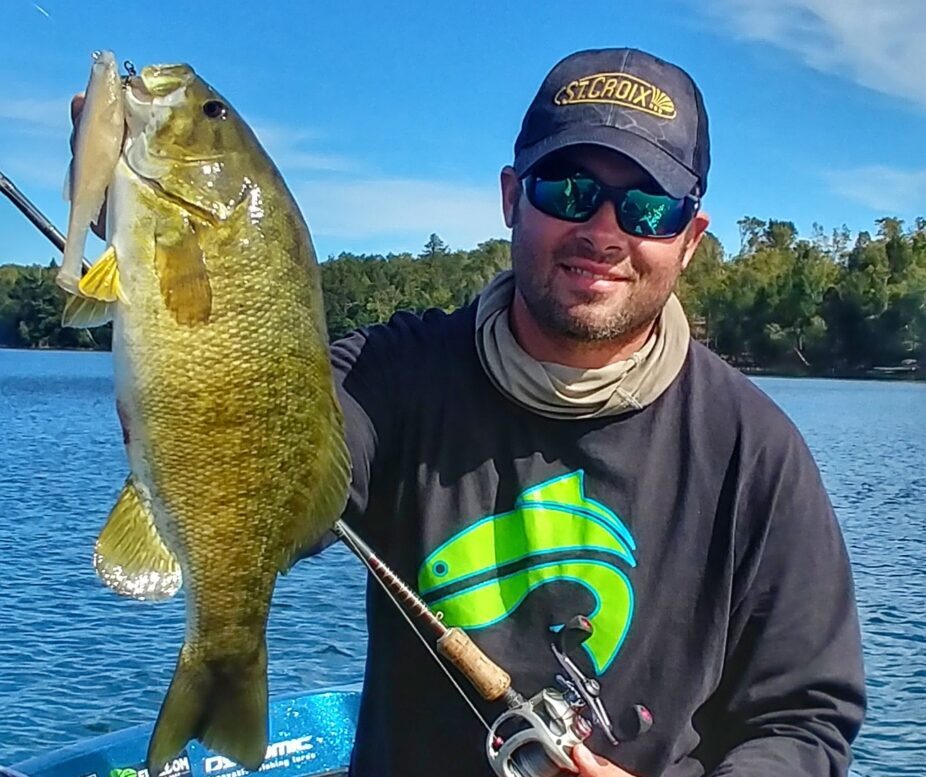
From the Great Lakes to the inland lakes, trophy smallmouths are exclusively being pursued more than ever before. These are wise, old fish. In the process, most of them grow conditioned. They ignore baits, especially those they see most often. These last few seasons, I’ve endured more lure rejections than successful captures. One interesting observation I’ve made is that large swimbaits are captivating the interest levels of the largest smallmouths. Even if they are unwilling to commit, these big fish are engaged to chase.
Selecting for specimens is now happening in my boat with more regularity. Big smallmouths get fired up over swimbaits in conditions and situations they should have no business behaving this way in.
The 6-inch Megabass Magdraft gets their attention.
Snacks to Giant Smallmouths
About 3 seasons ago, I acquired my first ever Megabass product. Noted for their high-end cost, it’s a price I am willing to pay thanks to the expensive nature of musky fishing I do as well. What could possibly go wrong with a 6″ swimbait meant for supersize bass that costs just a few dollars extra? They retail for $14.99.
I kept it a secret for about a full year, never disclosing the big smallmouths we caught the first month.
Delivering unique action and attraction, the Magdraft is molded around an internal harness. This eliminates ripping and tearing plaguing so many insert and line-through swimbaits, rendering them worthless.
Uniquely, the bait features a magnetic break-away system, a design influenced by European pike swimbaits. Therefore anytime a fish grabs it clean, the treble hook breaks loose giving anglers a higher hooking and landing percentage and prevents fish from using the bait as leverage. However, don’t rely on this hook magnet. After a few big fish or bad casts, it’ll suddenly vanish, requiring to then peg a hook point into the body to properly re-tune. Likewise, don’t trust the undersize chemically sharpened hook it comes with. I went through about 10 missed strikes on my first run before I swapped it in favor of replacing with a larger 2/0 VMC musky treble. A larger hook will let the bait swim a tad deeper, and you will then connect with a much higher percentile of fish. The internal harness can frequently bend, making the Magdraft swim out of tune. This will require reshaping and maintenance throughout the day.
Word of caution, like many other big fish baits, you will also lose a lot of big fish with it too.
The streamlined shape enables the Magdraft to be retrieved successfully with slow to medium speed. This also helps to minimize rolling. It must be retrieved at the proper lower speed, as suggested. The soft body and lively tail shimmies and wiggles at every foot of the retrieve.
Lasting an average of 20 fish per body, durability is pretty good. A Magdraft will last even longer if you refrain from fishing it around weeds and pike infested waters. The tail and fins can rip easily, thus deeming the bait worthless as it will no longer swim upright. Keep an eye on the tails, as these are always the first to go.
I treat the Magdraft as a big fish search bait. It’s become my secret weapon on trophy hunts and under tough fishing conditions that require an attention-seeker of a bait.
Unless there is an attachable weight harness that I don’t yet know about, I can only work the Magdraft in depths of 10-feet or less. In this zone of the lake, it fishes very well across expansive rock and sand flats, over submerged cribs, and in the open water sub-surface.
I have tinkered with my own slow-sinking versions with the attachment of bullet weights to use for more open water and suspending situations. It’ll work, but the bait will necessitate a faster retrieve speed it wasn’t meant to achieve.
Over the years, I’ve observed many targeted fish flash and shadow underneath my baits, or barely punch them only to blast away from the scene. Big fish are notorious for checking out horizontal baits on a straight retrieve before committing to them. The Magdraft sells a lifelike illusion.
Big Ass Swimbaits
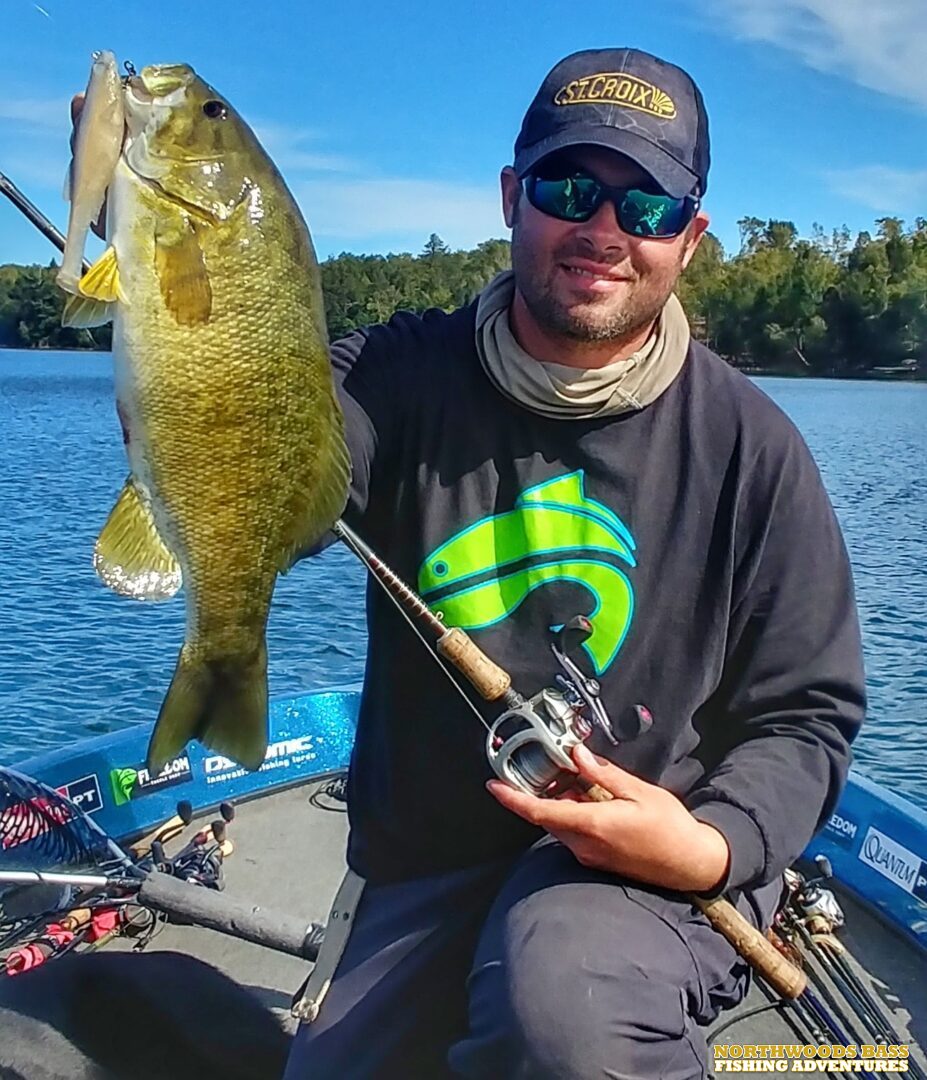
I treat the Magdraft as a big fish search bait. It’s become my secret weapon on trophy hunts and under tough fishing conditions that require an attention-seeker of a bait.
You’ll Want a Specialized Setup
So, you want to start throwing swimbaits with more regularity but your setups aren’t handling them too well. Especially the larger baits. These and other like-minded swimbaits require specialized rod, reel, and line.
For 6-inch and larger baits, you must consider getting a good swimbait rod to help handle the load. The surge in popularity has led to the creation of an entirely new rod sub-category in bass fishing, solely catering to swimbait fishing.
Rod selection should be determined by length of lure and its weight. Swimbaits are also meant to be cast at long distance. Ideally, you should seek a 7 and a half to 8 foot heavy power rod to best handle the load and bury the treble hook with.
The best swimbait-specific rod I have found for the slinging and usage is the St. Croix Victory S.B. Ranger (VTC710HF). It’s a 7-foot 10-inch heavy-fast rod with a flexible, reactive tip section. Rated for baits up to 3-ounces, easily handing most large swimbaits and even Alabama Rigs. One unique feature of this rod is the soft thick EVA foam handle. This prevents casting fatigue and supports cushioning as the rod is clutched against the torso.
Long rods aren’t meant for everyone, and that is OK with the Magdraft at least. Prior to 2022, I was operating with the St. Croix Victory Full Contact (VTC74HF), a significantly downsized version of the S.B. Ranger built for both casting and heavy cover fishing.
Good swimbait rods will cast far, but also have the backbone for good hook-sets. Don’t make the mistake of setting too prematurely. If you feel any light taps, continue retrieving until the rod loads. Then set the hook. Otherwise, swing and misses can accumulate quickly. And you’ll blow some heartbreakers. Smallmouths are notorious for punching, ramming, and slapping baits before fully committing to them.
Line choice and reel is important too, but of lesser priority. I have always gotten by with 30 lb. Cortland Masterbraid for my main line with a 5-foot attachment of 20 lb. Fluorocarbon line. One problem with this combo is the propensity for baits to break off at the line connection, mid-cast. Most bass anglers don’t allow the physics of the rod do the casting work for them. Switching over to entirely fluorocarbon has made mid-cast break-offs an afterthought. Presently, the best handling line I’ve found is Sunline Sniper FC. 17-pound and 20-pound size is suitable.
You’ll get by with most casting reels. My recommendation is a high-capacity spool. A 300 to 400 size reel is ideal. Mine is a Quantum EXO 400.
When you buy the Magdraft, buy spares.
Big Ass Swimbaits
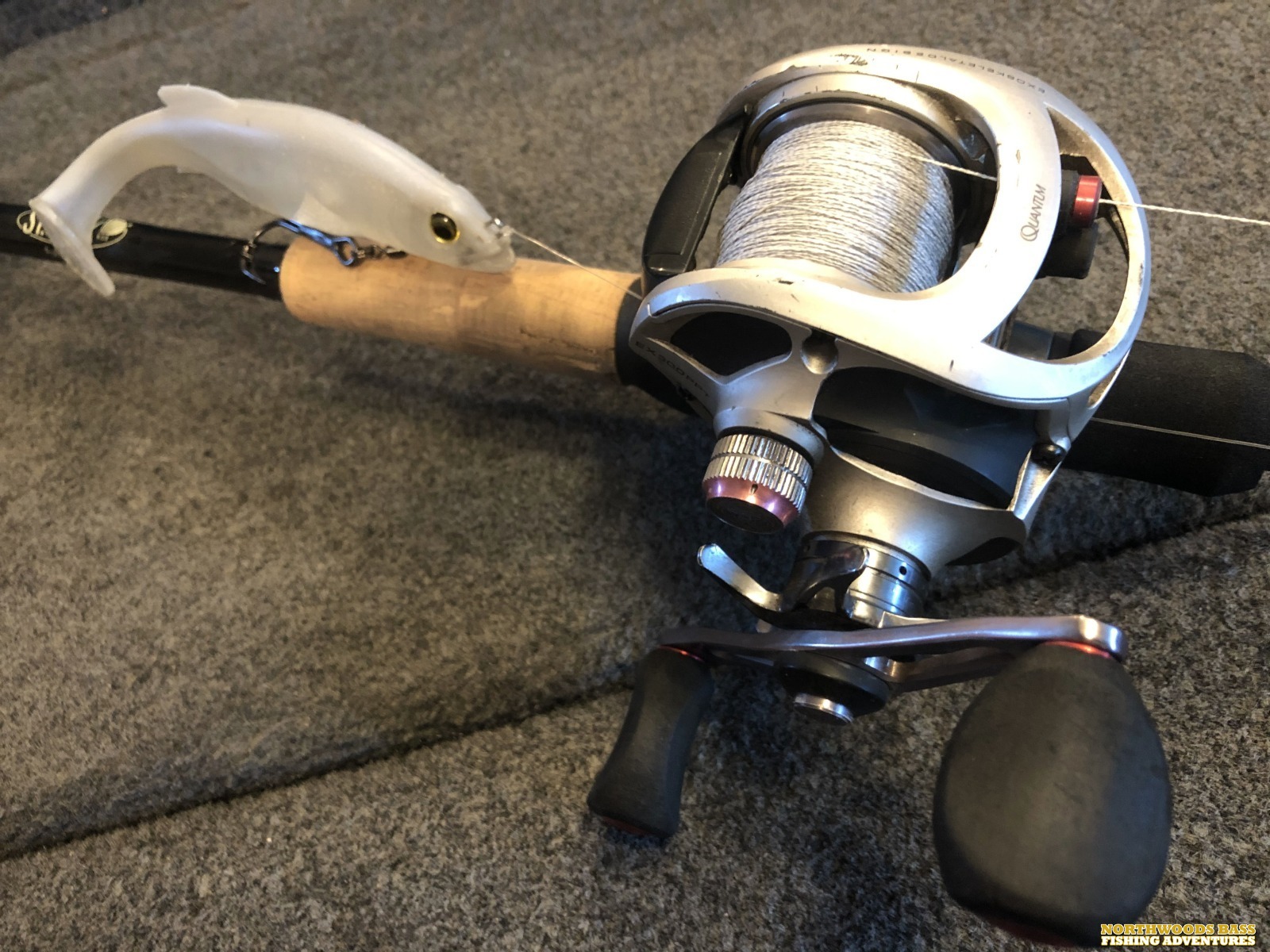
You’ll get by with most casting reels. My recommendation is a high-capacity spool. A 300 to 400 size reel is ideal. Mine is a Quantum EXO 400.
Solving the Forage Puzzle
Every trophy smallmouth bass fishery is driven by food availability, and their populations have specific feeding preferences. On many trophy smallmouth waters, it is a combination of pelagic baitfish species. The size, growth rates, and weights of trophy smallmouth are a product of that lake’s forage availability and abundance.
To maintain their heavyweight status, big smallmouths require these high protein meals. On deep, clear trophy lakes where aquatic biomass is low, bait is less available. Therefore smallmouth feed less. The cisco availability helps them achieve their wide bodies and grouper-like stature.
This is really no different to the stocked rainbow trout / largemouth fisheries out west. My smallmouths are taking advantage of a prey that’s most catchable and vulnerable to them.
A 20 inch smallmouth would much rather take down a 6 inch swimbait once per week instead of strike 3 inch paddletails several times per week.
Once the forage connections are made, patterns and locations for swimbaiting will come to light. Knowing the forage and feeding preferences will allow you to best apply this swimbait strategy to trophy smallmouths.
The Magdraft is a monster fish catcher. It’ll draw the attention of big bass that most other baits fail to accomplish, possessed with otherworldly enticing magic it relies upon that you must deliver to it.
Thanks to swimbaits, I have more confidence in catching trophies now than I ever did before.
Andrew Ragas splits time between the Chicago area and Wisconsin’s Northwoods. Based in Minocqua, WI, he specializes in trophy bass fishing and offers guided trips from May thru October. While big bass is the passion, he dabbles in multi-species as well. He may be visited online at www.northwoodsbass.com

What you can read next


Articles
 Lakes to Fish and Avoid During Fall TurnoverIt was a hot summer and thermoclines on deep lakes were noticeably ......
 Top Lures for the Early Fall TransitionLate August to early September annually represents the early fall ......
 Fishing Algae Bloom LakesClear in spring and green by late summer, algae blooms are an ......
 Smallmouth Grind-OutsThere’s a great chance that every fishing guide out there has a ......
 Inside Edge LargemouthsLargemouths love edges, and the most desirable fish I catch during ......
 Northern Water Snake PatternsOpportunistic predators with voracious appetites, largemouth bass ......
 Dark Water SmallmouthsWhen thinking about the prototypical and perfect Northwoods ......
 Locating Rip Rap Shorelines on FlowagesWith the local flowages down several feet, use this current drought ......
 Fish CatchersSmallmouth bass fishing has changed immensely over the past decade. ......
 Minimalist Smallmouth Fishing with St. Croix RodsIf you want to catch more fish and learn to be efficient, ......