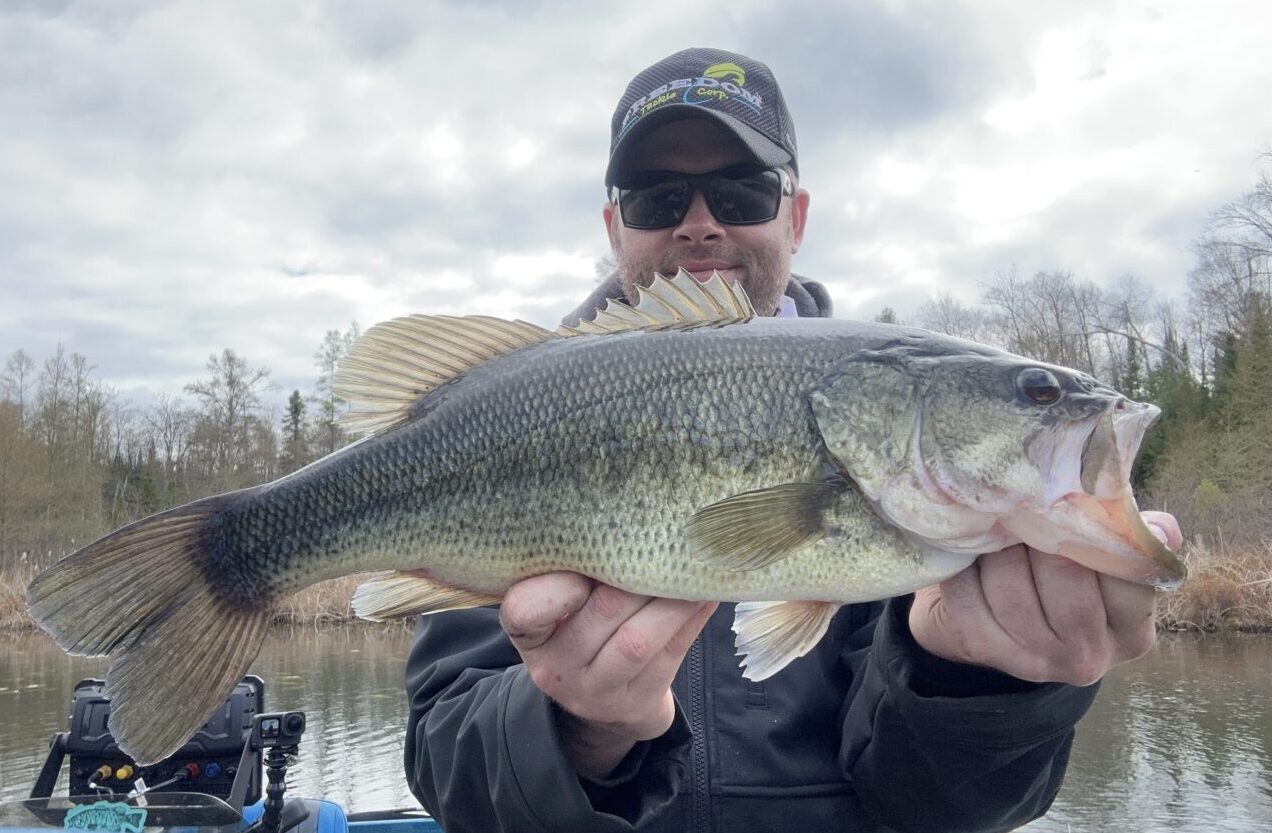

My Shallow Water Playbook for Ice Out Largemouths

Promptly at ice out, largemouths swiftly relocate from their wintering areas to the warmest waters available in the system.
Although they aren’t known to be a migratory species, largemouths can migrate and undergo movements just like any other schooling lake fish in spring (walleyes, crappies, bluegills). Following a brief transition period after ice-out, they set up in staging areas before infiltrating the shallows. A slight increase in water temperature, to the low-40’s, is just enough to trigger the first movements of spring into the shallow warming sections of every lake.
At this moment, you’d be foolish to not visit a fishery containing one of the following: A drainage lake system that connects between lakes and provides travel routes and several options for fish; Navigable creeks and channels that give fish hangouts for hiding, feeding, and spawning; Backwaters or oxbows that give fish a seasonal refuge and temporary home; Swamps and bogs – shallow habitats that simply load up with fish.
Common to each of these spots are their distance away from the cold main lake, and shallow habitats. The further away and shallower they are (ideally < 3-4 feet), the better.
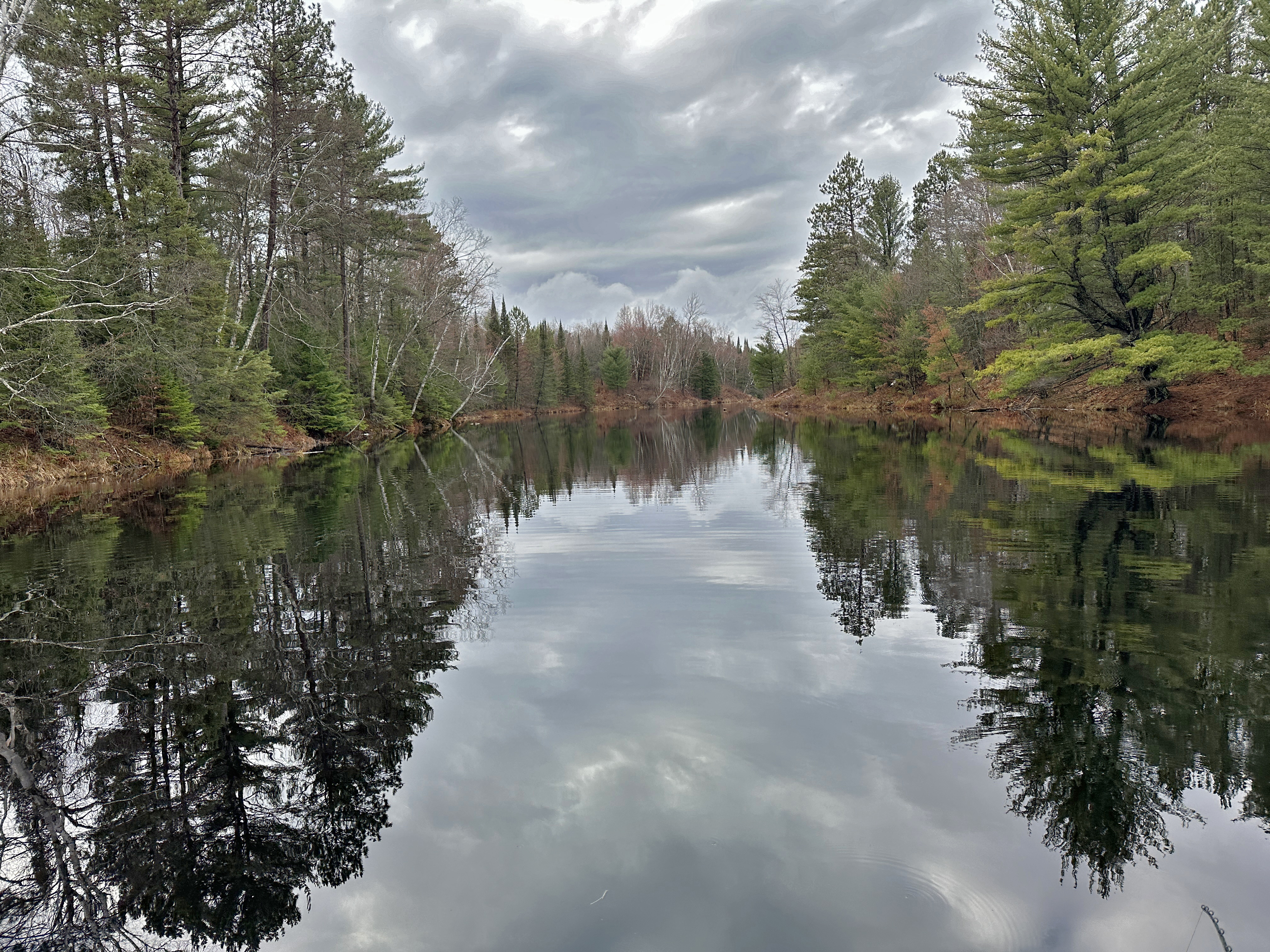
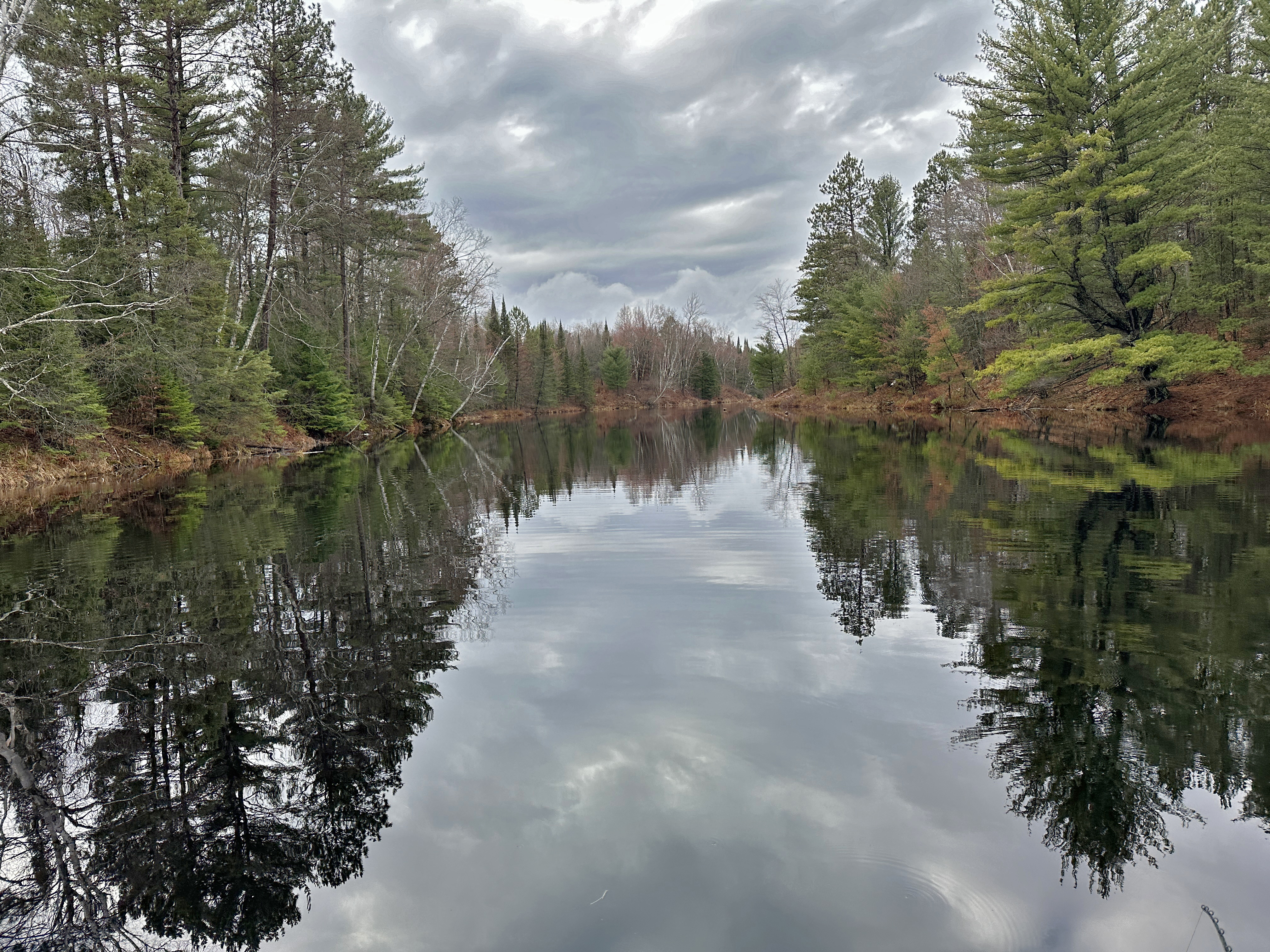
^ Shallow channel and creek arm on an early season flowage / elevated drainage lake system I fish during April and May. Ice out largemouths will bring you deep into skinny water like this. The fish within these areas will be active and engaged to feed.
Where main lake water temperatures will be in the low 40’s, each of these unique early season fishery types can be up to several degrees warmer. Largemouths pile into these areas that they will use first for warming, then feeding, and they’ll remain somewhere close by or within them for eventual spawning a month or two from now.
Where to go and what to do is a calculation, as not every lake is created equally or operates the same. Look closely through aerial maps and study the charts and contours of waters that could be your potential early season fishing targets. Pay close attention to the layout of them, their depths, available near-shore habitats, inflows or outflows (if any), and any shallow bays and lake sections that are located ways away from chilly main lake basins. If a largemouth fishery has any combination of these criteria, that’s a destination I will want to visit immediately when the ice leaves.
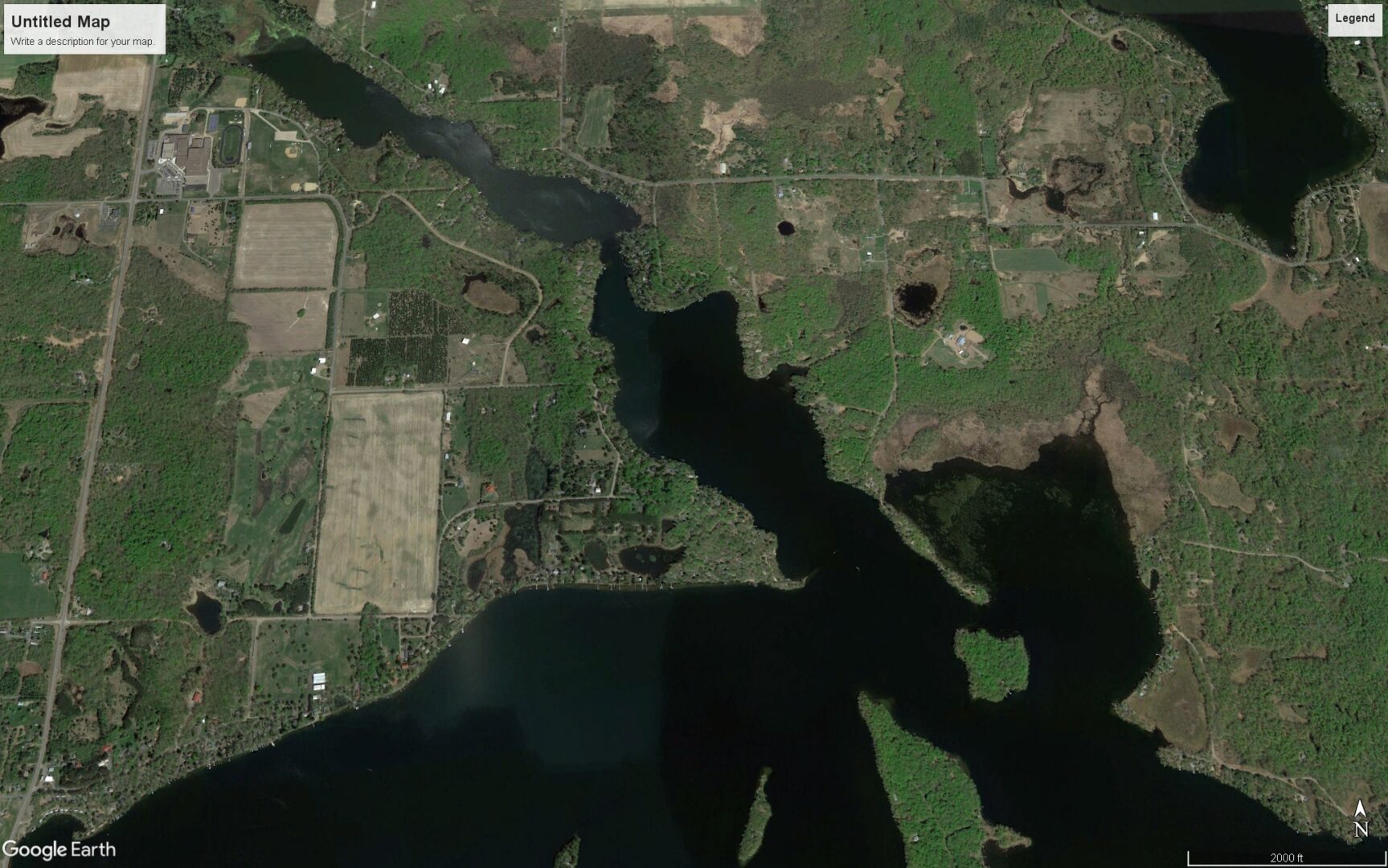
^ The setup of an early season largemouth lake – look at how far removed the bays and arms of this one is from the colder main lake area.
Depths are Always Less Than 4 Feet
Before setting out to experience the wonders of ice out largemouths, understand why bass invade the shallows and the reasoning behind these seasonal movements.
Prioritizing location first, largemouths are seeking the warmest waters they can find for feeding and pre-spawn preparations. Their movements from wintering areas to the shallows are rapid and you will never see it happening in real time. Honestly, you’ll never know when they left behind their deep weedlines out in the main lake towards the shallow backwater. They move in without giving you any signals.
My favorite spring season largemouth fisheries are drainage lakes, backwaters, and shallow eutrophic lakes. Each of these fisheries are commonly shallower, heavily vegetated, extremely fertile, full of inflows, and darker in clarity. They warm rapidly as a result, and their largemouth fisheries could be greater established into spring patterns compared to other waters and lake types at this time. Depending on climate and the ice out progress, these are the waterbody types that you must strongly consider prioritizing for immediate fishing success.
Drainage Lake
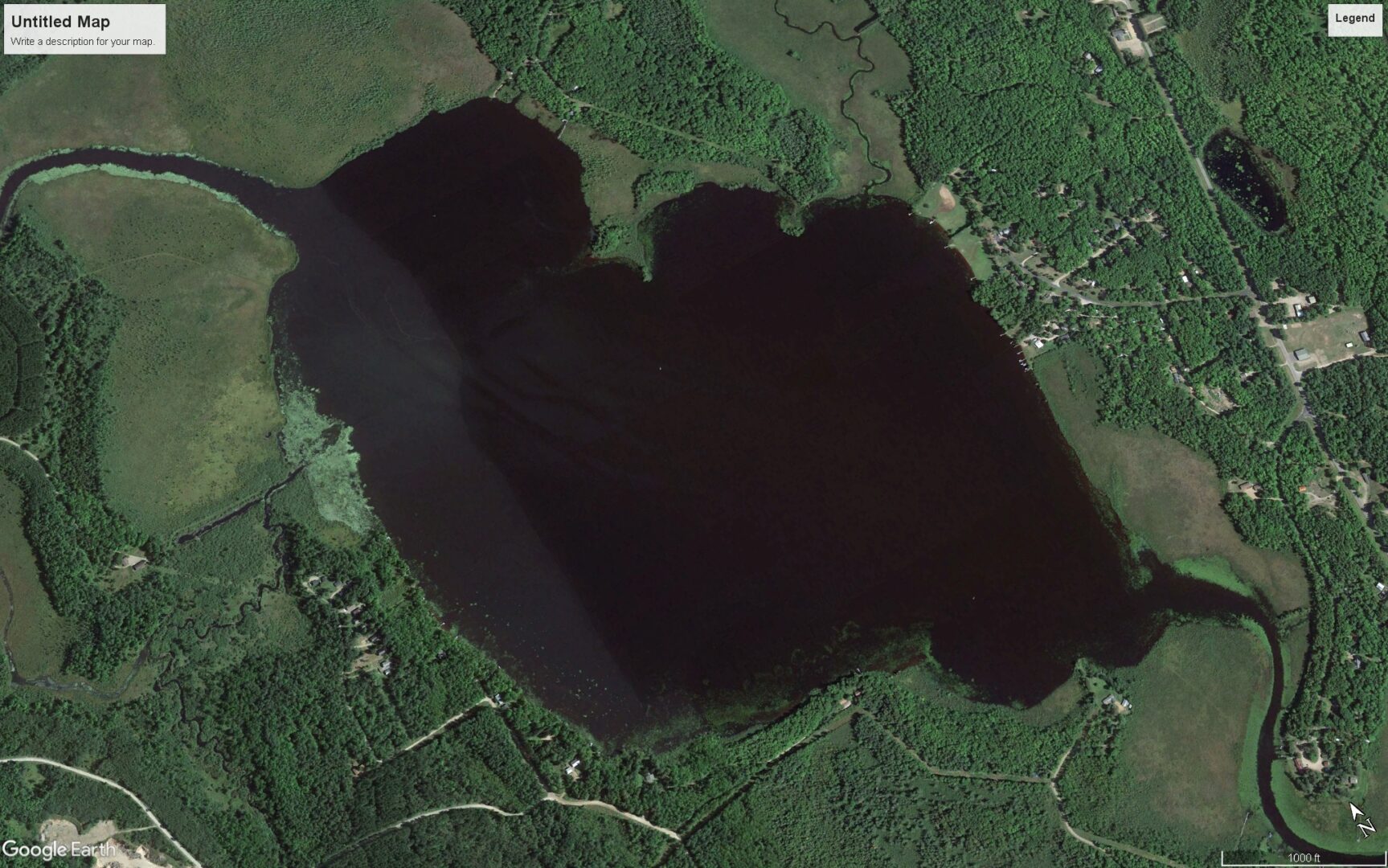
^ Drainage lake. Inflows and outflows keep a shallow lake like this one thriving – preventing it from potential winter kill events.
Eutrophic Lake
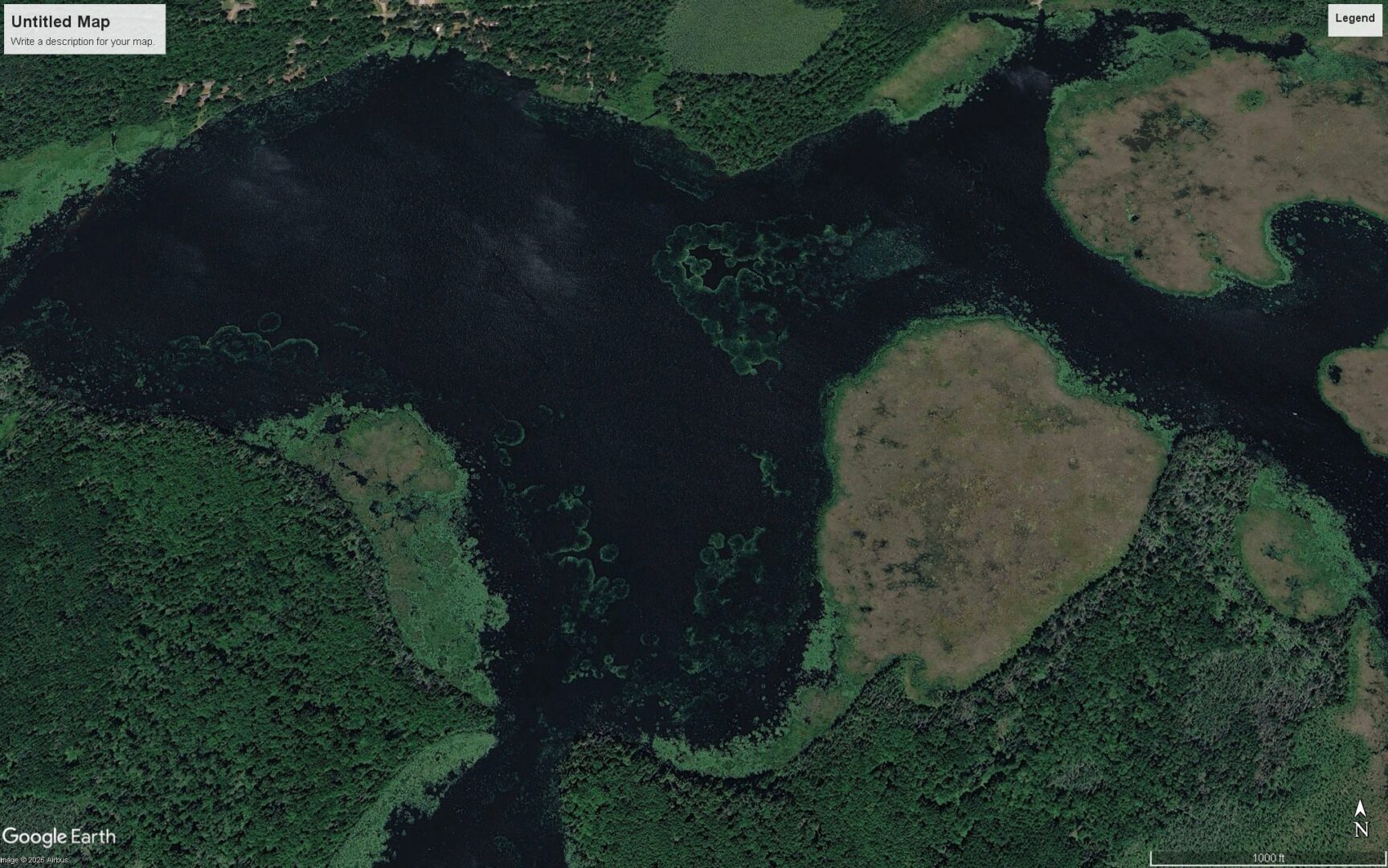
^ Eutrophic lakes with expansive backwaters like this example will be most fishable and accessible in April and May before the really thick slop emerges. They warm rapidly and are often slam dunk lake choices immediately after ice out.
Across these fisheries, largemouths will go as shallow as nature allows them to. We’ve caught a lot of big largemouths within a foot from shore and in only a foot or less. Typically, these bites will all happen in 4 feet or less.
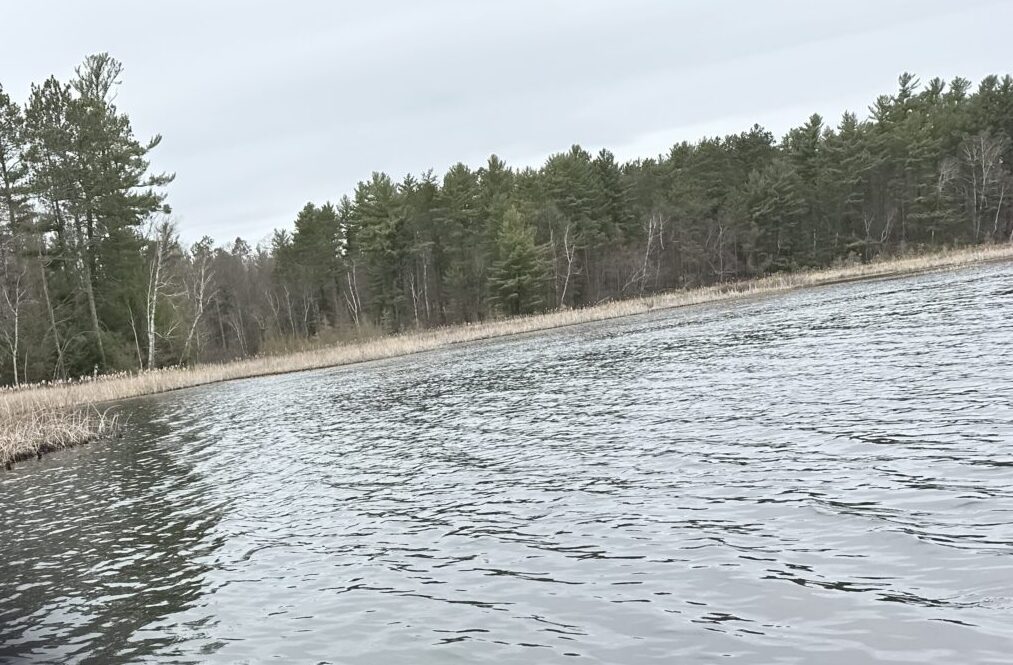
Shallow mud, black bottomed bays, backwaters, inflows and creek mouths, and extreme shallows like the above image warm quickest under a bright sun. Additionally, if there’s remnants of decayed grass, old bulrushes, and the root systems to lily pads, so much the better as it’ll give largemouths cover and protection. Logs, stumps, and wood along bottom will also collect heat on sunny afternoons, creating microwaves for fish to warm next to. These locations and habitat types must get intensely fished.
Layout of the lake is important. Pay attention the shape and configuration of your lakes. Fish the waterbodies that have the most irregular configurations, bays, necks and arms, and feeder creeks & inflows. These are the waters that fit my early spring criteria. So too will shallow eutrophic lakes, and even dark water lakes. Always look to the extreme shallows, and depending upon the layout and configuration of the lake, its northern shores. Importantly, keep an eye on the weather and the onset of fronts, as they can help trigger additional feeding windows. Pay close attention to wind direction, also. If blowing steadily to other lake regions with shallow bays for a day or two out of any direction, it’s guaranteed to be collecting warming water and corralling the fish.
Study Google Earth between now and ice out so that you’re ahead of the game.
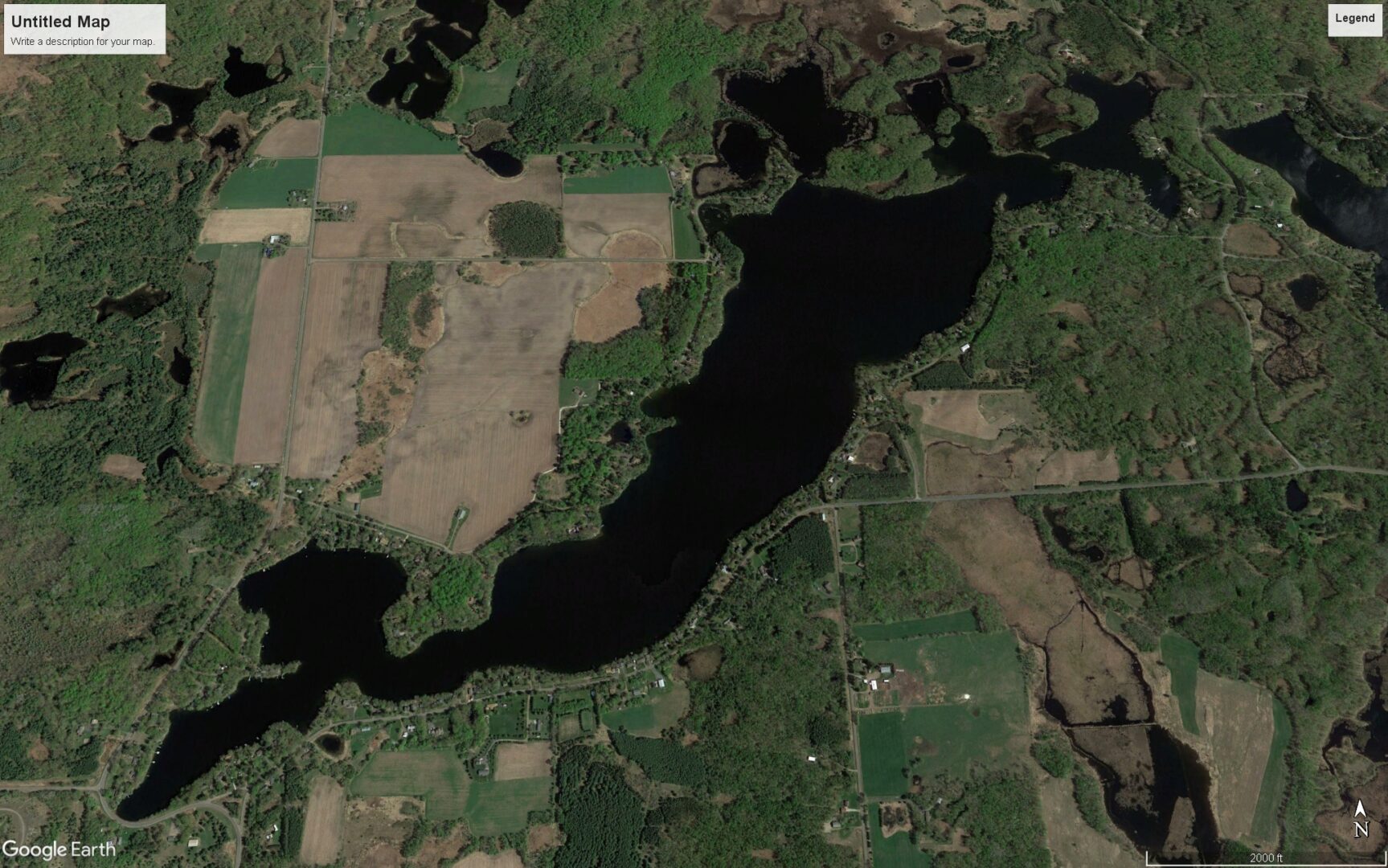
Seek Warming Water
Right now, you should always want to be on waters (and lake locations) that warm quickest but also offer adequate habitats as it relates to the spring season.
The most important order of business right now is seeking the lake or fishery’s warmest available water. While the main lake at ice out is typically 42 to 44 degrees, its bays and backwaters could be up to 5 or more degrees warmer.
The most important piece of technology in your boat will be the temperature gauge on your locators. It’ll be impractical to run around the lake scanning the temperature, but as you are fishing and idling around from spot to spot, monitor the reading.
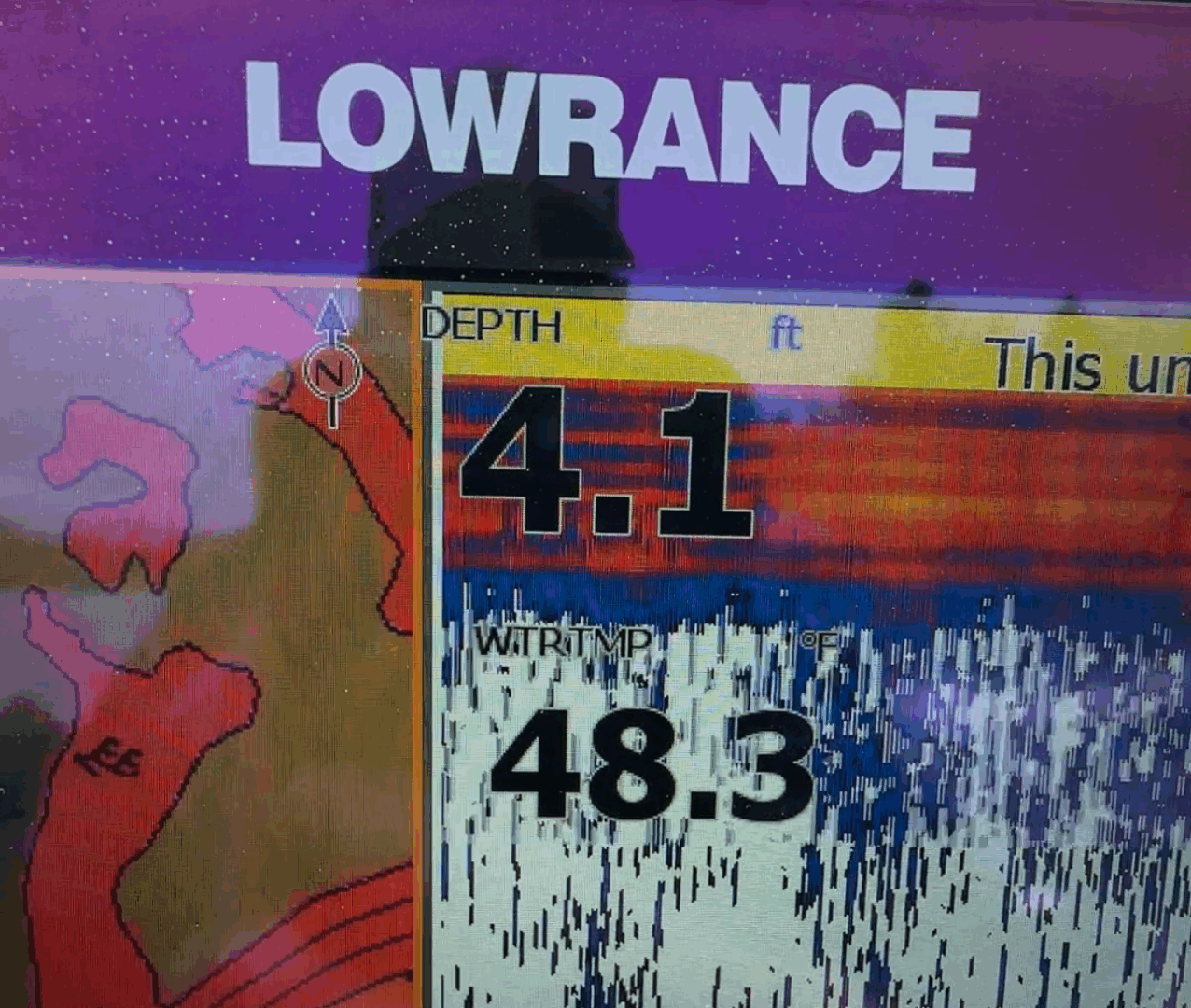
The success of early spring largemouth bass fishing in the northwoods revolves around seeking shallow cover and warming water temperatures. In conjunction with ample amounts of daytime sunlight, it triggers feeding and leading to a mass migration of largemouths invading the shallows.
Warm water is like a buffet to a big bass. The more of it available, the more feeding opportunities she’ll have throughout the day. As water temperatures climb a few degrees throughout the day, feeding interest peaks and elevates. I commonly run into dormant fish in the mornings, only to then find them chase down my jigs later in the day.
Everywhere you go, always look for the warmest water. Usually, it will be on the windblown side of the lake, in a backwater system, in the channel, or a shallow mud bay.
To really visualize what sections or regions of the lake could funnel the warmest water, always focus on the northern and eastern sides of the system. Studying Google Maps and your navigational charts (Lowrance C-Map here) will clearly paint the picture for you. Always examine the shape and layout of your lake before planning out the day’s strategy. If the lake features bays or coves located away from the main lake, you are likely to find largemouths using these lake regions for early season warming purposes.
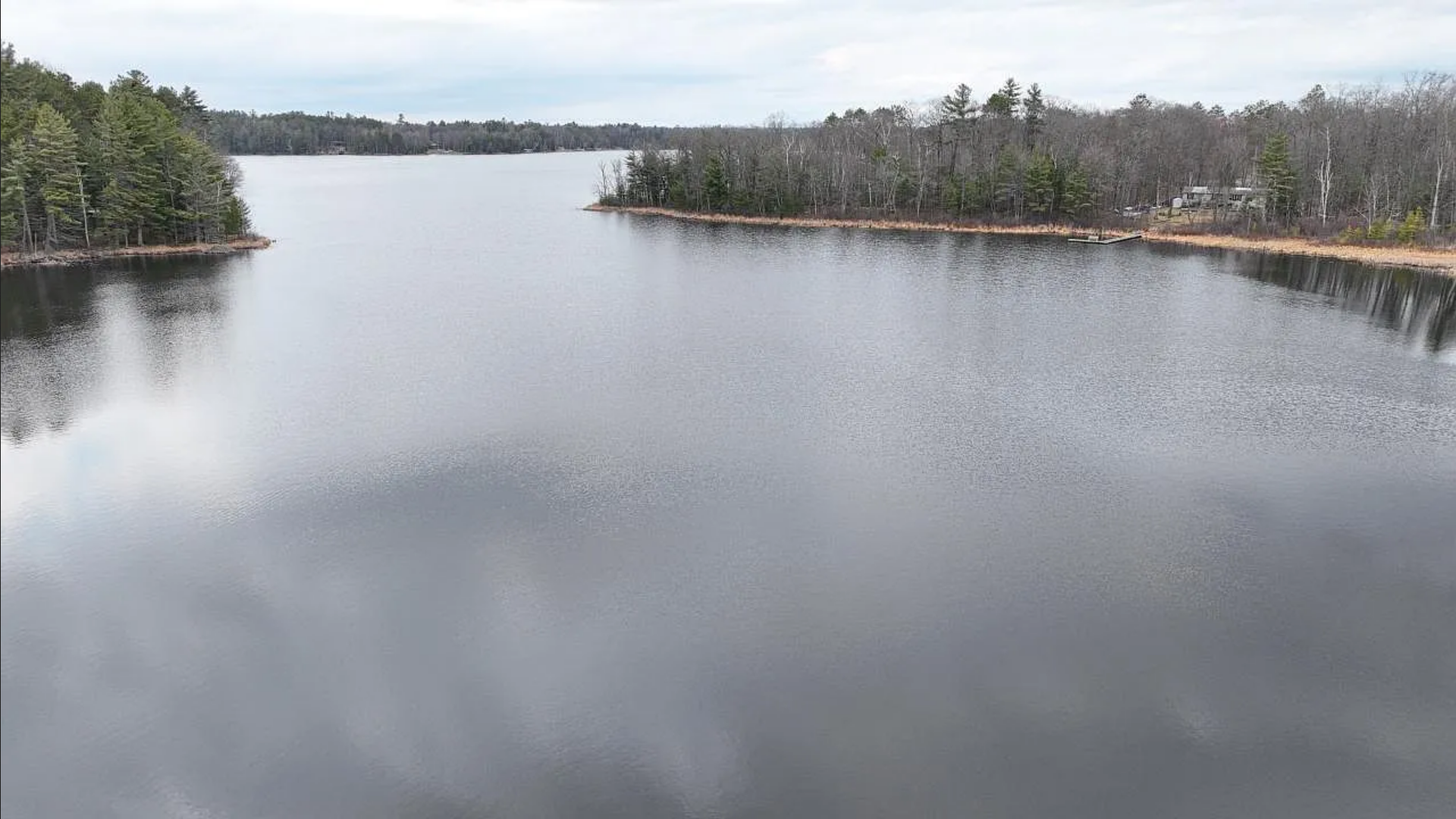
^ I am hitting that entire shoreline, starting at the point and curling through the right.
The Timing is Just Right
Movements and migrations are another thing to be mindful of. Go too early, and the fish might not be in yet. Go too late, or delay a week or two, and you might miss them. I’ve been in these positions several times before working for all species of fish. If largemouths haven’t moved into these areas yet, when you know they should be, revisit them all a day or two later. You’ll be surprised to find them then.
Be mindful that not all largemouths in the fishery invade the shallows at the same time. Up here, this spring movement can be dragged on over the course of a few weeks. As some largemouths invade the shallows, there will be stragglers who are still staging, and even others who remain deep.
Depending on the lake type and its largemouth size structure, most fish caught during pre-spawn tend to be males of all sizes. Males invade the shallows first, where they will forage, seek habitats, and establish their sites for the eventual spawn for several weeks.
Females, on the other hand, are in far lesser number on any fishery, and are slower to join in on these spring movements. When caught, the largest specimens tend to be rogue fish.
As you make your move into these spring hot spots, take advantage of environmental triggers, weather changes, forage abundances (in our case, shad and bluegills) and simply being in the right place at the right time.
Work the Outside Areas and Edges First
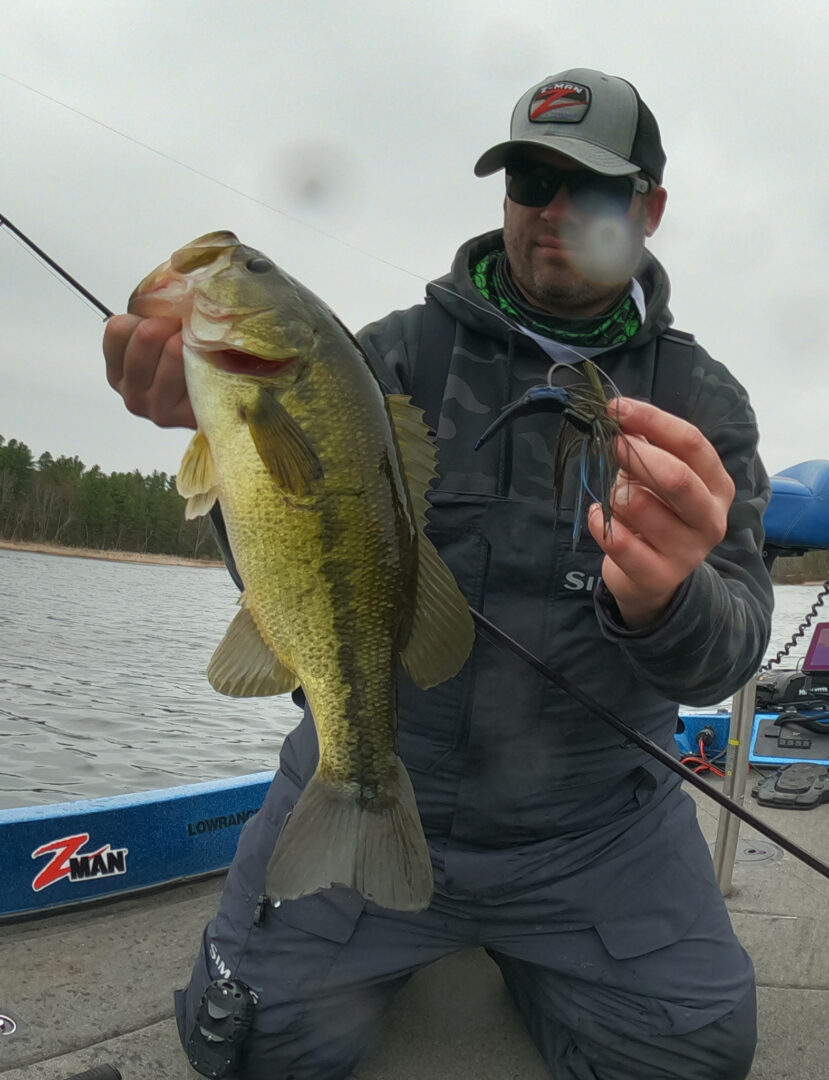
At this time, the biggest largemouths could be staging and holding along the outskirts and outside areas. You’ll know they are out deeper when all you’ve been catching shallow are frisky males.
Whatever fishery or lake type you’ll be visiting, start thinking to yourself where do largemouths in this lake spend their winter months. These wintering areas will vary by lake.
The Minocqua chain is a perfect case study and example of this question. Having fished it my entire life for largemouths in late season and atop the ice, I have a pretty good understanding already where my fish are wintering. On Minocqua and Kawaguesaga lakes for example, those fish are often on the deepest edges of points and weed bars in the main lake. They lay low, not far away from perch and bluegills they’ll feed on for sustenance, and on warmer mild days, they’ll be tempted to slide up into shallower bays where we’ve caught them on tip ups with shiners. Come the late stages of ice season, those fish are beginning their spring relocation. Once it’s ice out, they’re infiltrating into Stacks Bay, the thoroughfare, and all the shallow channels leading into the other lakes of the chain, and back bay coves. Other drainage systems in the area behave the same way too!
So, this is what you must be thinking about first – where do largemouths winter. This logic will then help you locate them under every scenario and shallow water progression they make.
Everywhere you go, start first by working the mouths, entrances, and outer edges of bays. What I do on this chain is textbook perfection that gets applied to everywhere else. Then make your way shallower where you could end up casting into inches deep water and getting the boat stuck in mucky backwaters.
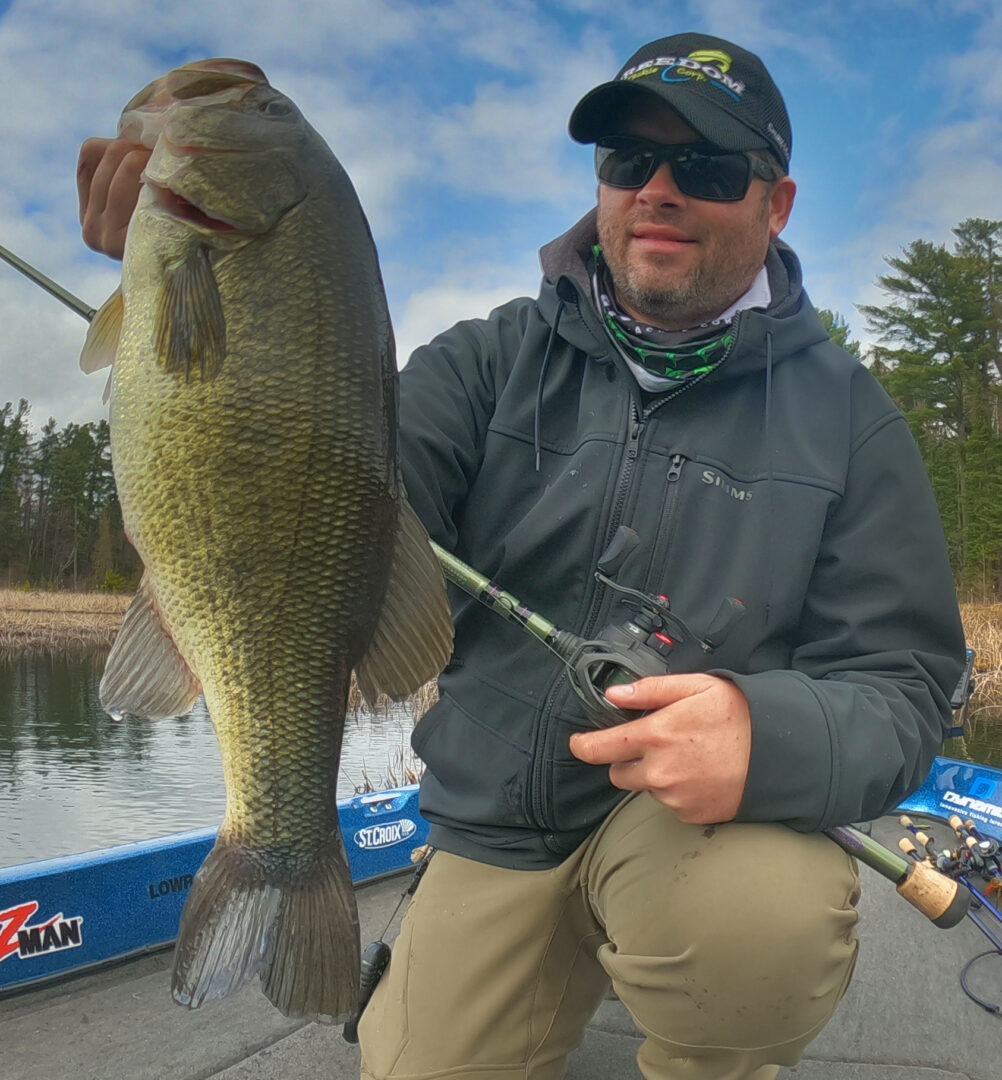
The pursuit of ice out largemouths is extraordinary and you never know what unique locations and destinations these fish will take you. There is nothing more exciting in Northwoods bass fishing than shallow water combat fishing and avoiding getting the boat stuck in the mud.
When the stars align and fish have invaded these extreme shallows making themselves vulnerable to capture, there isn’t a more unique fishing opportunity awaiting you in early spring.
Be confident that largemouths will be active and aggressive in the warming shallows. It’s further wise to use the water temperature of your fishery as a gauge to help predict their mood and activity, and ultimately what you should be throwing. As soon as water temps are between 39-42 (roughly ice out), this largemouth run is on.
Most of your shallow water fishing activities and locations at will also hinge on forage placements and abundances, wind and weather conditions, sunlight penetration, and where lake life is emerging.
Andrew Ragas splits time between the Chicago area and Wisconsin’s Northwoods. Based in Minocqua, WI, he specializes in trophy bass fishing and offers guided trips from May thru October. While big bass is the passion, he dabbles in multi-species as well. He may be visited online at www.northwoodsbass.com


Articles
 My Shallow Water Playbook for Ice Out LargemouthsPromptly at ice out, largemouths swiftly relocate from their ......
 Finding Trophy Bass LakesIt’s no secret that location is the most critical factor in ......
 The Best Lake Types to Fish by SeasonSo many lakes, such little time. It’s easy to get overwhelmed by ......
 My Best Chatterbaits for Spring LargemouthsMarch and April are Chatterbait-centric months for many of us who ......
 Catching Smallmouths if it’s a Cold SpringCold water and below average temperatures of spring are a byproduct ......
 Proven Presentations Only at Ice OutDepending on where you live, ice out could either be nearing or is ......
 Smallmouth Scenarios by SeasonEvery fish species has a seasonal calendar that in no way resembles ......
 The Best Largemouth Bass Lures of 2025I love fishing for big largemouths, and it’s too bad these ......
 The Cheat Code for Sculpin and Goby BaitsLike gooey and greasy cheese curd appetizers to us, gobies and ......
 Catching Smallmouths in November“Andrew, at what point do you stop catching smallmouths in ......