
Northwoods SLOP!

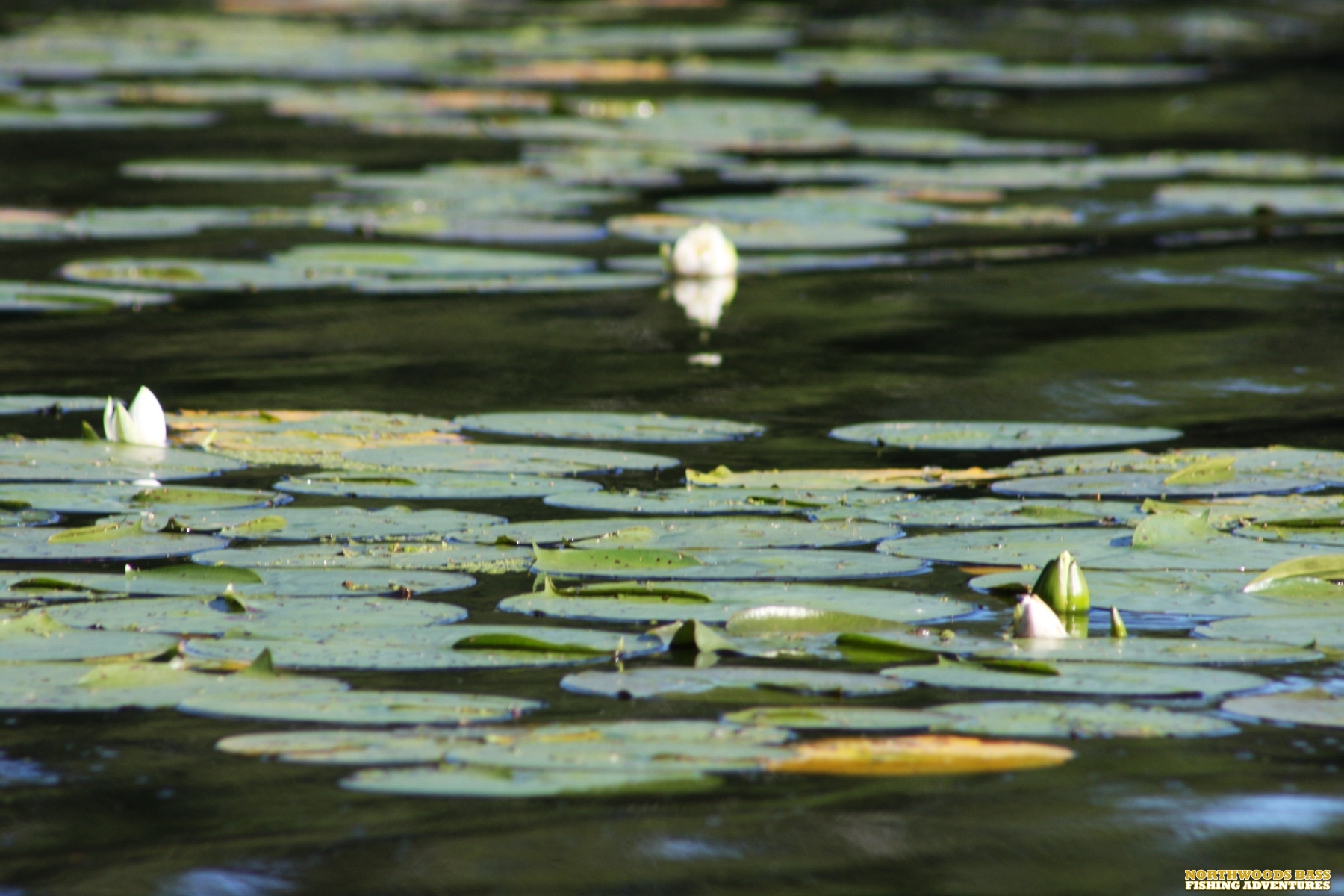
Slop. Junkweed. Floating weed mats. Pad fields.
Several northern largemouth waters contain these plant life overgrowths. As the summer months proceed on, plant species sprout and flourish, fed by daily sunshine and nutrients seeping into the system. Through photosynthesis, they continue to grow as summer progresses.
Even though slop fields and weed jungles greatly intimidate anglers for their fishing and navigational difficulties, focusing on these lake regions is integral for summertime largemouth bass success.
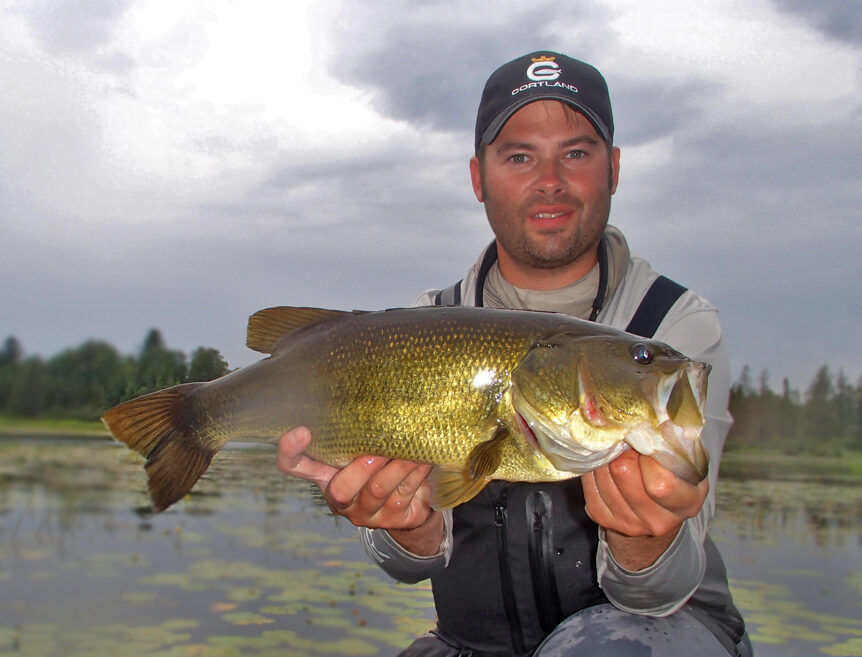
Across northern lakes, largemouths tend to seek the deepest edges and weed cover available, but where dense shallow cover is available, fish will also gravitate to these lake areas as well. Largemouths thrive in slop, utilizing it for their living quarters and prolific feeding. In these locations, largemouths frequently hunt for small prey that includes an assortment of unsuspecting juvenile panfish, insects, and amphibians. Most ambushing takes place near-surface. This heavy feeding delivers some of the most explosive, fun fishing of summer.
From shallow sloughs, swampland, and backwaters to the slop-choked bays and littoral zones of natural lakes, slop areas can offer undisturbed, less-pressured populations of big bass.
Northwoods Slop
Whether guiding or leisure fishing, we’re always looking for the best available and most unique weed habitat and shallow cover differing from the rest of the fishery. Across many Wisconsin lake systems, some of our best summer season fishing locations are around impenetrable, heavily vegetated areas.
Depending on the lake type (drainage or seepage), vegetation can range in sparse isolated patches to vast overgrowing expanses amassing several acres. Whatever the size, you can bet on largemouths frequenting them. Their habitats can be thick and rich with diverse emergent and submergent plant species. Another characteristic of them can be the abundance of timber and wood cover, and the element of protection from fishing pressure and the rest of the lake or river system. Other good water includes sparse grass, lily pads, overhanging trees and timber, and the dead ends of coves where emergent vegetation and debris has accumulated.
Habitats are very shallow, often 5 ft. or less. Largemouths in the north will only use them seasonally, with late spring through summer being the timeline. The best areas will contain edges, deeper holes, and available open pockets and casting lanes. And there is no shortage of fish cover, plant life, and submerged wood either.
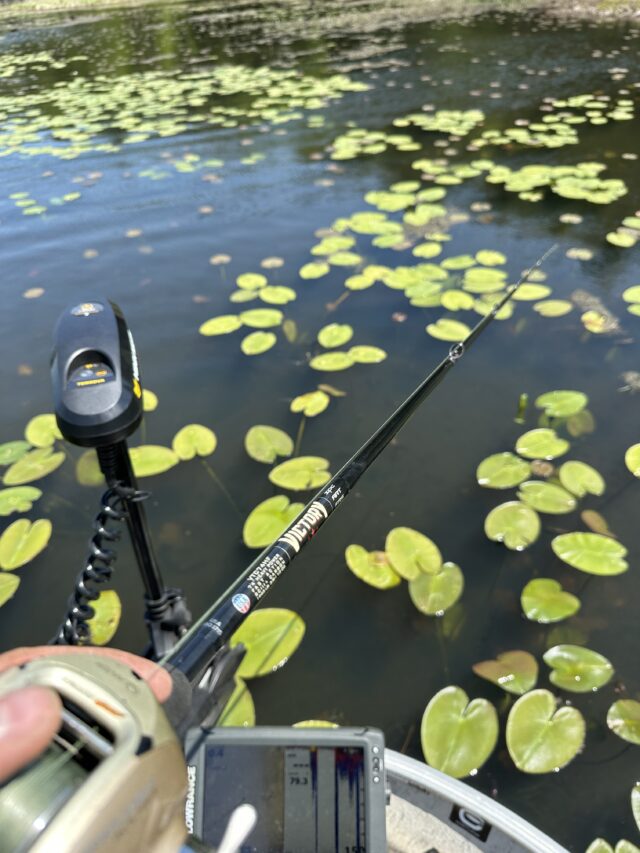 Too much dense cover creates challenging access and fishing. Isolated spots and openings have the best attraction. Largemouths love the edges everywhere they go. Slop offering outside or inside edges are always a benefit, but know how its diverse plant varieties benefit largemouths. An overabundance of lily pads, eel grass, and cattails can choke out the area, rendering it useless to largemouths. Identifying potential fish-holding targets will increase your catch rates.
Of all their relevant features, depth defines whether it’s worth fishing or not. Slop areas I favor will have distinct edges that are located closer to better-oxygenated deeper water, and access to the main lake. In these areas, 3-to-5-foot depths could be considered deep. Additional spots could be isolated and near-shore, such as shade spots tight to shore.
Depending on your region and lake’s bottom composition, several dozen plant species could be prevalent. In some slop areas, a single species could dominate and choke out the others.
Examine your baits frequently when they get fouled. Here in Wisconsin, top slop plants are lily pads (white water lily and spatterdock), northern milfoil, eel grass, broadleaf pondweed, duckweed, bullrush, and wild rice. Each one finds its home and anchor point around the lake.
Across the lake’s littoral zone and its shallow bays, plant growth often reaches the surface, becoming emergent. This is most common on the most fertile mesotrophic and eutrophic waters producing big bass.
Speaking of slop waters, some of these lakes will remain clear(er), while others develop greenish tints and blooms in summer-time, or have darker acidic brown water. I often find better quality fishing and most action on waters with a slight bloom – as their bass remain shallow under most conditions, don’t spook as easily, and relocate less frequently.
Locating slop can be accomplished easily through Google Earth. Today’s overhead satellite imagery of lakes enables anglers to see and find what each one offers. All you’ve got to do is look for green blotches – looking closely at bays, near-shore areas, channels, and backwaters. Once the spots are identified, align the Google Earth imagery with your lake charts and contour maps. This will aid in navigating to them, as well as potentially determining their depth and fishability. Oftentimes, the best method of finding slop is simply time on the water. Taking mental notes of emergent vegetation locations during spring before they fully bloom can be an important discovery for what lies ahead in summertime.
Google Earth
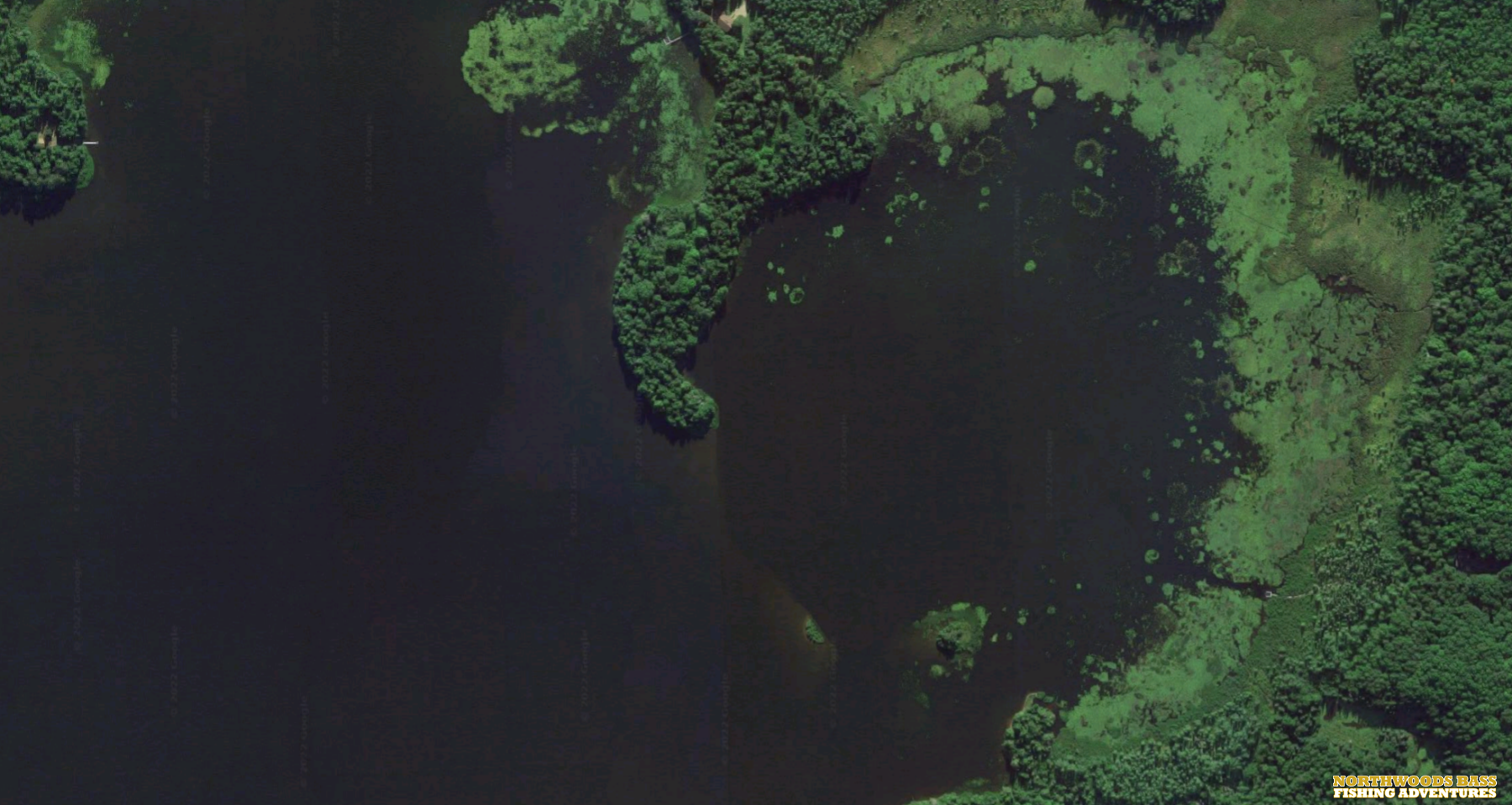
Locating slop can be accomplished easily through Google Earth. Today’s overhead satellite imagery of lakes enables anglers to see and find what each one offers. All you’ve got to do is look for green blotches – looking closely at bays, near-shore areas, channels, and backwaters.
Getting Your Boat into It
Slop fishing usually leads you and your boat into some pretty awful places that are generally inaccessible with the outboard motor and common trolling motor setups.
The greatest benefit to fishing them is difficulty of navigation and access to potentially less-pressured fish. Without the right watercraft and high-powered trolling motor, the most expansive slop fields can be very difficult to penetrate through.
Carefully approaching and entering these areas is important, so not to stir up bottom sediments and leave a cloud trail from the outboard and trolling motor. While 24 and 36-volt trolling motor setups can break through thick stuff, bass will be alerted, halting their activity. If you must, raise and trim the troller up high so the blades propel you only inches below the surface. Otherwise equipping with a push pole, or getting into these areas with kayak, are the quietest modes of entry. This stealth will help conceal you.
When largemouths elect to stay shallow during the daytime, be observant of dragonflies, reptiles and amphibians. Listen also for bluegills and sunfish popping insects loudly from the surface.
Most anglers tend to wait until summer before fishing these areas. However, largemouths begin visiting these lake locations much sooner in the year for spring feeding and spawning. Do not neglect the opportunities to fish these areas from ice-out through early summer, as bigger and heavier largemouths will be lurking. Depending on region, many slop areas could already be sprouting with some emergent vegetation by late May.
By early autumn, largemouths will vacate slop. Come turnover, it’ll all be devoid of life. Revisit the same areas again next year.
Getting Your Boat into It
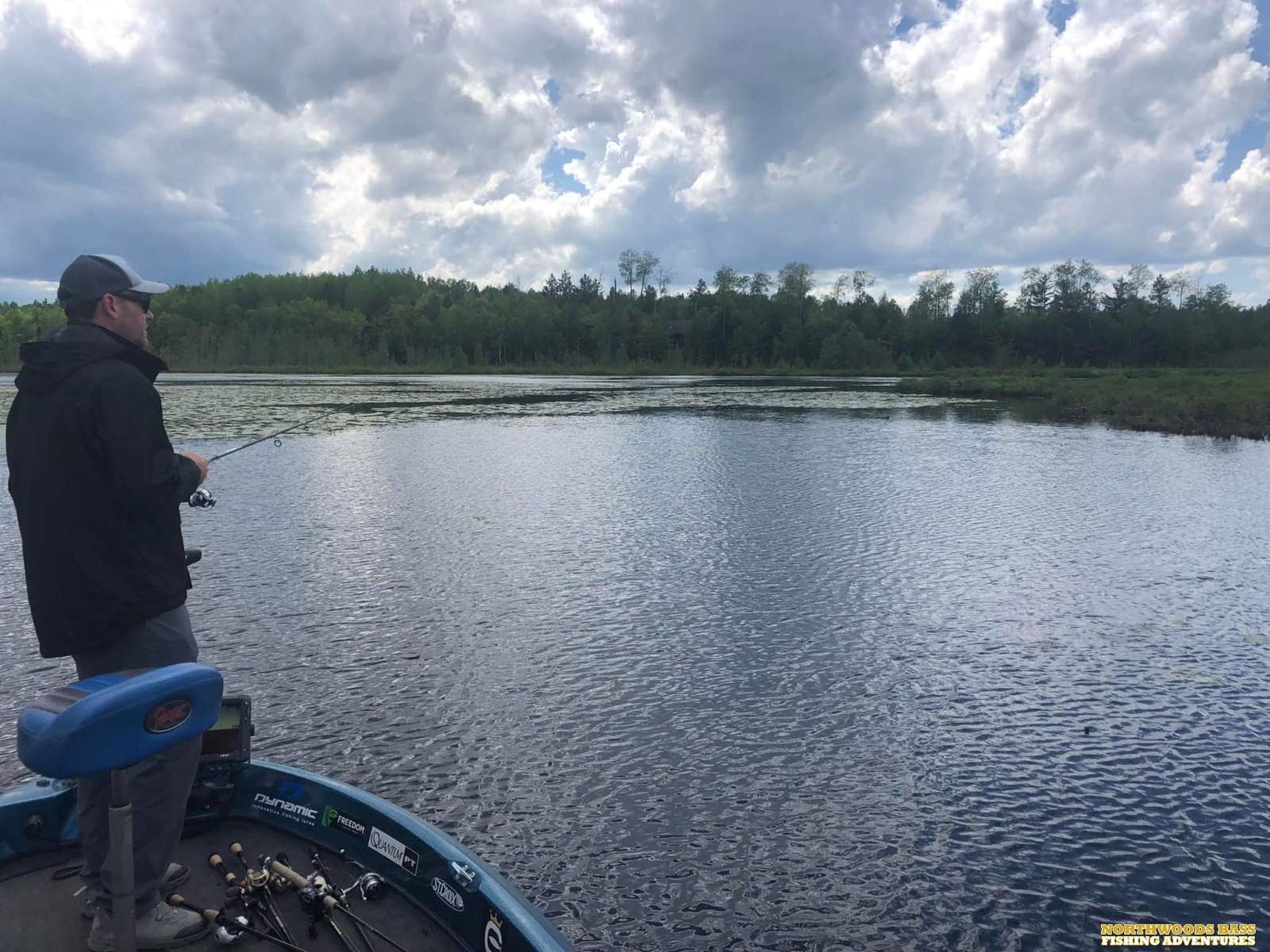
Without the right watercraft and high-powered trolling motor, the most expansive slop fields can be very difficult to penetrate through.
Popping Strategies
With the Minocqua Chain and many other nutrient-rich drainage lakes being my home waters, largemouth bass are often seeking shallow cover if they aren’t positioning themselves up against available deep weed lines.
On these heavily vegetated lakes around Minocqua, WI, their shallows are full of emergent plants. Wood and stumps play an important role too. By late May, the shallows are warming fast, sprouting with a combination of brown cabbage, and wild rice. Spatterdock lilies start growing too, and their root systems and sub-surface leafs offer more cover. Shortly later in early June, eelgrass beds emerge in combination with duckweed catching on to it, creating even more overhead cover. By July, milfoil and coontail can grow densely in bays and backwaters.
Largemouths see and feel disturbances on vegetation mats overhead. They are drawn to the movements. Like many anglers, I rely heavily on an assortment of weedless surface frogs to walk and pop across the tops. They are underrated search lures. My favorite frog is a Vexan Fishing Ninja Frog. These are available in popper and swimmer versions. They’re durably built, heavy and wide, push a lot of water and create a wild ruckus atop the surface.
Additionally, I work an assortment of other hollow body frogs that also includes Kalin’s Google Eye Lily Stalker and Popping Frogs. These two feature a glass rattle system pegged into the eyes, which can help for noise-making. Another worthy brand is American Baitworks wide assortment of Scum Frogs and Snag-Proof frogs. The Snag Proof Perfect Frog has a wide body, pushing substantially more water than all the others.
Popper frogs are worked through pockets and openings, and along the edges. They also walk-the-dog nicely. Swimming frogs are crawled atop pads and over everywhere.
In sparser slop, or when largemouths are very aggressive, softbait frogs and toads will further allow greater coverage of the area and enable you to fish fast. Only drawback is all the missed strikes and blowups they’ll promote, requiring a constant, fast retrieve across the surface. Some options to consider are Z-Man Goat ToadZ, Zoom Horny Toads, Kalin’s Sizmic Toads, and formerly Stankx Bait Co’s buzz frogs. Rig each weightless to a Trokar TK160 (3/0) Magnum Swimbait Hook or TK110 EWG.
Buzzbaits will be most effective around openings and where casting lanes are present. Otherwise, the blade fouls easily from duckweed and eel grass. I exclusively fish with a solid black ½ oz. Freedom Tackle Corp. buzzbait, rigged with a black Kalin’s Sizmic Toad to further enhance it. The factory hooks the bait comes with is worth keeping on for its weedless rigging possibilities.
Slop is also very accommodating of Johnson Silver Minnows. My boat has recently rediscovered the fishability and fish intrigue of these old school spoons. Guide customer Jason Norris brings a handful of them on every largemouth trip I host, putting on a clinic. Few weedless baits can run true and without hiccup through weeds, reeds, pads or wood like Silver Minnows can. Use a Dremel tool to sharpen the hook. Dress with a buzz frog, pork chunk, or a favorite soft plastic trailer of choice.
For frog fishing and buzz baiting, you’ll want a heavy-fast action set-up with a softer tip. The St. Croix Victory Full Contact (VTC74HF) and Legend Tournament Bass Slop-N-Frog (LTBC74HF) fish masterfully. You’ll want to accompany them with a high-speed reel spooled with 50 lb. Cortland Silent Flip. This braided line is kind to the rod guides, slices through vegetation, and silent on the hook-set.
As with all frogs and surface lures, setting the hook promptly on a splash result in swing and misses. Be patient, waiting an extra second or two longer. Always set when you feel the weight.
Popping Strategies
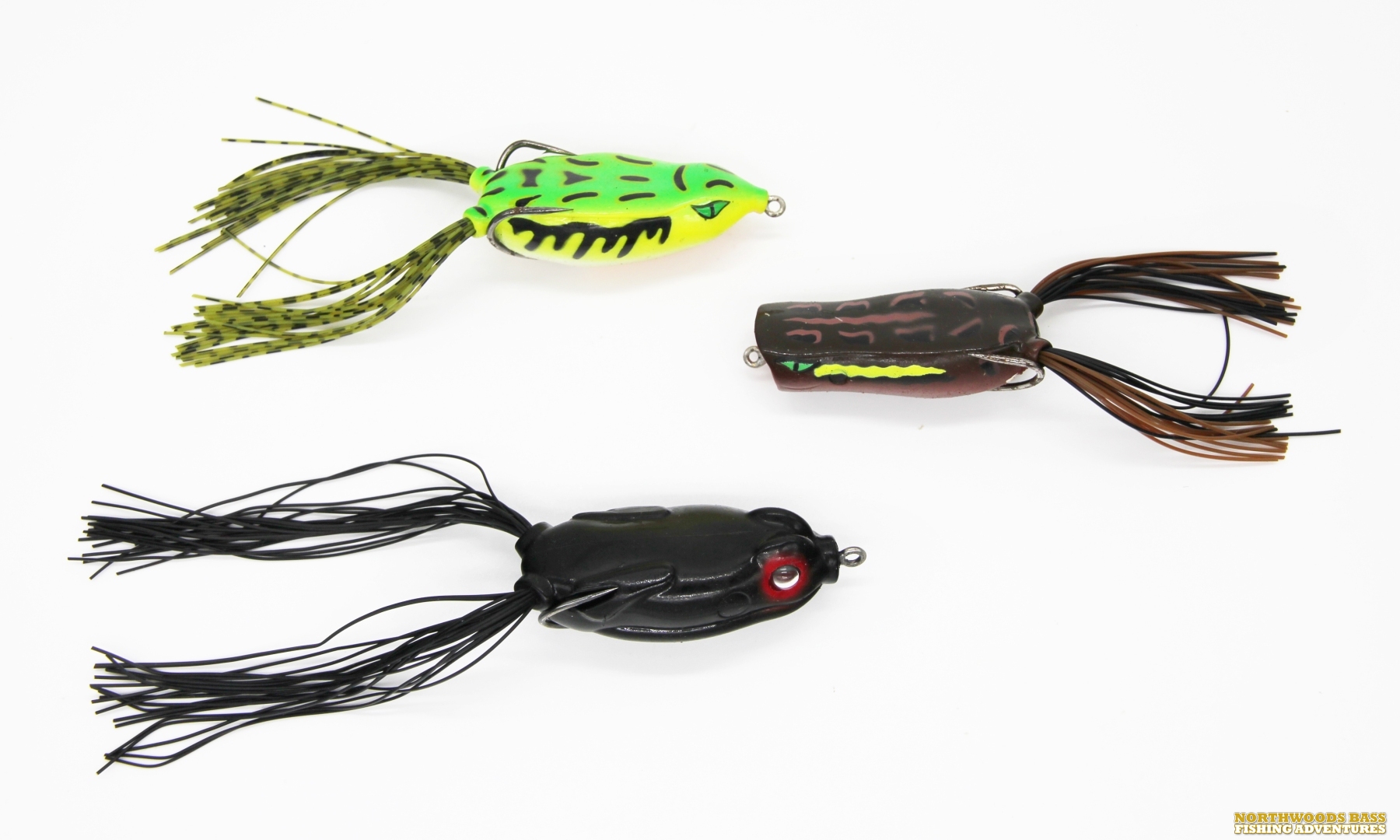
Popper frogs are worked through pockets and openings, and along the edges. They also walk-the-dog nicely. Swimming frogs are crawled atop pads and over everywhere.
Probing Strategies
Often, you’ll receive a lot of blow-ups that don’t result in hook-ups. For those times and other situations in which bass are positioning along the edges or open pockets, I’ll turn to probing strategies with an assortment of lizards, creatures, and punch rigs. These strategies require very specialized tackle, and a whole lot of patience for bites.
Punching is an art. It requires attention to detail and being able to identify pockets that’ll be accepting of your flip.
For punch rigs, go heavy. Think ¾-ounce and 1-ounce tungsten weights. As you move along and seek the openings, continue dropping and slithering the rigs through.
Several creature-styled and flipping-inspired plastics will work. My favorites for punching are Z-Man Hella Crawz, Missile Baits D-Bombs in black neon and super bug, 4-inch Bizz Baits Bizz Bugs in bama bug, Strike King Rage Bugs, and 4.25 YUM Wooly Bugs. Rig each to a Trokar TK133 Pro-V Flipping hook. Dark, well-contrasting colors are recommended.
Often, you cannot beat the subtle simplicity of delivering a flipping tube. I continue to be amazed by their durability and minimalism. In slop, a tube can represent a crayfish or a bluegill. Rigged instead with a Trokar TK190 (3/0) tournament tube hook, I love running through my old supply of YUM Mega Tubes, Stankx Bait Co. DD tubes, and Strike King Flipping Tubes. The package is insanely weedless.
When the fish want more, consider lizards and brush hog baits. They can be rigged to the punch rig as well, but I actually favor fishing them Texas Rigged, weightless. I’ve recently discovered a great one with greasy, salt-infused Pro Tour Baits 6-inch Brush Pigs. I also love buzzing and walking my retro 6-inch Gambler Bacon Rinds across the surface.
In most instances, a spinning set-up will be severely under-powered, but you can also pitch weightless Kalin’s Wac-O-Worms along the deep edges and through the openings to score lots of fish.
Last, hefty jigs with pointed heads can penetrate through slop, but their guards can be prone to fouling quickly where eel grass is in play. In some situations, I turn to Freedom Tackle Corp’s. FT structure jigs and flipping jigs in ½-ounce and ¾-ounce sizes. Pair with your favorite trailer or creature bait in matching colors.
Choose the longest and heaviest rod you’re comfortable handling. Long rods have more line pickup and better leverage. For each of these methods, I recommend heavy-moderate-fast 7-and a half to 8-foot rods. At minimum, St. Croix Rods Victory Flip’n (VTC73HMF) and Full Contact (VTC74HF) can handle most of these applications and the spots I fish. For additional beef, consider the Legend Tournament Flip’N (LTBC76HMF) and Power Flip’N (LTBC711HMF). Line weight should remain the same – 50-pound Cortland Master Braid or Silent Flip deployed on a high-speed reel.
Frogging and punching the slop are top trophy producing summer largemouth strategies. They can both help you select for specimens, with average fish sizes running potentially large.
Probing Strategies
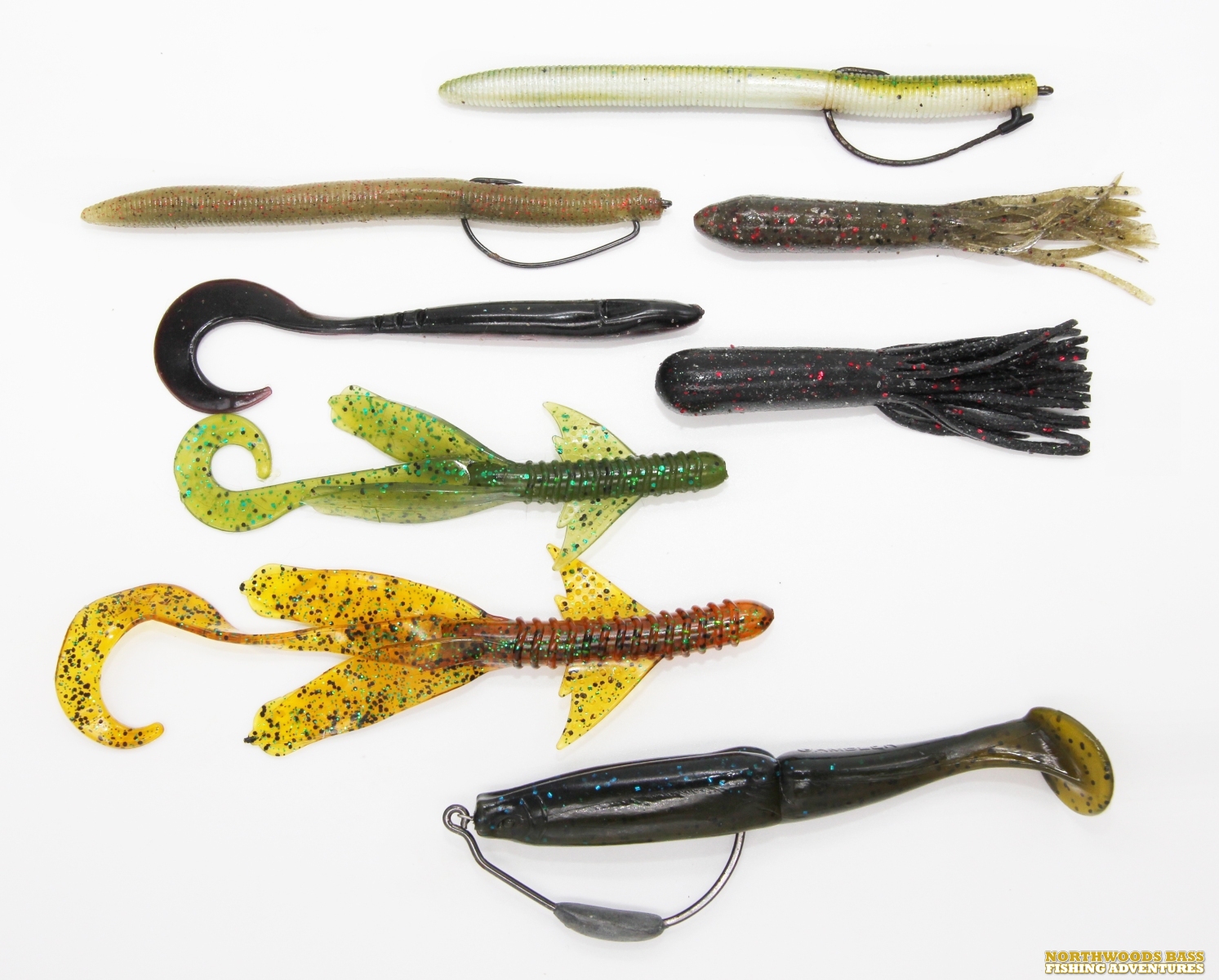
Often, you’ll receive a lot of blow-ups that don’t result in hook-ups. For those times and other situations in which bass are positioning along the edges or open pockets, I’ll turn to probing strategies with an assortment of lizards, creatures, and punch rigs.
Big Bass Beware
Plain and simple – largemouths are in slop areas to feed. Key locations always revolve around edges and open pockets, but also look for depth, holes, shaded areas, and transition areas between different plant species.
Avoid fishing these shallow regions on windy days, as wind stirs up these areas. Not only does wind greatly reduce underwater visibility, it can make them unfishable due to difficult boat placement and control. Strive to fish these lake regions under calm conditions for best boat control and fishing coverage.
Based on my personal experience, low-light conditions, some cloud cover, and high pre-frontal humidity can greatly help trigger the best surface and feeding activity. Cold fronts and wind kill the strategy.
Work through the slop slowly and thoroughly. Don’t get discouraged over plants and surface algae fouling your line and baits every-other cast – it’s all part of the process. Remember to always feel the weight of a lunker first, before setting the hooks completely.
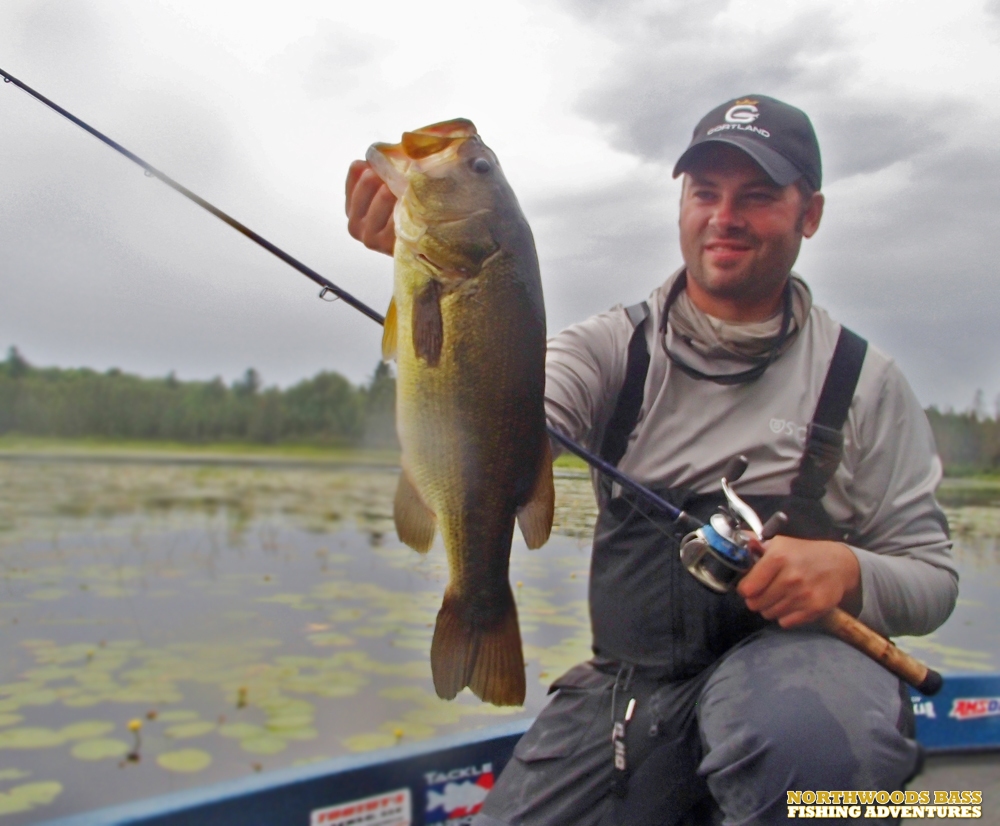
Andrew Ragas splits time between the Chicago area and Wisconsin’s Northwoods. Based in Minocqua, WI, he specializes in trophy bass fishing and offers guided trips from May thru October. While big bass is the passion, he dabbles in multi-species as well. He may be visited online at www.northwoodsbass.com

What you can read next

Articles
 Lakes to Fish and Avoid During Fall TurnoverIt was a hot summer and thermoclines on deep lakes were noticeably ......
 Top Lures for the Early Fall TransitionLate August to early September annually represents the early fall ......
 Fishing Algae Bloom LakesClear in spring and green by late summer, algae blooms are an ......
 Smallmouth Grind-OutsThere’s a great chance that every fishing guide out there has a ......
 Inside Edge LargemouthsLargemouths love edges, and the most desirable fish I catch during ......
 Northern Water Snake PatternsOpportunistic predators with voracious appetites, largemouth bass ......
 Dark Water SmallmouthsWhen thinking about the prototypical and perfect Northwoods ......
 Locating Rip Rap Shorelines on FlowagesWith the local flowages down several feet, use this current drought ......
 Fish CatchersSmallmouth bass fishing has changed immensely over the past decade. ......
 Minimalist Smallmouth Fishing with St. Croix RodsIf you want to catch more fish and learn to be efficient, ......