Threats to Northern Smallmouth Fisheries

The fish aren’t biting like they used to.
And if you also feel like smallmouth fishing has gotten progressively worse over the last couple of years, those thoughts might now be valid.
Fisheries are cyclical. They peak and decline in response to man’s interference and biologic changes beyond our control.
Over my last 25 years of intense smallmouth fishing and 10 as a guide, I’ve watched many different waterbodies change and evolve in the last quarter century – some for the better and most for the worse. This is 1 generation, and that’s also how long it takes for smallmouths to grow into 20-inch trophies. And if their fisheries haven’t changed much in terms of fish population numbers and their size structure, the behavior of trophy smallmouths has changed more than anything else.
My last 10 years of guiding have made me wonder what has happened to some of our prestigious smallmouth bass fisheries.
But first, let me give you an overview of everything that created the fisheries we have today.
History of Wisconsin Smallmouth Fisheries
The rise of Wisconsin’s smallmouth fisheries is historical. Our state is the perfect case study of this examination.
Wisconsin smallmouth fisheries have evolved from a largely overlooked, native, or early introduced species into a premier, world-class destination. Modern management, including mandatory spring catch-and-release seasons established in the mid-1980s, has been able to help create and support the trophy fisheries that we have today.
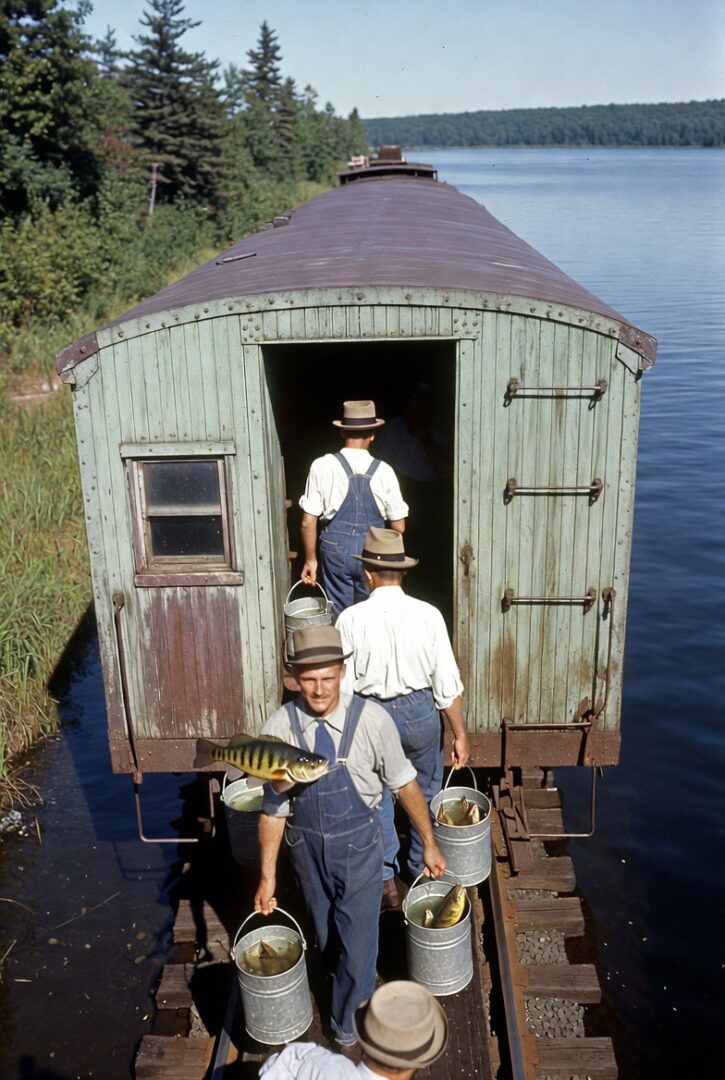
While only native to some lakes, smallmouths were often introduced to new waters throughout the first half of the 20th century by way of private illegal stockings and the railroad method. By the 1950’s and 60’s, smallmouth fisheries were becoming largely affected by industrial pollutants that decimated local populations. And if not depleted totally by pollution, those fisheries were getting cleaned out by man as there was little regard for catch and release and conservation as most fisheries struggled to produce fish to 12-inches length. Help was on the way, however. The passage of the Clean Water Act in the 1970s was a turning point for our nation’s lakes and rivers and the beginning. As water quality improved, smallmouth fisheries saw a massive resurgence.
While smallmouth fisheries and populations were significantly lower throughout the 1970’s and 1980’s when other gamefish species and their populations were larger and healthier, more help was on the way. The arrival of aquatic invasive species such as rusty crayfish provided a high-fat diet that boosted smallmouth sizes and growth rates to historic levels.
This quickly necessitated the need for smallmouth expansion, stocking considerations into new waters, and swift protection.
For more than half a century, smallmouth bass were not stocked by the state anywhere in northern Wisconsin. On rusty crayfish infestation lakes, the DNR instituted more stringent regulations to help protect the largest, most prolific predators. These changes led to increased rusty crayfish predation. On lakes with a trophy smallmouth component available, an 18-1 (minimum length – daily bag limit) was implemented to help maintain their lower density fish populations and lead the way in crayfish reduction efforts. As a result, these protected fish kept eating and growing 24/7. Lakes began to produce more 5-pound specimens with regularity. The regulations were also protecting these fish from most angling harvest.
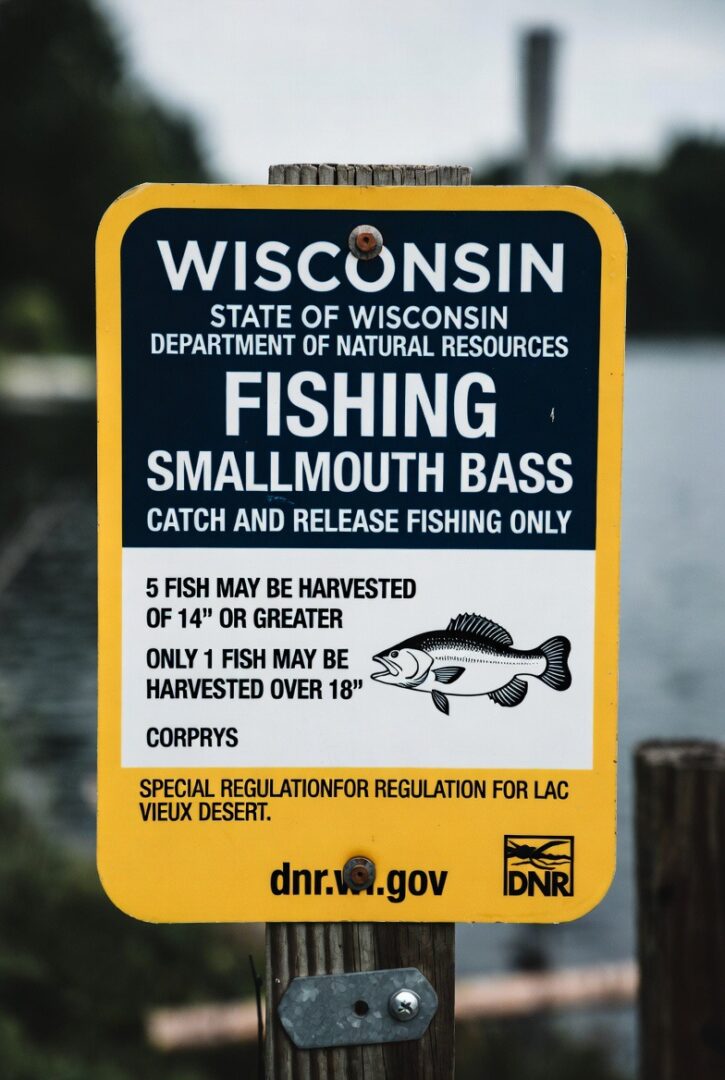 The smallmouth boom on inland lakes led to further protection with the installation of spring catch and release seasons and the implementation of Wisconsin’s original black bass management plan (originally drafted in 1994 and enacted in 1999). The Management plan served historic for installing standardized length limits, creating a template for trophy fish creation and lake management, and stricter northern zone regulations to maintain quality over quantity.
But in the 1990’s, smallmouth fisheries and angling interests were only a small fraction of what they are now. They were not a popular sport fish to the general fishing public either. This decade also marked the beginning of the decline of walleye fishing on inland lakes, and I took notice of it early on, gave up, and proudly became a smallmouth angler.
By the 2000’s, angler opinions were changing. Smallmouths became viewed as quality sport fish rather than a meal. Combining this with the fact that bass would provide a potential biological control of rusty crayfish made high size limits and lower bag limits attractive, when previously they were not.
More than 20 years have passed since the Black Bass Management Plan took effect, and it grew fish and fisheries to what they are now. It took 20 years for smallmouths to grow into 20 inchers. At some point each of these fisheries peaked, and we are now past peak.
For the last 25 years, angler effort targeted at smallmouth bass has increased ten-fold since the year 2000 and that number has more than quadrupled since 2015. Since Covid 2020 and the clusterfuck that season was, those numbers might have increased by more than 100%. Bed fishing, tournament fishing increase, and social media influence and exploitation are largely to blame for this spike in trophy fish interest and any potential declines.
Fisheries peak and are plateauing, now with too much fishing effort affecting smallmouth catchability. Here’s an uncensored take on what has happened, and why our big fish are becoming harder to catch and what this means for the future upkeep of smallmouth fisheries.
Fish Get Smarter as They Get Older
Smallmouths don’t have sophisticated brains like us, but what they do possess are highly functioning sensory organs, memory retention, and some ability to learn from past mistakes and experiences.
20-inch smallmouths are wise creatures that have been around the block several times before. In many of our best waters, some of these fish are caught and released multiple times throughout a single season – they are that pressured now. Conditioning to lures and locations, overhandling, coupled with angling pressure by fishermen and today’s modern methods and highly sophisticated marine electronics are largely to blame for this decline.
Northern Wisconsin smallmouths have proven to live far longer than anywhere else in North America. Fisheries surveys and sampling data have accurately calculated that the oldest smallmouth bass on record have an estimated age of 25 to 28 years old like my biggest ever. That specimen was named “Mrs. Big” by Vilas County fisheries chief, Steve Gilbert, who aged her through a left pectoral fin clip sampling in 2009, measuring at 21.5 inches and weighing 5.7 pounds. 8 years later, I caught her twice, 10 months apart, between the 2017 and 2018 seasons when she measured 22-inches and 7.5 pounds at her heaviest. “That fish was probably 20+ years old then, now add 8 years. Pretty cool,” remarked Gilbert in September 2017, after asking him for an ID.

With that kind of age comes lots of experience and lure rejections. Smallmouths remember how they strike baits – namely ones with treble hooks. Suspending jerkbaits like the X-Rap 08, once at the pinnacle of the smallmouth world, are now getting ignored by fish every spring.
Smallmouths also have a memory. Perhaps they’ve had a terrible time making it into the boat because the angler exhausted her. Or the angler used a shitty nylon net instead of a rubber one, the industry standard, so she got massively tangled or injured at worst, and also flopped around on the boat floor. Painful memories, big smallmouths remember.
Smallmouths remember these experiences, have a memory, and retain some information at least. As they condition, they become more cautious of their surroundings and feed more tentatively and less frequently. Catch rates decline.
Survival instincts kick in. Can you blame smallmouths for refusing to strike lures altogether?
The Increase in Fishing Pressure
In the last decade, smallmouth fishing has exploded in popularity, likely supercharged by the internet and its many influencers – TV shows, celebrities, tournaments, and fishing guides including me. I am guilty as hell for bringing some additional fishing pressure to the lakes, but we aren’t harvesting or killing fish, and what we do educationally and instructionally with other conservation-minded anglers isn’t anything like TV shows and social media have done. And because of this, there are more boats on the water, more kayak fishermen, and more anglers participating in smallmouth fishing than ever before. Including the advanced equipment, technology – live sonar, and social media where hot bites get shared instantly, our fish are no longer getting any breaks. The same lakes and spots get pounded daily, weekly, or seasonally.

Thanks to fishing pressure, our catch rates have declined compared to our most recent excellent fishing seasons prior. Of course, you can get hot and have some resurgent years like we’ve just had in 2024 and 2025, but that requires having a guide’s schedule and most don’t have that luxury. And good fishing years come at random like this when everything aligns perfectly in creating ideal bites.
Up north, the weekend pressure is so intense on May and June weekends that I almost don’t want to fish altogether on weekends of peak seasons anymore. To understand the level of fishing pressure, all you need to do is see the northbound traffic and glitter rigs traveling north on 51 between Thursdays and Fridays. The number of boats coming into the region these days is unsustainable.
These last 5 spring seasons, we’ve run into an intense increase of angling pressure during May weekends. Every boat landing on the well-known lakes gets filled up with bass rigs. And if you decide to join them, you’ll be participating in an impromptu derby in which you’ll have a hard time finding available and unfished spots on the lake. Spring weekends are no longer worth it to me.
Tournaments and derbies have brought in a significant influx of fishing pressure in the last 10 years. The passing of 2004’s Wisconsin Act 249 required the DNR to establish a pilot program for culling, which allowed for increased tournament activity. Then Wisconsin legislation officially allowed bass culling on May 27, 2011 signed by Gov. Walker. This opened the doors to more tournaments and derbies on inland waters. Since then, the number of permitted sanctioned tournaments and independent permit-less derbies have skyrocketed. This became noticeable throughout the mid 2010’s when we’d run into popup derbies on local lakes. Today, the Minocqua chain hosts multiple bass derbies every summer weekend, and non-local clubs infiltrate the inland lakes to host their events.
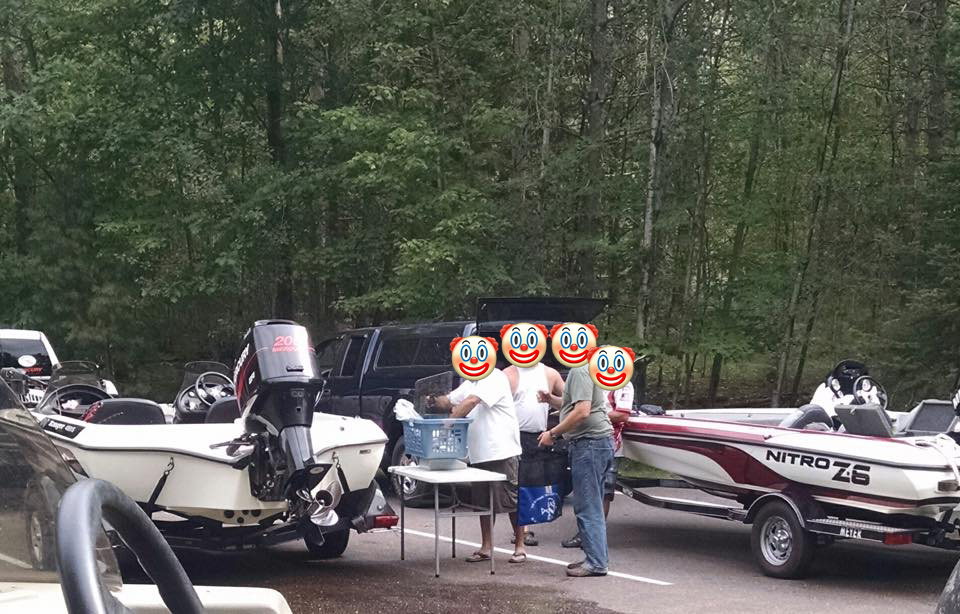
Some of these events (especially large and sophisticated ones) are ran quite well, while most of them don’t give two shits for the health and well-being of the fishery. The fisheries, and inland lakes especially, receive little or nothing in return out of these events as far as conservation efforts and payback funds are concerned. Organizers and participants will never admit publicly, but more released fish die from livewell captivity and post-release delayed mortality than any other cause. 90% or more of these fish will drop to the bottom of the lake while a small percentage will turn up as floaters. Hot summer months should be off limits for smallmouth tournaments and hosting on smallmouth fisheries. The decline of big smallmouths on some lakes in the last decade – notably Lake Tomahawk, Big Saint Germain, Squirrel, and the Lac du Flambeau Chain – is obvious.
And another major problem from derbies is displacement. Smallmouths leave the lake and never return to where they were caught from. The LDF chain is perfect case study of this. To launch a boat on the LDF chain now requires a permit from its two main boat landings. Derbies that would use the Fence Lake landing as launch site are now going out of the tiny DNR owned launch from Little Crawling Stone. All the smallmouths caught and livewelled from Fence and elsewhere on the chain are being released into a small 100-acre pond that connects to the rest of chain by a small, dredged channel. Hundreds of smallmouths have gotten displaced in this manner in the last 3 years. No way are these fish ever returning to original location of capture or the exact spots they came from. Displacement like this is a major problem on other large lake systems and chains too. I guide this chain 3x a week some months, and it is too bad most others fail to see this.
Tournaments and participation in them have increased dramatically, because according to the Wisconsin Department of Natural Resources (DNR), tournaments using the immediate release method rose from an average of six per year between 2010–2015 to more than 30 per year during 2015–2020. Over the roughly 15 years prior to 2017, the total number of permitted tournaments in Wisconsin grew from just over 300 to more than 450 annually.
Personally, I am a huge fan of live release formats and events like the MLF positively demonstrates and we saw firsthand last September on the Minocqua chain. Livewelling events are outdated, antiquated, and selfish to the severe detriment and decline of inland lakes.
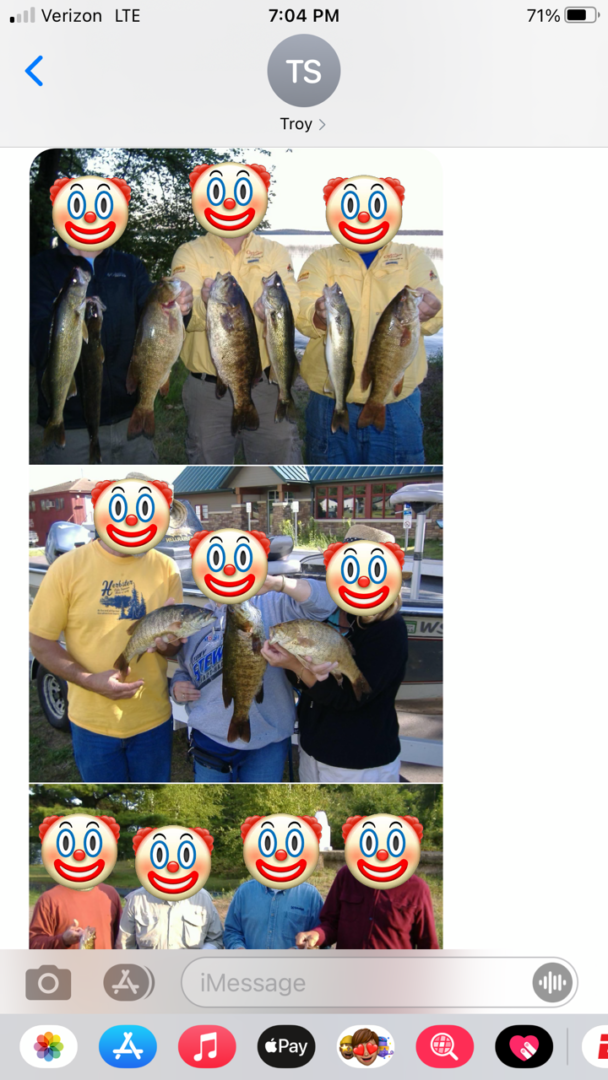
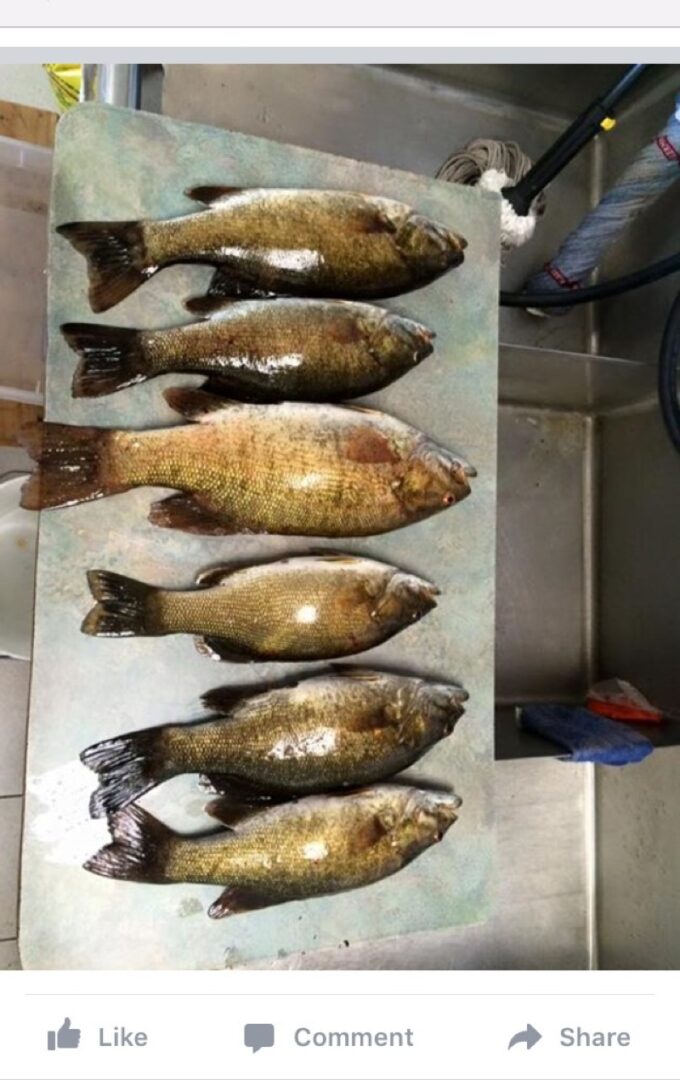
Guides – There are several more around now than since when I first started in 2015, and the pressure and consequences from introducing other anglers to specific waters has slightly contributed to lake exploitation and further smallmouth conditioning. What we do here is meager, and we are the first ever and only remaining exclusive bass fishing guide service to the region. On the other hand, multi-species guides have increased in even greater numbers, as have the volume of guided fishing trips in the region. I see guiding as a contributor to the decline of some fisheries only if purposeful neglectful smallmouth harvesting is occurring like these few images below depict, and if the clients camp and pound on those waters afterwards. Big picture wise, the ratio between guides to sport fishermen/food fishermen and the total number of smallmouth angling participants is extremely slim.

And here’s another example. I love using my burner account to monitor these types of guides.
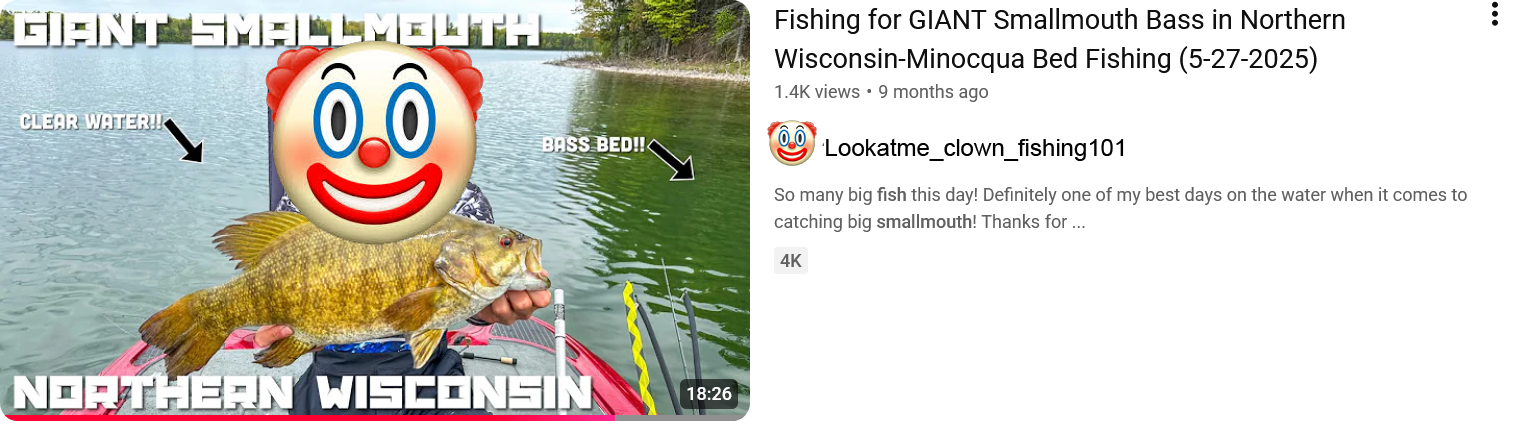
Bed fishing is also a serious problem. In the last decade many glitter rigs from out of state and elsewhere exclusively travel to this region to raid nests. These rigs are most commonly from southern states (Indiana, Missouri, Arkansas, Tennessee) where the practice of bed fishing is culture and more sustainable on massive southern reservoirs. The guiltiest participants of bed fishing openly advertise and share this information to their audiences on YouTube and Instagram – want names of them, message me privately. These anglers bed fish for the likes and negative attention they receive. Harvest seasons are closed largely due to this and thank God for catch and release season. No other spawning fish out there is as vulnerable like smallmouths are.
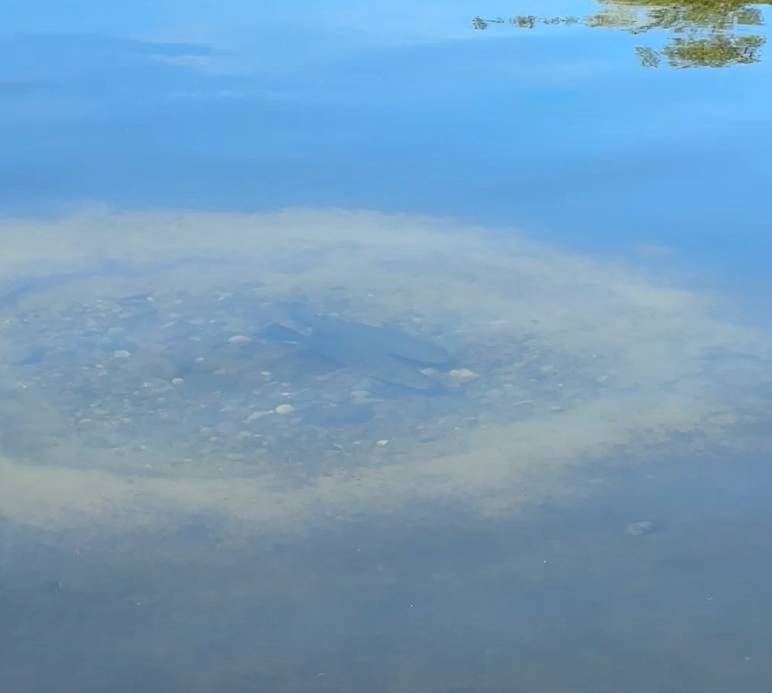
Bed fishing for smallmouth in Wisconsin has become a recognized issue due to intense angling pressure during the spring spawning season, particularly starting around Memorial Day lasting through the first weekends of June. This pressure on shallow, nesting fish, which are highly vulnerable, has led to concerns about population sustainability and prompted discussions on further regulation changes.
There are no redeeming qualities whatsoever in fishing for nesting northern range smallmouths in spring. Removing a fish from a nest does detriment to the future of that fishery. Up here, smallmouths may not spawn with high egg production and high recruitment every year. The more nesting fish get harassed, the less energy they accumulate, and they’re ultimately too tired to spawn.
Not only does targeting bedding bass affect individual fish, but it also totally changes their behavior and nesting locations in future years. This has led to concerns about declining numbers of 14- to 16-inch fish and, in some cases, a decline in overall population in specific Wisconsin waters. These fish are also adapting to nest in deeper water, 8 to 12 feet, as a survival tactic. Less egg production, a much longer spawn period, and a less successful fry hatch are the result of this. Green Bay and Sturgeon Bay might be the conversation starters in new emergency regulations changes for spring seasons to come.
If I had to guess, about 80% of the fish we catch during the first week of June have each been caught 1 to 5 times prior already since ice out. They have hook marks everywhere!
And we also catch lots of males and females with half-missing jaws, and in just the worst bodily condition imaginable.
During the spawning phase, we are even finding dead males that have been gut hooked because of nest raiders. How is this ever possible? Some anglers who take joy in plucking bass off beds like this have serious disorders.
Whether or not smallmouth fisheries are harmed during spawn is going to be related to the amount of pressure a lake receives per day. It requires a certain number of anglers impacting the fishery at any single time to impart risk. Anglers need to self-police themselves during this most critical and vulnerable time of the year.
In my 10 years of guiding, I have turned away a countless number of bed fishing trip requests, and we’ve refrained from ever being tempted to play bozo buckets.
And the Boat Traffic is God Awful These Days
Wisconsin has a lake life problem right now, and it is magnified on busy weekends and during the summer tourist season when lake homeowners flock to their properties.
Everyone on every lake owns a boat nowadays. And whether you operate a jet ski, pontoon, speed boat, fishing boat, or wake boat, we are all disrupting the aquatic ecosystem together.
Which is why I began to hate guiding on summer weekends.
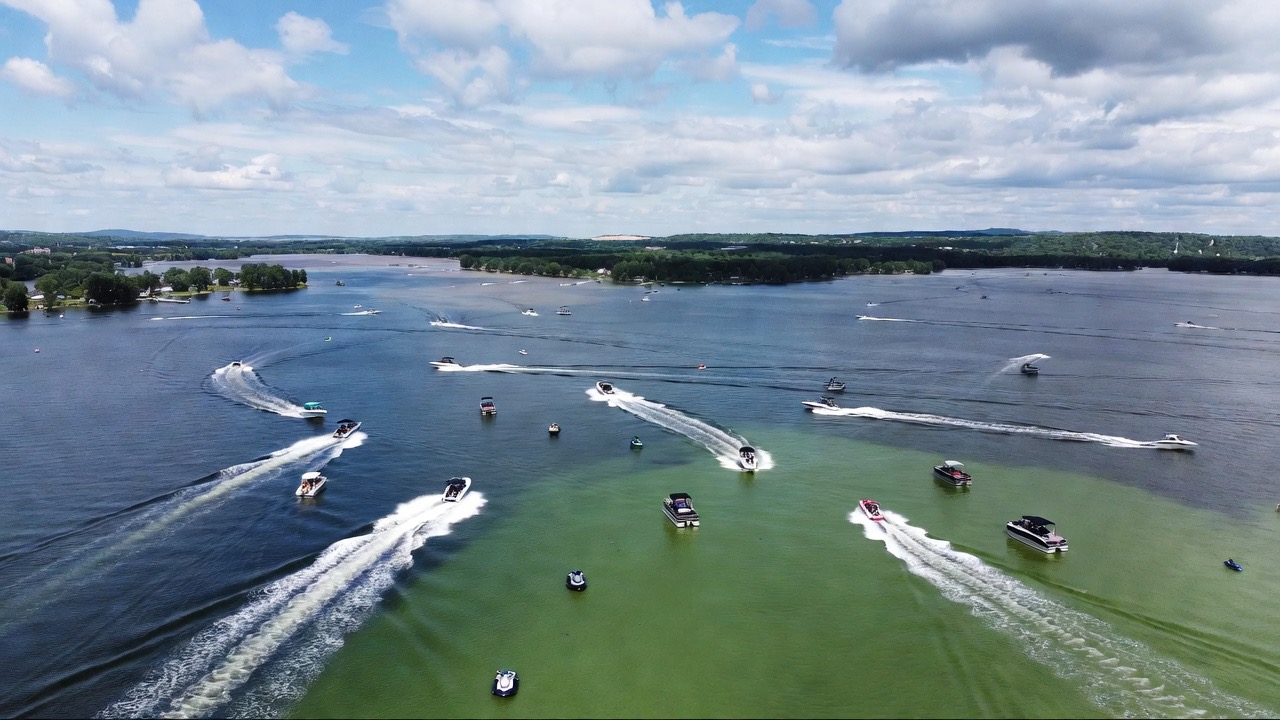
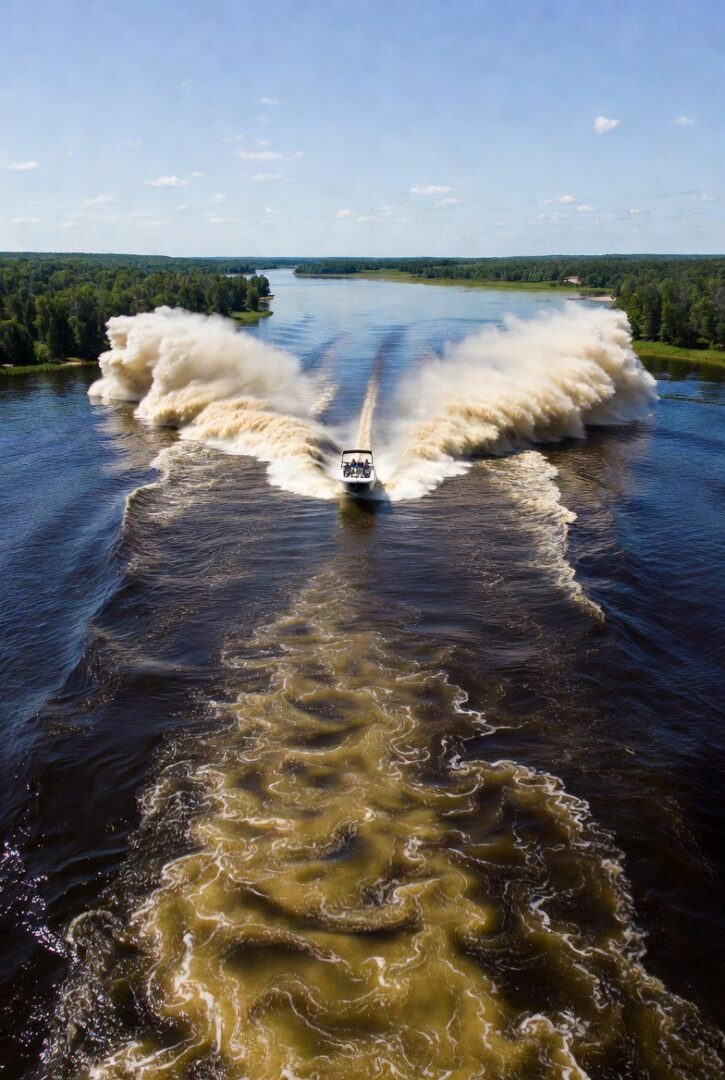
In recent years, wake boats have become problematic on inland lakes because they create massive, high energy, artificial waves that utilize a downward propulsion into the lakebed. This not only destroys and churns up the lakebed, but these same waves also cause destruction to the lake’s littoral zone, shorelines, and damage to other hulls and boats operating on the same lake. A few summers ago, my Ranger nearly took on water and capsized because of a wake boat and operators who cut us off.
These monster trucks are designed and built for oceans and massive waters with depth, not small inland lakes.
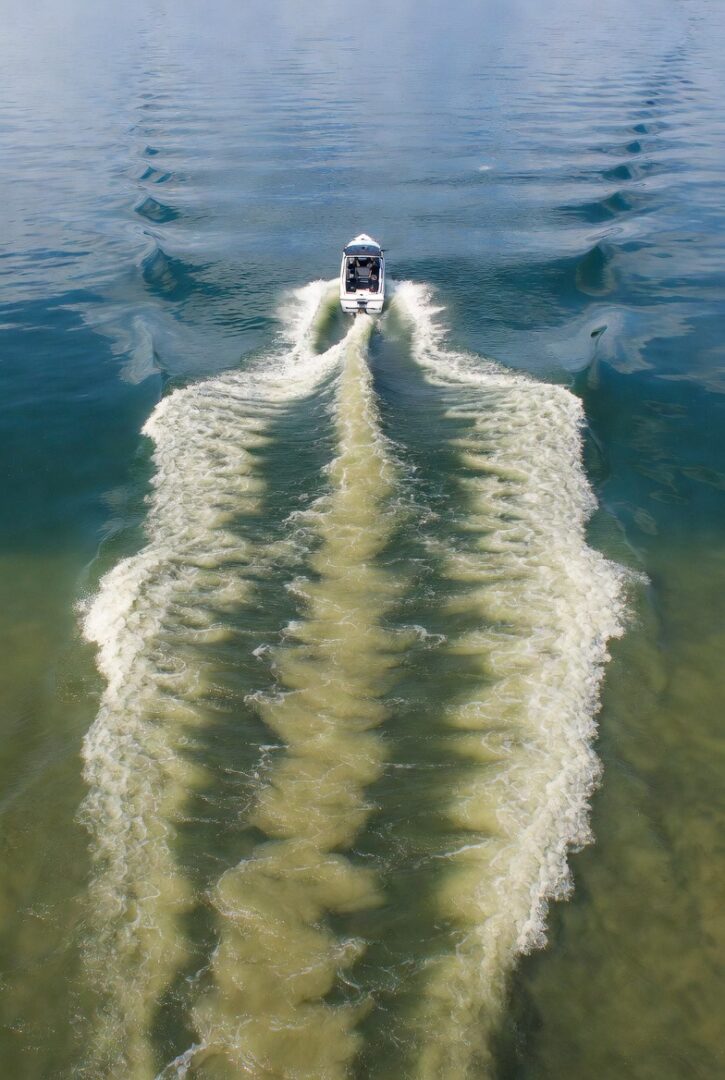
While Wisconsin is also paranoid about and very late to the prevention of aquatic invasive species, these same boats have a high capacity to spread invasives through their ballast tanks! How hypocritical of the state and its agencies to be allowing these machines onto inland waters when there are AIS inspectors at most public landings.
So, how do wake boats and heavy marine traffic affect our smallmouth fisheries?
They degrade habitats and turn pristine clarity and lake bottoms into a turbid silted in mess. Your clear smallmouth lakes will eventually start to look like how Big Cedar Lake looks – or like murky southern reservoirs do.
From a selfish fishing and lake lover standpoint, wakeboats should be banned on every inland lake. They ruin the lake for all other recreational activities when they’re on the lake. One cannot safely swim or kayak when they’re around. The prop is pointed downward into the lake ruining the bottom. If they go to different lakes their ballast will transport and introduce invasive species to other lakes (the hypocrisy!).
And another problem – wakeboat owners are wealthy, and money talks. But only 4% of all annual boat sales in Wisconsin are for these vessels. The percentile of stakeholders here is very meager against all other recreational users. Many of these wake boats also come from out of state. I see several coming up from Illinois throughout my frequent weekly travels down 51 and 41.
As of early 2026, Wisconsin still lacks comprehensive statewide legislation regulating wake boats, leading to a patchwork of over 300 local ordinances that restrict or ban enhanced wakes. While state lawmakers continue to debate competing proposals—some favoring a 200-foot setback and others a 500-foot, 20-foot depth restriction—no definitive, unified law has passed.
Due to the lack of state action, this has forced local municipalities to enact their own ordinances and restrictions. Enhanced wakes are outlawed on lakes within Harshaw, Newbold, Lake Tomahawk, Lac du Flambeau, Manitowish Waters, Presque Isle, and Lake Tomahawk.
Jet skis and pontoons, as annoying as they also are, have become acceptable and more tolerable thanks to wake boats.
The Prevalence of Exploitation
Just a decade ago, these lakes were getting at least 90% less pressure than they do now. Social media is largely to blame for smallmouth popularity.
Exploitation problems in smallmouth fishing have evolved from simple overharvesting to complex issues involving behavioral conditioning, high-intensity pressure on specific, vulnerable, and aging populations, and the consequences of social media.
Instagram anglers and influencers, independent YouTubers, TV shows, Facebook postings, Google maps and phone apps, fishing forums and specialty community websites have revealed far too much and successfully ruined several secret spots over the years. Oftentimes revealing far too much information and leading to too much angling pressure and human presence afterwards that these spots can healthily support. The negative impact on fisheries and the spot has become exponential and devastating to some that they may never recover.
For example, Jimmy Houston’s visit to Minocqua in September 2017 was not warmly received by locals once the word got out and the episodes aired. During that week long visit, local waters were fished and filmed. Then he headed further north up to Hurley. Shortly after airing his episodes on the Gile Flowage and showcasing every known landmark of the lake, I got calls and requests from people across the country to take them fishing to it the next season in 2018. Perfect example of fishery exploitation here with the Gile. Pre-Jimmy, 100 fish days were the norm out there. Post-Jimmy, you’d need a full day in June to accumulate just 30-40 fish. That place never returned to the same form again, and people aren’t going there anymore.
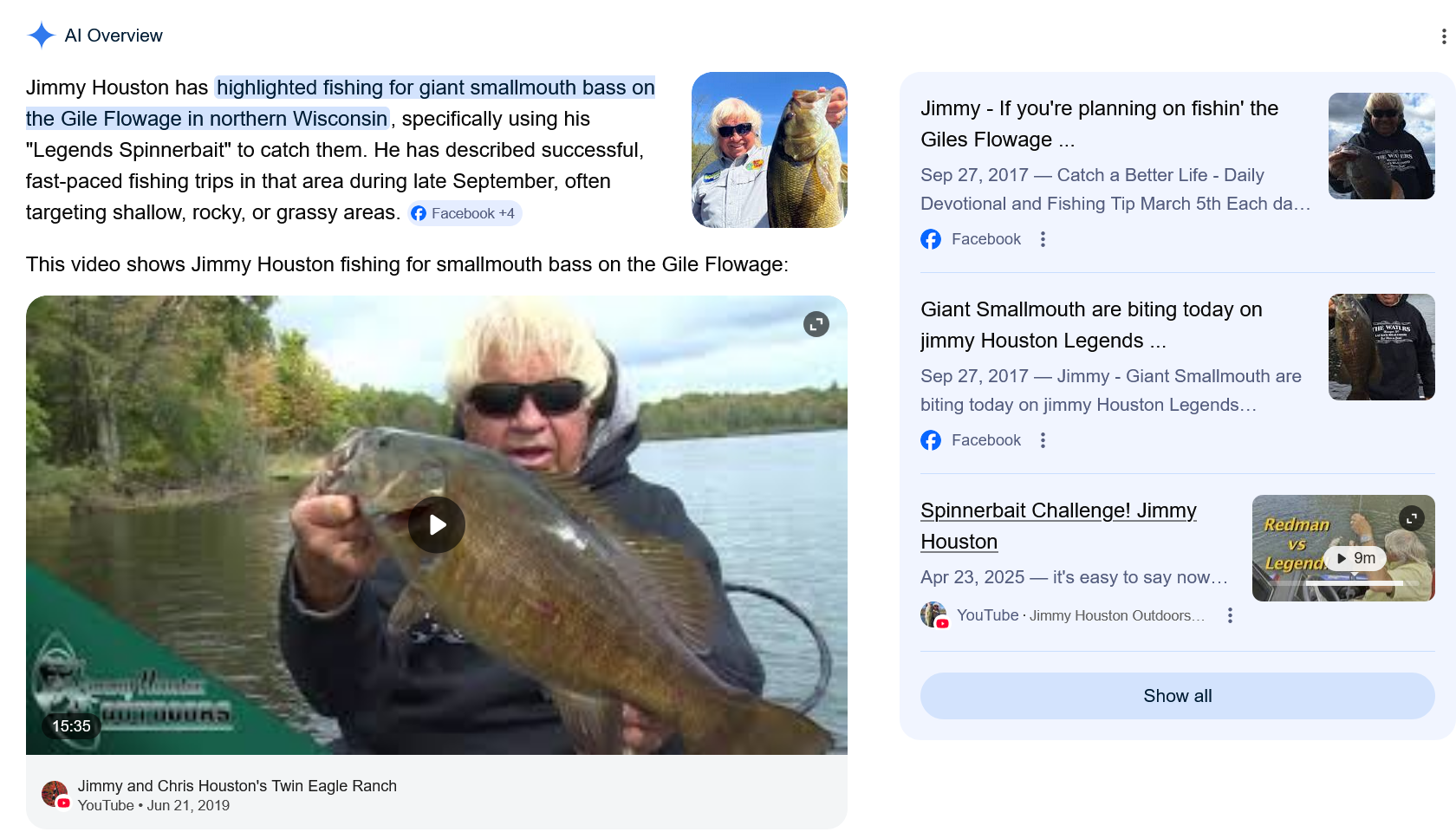
Influencers and social media driven anglers often reveal precise locations like Jimmy did, ruining secret spots and causing overcrowding. This is not the only television show program who’s done this.
Butternut Lake in Forest County is another case study. Over the past few decades, it’s been a frequently showcased fishery on several television shows and YouTube videos. The fishing pressure and number of visiting bass rigs is intense out there nowadays.
We all have several other smallmouth lakes or specific fishing spots that were much better prior to getting exploited on TV shows and YouTube.
Social media exploitation is such a problem nowadays that I mostly refrain from posting and sharing to my own Instagram and Facebook accounts. And if I do ever share, it’s not until a year or two later. I hate these apps so much. This also led me to stop creating video for YouTube which I did frequently during its early days (2007-2015).
Spot dissemination is commonplace throughout social media. Then it gets worse when posters showcase backgrounds and landmarks like boat landings, and geo-location tags. Facebook, YouTube, and Instagram allow for the rapid, widespread sharing of specific fishing spots, leading to excessive, localized fishing pressure at places that were previously remote or quiet locations.
How can we protect our secret spots? Maybe the answer is to quit posting about them and keeping these secrets to ourselves. But we can’t do that. All fishermen nowadays, especially the influencers, are fishing for likes and self-glorification on social media and then they must tag everything and everywhere.
Gone are the days of being the only boat on the water. Despite the number of quality inland smallmouth fisheries, so many other anglers have now found these fisheries too.
Why do people still harvest big fish in the 21st century?
Harvest is still a problem, and I know of several formerly good bass lakes whose big bass and impressive size structures got cleaned out. In the year-2025, one shouldn’t find death piles of filleted smallmouths discarded in the woods or at boat landings like we come across every summer. This is not the 1960’s and no matter what the fishing regulations have printed doesn’t mean those fish should have been harvested in the amounts that they were.
Watch this video before reading this segment further.
This year, the Wisconsin DNR is still promoting harvest like it’s the 1960’s and not modernizing and revising the regs to keep up with the times, social media antics, and technologies aboard every fishing boat.
These inland lakes are ponds in comparison to the Great Lakes fisheries and Southern reservoirs. The way our fisheries continue to be managed, and the droves of anglers flocking to them, is unsustainable and quite worrisome.
Old-timer guide services who fry up everything they catch, vacation home renters and tourists who don’t know any better, and resorts are huge contributors to the harvesting problems some of our lakes have. Not just for bass, but on all species.
In 2020, the COVID-19 pandemic triggered a historic outdoor boom and fishing pressure increase on Northwoods Wisconsin waters. Fishing pressure here skyrocketed overnight. While overall vehicle traffic at lake access points didn’t see a uniform statewide increase, pressure shifted toward specific well-known waters and hot spots. According to the DNR, lakes with public boat landings, campgrounds, and resorts saw a 103% increase in traffic compared to previous years. Additionally, that year, every single cabin and home on the water turned into a private resort occupied by weekly renters or work-from-home vacationers, triggering the AIRBNB and VRBO problems that persist to this day. This has contributed further to overharvesting.
The pandemic boom has now largely subsided, but the AIRBB and VRBO rentals have only increased…. And lakes most affected by these two events have been very slow to recover. Big St. Germain’s smallmouth fishery got decimated by resort visitors that summer.
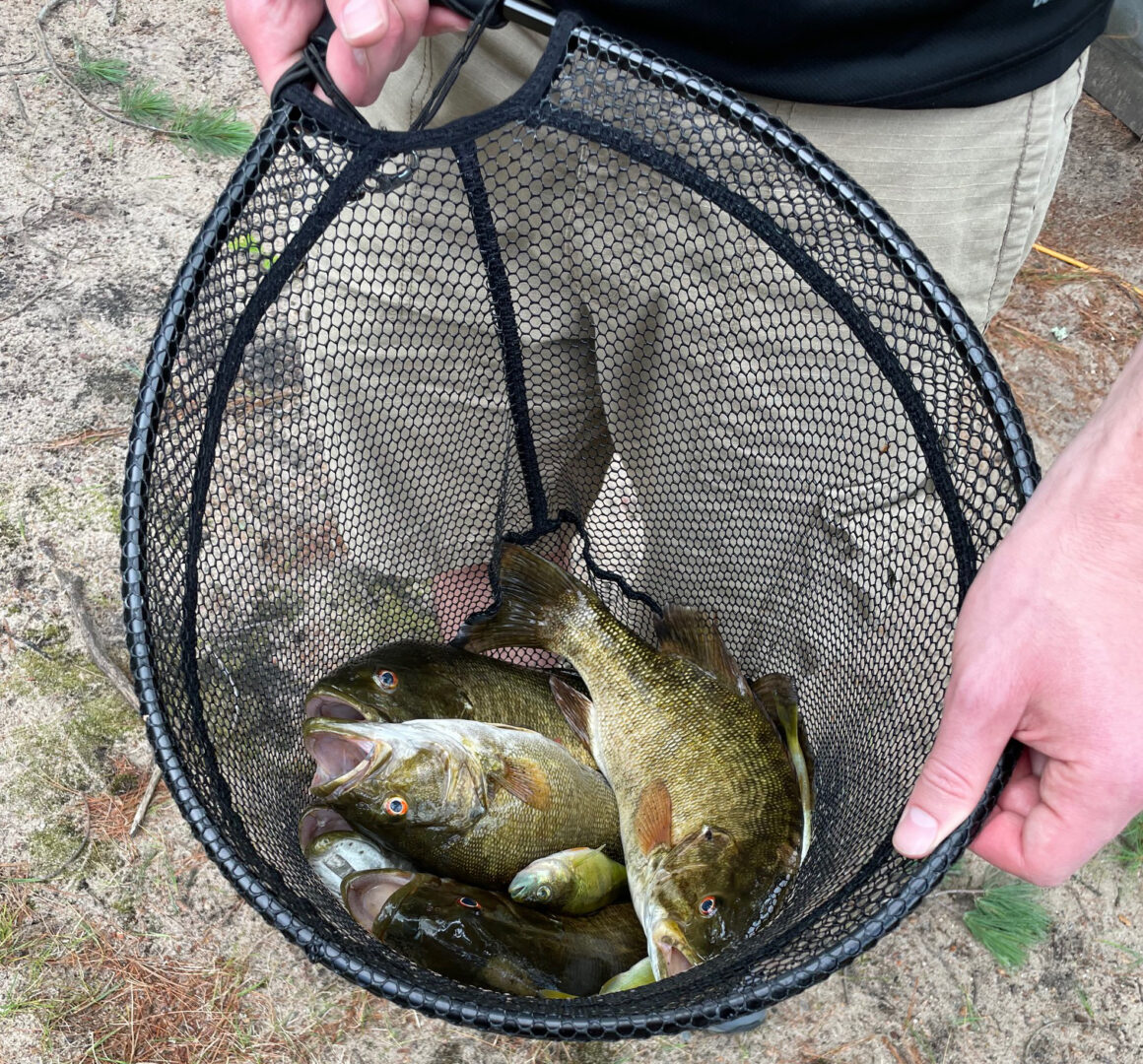
The 2020 surge in fishing pressure was substantial. Even with catch-and-release, so many fish of all species died that summer.
Recent creel surveys confirmed just how bad 2020-21 were on fish harvest. 18- and 19-inch adult female smallmouths should never be the average sizes harvested on most lakes. Shame on those people keeping these up and comer trophy fish!
These fish are more valuable to remain in the lake than getting hung on the wall, or getting excreted out into your septic systems.
The Big Fish That Grew and got Caught for 20 Years Have Died
And because of this, nowadays there are fewer 20 inchers around to catch.
While our inland lakes continue to be destination fisheries for inland smallmouths, anglers are noting that the giant 20-inch specimens are becoming harder to find in many lakes, me included. This downward trend is driven by a complex combination of biological competition, increased fishing pressure and fishing efficiency, and environmental shifts in which lakes and fisheries simply enter a cycle period.
As previously mentioned in this story, trophy smallmouth fisheries peaked maybe a decade ago – right before angling pressure began increasing, social media wasn’t yet the tool for spot hawking, and right as the rusty crayfish virus was ongoing. And with all the shit and nonsense we’ve seen and dealt with ever since we’ve reached a plateau or at worst a decline on some waters. What’s happened?
Irreplaceability.
Trophy smallmouths have age requirements. In the cool, cold waters of many Vilas County lakes, a 20-inch smallmouth can be 20 years old or more. These fish are effectively irreplaceable in the short term. If even a small percentage are removed from the system by harvest or mortality from repeated catches, it can take decades (or a generation) before a new class of giants ever replaces them.
The original herd of trophy smallmouths Wisconsin had produced from hard work through the Black Bass Management Plan have died out from old age, or the above causes of harvest and delayed mortality. This timeline aligns with the 1994-1999 period when the plan became established, and Wisconsin smallmouth fisheries began to reap the rewards and consequences from protected seasons. The 20-year mark was 2014 (my peak estimation), and 30-year mark would have been 2024. Except for my unicorn capture, very few smallmouths ever reach older than 25 years age. That means this fish would have hatched as a fry around 1990. I was only age-4 that year.
Right now, all the up and comer fish that are most plentiful on our lakes (16-to-19-inch sizes) have yet to fill the biomass and even fewer fish are replacing the ones who’ve died from old age or left the system by harvest or delayed mortality.
Monster smallmouths are declining due to a combination of intense fishing pressure, advanced technology, and environmental stressors. Increased angling, specifically targeting spawning fish and using sophisticated electronics, has educated or removed older, trophy-sized fish from most systems. Additionally, warming water temperatures have also increased the chance for delayed mortality post-capture and captivity, and stressed habitats. The most fish die in July and August.
Lakes and fisheries are cyclical in nature, and environmental and ecosystem shifts are ongoing. Whenever trophy bass get removed or leave the system, an overpopulation of smaller fish occurs.
Another example of these ecosystem shifts is when another gamefish species dominates the biomass, keeping bass numbers in check. The healthiest walleye fisheries remaining rear high quality trophy smallmouth fisheries too. Many former Northwoods walleye factories used to contain limited, but low-density trophy smallmouth fisheries. These walleye fisheries crashed in the 1990’s and 2000’s from a combination of poor spawning classes and overfishing / overharvesting. Best case studies are Katherine, Big Carr, the Minocqua Chain, and any other lake that now has an open harvest of smallmouths. The removal of several thousands of walleyes on these lakes led to the current overpopulation of bass these lakes now suffer with. High densities create intense competition for limited food, which stunts the population, preventing many fish from ever reaching the 20-inch trophy mark. These lakes are each to the point of no return.
In midst of ecosystem shifts, be observant of size structures. This will be an indicator of the current state of the fishery. If its smallmouths are robust and well built, it’s an indicator of a healthy well balanced smallmouth fishery. And if you’re a higher rate of 14-to-18-inch fish in which that is average size rather than small fish, the lake is in position for a great trophy future. If what you catch is the opposite and lesser, time to go find some new lakes. It can take several years for lakes to rebound and to manipulate fisheries into correcting themselves.
The Decline of Rusty Crayfish
I largely pin the decline of fisheries to forage changes. The ongoing slow depletion of ciscoes due to warming climates and waters, and the extermination of rusty crayfish are both worrisome. Many fisheries across the north are currently experiencing this problem.
While invasive species like round gobies initially caused a growth explosion across the Great Lakes, some biologists worry that over-reliance on a single forage source or shifts in the broader ecosystem like Wisconsin’s decline of native and invasive rusty crayfish may be stabilizing growth rates below the 20-inch threshold in certain lakes. An abundance of the right forage and multiple options leads to the best smallmouth growth and trophy production.
Rusty crayfish have traditionally been one of the most problematic pests in Wisconsin waters due to their difficulty in controlling. On some lakes, controlling methods were relied on trapping but required several hours of physical manpower. On others, letting nature run its course by allowing protected smallmouth bass to control their numbers proved more effective in the long run. Almost every Northwoods lake that had a rusty crayfish infestation went on to also produce a significant trophy smallmouth fishery.

Crayfish species have been intensely studied academically and now more recently by state agencies. However, none have ever examined what affect rusty crayfish had in creating trophy smallmouth fisheries and how their disappearance from lakes also affects smallmouth sizes. 20 years ago, the smallmouths residing in these lakes had an unlimited food supply.
Between 2010 to 2015, rusty crayfish populations in Wisconsin lakes began experiencing significant declines due to a presumed pathogen, a virus or fungus, in the Northern Highland lakes of Vilas County. Sampling collections and studies showed a 33-year trend indicating that rusty crayfish populations throughout northern Wisconsin began crashing simultaneously in many lakes, with the infestations on some lakes (Trout Lake) dropping to nearly zero.
This die-off has helped restore several native aquatic ecosystems that were previously eaten away by crayfish. But negatively, an integral food source permanently left the menu. While this is good news in every other aspect for lake health and rehabilitation, the demise of rusty crayfish across numerous inland lakes of Wisconsin has only now started showing a noticeable effect and correlation in smallmouth weights and body condition. Fish are a little less girthy now than they were a few years ago.
Best case study – Metonga Lake in Forest County. For several years the lake was loaded with rusty crayfish the size of prawns. In September 2024, I contacted biologist Greg Matzke with my concerns about the lake’s explosion in milfoil which is an indicator of the crayfish’s disappearance.
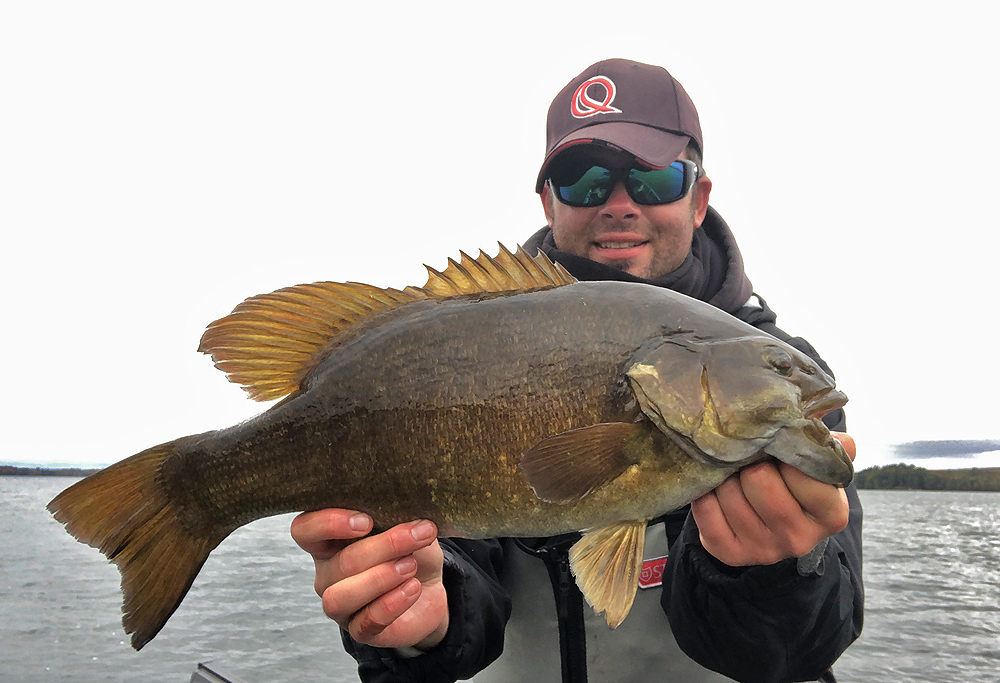
^ Metonga Smallmouth pre-crayfish virus in 2019.
“It is a special smallmouth fishery, and I have never seen one quite like it. I am a bit concerned because the crayfish population has crashed. About 3 years ago the crayfish population crashed, and we aren’t sure why. Crayfish tend to be what makes this lake go. I am glad the body condition of the fish in your pictures wasn’t bad, I was a little nervous that the SMB would start getting substantially skinnier (they have always been extremely robust),” Matzke shared.
In September and October 2025, we caught several smallmouths ranging from 20.5 to 22 inches in length and none of them ever came close to surpassing 5.5 pounds. In the lake’s heyday, these fish were routinely surpassing 6 or more and feeding a great percentage on exclusively crayfish. Today, this fishery is largely being fed by a very abundant yellow perch population that doesn’t quite contain the fat and grease like rusty crayfish did. Perch took off in this lake after game changing bullhead removals started in 2008, and it’s the finest inland perch fishery in the whole state.
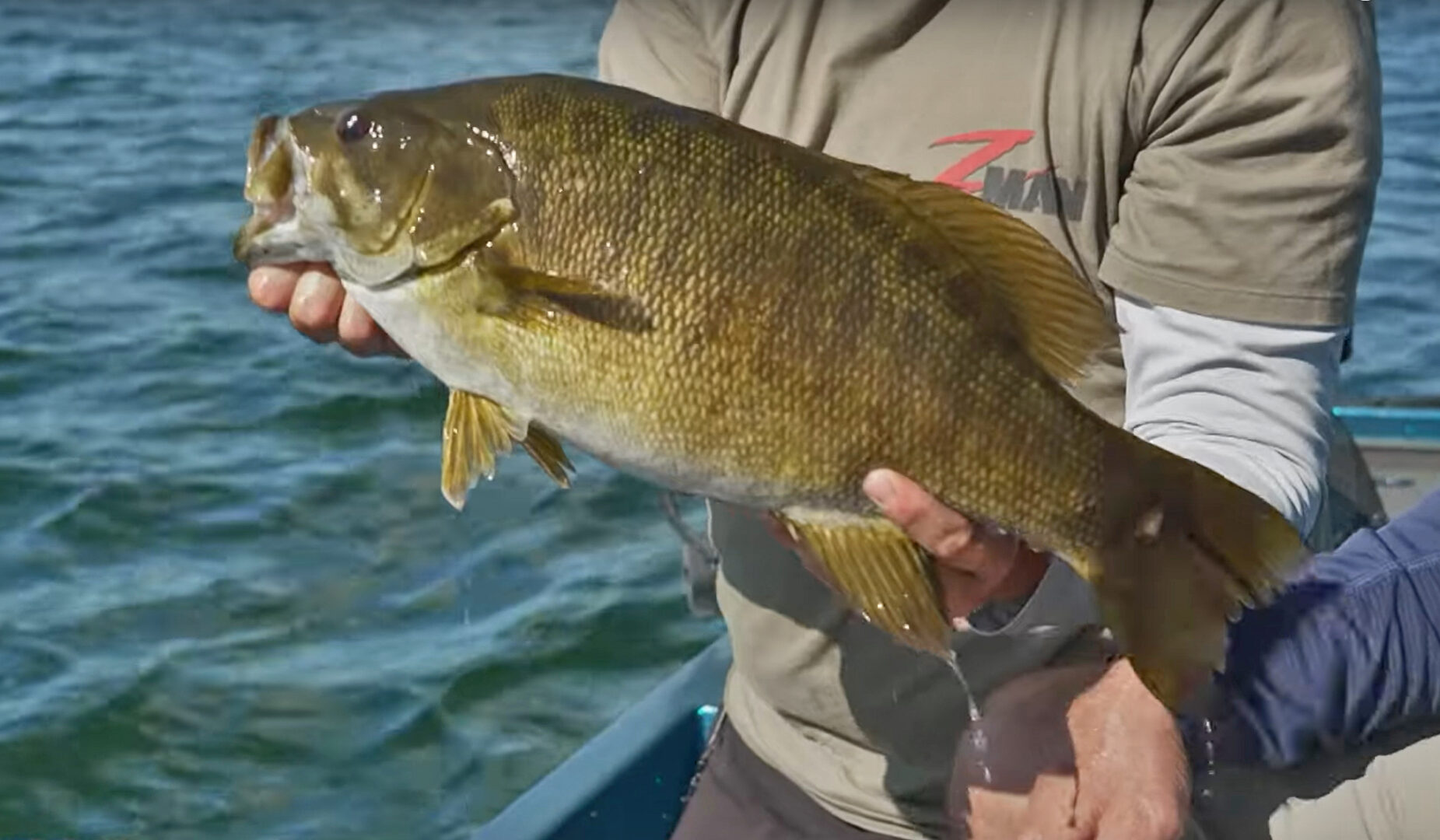
^ Metonga smallmouth as of 2025 – they run slimmer and are no longer rock oriented fish.
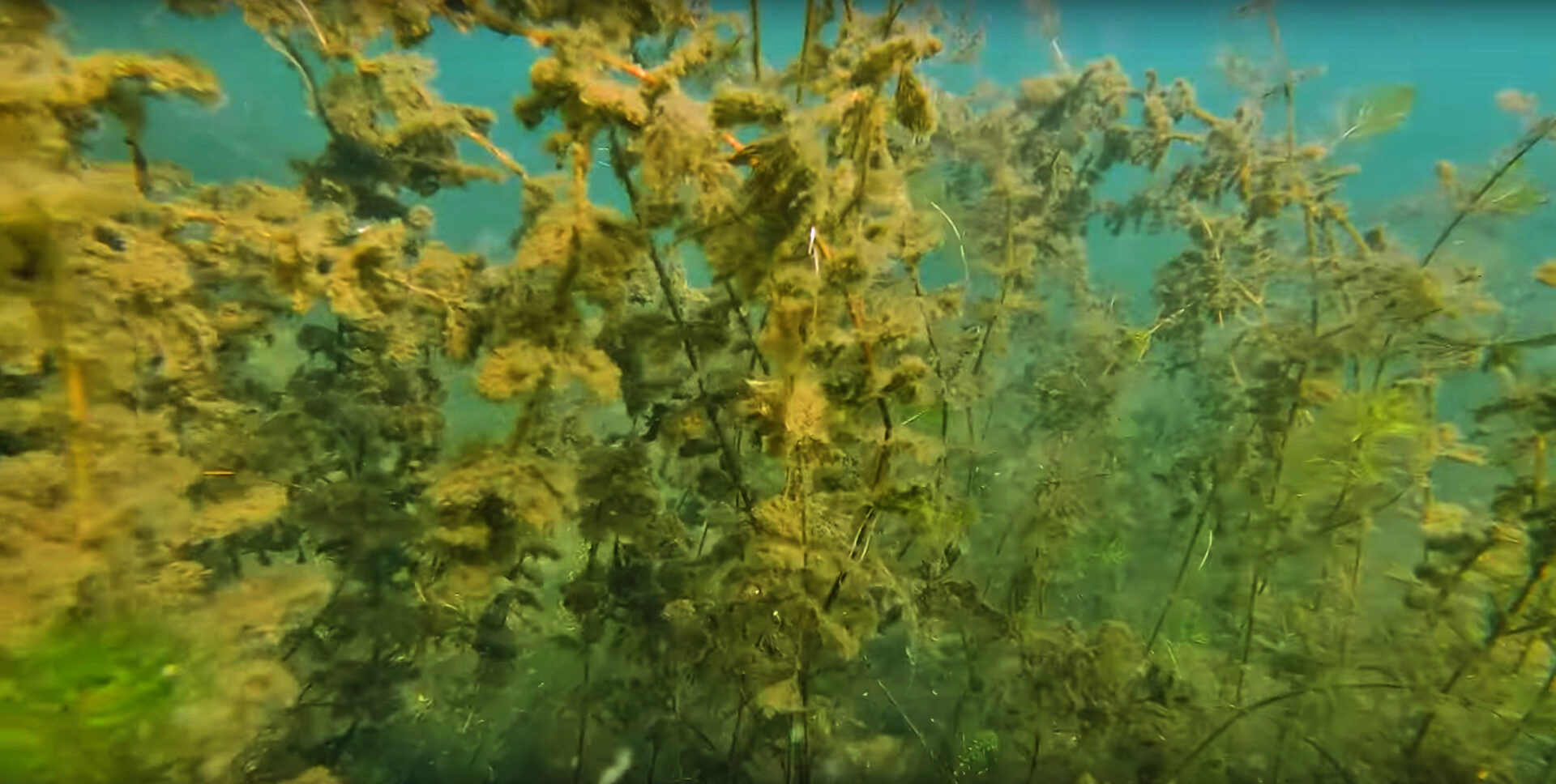
The crash not only took away an important food item from smallmouths, but it also led to lake’s current milfoil explosion. Many shallow bars and important spawning areas throughout the lake are now taken over my impenetrable milfoil. Smallmouths lost those important habitats too.
Biologists, lake managers, and anglers need to begin paying attention to this more. If trophy smallmouth fisheries and their size structures are reduced by lack of, or inadequate forage like Metonga Lake could be dealing with, we have a larger-scale problem.
Modern Day Technology and Fishing Methods
The popularity and increase of Forward-Facing Sonar (FFS) and high-powered electronics on every bass boat and serious fishing vessel has made once elusive and challenging to find offshore trophy smallmouths now more vulnerable to getting located in offshore deep and open water that was once their sanctuary. Now, these fish are being chased around lake basins by idlers and screen watchers.
Smallmouths across Wisconsin lakes are significantly affected by Forward-Facing Sonar (FFS) and other angling pressures because these technologies enable anglers to pinpoint and target fish in deeper, colder water, particularly during vulnerable pre-spawn and spawning periods. The ability to see and force-feed these fish, combined with increased pressure on bedding fish and deepwater extraction, has raised concerns regarding population sustainability, especially in clearer, deeper Wisconsin lakes.
The level of vulnerability resulting from FFS chasing and fishing methods is extremely high compared to the FFS infancy. During the summer months, smallmouths roam, suspend, or congregate in large groups in open water, offshore humps, and deep, clear water. FFS allows anglers to spot these schools or individual fish that were previously impossible to locate systematically.
The widespread use of FFS has meant that these fish are under constant pressure. As they are targeted more frequently, they grow further conditioned and disengaged, becoming more cautious and harder to catch, turning off to traditional, aggressive baits.
Smallmouths are experts in sensory detection. FFS confirms this further. Nowadays, more adult smallmouths are wary of overhead boat traffic and these high-powered sonars.
To the detriment of anglers, the high power 800 to 1200 kHz frequency of forward-facing sonar repels them away from boats. They’ve become elusive as a result, and why anglers now have to zoom out to 60 feet or greater. The first time I ever had my Lowrance Active Target 2 deployed I saw firsthand how smallmouth schools have learned to scatter away from deep humps. What I do instead now – turn it off. And I still catch fish well without it.
FFS enables anglers to locate and chase these fish to areas of the lake they’ve retreated into to escape pressure, a depth range that used to provide sanctuary. Smallmouths have nowhere to hide now.
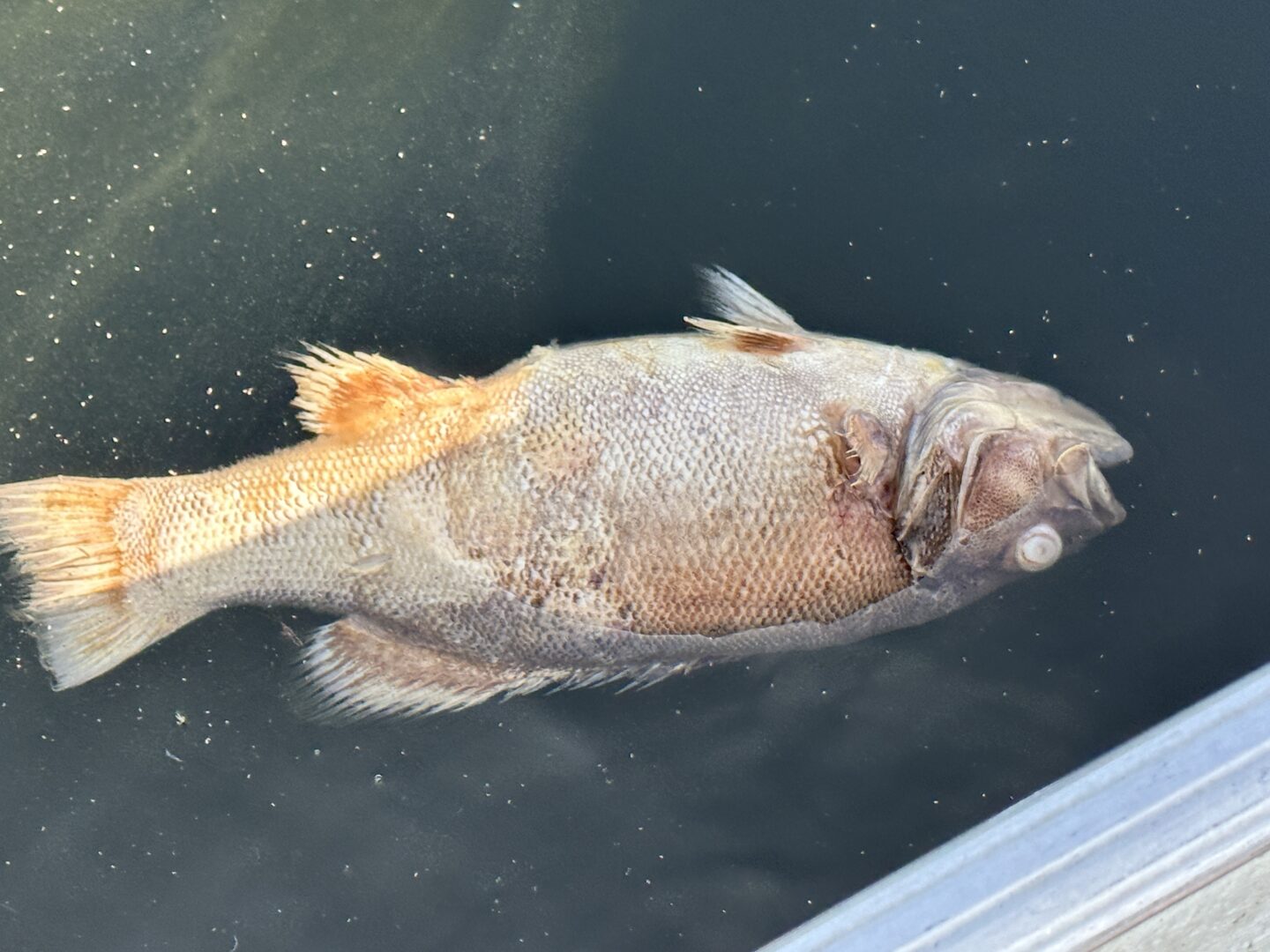
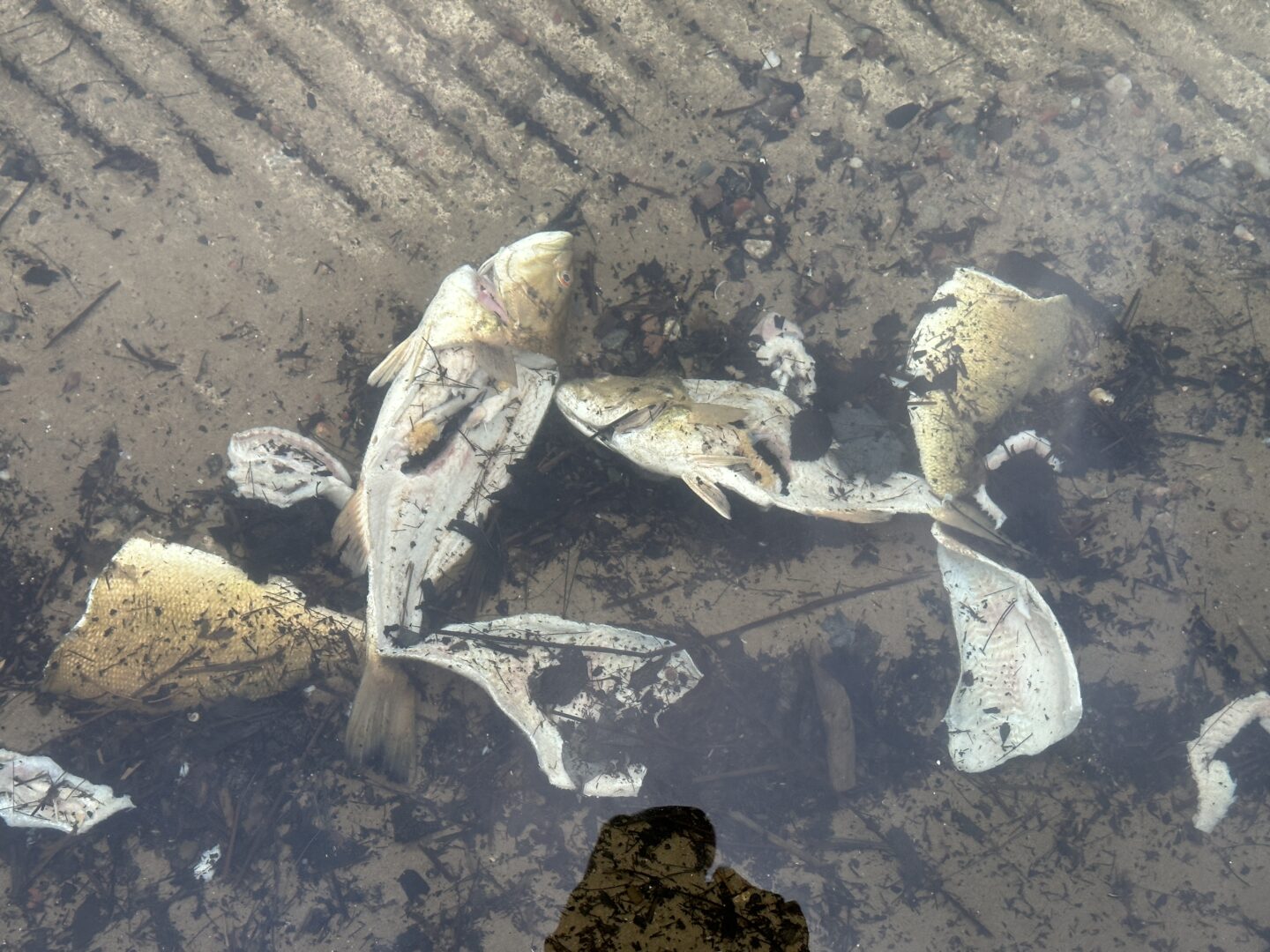
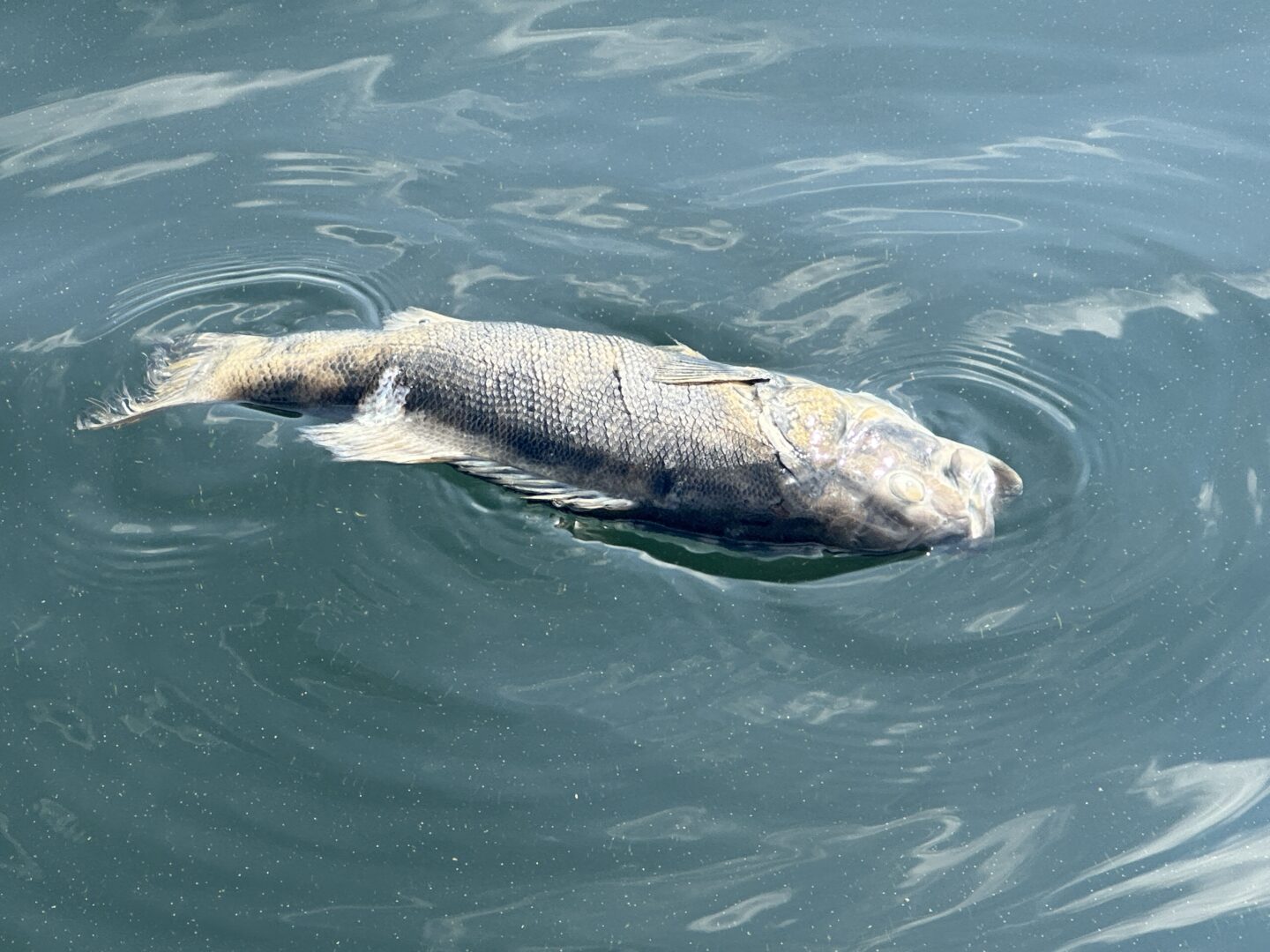
Floaters are more prevalent now than they were ever before. The dead smallmouth carcasses we find atop the lake surfaces in summer are a result of social media hero shots, livewelling, over handling, or mid-summer derbies. And of newest concerns, many of the floaters I find in the summer months can also be attributed to livescoping and chasing individual fish around the deep basins. Extracting a fish from 30 feet down where the lake’s water temperature is the coldest and oxygen content is the greatest and bringing it up to the surface where oxygen is the lowest and water temperature is the warmest sends the fish into a thermal shock as well as barotrauma. This results in death as in delayed mortality. Livewelling will not revive these fish back into a releasable state. I know this is for certain on some lakes as I’ve encountered dead smallmouth carcasses immediately after a heavy influx of FFS anglers and traffic.
Livewelling is another critical issue that’s pissed me off these last several years.
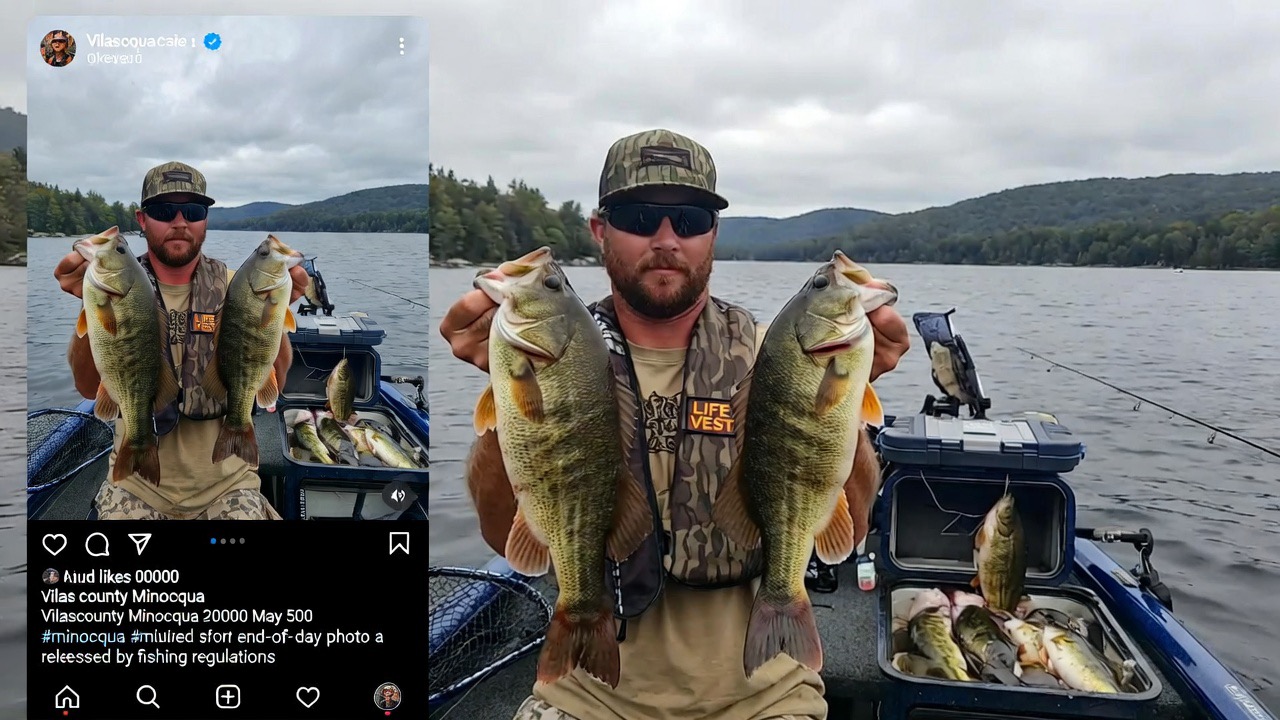
Livewelling smallmouths for an entire day for end of day photos is a serious unaddressed problem primarily because it causes high mortality rates in large, 15 to 20-year-old, irreplaceable, slow-growing, and easily exploited, trophy-sized, schooling fish. I attribute this practice to the decline of our lakes and the reduced number of 20-inch fish remaining in them.
Anglers only do so for end of day social media photos. Little do they realize on these lakes once you have one bass in the box, you are done fishing for the day. Yet they continue fishing for the additional fish to livewell and disregard bag limits.
This practice can quickly devastate local populations, particularly at high-traffic, heavily pressured, and popular trophy smallmouth fisheries. Old smallmouths are not to be overhandled. They are highly sensitive to handling stress, barotrauma, and livewell confinement.
Livewelling is also a huge cringeworthy issue in the fall months. Keeping smallmouths in the livewell while you’ve extracted them from wintering sites is the most unsportsmanlike conduct out there. If they die, get removed, or displaced, or never return back to the exact areas they came from, your actions will destroy the fishery for a generation.
Some guides out there are also livewellers. This is extremely illegal for them to do so.

Buddy, good luck pulling these stunts on Big Presque Isle Lake again the next time. Lucky for you that you’re located over an hour away from the closest game warden.

Livewelling isn’t slowing down, but other cultural and social movements in bass fishing are taking on greater participation. Nowadays, if anglers aren’t showing social media photos an end-of-day photo of a digital scale of their top-5 fish weights caught, you aren’t cool enough.
Let me tell you a thing or two about digital scales – the handling techniques with them all suck. Hanging a 6-pound fish vertically by a hook or jaw clip is never in the best interests of that fish. This causes severe jaw damage and dislocation, and tissue injury and infection. I have seen fish injuries occur with digital scale – by hanging and by those fish flopping off.
Another problem created by them is overhandling and prolonged handling time. Fumbling around with a scale increases the time the fish is out of the water, reducing its changes of survival. Those are several valuable seconds where that fish is suffocating out of water.
Because of digital scales and their designs, and the stupid bass culture, I simply refuse to weigh fish altogether. I don’t care, and this is largely why our focus is on bump boards and giving inches instead. I can make my measurement in less than 5 seconds of handling time while it takes 30 seconds or longer to register a weight. Unless smallmouths pay for your mortgage and you’re competing in several thousand-dollar payouts where ounces make the difference, you shouldn’t care to weigh your fish for fun like this either.
Dumb!
Will we ever have supply and demand issues for 20 inchers?
Despite each of these critical issues and intensely researched problems affecting our precious fish, Wisconsin still possesses tremendous inland smallmouth fisheries.
But with more people on the water today than ever before and the popularity of smallmouth fishing, considering the longevity it takes to grow and groom a 20 incher, and big fish numbers declining due to old age and death, this could lead to the same supply and demand problems down the road that Wisconsin’s inland walleye and muskie fisheries are now experiencing as a result of depleting resources, reduced stocking, exploitation through fishing technology and lack of ethics, and overfishing.
Judging by what I’m seeing on the water and the exploitation and antics I’m witnessing and observing on and off the water, our inland lakes will struggle to withstand the issues and concerns that I present to you today.
Our inland lakes are ponds in comparison to the Great Lakes fisheries and Southern reservoirs. And all good things don’t last forever in the nature and generational cycle of lakes and fisheries. However, on the bright side of things, Wisconsin employs several tremendous bright minds and friends of the trophy smallmouth to manage their waters such as Max Wolter (Sawyer Co.), Greg Matzke (Forest and Florence Co.), Eric Wegleitner (Vilas Co.), Zach Lawson (Iron Co.), and Nathan Lederman (Oneida Co.). The best trophy and destination smallmouth fisheries we still have available are within their management jurisdictions.
I am worried. And if you care too, you’ll be also.
Andrew Ragas splits time between the Chicago area and Wisconsin’s Northwoods. Based in Minocqua, WI, he specializes in trophy bass fishing and offers guided trips from May thru October. While big bass is the passion, he dabbles in multi-species as well. He may be visited online at www.northwoodsbass.com

What you can read next

Articles
 Threats to Northern Smallmouth FisheriesThe fish aren’t biting like they used to. And if you also feel like ......
 My Shallow Water Playbook for Ice Out LargemouthsPromptly at ice out, largemouths swiftly relocate from their ......
 Finding Trophy Bass LakesIt’s no secret that location is the most critical factor in ......
 The Best Lake Types to Fish by SeasonSo many lakes, such little time. It’s easy to get overwhelmed by ......
 My Best Chatterbaits for Spring LargemouthsMarch and April are Chatterbait-centric months for many of us who ......
 Catching Smallmouths if it’s a Cold SpringCold water and below average temperatures of spring are a byproduct ......
 Proven Presentations Only at Ice OutDepending on where you live, ice out could either be nearing or is ......
 Smallmouth Scenarios by SeasonEvery fish species has a seasonal calendar that in no way resembles ......
 The Best Largemouth Bass Lures of 2025I love fishing for big largemouths, and it’s too bad these ......
 The Cheat Code for Sculpin and Goby BaitsLike gooey and greasy cheese curd appetizers to us, gobies and ......