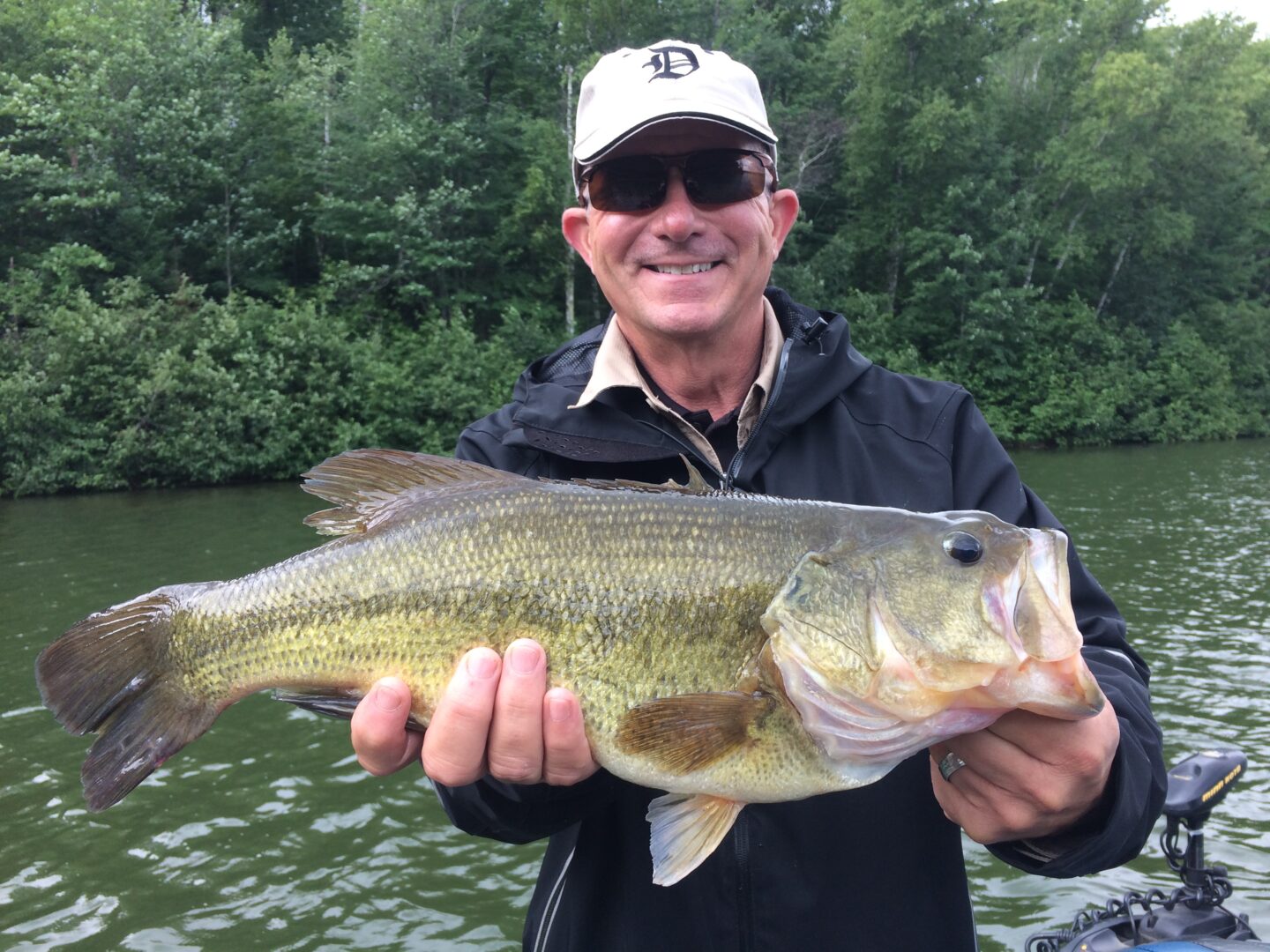

Tips for Bigger Summer Largemouths

No creature is wiser, wittier, and more deceptive than a trophy largemouth bass is. Once summer peak settles in, which for me is by mid-July, my bass fishing desires and motivation revolve greatly around the whereabouts of big largemouths.
Everything about their lifestyle drives me crazy. From the challenges of finding fisheries, to locating and patterning them, and figuring out what triggers them, there’s been many very long days and nights of trial and error. I don’t know how you feel about it, but the pursuit of mega largemouths is far more advanced and challenging than pursuing smallmouths of similar caliber.
Depending on your waters and trophy fish findings, patterns could be habitual or constant from year-to-year. They may also revolve around good weather, peak feeding, or biological factors. Additionally, patterns could even be specifically lake-dependent.
The variety of largemouth patterns I attempt to follow each summer are predictable, often repeating themselves annually when everything aligns perfectly together. Additionally, patterns are prone to change on the fly from forces beyond our control, requiring me to adapt quickly as these expertly adaptive creatures themselves do.
Unlike trophies, smaller fish are usually the least educated and most willing hook and line participants. Small bass are not worthy of discussion for this piece. The following insights will aid you in your summertime trophy largemouth pursuits.
Green Water and Eutrophic Lakes
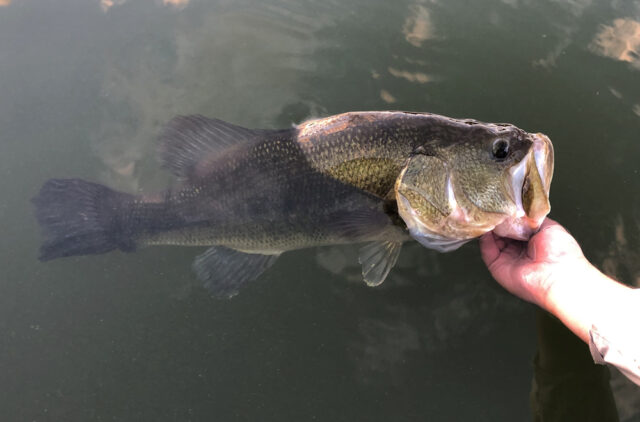
Largemouths are comfortable in warmer, shallower waters. They are also efficient predators in algal bloom conditions. Come mid-summer under 78-to-82-degree water temps., largemouths from these waters feed heavily to maintain their robust weights.
Whenever I see algae-blooming waters while browsing on Google Earth, I want to go fish them. These lakes are common throughout agricultural regions, in glacial lake regions, and in drainage systems. My region of Wisconsin has a lot of these lakes. Some of them support great largemouth bass fisheries due to adequate depth and currents, while others suffer winter-kill events and mass die-offs in brutal winters to the point of no recovery.
Eutrophic lakes are exceptionally fertile, shallow, warm and heavily vegetated. These waters are personified by all of the nutrients and run-off that feeds into them, triggering summertime algae blooms and potential summer kills. Rarely deeper than 10 to 15 feet, they are bowl shaped and often lack well defined structure. They tend to have silted muddy bottoms, and may feature boggy and heavily submerged wooded shorelines and tannic stained water. They are heavily weeded with emergent and submergent vegetation that covers much of their acreage. The most common plant species tend to be lilies, pond-weeds, and milfoil. In summertime, these lakes take on the appearance of pea-green soup.
Largemouth bass, bluegills, yellow perch, and northern pike are the most dominant species in eutrophic lakes. In mid-summer, I favor fishing these waters more so than cleaner and clearer mesotrophic lakes due to their high-fertility and very fast growth rates, excessive feeding frequencies, and being able to fish them undetected due to them being heavily vegetated and green watered. Largemouths from these lakes under most circumstances will not spook.
Several strategies may work on these lakes. Shallow emergent cover is very abundant; therefore, frog and slop fishing could dominate the littoral zone. Slide out deeper, where submergent weeds abound and feature weed lines, pockets, patches and walls. A jig bite, creature, Tokyo rig, or punch rig could be most likely in these areas. As weed growth might dissipate somewhere around the middle, you might experience a good crankbait bite wherever the fish roam.
Beyond weeds, these waters contain additional habitats that may include wood, bogs, and connected marshlands with backwater areas. They can all hold largemouths at any time.
Always seek out the waters that can avoid winter kill events. The further south they are located, the less prone or affected they are by them. Eutrophic waters that can survive up to a decade without any kills will produce the biggest bass anywhere in the north. These waters could contain several year-classes of bass, and be home to giants that feed non-stop.
Green Water and Eutrophic Lakes
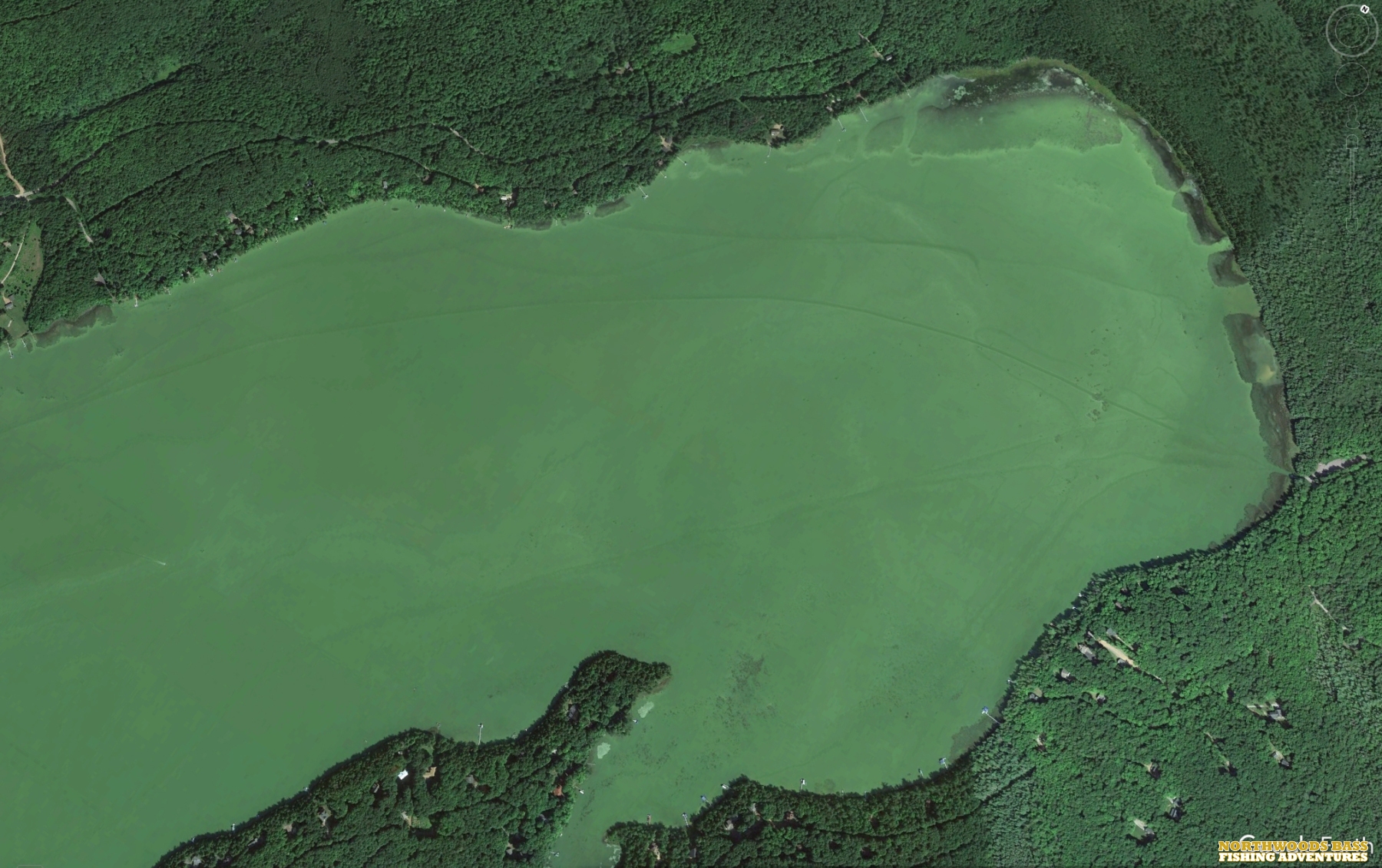
Whenever I see algae-blooming waters while browsing on Google Earth, I want to go fish them.
Perfect Plants
The lives and feeding patterns of largemouth bass revolves around plant life year-round. Aquatic plant species form the foundation of healthy and flourishing underwater ecosystems.
Most largemouth habitat on my eutrophic and mesotrophic lakes is vegetated. Native plant species like bulrushes, lily pads, coontail, northern milfoil, and pondweed varietals are most common. Meanwhile non-native invasives and introduced species like Eurasian milfoil, hydrilla, bladderwort, and curly-leaf pondweed may also be featured and in some cases take over the entire lake. Largemouths find ways to utilize them all!
My best largemouth lakes contain several weed beds and deep weedlines of green cabbage. Once fully established, on the onset of summer peak, it becomes a player for all the deep weedline fishing we will do through year’s end.
Green cabbage is the deepest-growing, producing much-needed oxygen can last through late fall into early ice. These characteristics are what makes mid-summer deep weedline fishing productive and this pattern so predictable every July and August.
The magic depth for this plant species tends to be between 10 and 15 feet. I find it so appealing to largemouths because in these depths they have the entire water column of the plant and its edges to utilize for feeding and cover.
Prioritize fishing the edges and outside edges as often as possible. On my local waters, massive congregations of juvenile bluegills are drawn to these locations. Groups of largemouths commonly cruise the outside edges, scouting for prey and then flushing them out. If positioning the boat next to the edge, vertical presentations like a drop shot and jig works best. If positioned a cast-length away, parallel casting swim jigs, jig and wacky rigs, Carolina rigs, and crankbaits are my top choices. Locate the plants, establish the edge, find the fish, and you’ll be in business.
Packs of largemouths often work together for feeding. We often see this throughout the shallows of some lakes, and along deep weedlines on others. Specimens could be of moderate to desirable sizes.
While largemouths work together in packs, the big queens I am after are usually solitary. I’ve never fully understood this solitary behavior, but it makes sense as the biggest fish want to be in isolation, situated in the best habitats available and to have the greatest individual feeding opportunities.
Side imaging enables me to examine weed beds and their edges at long-distance from each side of the boat while on plane and at idling speeds. My Lowrance HDS-12 Live units with Active-Imaging 3-in-one transducer works marvelously. Down-imaging used in conjunction with fish-reveal will display the shape and features of every plant, and what could be inhabiting them.
Learn to differentiate between plant species, and study everything underwater in your local waters. The more you learn about aquatic plant species and how largemouths use them and position themselves, the better a trophy hunter you’ll be.
Perfect Plants
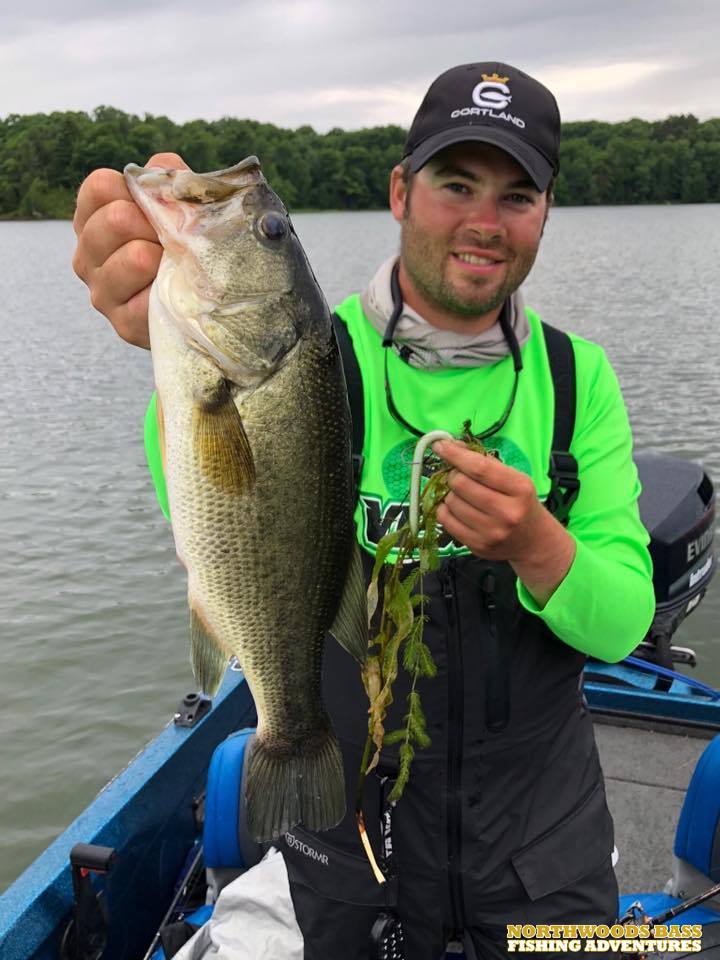
Most largemouth habitat on my eutrophic and mesotrophic lakes is vegetated. Native plant species like bulrushes, lily pads, coontail, northern milfoil, and pondweed varietals are most common.
Bluegill Connections
Bluegills are the backbone and lifeblood of all good largemouth bass fisheries, and integral for the development and growth of sustaining them. Largemouths live for them, and finding them first is the secret to unlocking quality fishing.
Juvenile bluegills are known for their heavy schooling. Summer largemouth locations often revolve around bluegill schools.
The activity levels of bluegills drive the feeding and moods of its largemouth fishery. When bluegill schools are visible near-surface, feeding and roaming the weedline, the food chain is very active. When we witness bluegill schools exploding across the water’s surface, the largemouth fishing is very good.
Calm, humid conditions are most inviting for schools, promoting high surface activity. Pay attention for surface activity and feeding, and fish vigilantly. Wherever there’s surface activity happening you’ve got to get the boat over to that region to fish it. Surface explosions are often indicative of feeding largemouths.
When water temperature averages 75–degrees and warmer, a healthy largemouth bass consumes its entire weight in bluegills each month. As water temperatures are usually 75 and warmer during July and August, a 5-pound largemouth can consume an average of 150 juvenile young-of-the-year bluegills in a typical summer season. A moderately sized lake can contain thousands of juvenile small bluegills.
Observing the methods and locations of other boats, I remain surprised by the low number of anglers whose mid-summer fishing strategies aren’t dictated by these bluegill patterns. Furthermore, considerably few anglers are fishing with bluegill-imitation patterns to begin with.
Every summer, the bluegill bite is steady and reliable. Across many weedy lakes, the locations and feeding habits of largemouths is determined by bluegill activity and the presence of young-of-the-year schools.
Bluegills are the driving forces behind many largemouth bass fisheries. More anglers are learning that locating juvenile bluegill schools is necessary for mid-summer success. If you’ve started catching largemouths from deep weedlines in July and August with the aid of a bluegill pattern, you’ve successfully made the important predator and prey connection.
Bluegill Connections
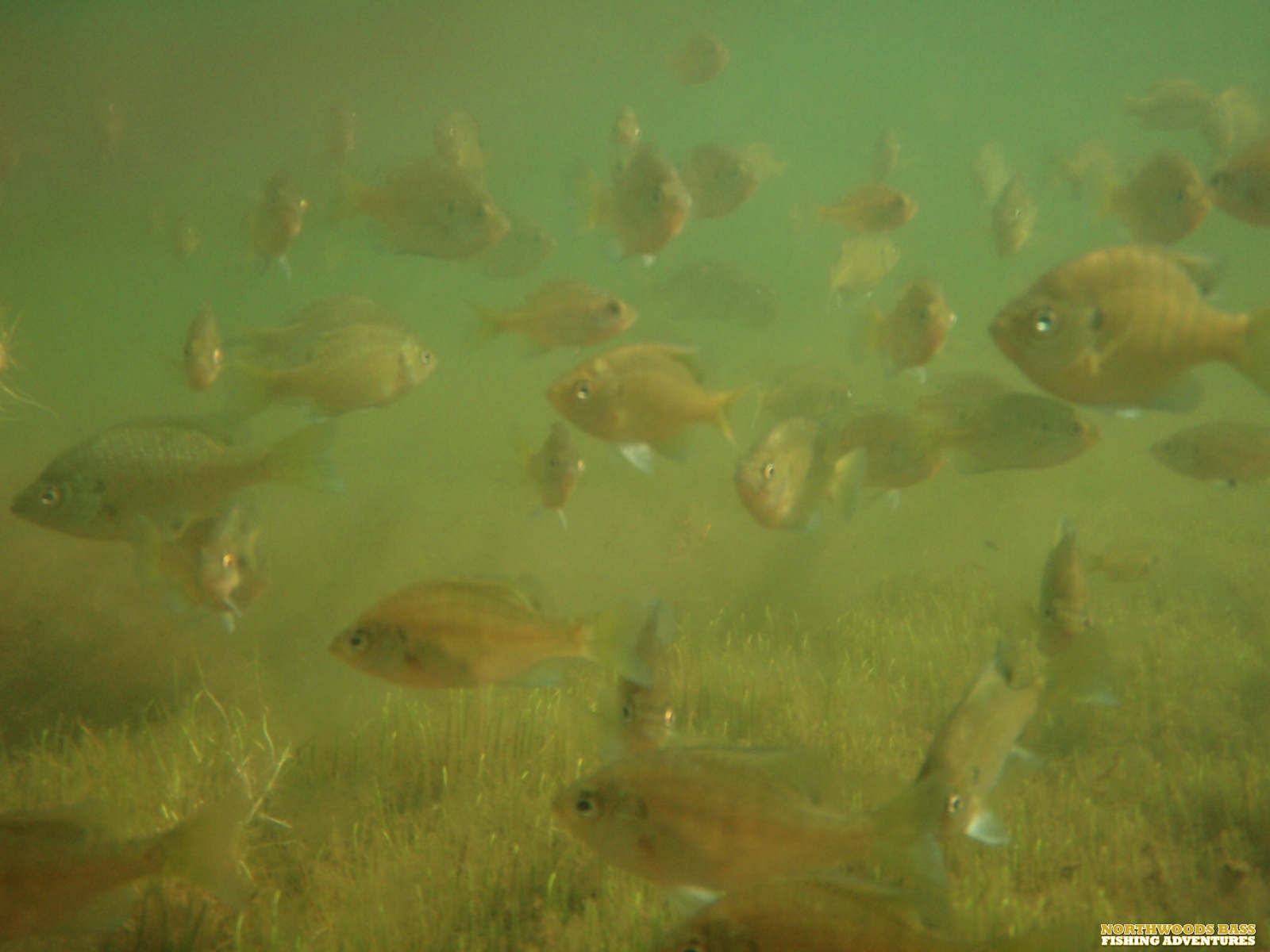
Juvenile bluegills are known for their heavy schooling. Summer largemouth locations often revolve around bluegill schools.
Shallow Edges
Largemouths love edges, whether shallow or deep. The most desirable fish I catch in July and August come from shallow cover within close range to shore.
Early and late in the day, I frequently see movements to the extreme shallows where largemouths utilize the protective heavy cover and weed growth as ambush points. These areas are the edges of shorelines.
Some shoreline edges can be wood oriented, while others weed oriented. Probing through the shallows and casting or flipping to all targets and open pockets in between weed cover is the name of this game. Coontail and cabbage beds, slop, wood and downed trees, pads, reeds and cattails are just a handful of high percentage targets to look for and focus on.
Another incentive of the extreme shallows could be the availability of amphibians, minnows, and juvenile bluegills drawn to the area.
When it’s the right time of day, largemouths love to hide and ambush. The best spots can be impenetrable and inaccessible for the average angler.
Once you find them, attacking these near-shore spots, their openings, and casting lanes is accomplishable with skillful pitching and flipping tactics. Pitching and flipping must be prioritized. However, there may be some openings and edges to make a few accurate casts. Active fish could be meandering through these casting lanes. Surface frogs are the best secondary option. They are snag resistant, penetrable, and work best around laydowns and pads situated on the outer edges.
Shallow oriented fishing is simplistic, visual, and mostly based on your prior knowledge of the lake and where its best habitats are located. It will not rely on electronics for other than water temperature readings, and side-imaging to help identify good weed species and finding the best weed lines and pockets.
These mid-summer shallow water pursuits have resulted in an astonishing number of trophy largemouth catches with fish to 7-pounds hiding and lurking around in inches-deep cover.
Shallow Edges
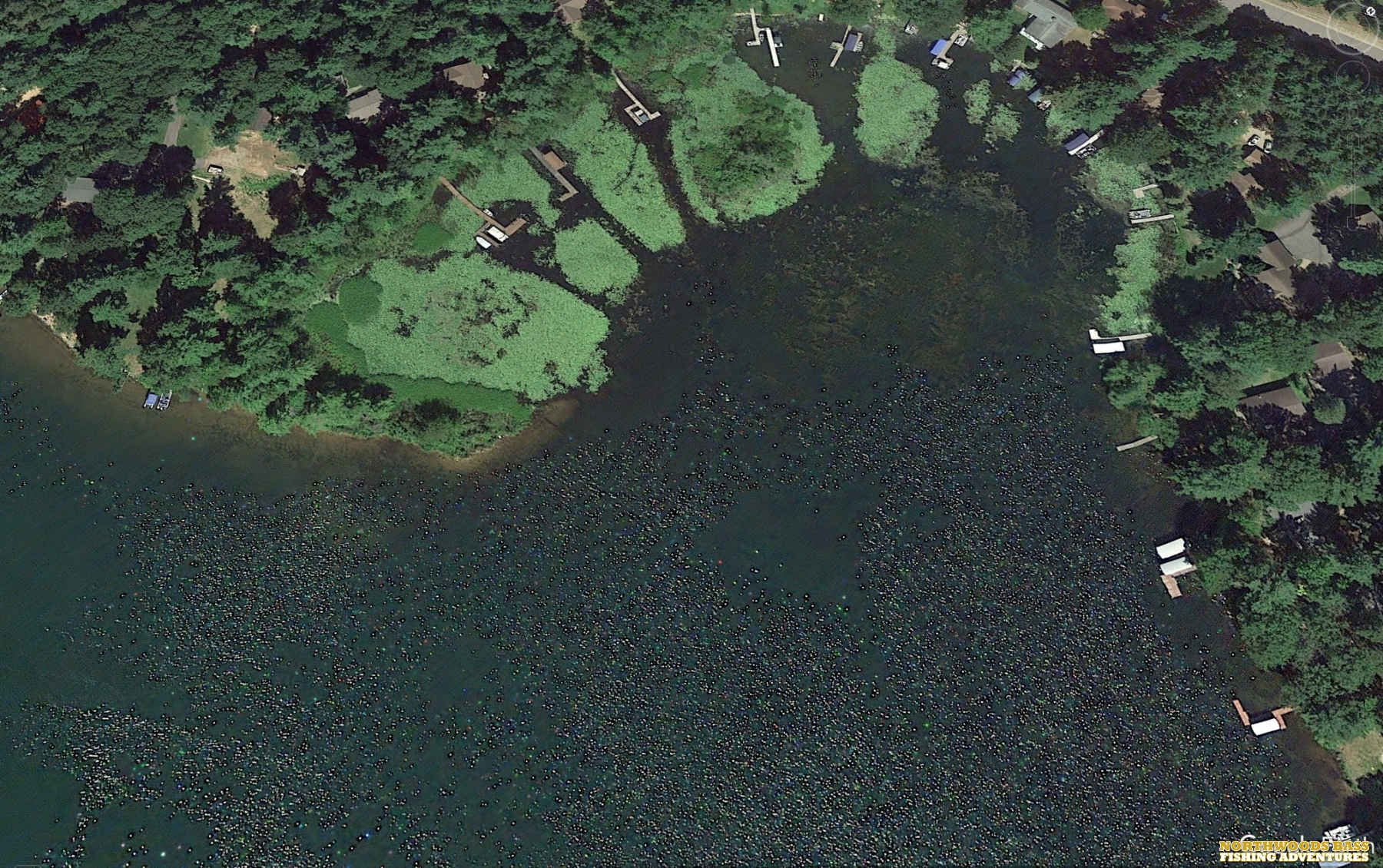
When it’s the right time of day, largemouths love to hide and ambush. The best spots can be impenetrable and inaccessible for the average angler.
Weather Changes
Largemouths sense and react to weather changes quickly.
This time of year, the worst day of weather could be the best day of fishing you’ll ever experience for largemouth bass. The most foul and pervasive summer conditions you can think of can help shape and lead to your best and most aggressive bites of the year.
Mid-summer cold fronts might not be as drastic like other seasons, but gloomy rainy weather, overcast skies, and fronts can pass slowly and alter the underwater ecosystem. A foul day in mid-summer provides much needed recovery and cooling for lakes and their hot water temperatures, and recovery for largemouths as they regain activity and feed heavily.
The foul weather sets up an explosive shallow water largemouth bass bite.
This pattern was first identified back during a July-2017 guide trip when a customer and I hauled in a 50-pound sack of fish during a 3-hour window. Air temps in the low 60’s, a big northwest wind, and periodic rain throughout the day fired up the entire ecosystem.
As a response to the cool down, largemouth slid back into the shallows to feed. Fishing various pockets and sections of shoreline, prowling through the inside and outside weed lines of coontail and surface slop with swim jigs and beefy trailers, we were able to catch largemouths of epic proportions. Of the 40 fish, 12 of them were between 18 to 21 inches. This is no easy feat on northern fisheries.
The massive haul of fish encompassed multiple personal bests for my customer, and the fastest action of huge mid-summer largemouth I have ever experienced. The weather change made it all possible.
Even though summer delivers oppressive heat waves that halt fishing success, there’s always relief and recovery on its way from the incoming fronts that follow. If you ever thought the shallows were too hot and vacant, reconsider when a cold front strikes. Water temperatures will cool and recover, re-activating lake ecosystems again and awakening fish species from summer dormancy. Weather changes like this will set up good fishing.
Finding Fisheries
Realize that not every lake is capable of growing and rearing giants. Each largemouth lake I fish contains different population densities and size structures.
There’s a largemouth bass lake for everyone. Some are action fisheries, loaded and overburdened by high numbers of lesser sized fish. Catch rates are high. Others, meanwhile, are lower population density fisheries, occupied by fewer fish but with many of them being of larger sizes. Catch rates are low. And there’s also waters containing fish of all sizes to suit just about everyone.
Trophy largemouth are most prevalent in the lesser density waters where they don’t have to compete with many other members of the population for food. These are my destinations.
Finding fisheries requires a lot of scouting, exploring, and off the water research.
Today it’s now possible to explore bodies of water online before ever dropping a boat into them. DNR lake surveys, discussions with homeowners, Google searches, and lurking around on YouTube are some of the most effective ways of discovering the trophy potential of a fishery. After gathering the data, it’s time to go put it all to work.
In my area, big fish waters are declining due to harvest and exploitation. It is easy to grow big fish, but difficult to manage them. Wisconsin doesn’t seem to want to maintain or sustain its trophy largemouth fisheries, so these fish get poorly managed or not at all.
Subsequently, each fishery needs ongoing management to produce desired growth and catch rates.
Due to overharvest of big fish and smaller fish quickly overpopulating the waters, fewer waters are kicking out big fish. Of the hundreds of bass lakes I fish, only two dozen of them I would consider trophy waters. All of the others are high-action, numbers factories.
The ratio between trophy vs action waters is insanely small. I never want to fish waters lacking in trophy potential.
Keep expectations realistic, and understand that not every lake is capable of producing and rearing trophy largemouths. This reality is influenced by neglect of management, infertility issues, water quality, forage and food-chain limitations, genetics, and lack of any thoughtful harvest programs. Big fish waters are dwindling in number.
Finding Fisheries
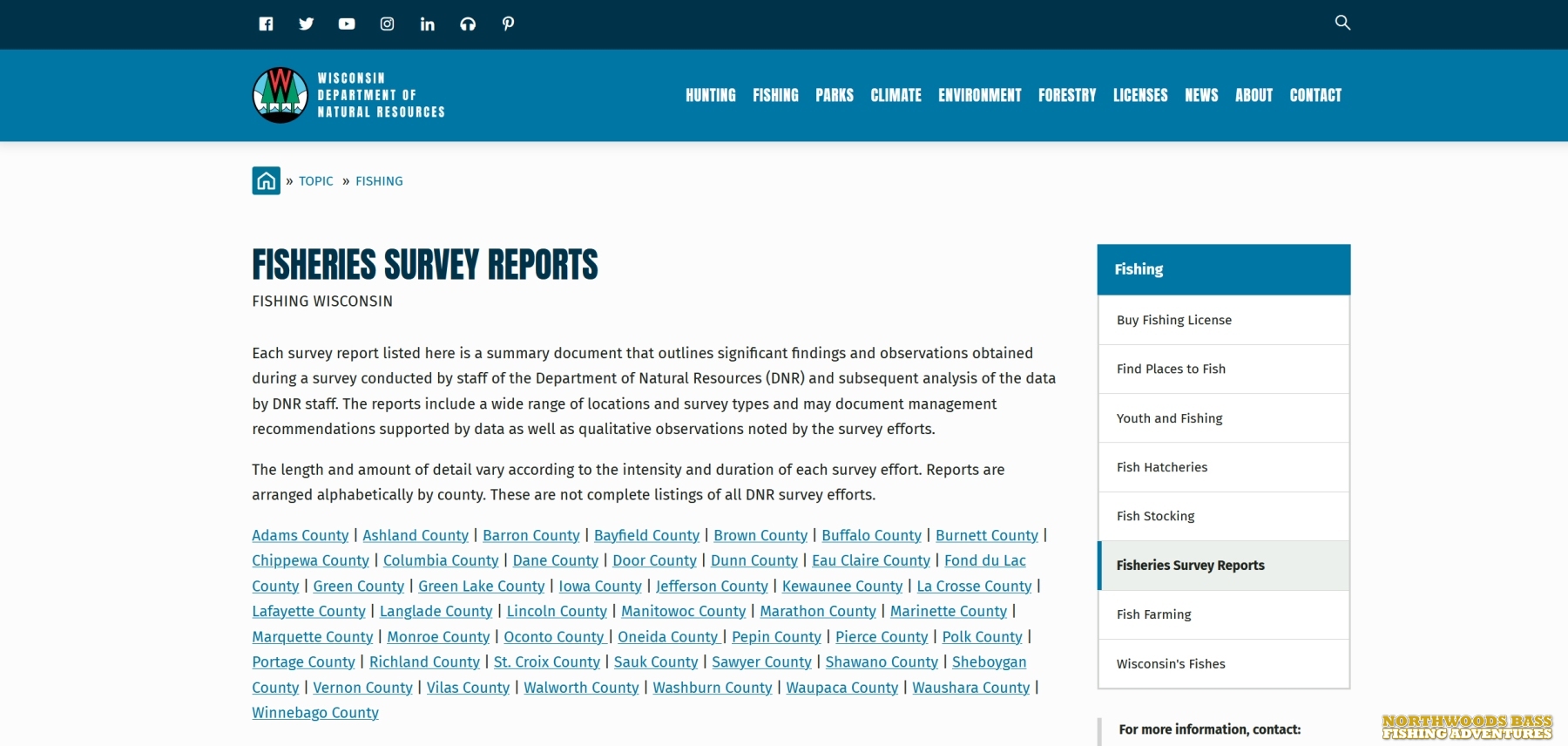
Finding fisheries requires a lot of scouting, exploring, and off the water research.
As summer is heating up, largemouths are firing up. Big bass are addicting, and all pursuits must revolve greatly around the whereabouts of big fish. Hopefully these insights help shape your summer trophy hunt strategies, locations, and destinations.
Andrew Ragas splits time between the Chicago area and Wisconsin’s Northwoods. Based in Minocqua, WI, he specializes in trophy bass fishing and offers guided trips from May thru October. While big bass is the passion, he dabbles in multi-species as well. He may be visited online at www.northwoodsbass.com

What you can read next

Articles
 Lakes to Fish and Avoid During Fall TurnoverIt was a hot summer and thermoclines on deep lakes were noticeably ......
 Top Lures for the Early Fall TransitionLate August to early September annually represents the early fall ......
 Fishing Algae Bloom LakesClear in spring and green by late summer, algae blooms are an ......
 Smallmouth Grind-OutsThere’s a great chance that every fishing guide out there has a ......
 Inside Edge LargemouthsLargemouths love edges, and the most desirable fish I catch during ......
 Northern Water Snake PatternsOpportunistic predators with voracious appetites, largemouth bass ......
 Dark Water SmallmouthsWhen thinking about the prototypical and perfect Northwoods ......
 Locating Rip Rap Shorelines on FlowagesWith the local flowages down several feet, use this current drought ......
 Fish CatchersSmallmouth bass fishing has changed immensely over the past decade. ......
 Minimalist Smallmouth Fishing with St. Croix RodsIf you want to catch more fish and learn to be efficient, ......