

Tracking Midsummer Largemouth Bluegill Bites

Bluegills are the backbone and lifeblood of all good largemouth bass fisheries, and integral for the development and growth of sustaining them. Largemouths live for them, and finding them first is the secret to unlocking quality fishing.
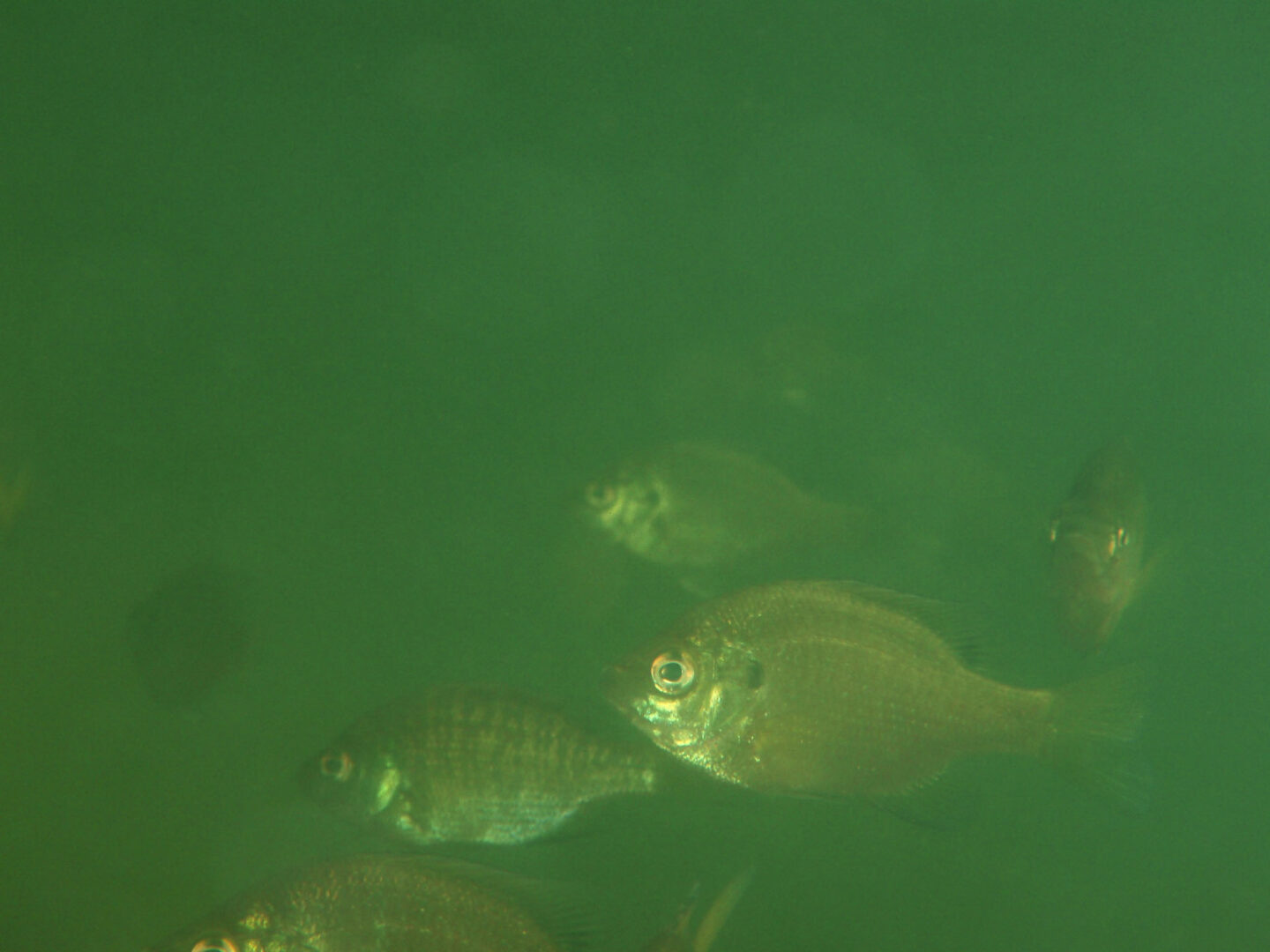
Juvenile bluegills are known for their heavy schooling. Summer largemouth locations often revolve around bluegill schools.
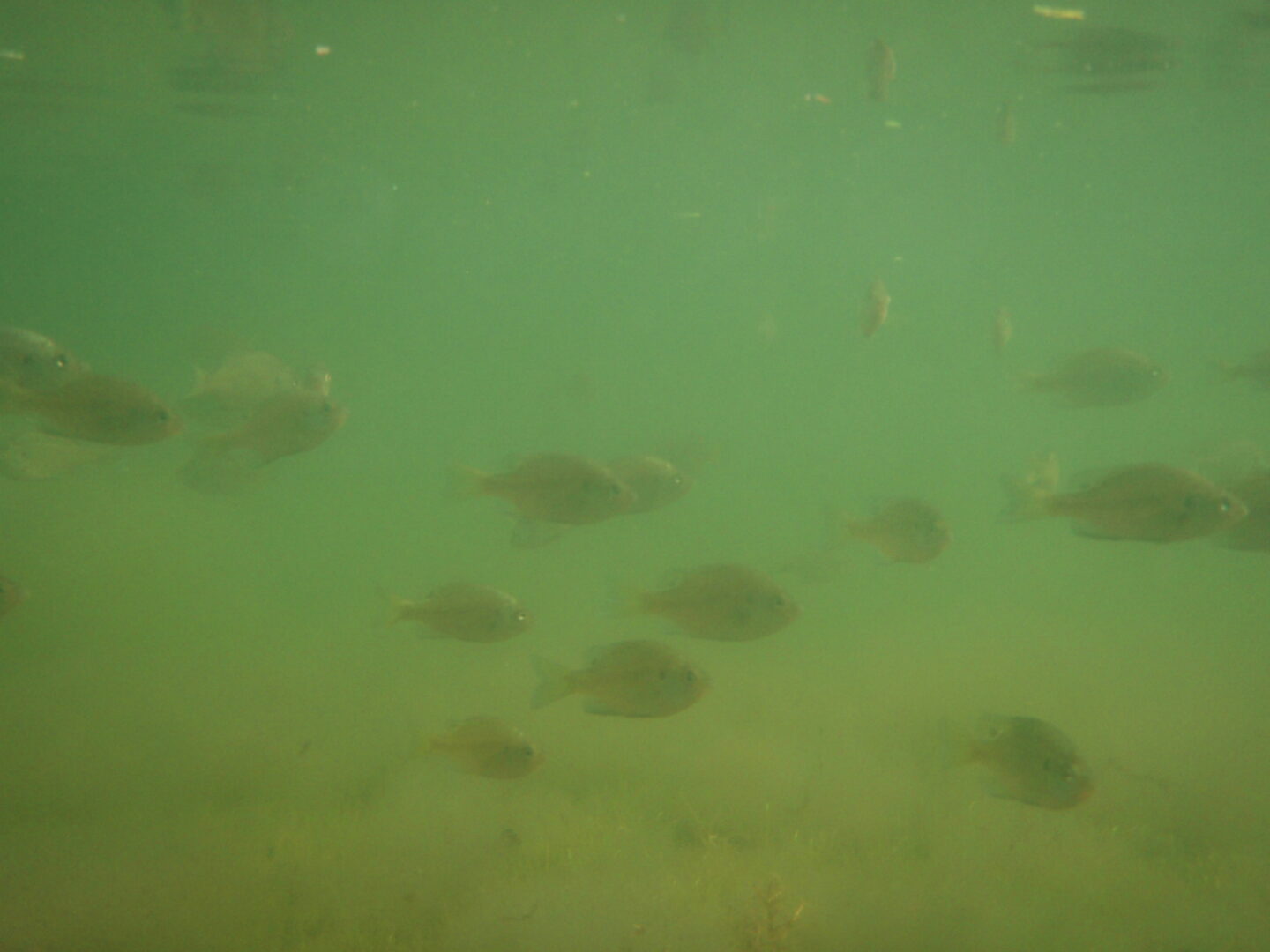
The activity levels of bluegills drive the feeding and moods of its largemouth fishery. When bluegill schools are visible near-surface, feeding and roaming the weedline, the food chain is very active. When we witness bluegill schools exploding across the water’s surface, the largemouth fishing is very good.
Calm, humid conditions are most inviting for schools, promoting high surface activity. Pay attention for surface activity and feeding, and fish vigilantly. Wherever there’s surface activity happening you’ve got to get the boat over to that region to fish it. Surface explosions are often indicative of feeding largemouths.
When water temperature averages 75–degrees and warmer, a healthy largemouth bass consumes its entire weight in bluegills each month. As water temperatures are usually 75 and warmer during July and August, a 5-pound largemouth can consume an average of 150 juvenile young-of-the-year bluegills in a typical summer season. A moderately sized lake can contain thousands of juvenile small bluegills.
Observing the methods and locations of other boats, I remain surprised by the low number of anglers whose mid-summer fishing strategies aren’t dictated by these bluegill patterns. Furthermore, considerably few anglers are fishing with bluegill-imitation patterns to begin with.
Every summer, the bluegill bite is steady and reliable. Across many weedy lakes, the locations and feeding habits of largemouths is determined by bluegill activity and the presence of young-of-the-year schools.
Bluegills are the driving forces behind many largemouth bass fisheries. More anglers are learning that locating juvenile bluegill schools is necessary for mid-summer success. If you’ve started catching largemouths from deep weedlines in July and August with the aid of a bluegill pattern, you’ve successfully made the important predator and prey connection.



Fishing Tips and Short Stories
 Smallmouth Scenarios by SeasonEvery fish species has a seasonal calendar that in no way resembles .....
 Where to Go Fishing During Cold FrontsHere in Wisconsin, largemouth and smallmouth lake types and .....
 Perfect Plants to LargemouthsThe lives and feeding patterns of largemouth bass revolves around .....
 Finding Trophy Largemouth LakesRealize that not every lake is capable of growing and rearing .....
 Kid Friendly Smallmouth LuresKeep lure selection simple, and outfit a child with the simplest .....
 Tracking Midsummer Largemouth Bluegill BitesBluegills are the backbone and lifeblood of all good largemouth .....
 My Dark Brown Water Smallmouth SecretThe Bama Craw Z-Man Fishing Products Chatterbait Elite EVO .....
 Opportunistic Feeding and Junk Weather WindowsUnlike us, big fish don’t read through the phone’s weather apps or .....
 The Best Early Season Largemouth FisheriesWhere to go and what to do in early spring is a calculation, as not .....
 River Patterns, Spring thru FallRiver fisheries continue to be lower-class smallmouth destinations .....