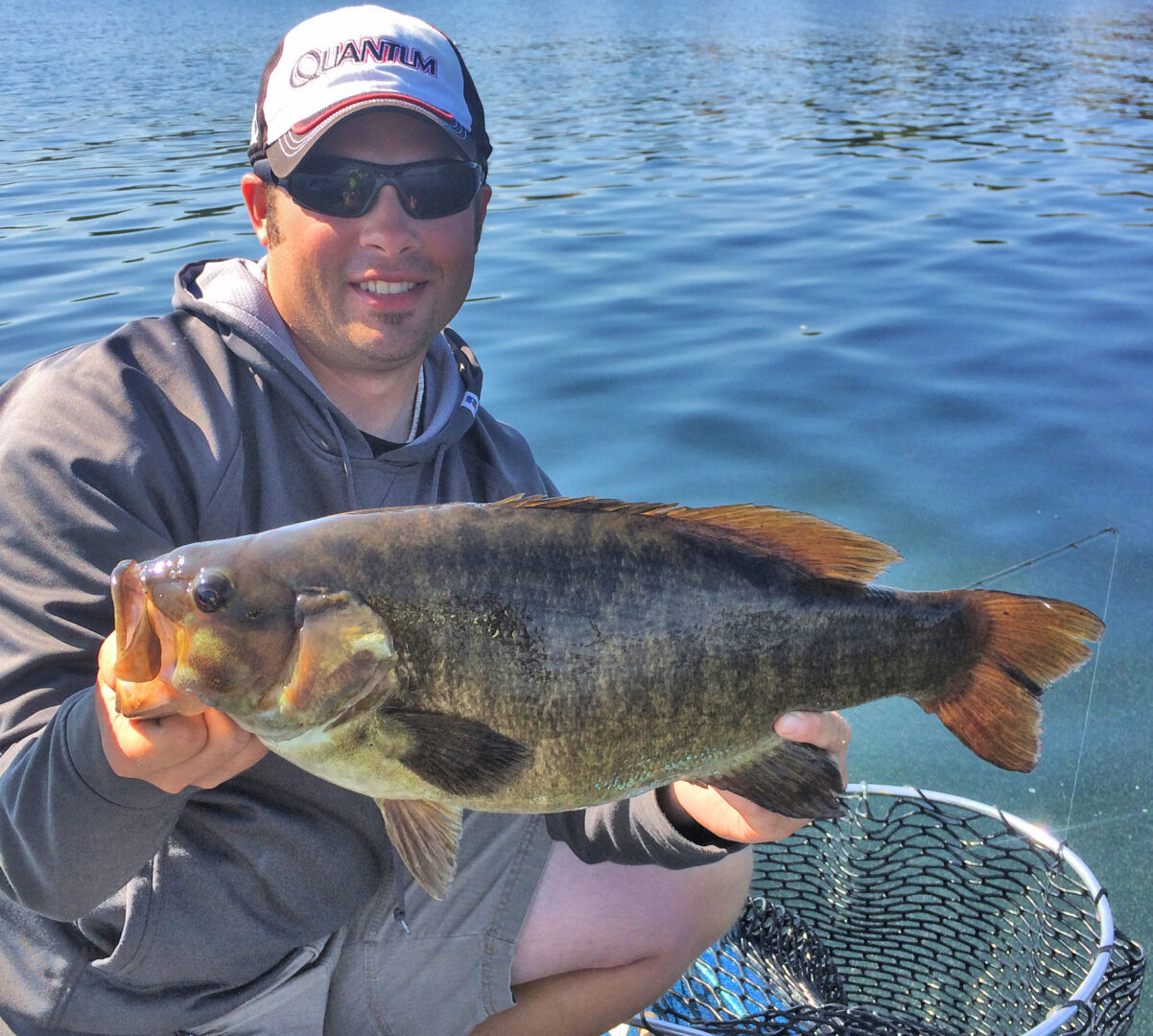

Weed Dispensary Smallmouth

Across many northern natural lakes and lowland flowages, some of the biggest bronzebacks available in the system can be found dwelling in weedy cover. They’ll utilize weeds for cover and habitat for cover and feeding opportunities more often than you think. These weed oriented smallmouths continue to be overlooked and under fished, with the dispensaries themselves being unpressured.
Smallmouth bass have high adaptability. Where available, smallmouths relate to many varieties of plant species. On some fisheries, they prefer weed habitats above all other forms of structure.
Bass anglers continue to believe that smallmouths are best pursued around rocky substrates and deep structures. But what they’re missing is the fact that weed beds draw big fish and hold massive amounts of forage. Those who are bypassing these lake locations in favor of more prototypical smallmouth habitats are neglecting the best fish concentrations and most active members of that fishery.
Submerged grass and smallmouth are a winning combination. Submerged vegetation has incredible drawing power and attraction.
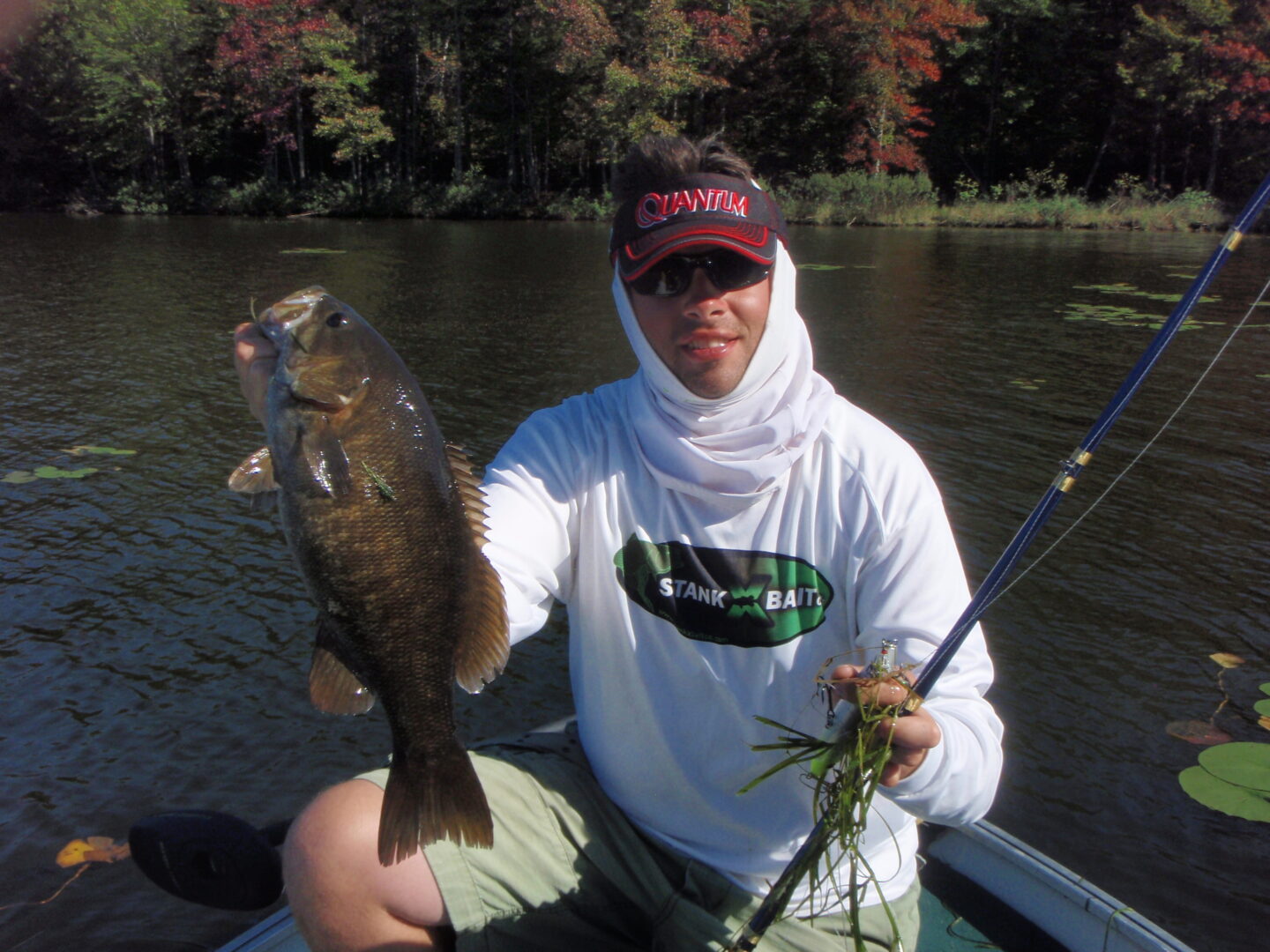
Weed Dispensaries
Northern bass anglers have lots of exposure to weed smallmouths. Anglers across Wisconsin, Michigan, Minnesota, and Northwest Ontario know darn well that big smallmouths are attracted to weeds. On many fisheries, plant life and grass is the number-1 habitat for them.
Not every smallmouth fishery has the prototypical habitats they favor. These waters appear boring on maps, making us wonder whether they hold smallmouth in the first place. Rocks, wood, and hard bottom substrates are limited or nonexistent. They might not even feature any topography or underwater contour, humps, and other deep structures. Instead, they could have bowl shaped basins without anything attractive. But what they can offer is the potential for deep sand grass growing throughout the basin, and near-shore areas and breaklines with plant life. Somewhere in the lake, smallmouths are going to be drawn to its weeds.
Weed beds are fish magnets. Throughout the season, they’re a key to our fishing for all species. Accept the fact that smallmouths love sand grass, eel grass, brown and green cabbage species, and coontail. Understand that on these dispensaries, smallmouths won’t position and relate to them like largemouths and other predators do.
Throughout the north, most fish species occupy different niches in weed cover. It draws in muskies, northern pike, walleyes, largemouths, and panfish too. During a day of fishing, it’s common to catch all of them from the same areas in a northwoods lake.
Muskies and pike are the most dominant weed-loving species. They position along the deepest available edges and other irregularities using them as ambush areas. Largemouths are jungle lovers, frequently burrowing themselves deep, and will also school along their deepest edges if located in deep water. Walleyes will behave similar, but are a wild card for their unpredictable nature. Smallmouths are likely to hover atop submerged weed beds, occupying pockets and openings, and mingle and cruise along the deepest edges available. The only instance they’ll ever bury into them is during the passage of severe cold fronts. On weed habitat, smallmouths are more sociable than all the other fish species they hold.
Weed types that cater best to smallmouth bass are varied, and found at every level of the lake. Near shore, broadleaf cabbage, brown in color and most dense, provides every fish species a wealth of oxygen and cover. Eel grass is also present in shallow locations, and is a dominant, favored species on river systems. Curly leaf pondweed, located deeper along the breaklines, commonly serves as the boundary and edge of a lake’s littoral zone. Moving into deeper water, coontail is a magnet that lives year-round and can be found in depths to 20 ft. Deeper and beyond, sand grass occupies the lake basin and is another smallmouth favorite from summer into fall.
Bottom composition is important to smallmouths. They’ll utilize weed habitats even further if the surrounding area includes sand, gravel, wood, or rock. On the contrary, you’ll find very few smallmouths if the weeds are surrounded by muck. If grass flats are thick in texture and run for miles, it seems smallmouths avoid them. Less is usually more. They’ll use areas that are broken up by sand pockets, rock piles, and other spot-on-spot additions. Whichever weed species smallmouths favor, consider how their location and depth has a bearing on the spot’s productivity. Often, the best weed areas for smallmouths will be very close to deep water, topography, and bottom structure.
Smallmouths don’t hold in weeds for long, frequently moving in and out of them. In them one day and out of them the next, the pattern doesn’t occur daily.
The presence of forage drives their movements. Yellow perch schools are of most influence.
Perch Schools
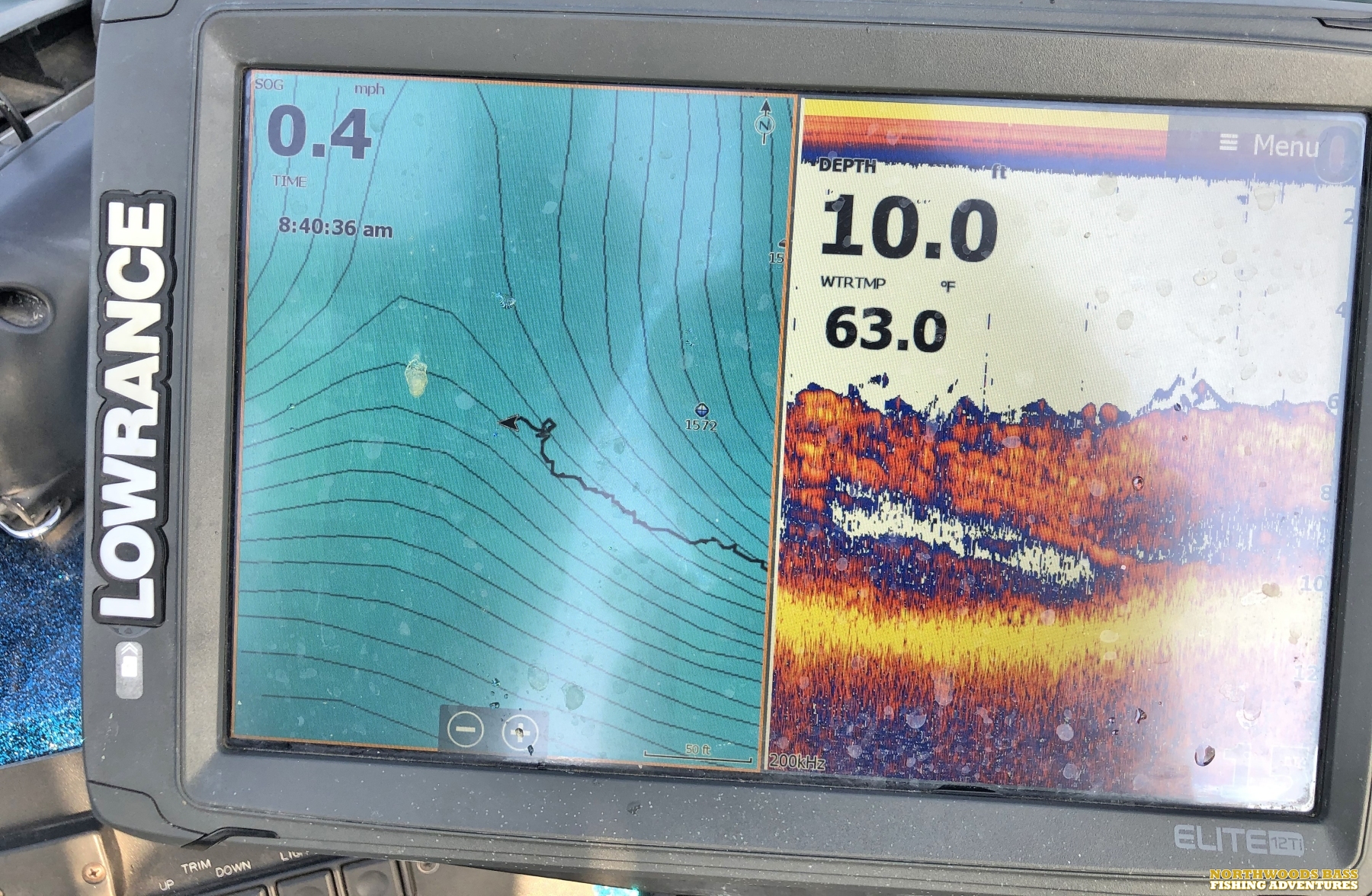
The presence of forage drives their movements. Yellow perch schools are of most influence.
Northern Grass Patterns
Grass patterns are the driving forces behind several prominent smallmouth fisheries. Whether the water contains rocks or not, you’ll seemingly find smallmouths in grass.
IN CANADA – Across many Canadian waters and shield lakes, isolated near shore cabbage beds and bulrushes have quietly turned into smallmouth favorites. On the northwest arm of Rainy Lake, overabundant pike and walleyes have driven smallmouths away from their former rock and deep open water habitats, forcing them into these areas. Taking them with spinnerbaits, topwaters, weightless wacky worms, and hair jigs is deadly. Summer season Canadian bass tournaments have been won by these weed strategies. Likewise, it is a top producer for guests who visit with Rainy’s Camp Narrows Lodge. Smallmouths on Rainy and many other Canadian fisheries have become weed-oriented due to competition with other abundant species. Only the infestation of rusty crayfish can prevent weed patterns from succeeding.
IN FLOWAGES – This unique displacement is also common across many Wisconsin flowages too, where the domineering walleyes seem to have forced smallmouths away from rock and boulder areas. Locally, we’ve experienced it on the Turtle-Flambeau, Willow, and Rainbow flowages. Immediately after spawn, lasting through the final days of summer, smallmouths leave their rock flats, gravitating to cabbage and pond weed, and can hold nearby these beds for up to several weeks. Casting in-line spinners such as Mepps Musky Killers and big topwaters catches big ones on hot summer days.
IN RIVERS – On many premier smallmouth river fisheries, mid-river eel grass, pond weed species, elodea and water marigold are the most common weed types available. Smallmouths dwell in them throughout the summer months if their locations include depth and proximity to holes and the main channel. They are utilized for cover and feeding. On world class fisheries that includes the Upper Mississippi, Saint Croix, Menominee, and Upper Wisconsin systems, summer time smallmouths are often taken from their mid-river weed beds with topwaters, swim jigs, and weightless fluke minnows. To catch more fish on float trips, avoid navigating through these areas with jet or short shaft outboards if you can. Not only will fish spook, they mow down the river. It becomes impossible working baits without getting fouled. Row through pools with oars instead.
AND IN LAKES – Smallmouths are drawn to weeds as soon as mid summer on the inland lakes of Northern Wisconsin and Upper Michigan, where several wolf packs of them will travel atop grass flats and along edges, seeking abundant schools of young-of-year yellow perch. Yellow perch undertake major migrations on some of the best bass fisheries. When perch availability is most abundant, smallmouths favor them over crayfish, cisco, and smelt. Come September into early October prior to turnover, this weed pattern becomes dependable and good, often holding the largest smallmouths in the lake.
Around 2015, I began prioritizing grass flats and weedlines on a more daily basis on summer and fall trips. Initial findings and catches proved how excellent these locations are. I recall once drifting along the edge of a shallow 100 yd. near-shore sand flat, casting a 4” paddletail grub with spinning gear. The top of the sand flat was 4 ft with scattered grass. and featured a ledge that broke to 20 ft. The entire edge was rimmed by pond weed with deep coontail. Prior to, and during that pass, I marked massive schools of yellow perch suspending along the ledge. I bombed the little swimmer into their direction, and worked it back through those perch schools. A handful of smallmouths to 21” were captured, including some of the biggest fish I’ve caught to this day from that specific lake. This was in late July of that year.
Later in the season, the weed pattern peaks further as water temperatures cool into the low 60’s and upper 50’s from mid September into October. Prior to turnover, perch will school even heavier and in larger sizes. This is when we visit the weed dispensary to catch monster smallmouth. Some of the heaviest smallmouths we’ve caught, up to 6.5 lbs. have come from these locations on swim jigs and with 3.8” paddletails.
Where fisheries are driven by this abundant forage species, weed patterns are capable of out-fishing rock-related and offshore structure strategies by a wide margin. It’s become one of our best seasonal and big-fish patterns. The only condition is yellow perch schools must be present nearby.
Lure choices are easy to make. Swimmers and search lures encompassing swimbaits, paddletails, swimming grubs, lipless crankbaits, and suspended jerk baits take majority of our catches. On special occasions, swim jigs and spinnerbaits are effective too.
Keep moving with these search lures until you run into fish. Always drift and position the boat a good distance away from the target region. Often, multiple y.o.y. perch will be the first to follow-in your baits. Once their presence is confirmed, spend some extra time in that vicinity. Smallmouths won’t be too far behind. Strikes will happen at any moment.
Anytime under high skies and calm conditions, hair jigs, spy baits, weightless Texas rigged minnows and wacky worms are top producers. You’ll want to focus on baits providing a lot of hang-time in the strike zone.
Around weed locations, cruising smallmouth are common sights. These fishes are merely traveling and seeking out some friends to go on a hunt with. Smallmouths that are bottom dwellers are disengaged, negative, and uncatchable. Ones that position higher in the water column will give you a chance. While they’re engaging and fun to observe, most cruising fish aren’t worth targeting. On these high-visibility waters, they’ll see you too.
Weed Dispensary Smallmouth
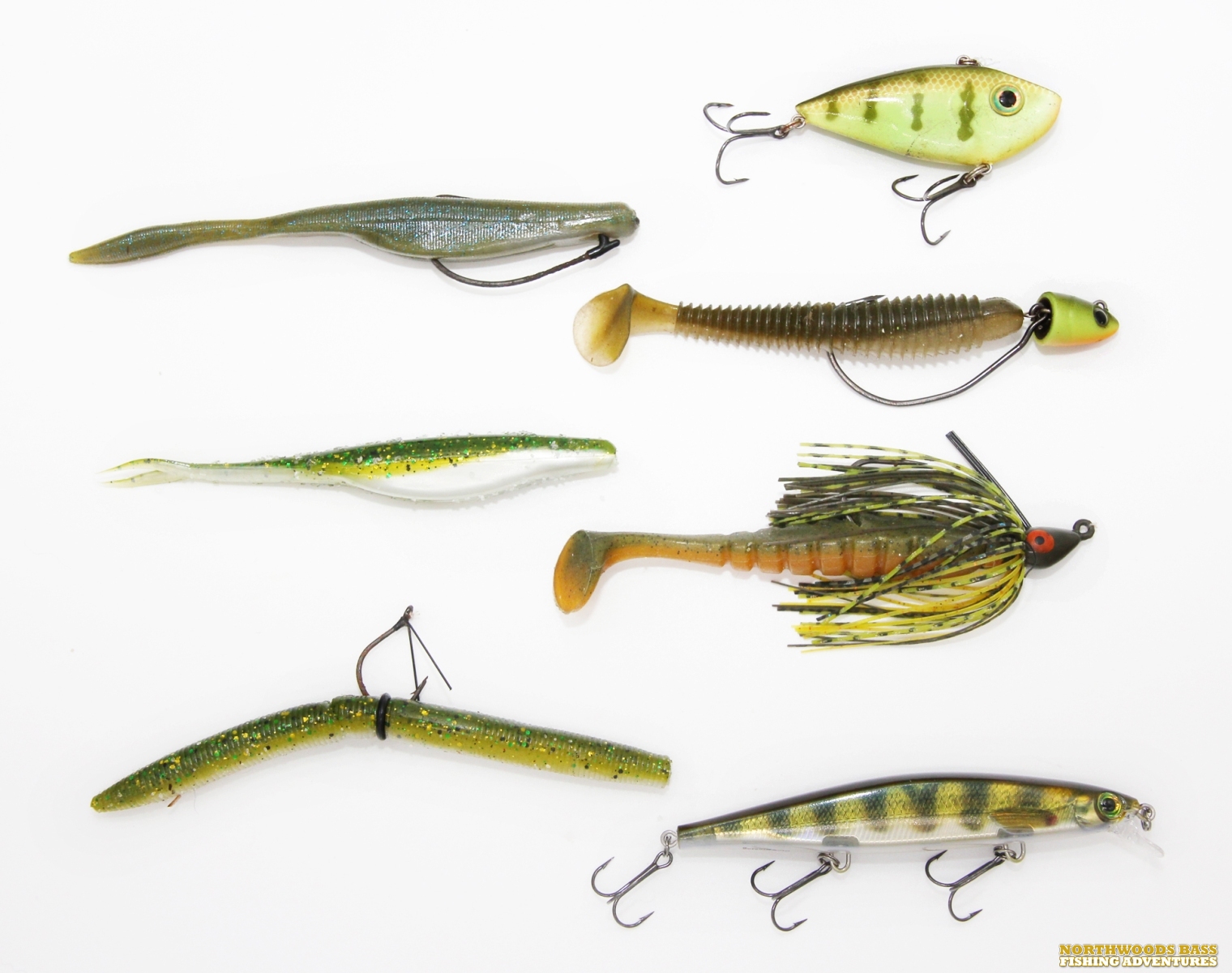
Lure choices are easy to make. Swimmers and search lures encompassing swimbaits, paddletails, swimming grubs, lipless crankbaits, and suspended jerk baits take majority of our catches. On special occasions, swim jigs and spinnerbaits are effective too.
High on Grass
Weeds are not necessary for good smallmouth fishing, but they’re an enhancer and byproduct of a lake’s fertility for helping grow and rear fish. Most smallmouth anglers continue to overlook these lake regions and their less-pressured fish. They’re not just home to muskies, pike, walleyes, and other weed-addicted species.
Smallmouths, like all other fish species, are highly adaptive creatures that will make use of every habitat type available. Whatever weed preferred species are available, there’s a very high probability that smallmouths will be using these dispensaries throughout the course of a year for their homing and feeding.
There is no question some of North America’s best smallmouth fishing occurs in sterile, rocky, weed-free waters. On the northern bass waters I fish, the best smallmouth fishing occurs on fertile waters with weed growth.
Canadian Patterns
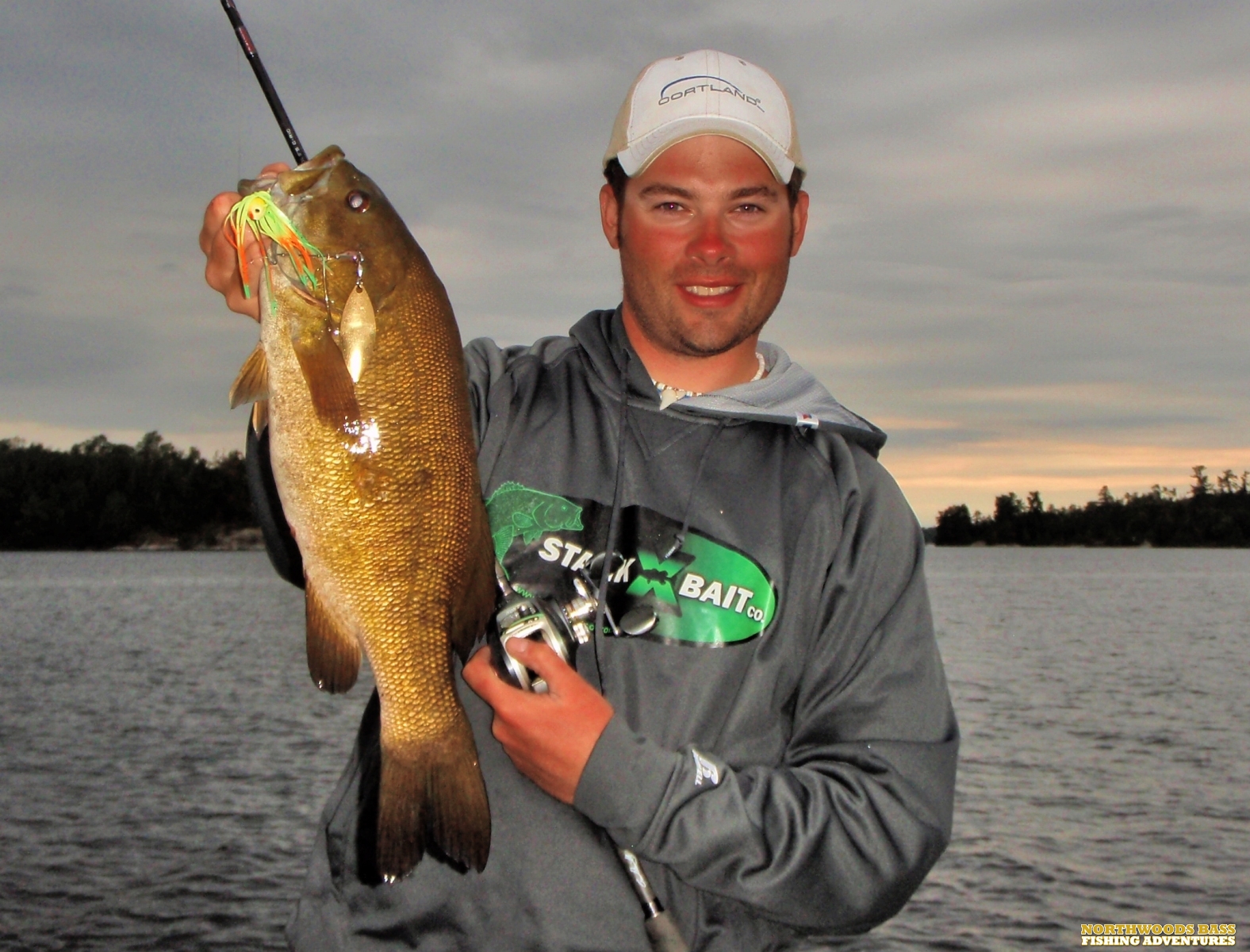
Across many Canadian waters and shield lakes, isolated near shore cabbage beds and bulrushes have quietly turned into smallmouth favorites. On the northwest arm of Rainy Lake, overabundant pike and walleyes have driven smallmouths away from their former rock and deep open water habitats, forcing them into these areas. Taking them with spinnerbaits, topwaters, weightless wacky worms, and hair jigs is deadly.
Andrew Ragas splits time between the Chicago area and Wisconsin’s Northwoods. Based in Minocqua, WI, he specializes in trophy bass fishing and offers guided trips from May thru October. While big bass is the passion, he dabbles in multi-species as well. He may be visited online at www.northwoodsbass.com

What you can read next

Articles
 Lakes to Fish and Avoid During Fall TurnoverIt was a hot summer and thermoclines on deep lakes were noticeably ......
 Top Lures for the Early Fall TransitionLate August to early September annually represents the early fall ......
 Fishing Algae Bloom LakesClear in spring and green by late summer, algae blooms are an ......
 Smallmouth Grind-OutsThere’s a great chance that every fishing guide out there has a ......
 Inside Edge LargemouthsLargemouths love edges, and the most desirable fish I catch during ......
 Northern Water Snake PatternsOpportunistic predators with voracious appetites, largemouth bass ......
 Dark Water SmallmouthsWhen thinking about the prototypical and perfect Northwoods ......
 Locating Rip Rap Shorelines on FlowagesWith the local flowages down several feet, use this current drought ......
 Fish CatchersSmallmouth bass fishing has changed immensely over the past decade. ......
 Minimalist Smallmouth Fishing with St. Croix RodsIf you want to catch more fish and learn to be efficient, ......