
Where to Go for Smallmouths During Cold Fronts

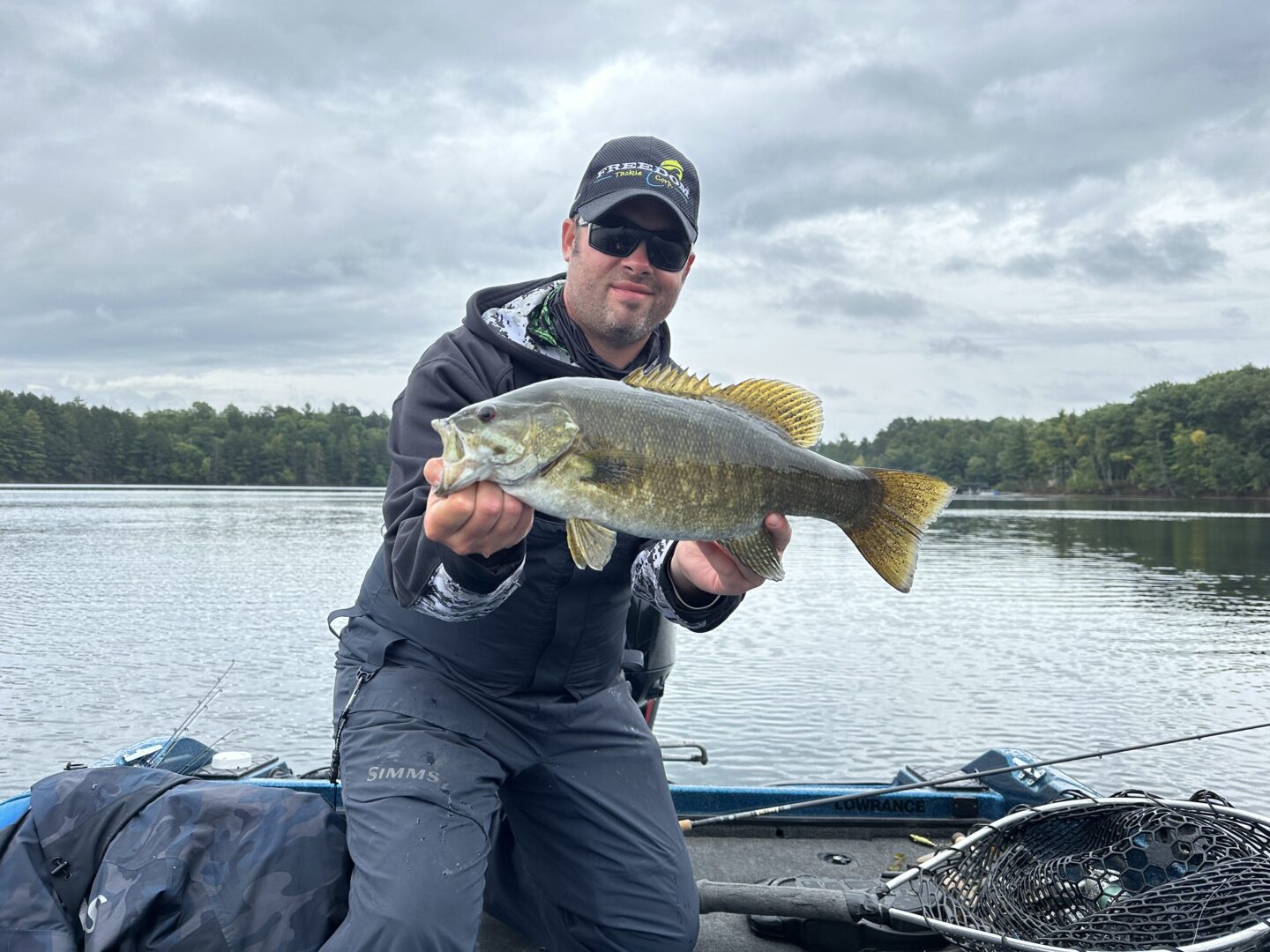
I’ve learned over the years not to beat a dead horse. We’ve spent many cold front days on challenging waters that are deep and clear with hopes of coaxing a trophy bite or two. The only problem on these lakes is smallmouths don’t have many places to hide and retreat to. Without the habitats and structure, finding a trophy becomes a needle in a haystack. And if you find them, most smallmouths are reluctant to feed willingly, or move far from their spots.
Nowadays, what I do altogether is avoid the clear, featureless lakes lacking hideouts and cover. Instead, I will seek shallower, fertile lakes and systems with weed and wood cover, and rock habitat.
River systems, flowages, and dark water natural lakes are excellent cold front options whose smallmouth fisheries utilize their habitats and protection they provide.
Rivers and flowages are the most ideal smallmouth fisheries in cold fronts due to their reduced visibility and currents – both of which mask the affects of cold fronts and consequently their smallmouths tend to behave and feed under more normal circumstances. Another benefit of fishing them is cold fronts can quickly lower their warm summertime water temperatures.
Rivers and flowages are top smallmouth destinations for us in spring and fall. They offer smallmouths not only the topography and structure such as deep holes to retreat into, but a wealth of habitat too, such as rock, boulders, wood, and plant species. Throughout the year, and as dictated by water temperature, smallmouths can dwell shallow on these fisheries.
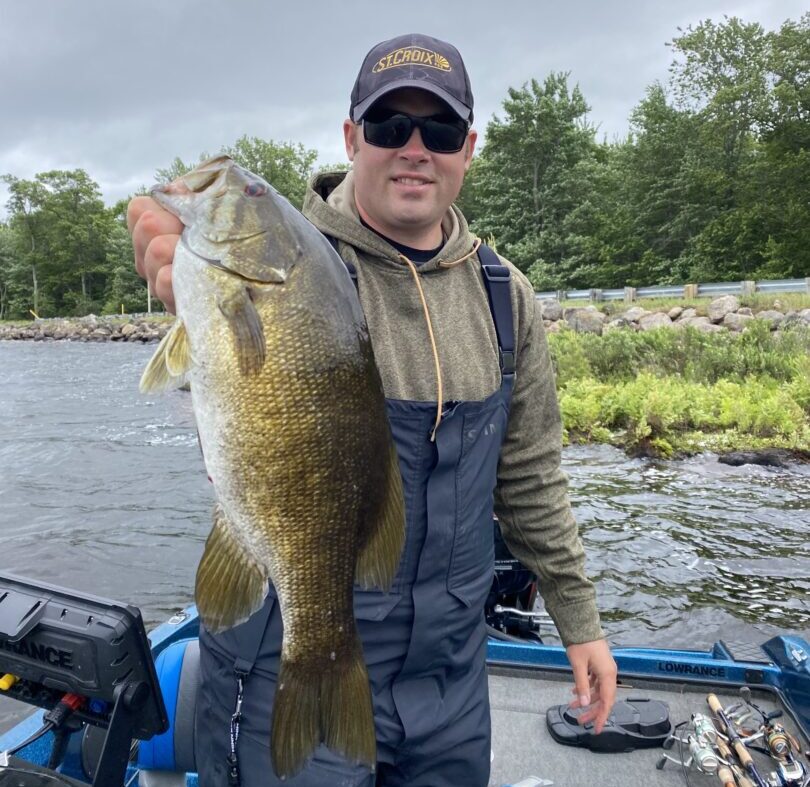
Dark water natural lakes meanwhile will contain active smallmouths too. The landscape of the Northwoods contains several dark brown & tannic waters whose high fertility grows smallmouths quickly and large. The robust fish in these waters too have no shortage of adverse condition hangouts that includes weed lines, bulrush beds, wood, cribs, reefs and rock piles. Despite their very low visibility being a turnoff to most serious smallmouth anglers, some of the largest and heaviest inland water smallmouths in the state of Wisconsin reside in these overlooked lake types.
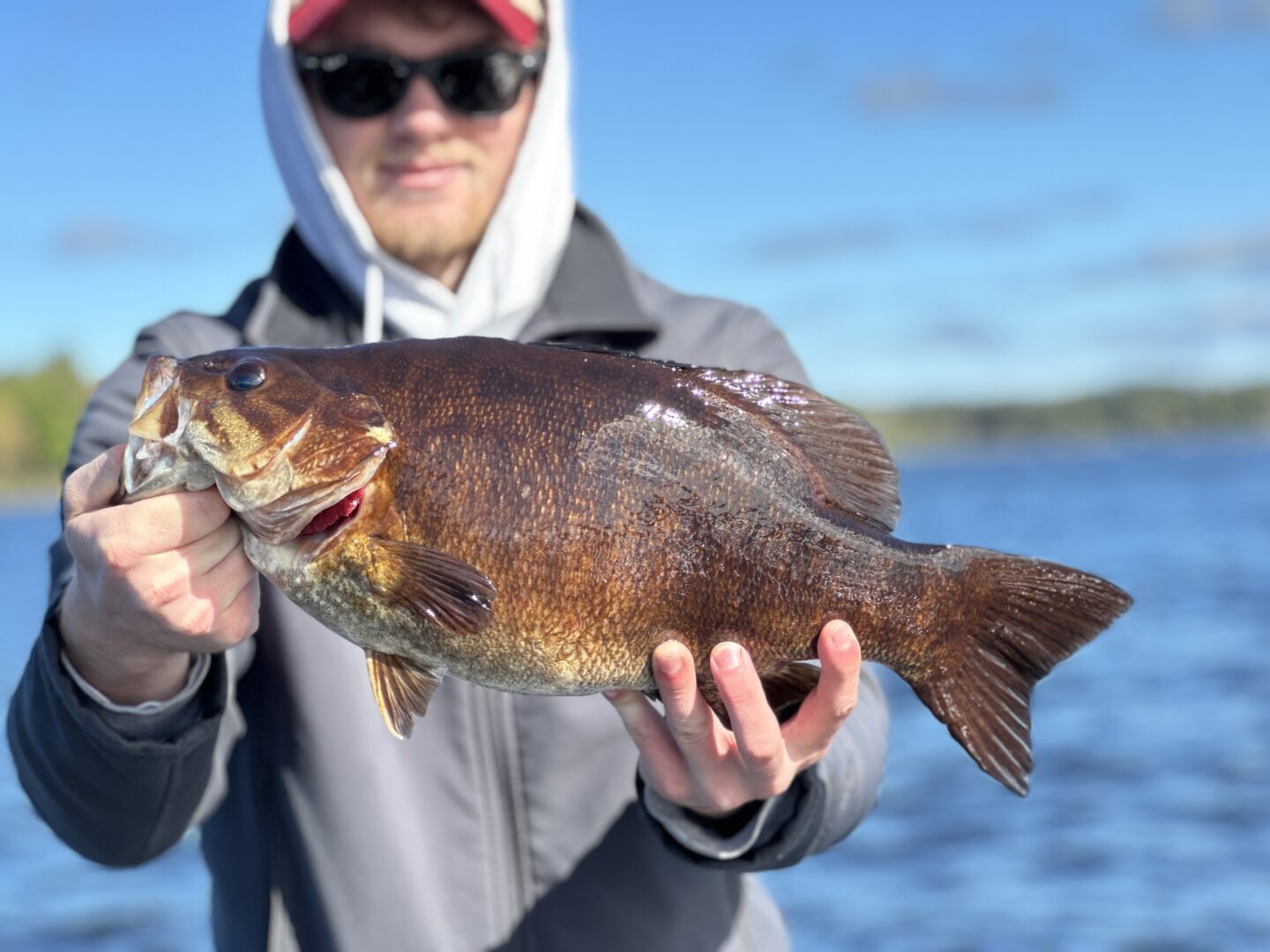
If you must fish clearer waters and typical lake types, look for waters that have weed growth (milfoil beds), and active fish crib programs.
Milfoil is among the best form of protection smallmouths enjoy. Where dense near-shore pockets and weedlines are available, smallmouths can be found attached and stacked up against this cover.
On lakes that have them, fish cribs are smallmouth magnets. Fish often gravitate to these large, man-made wood structures if the lake provides nothing else for cover and protection. Fish cribs have been built and submerged by DNR agencies and lake associations across several lakes for purposes of creating artificial habitat and fisheries enhancements. Their depths and lake placements on most Wisconsin inland lakes are commonly between 12 to 16 feet. These fish attractors are excellent smallmouth habitats year-round, and further appealing in cold fronts as they can pin up next to logs or lay inside of them.
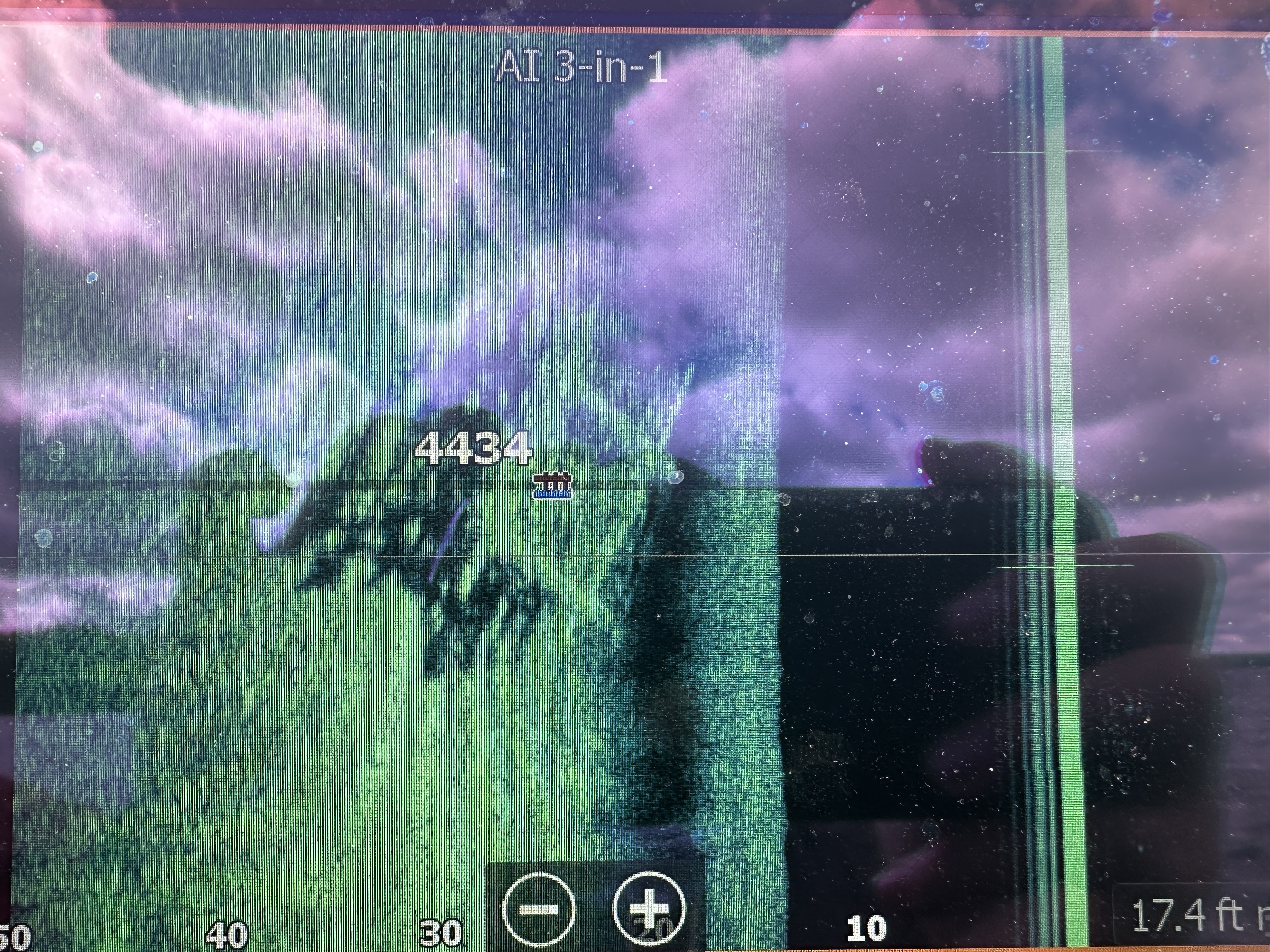
Last, it always helps to go to action waters on these types of days too.

Articles
 My Shallow Water Playbook for Ice Out LargemouthsPromptly at ice out, largemouths swiftly relocate from their ......
 Finding Trophy Bass LakesIt’s no secret that location is the most critical factor in ......
 The Best Lake Types to Fish by SeasonSo many lakes, such little time. It’s easy to get overwhelmed by ......
 My Best Chatterbaits for Spring LargemouthsMarch and April are Chatterbait-centric months for many of us who ......
 Catching Smallmouths if it’s a Cold SpringCold water and below average temperatures of spring are a byproduct ......
 Proven Presentations Only at Ice OutDepending on where you live, ice out could either be nearing or is ......
 Smallmouth Scenarios by SeasonEvery fish species has a seasonal calendar that in no way resembles ......
 The Best Largemouth Bass Lures of 2025I love fishing for big largemouths, and it’s too bad these ......
 The Cheat Code for Sculpin and Goby BaitsLike gooey and greasy cheese curd appetizers to us, gobies and ......
 Catching Smallmouths in November“Andrew, at what point do you stop catching smallmouths in ......