
Microwaves

Last May (May 15, 2022) on one of northern Wisconsin’s largest inland lakes, my customers and I launched to chilly 45-degree water temperatures. Cold water be damned, we weren’t going to let it prevent us a good day. Despite the lake’s cold water, what we had working in our favor soon after was sunshine with 70-degree air temperatures incoming for the afternoon, and steadily blowing southerly winds.
If we played the wind, we’d find the fish. To the windblown side of the lake we went. First areas we worked through had only spawning walleyes. Then to the far north end we puttered. It was the windiest with warmest water over there.
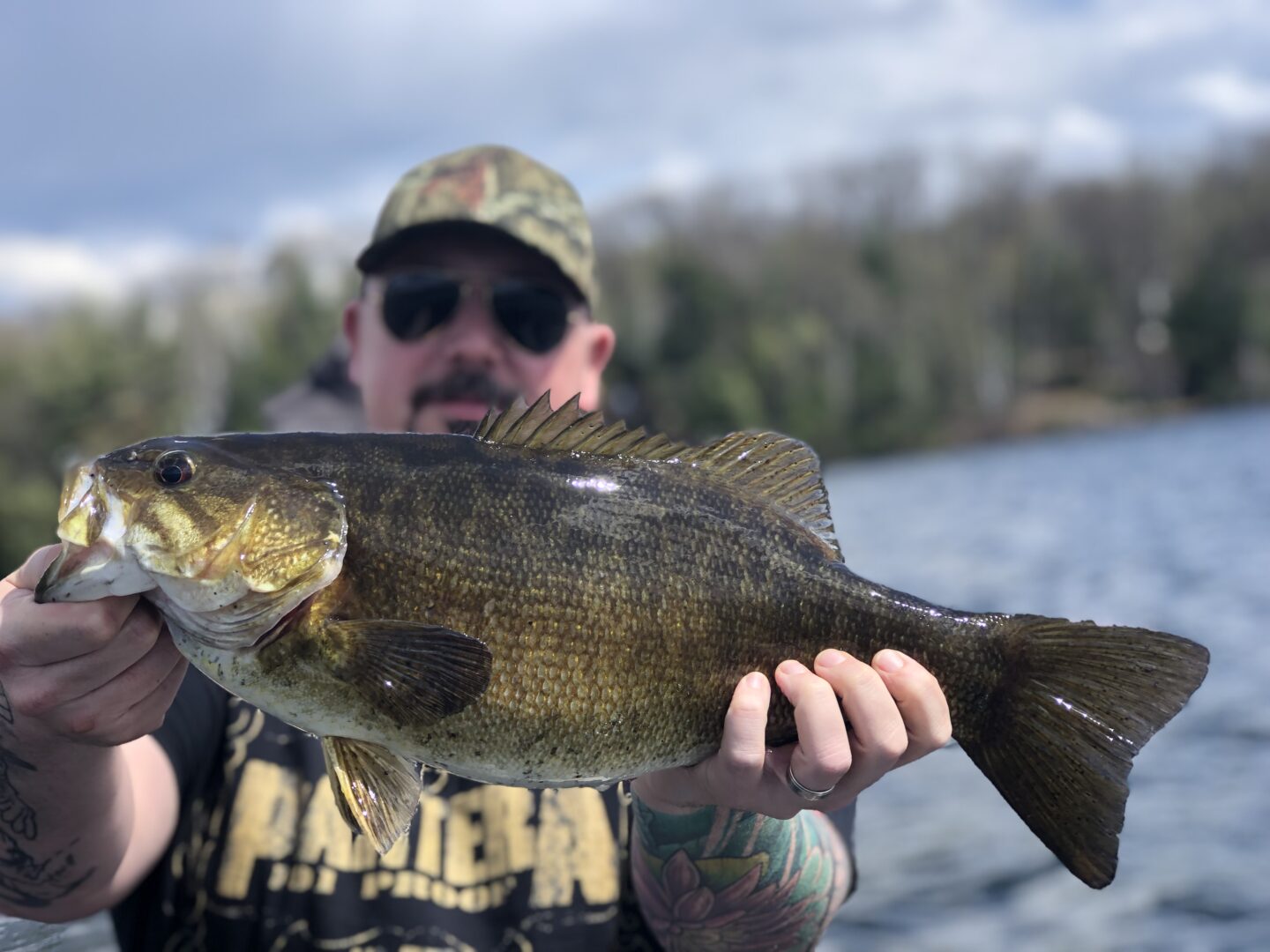
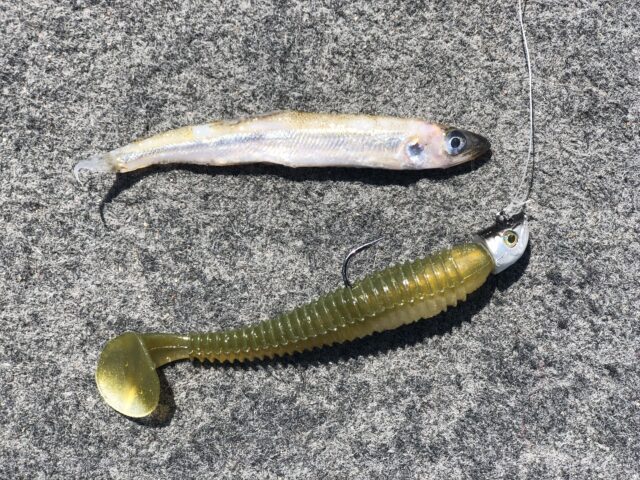
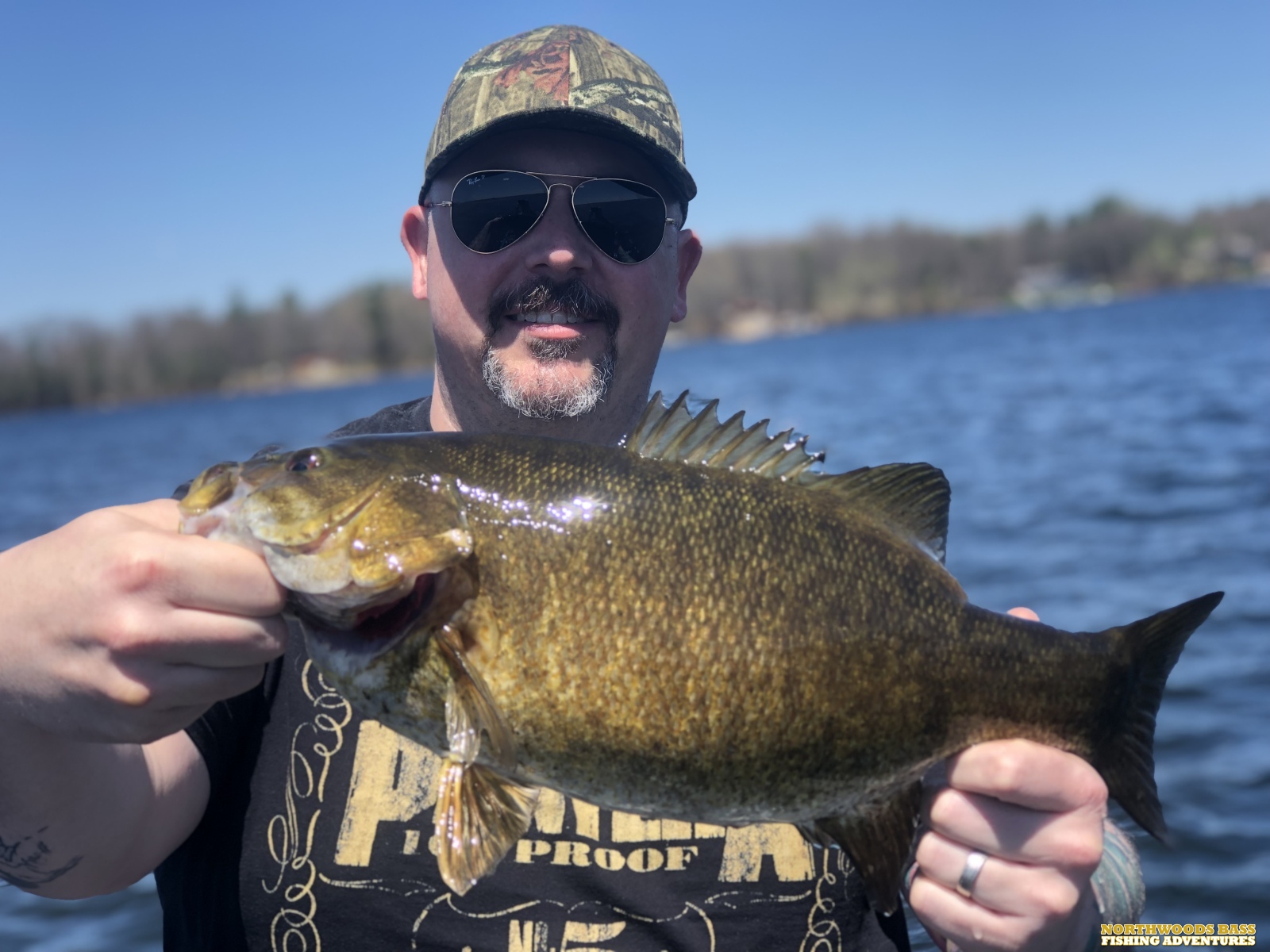
For the next 6 hours, we pounded a large sandy, windblown bay that was collecting and circulating warm surface water. It was full of life, and averaging 12 to 14-degrees warmer than where we started from. We stuck with the program of keeping the boat in 5 to 8-feet, casting smelt imitator X-Rap 10’s and 3.8” paddletails up into 3-foot depths. By afternoon’s end, an ungodly number of big walleyes and smallmouths were captured. Each one of them concentrated to microwaves.
Location precedes everything in spring, dictating lake choice, specific spots, and how to go about with my business. It is the greatest influencer of my boat’s fishing success from now until spawn.
In combination with location, sunlight is the catalyst of most smallmouth movements this time of year. Its radiance warms the fishery, further dictating smallmouth locations and their feeding. As the sun’s rays penetrate into the waters, smallmouths seek the warmest areas of the lake to set themselves up at. Wind direction then helps seal the deal. Identify each lake’s warm water areas, and you’ll come closer to finding its smallmouths.
Under good conditions, warming trends and southern & westerly winds, water temperatures rise. Smallmouths are active, feeding and infiltrating into the lake’s littoral zones. Oppositely, under cold fronts or overcast skies, there will be lesser underwater activity. Spring’s forward progress stagnates, with smallmouths cooperating less. But they are still catchable if you’ve found the lake’s heat conductors. These lake areas and its pieces of shallow structure absorb heat. Smallmouths attach to them like magnets.
Every lake holds a few of them, or several. What’s also nice is they won’t show up anywhere on the lake map or on your screens. Seeking them out must be done before even thinking of pursuing smallmouths at this time.
And it wouldn’t hurt to say a prayer for sunlight, the night before trip day.
Microwaves
Location precedes everything in spring, dictating lake choice, specific spots, and how to go about with my business. It is the greatest influencer of my boat’s fishing success from now until spawn.
Playing the Wind
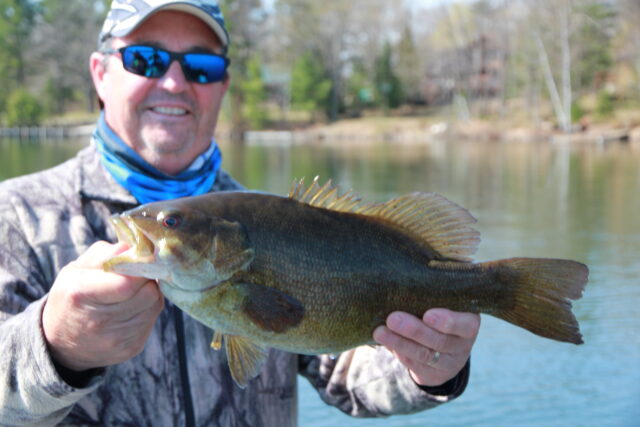
Peak smallmouth fishing in spring revolves around sunlight and water temperature. If you’ve perused over the thousands of spring smallmouth photos I’ve collected over the years, most of our best fish get caught during the midday and afternoon hours of bright sunny days. Others, meanwhile, get caught at any time. What’s common to all of these specimens is they’re associating to bottom structures collecting heat that are located in the warmest, most windblown regions of the lake.
Water in general is a poor heat conductor, but it has a high capacity to hold energy. When sunlight beams down to the lake’s surface, it heats the top layers most effectively. It’ll do the same to the lake’s shallow water areas, its littoral zone. At 6-and-a-half-foot depth, the sun’s energy gets absorbed and transformed into heat most quickly. Most lakes have a high capacity to hold onto heat.
Once absorbed, heat gets transferred throughout the waterbody through circulation – mainly wind and all of the undercurrents it creates. Since the upper layer is less dense than deeper water, it circulates well, bringing the solar-heated water of the surface down into the water column. Wind gets the warming cycle started.
If you’ve ever wondered why surface temperatures over 5 feet of sand is at 55 degrees while the open water basin of the lake over 60 feet is 45 degrees only a week or two after ice out, this is why. Water doesn’t absorb heat efficiently like specific structures and bottom types do.
When smallmouths rise up from their wintering holes is determined by water temperature, which is heavily influenced by sunlight and wind direction. It’s like clockwork, basically. When the water temperature hits a certain number for that lake, fish will rise up and follow a trail of underwater structure to the shallows they will be using for feeding, staging, and spawning.
Many of my favorite and most productive smallmouth lakes contain multiple staging areas, sometimes dozens, where fish show up early in spring. They’ll use these areas for feeding, and congregating for available warmth. Most successful anglers know the lake regions and specific spots that will turn on first will be those that warm the fastest. The areas that warm quickest are determined by the lake’s shape, its shallow water structure availability and bottom composition. Typically, shallow bays with exposure to the southern skies will warm the fastest unless a north wind is blowing all of that warm water back out towards the open basins of the lake.
Wind direction often determines where the best bites will take place. Playing the wind depends on several factors which includes air temperature, sunlight penetration, wind speed, and the under-currents beneath the water’s surface. In a perfect scenario, you want all of this to play influence on specific locations and pieces of shallow structure.
Microwaves
Big water, like the kind I brought my two customers to, takes forever to warm in spring. It is intimidating for the simple reason that much of the surface acreage of the lake is deep and very cold. Don’t make any gameplan until after launching the boat. Evaluate the wind direction and wind speed, take advantage of the most sun-exposed sides of lake, and allow all of it to influence your lake location.
In spring, the sun radiates the lakes and specific pieces of bottom structure just like microwave ovens heat our food on a dinner plate. Once you reach the lake areas suggested to you by the wind and sunlight, the hunt for heat conductors begins.
Every lake contains them.
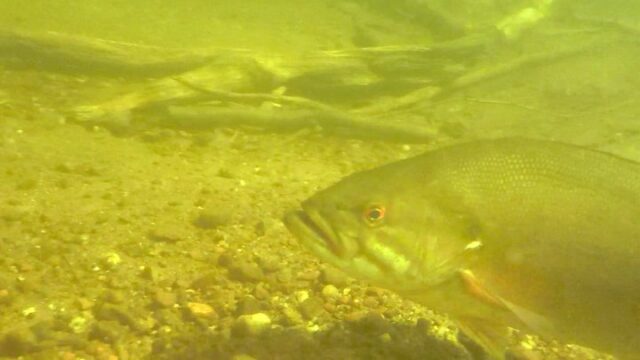
An early spring wind fishes best with some sunlight. When wind is blowing inward onto specific lake regions and spots and sunlight is present, the water will warm along shorelines and in shallow bays adjacent to deep water. By keeping track of recent wind patterns and its effect on specific spots, it’s possible to predict the locations of the lake where water will be warming.
Wind creates currents. Therefore, if the wind has been blowing from the west for 24 hours or more, there is a possibility that the rocky shoals and spawning flats facing west will most likely be conducting heat and hold the most active fish. Likewise, if wind is steadily blowing from the south, it’s a good assumption that smallmouths will migrate into and attract to the rapidly warming north bays.
When sunlight hits specific pieces of structure and reflects off certain bottom types, the surrounding area will bake and warm rapidly. Hence the term, microwaves. Every lake I fish for smallmouths is full of these unique spots and they are nothing more than natural heat conductors that can only be found on your own. Most lake maps and charts do not identify them, making them hot spots that are unique to individual anglers.
Every lake is different. Some have shallow neckdowns bays and pockets, while others have varieties of sand flats and beach areas, rock shoals, boulders, laydowns and wood, and muck bays. The one constant to them all is they collect wind and are exposed to sunlight overhead. Early season smallmouths are notorious for laying low in these locations to absorb heat themselves.
These shallow water locations rule for pre-spawn smallmouths. Pursuing them can be predictable as fish revisit the same locations each year – some of which are historic to the same individual fish.
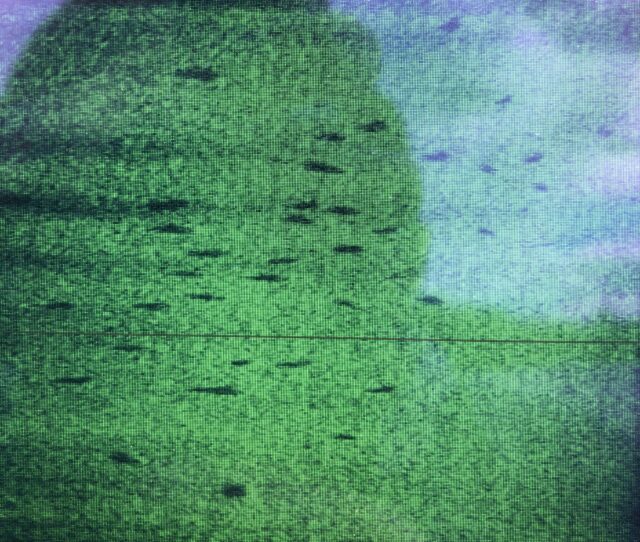
Pay attention to your temperature gauge, as well as detecting these structures on side imaging. Schools of fish could become visible on the screen. The Active Imaging 3-in-1 transducer for my Lowrance HDS-12 Live screens is amazing picture clarity for this.
Shallow Bays, Coves, and Pockets
If using Google earth or your navigational charts to study a lake and its topography, be hopeful of it featuring a shallow bay or two (includes coves or pockets) containing sand and muck with elements of rock and wood. If its placement is somewhere along the lake’s northern, eastern, or western shores, it’s likely to be warming at a rapid rate at some point in the day. When they do, smallmouths gravitate to these areas in high numbers.
Coves and Pockets
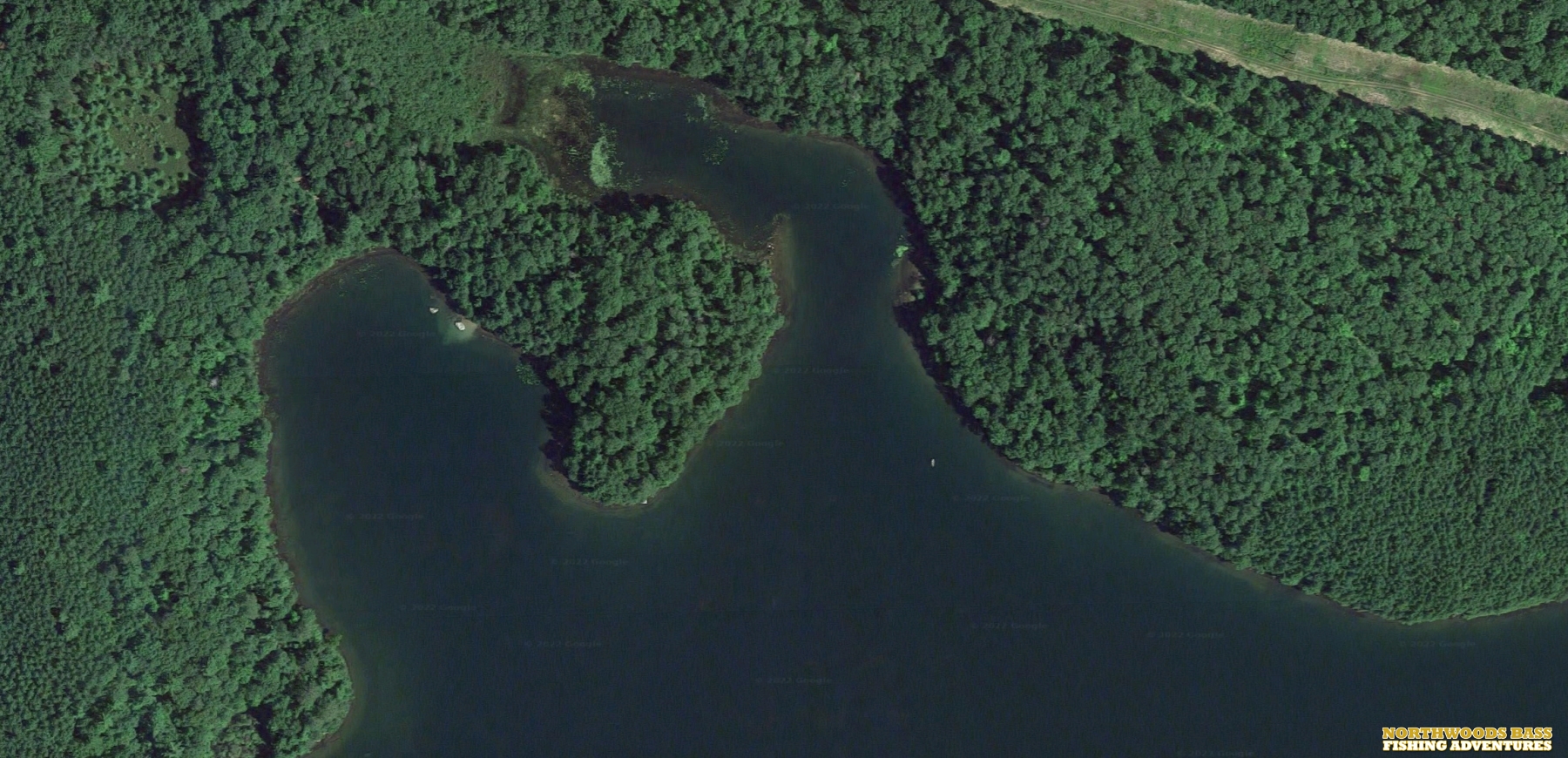
If using Google earth or your navigational charts to study a lake and its topography, be hopeful of it featuring a shallow bay or two (includes coves or pockets) containing sand and muck with elements of rock and wood.
The focus area should be the edges and entrances. This is where smallmouths are likely to settle and use first as staging sites for up to a few weeks before spawn. Under warming conditions, smallmouths will infiltrate into them further for feeding, resting, and their own sun bathing.
As waters are in the mid-40’s to the low-50’s, the best shallow bays and pockets can congregate dozens of smallmouths where fish could be milling around and chilling amongst one another. If they aren’t out in the open, I commonly find them holding up tight in the bay’s extreme sandy shallows seeking further warmth.
Shallow bays can be of hard and softer bottom. Smallmouths will favor rock, boulder and wood habitat, with a bottom of sand and muck, and maybe gravel or rock in any combination at these locations. Some of the best shallow bays I’ve found encompass rock shoals, and even emergent cabbage beds.
To target these fish, I swim slowly and subtly with swimming grubs. Kalin’s 5-inch Lunker Grubs fished on exposed ¼-ounce minnow heads are my boat’s fish finders and fish catchers on most days. If downsizing is necessary, in which smallmouths are fixated on smaller prey, consider downsizing to a 3-inch Lunker Grub with 1/8-ounce head. With lighter line it usually seals the deal.
Casting and steady retrieving them is the standby technique. Along the bay’s deepest edges, one can often get a nice flurry of bites along the first breaks in 5 to 10-foot depths. The same could also be replicated atop shallow flats when drifting and covering water. Make far casts, and run your swimmer thru the lower water column. Turning your reel 1x every second will maintain it at these depths. When smallmouths are shallower, downsizing your head to a 1/16-ounce or 1/8-ounce ball or minnow shaped head will allow you to probe through the skinnier water.
Other options to consider in these skinny water locations are weightless fluke minnows, hair jigs, and Z-Man finesse TRD’s presented on lightweight heads for slow-sinking.
Shallow Bays, Coves, and Pockets
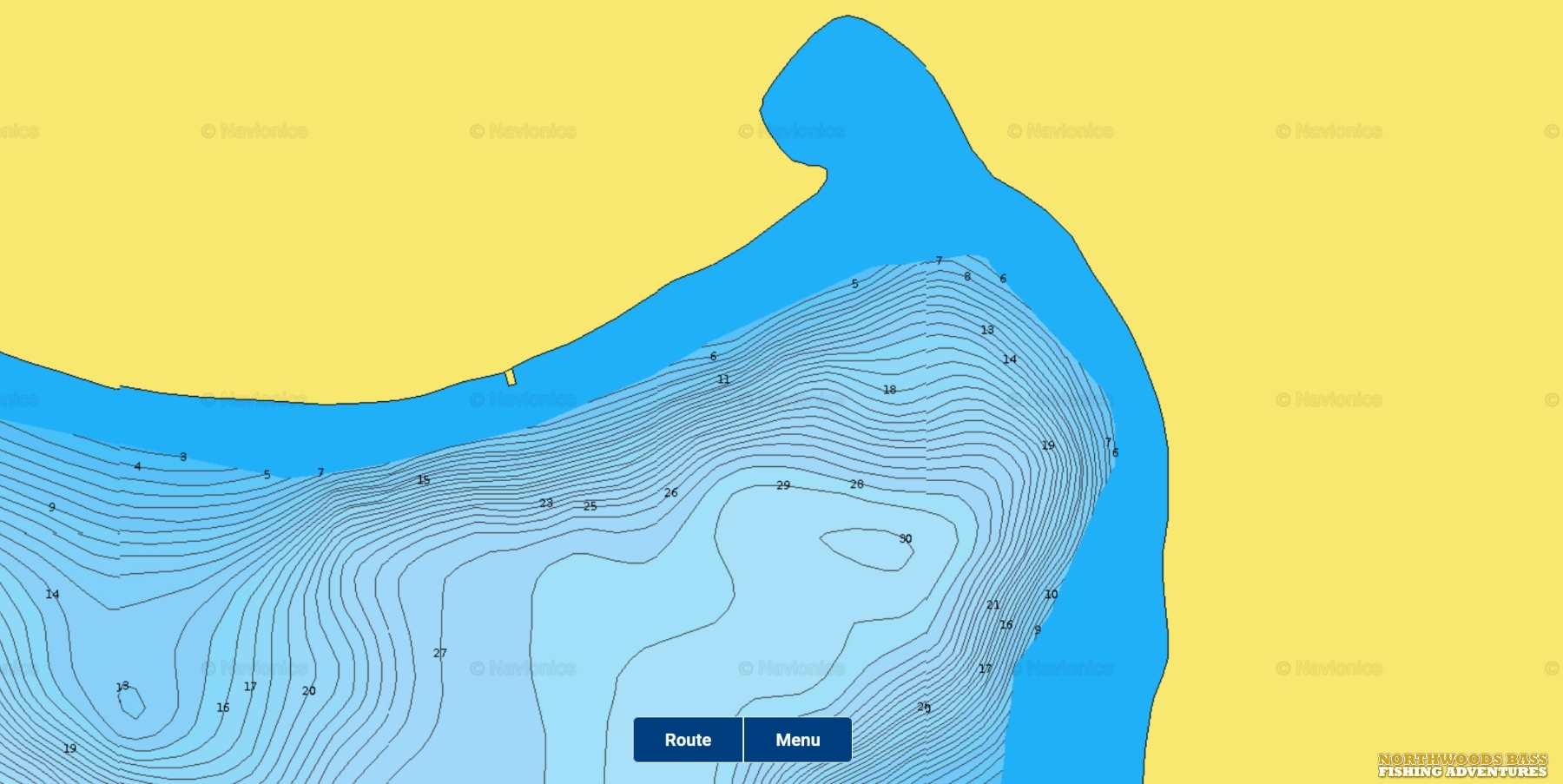
As waters are in the mid-40’s to the low-50’s, the best shallow bays and pockets can congregate dozens of smallmouths where fish could be milling around and chilling amongst one another. If they aren’t out in the open, I commonly find them holding up tight in the bay’s extreme sandy shallows seeking further warmth.
Sand Beaches and Flats
Flats and beaches with exposure to southern skies conduct heat. Smallmouths using these locations will proceed to lie on bottom, absorbing every ray like sun tanning babes do. We love to drift across them where depths can vary between 4 to 8 feet. Flats that are on the receiving end of wind should be met with high expectations. Additionally, the more spot-on-spot areas they contain, which could be wood, boulders, or rock piles, the more appealing they will be to smallmouths. Some emergent grass along the bottom is good too.
Sand Beaches and Flats
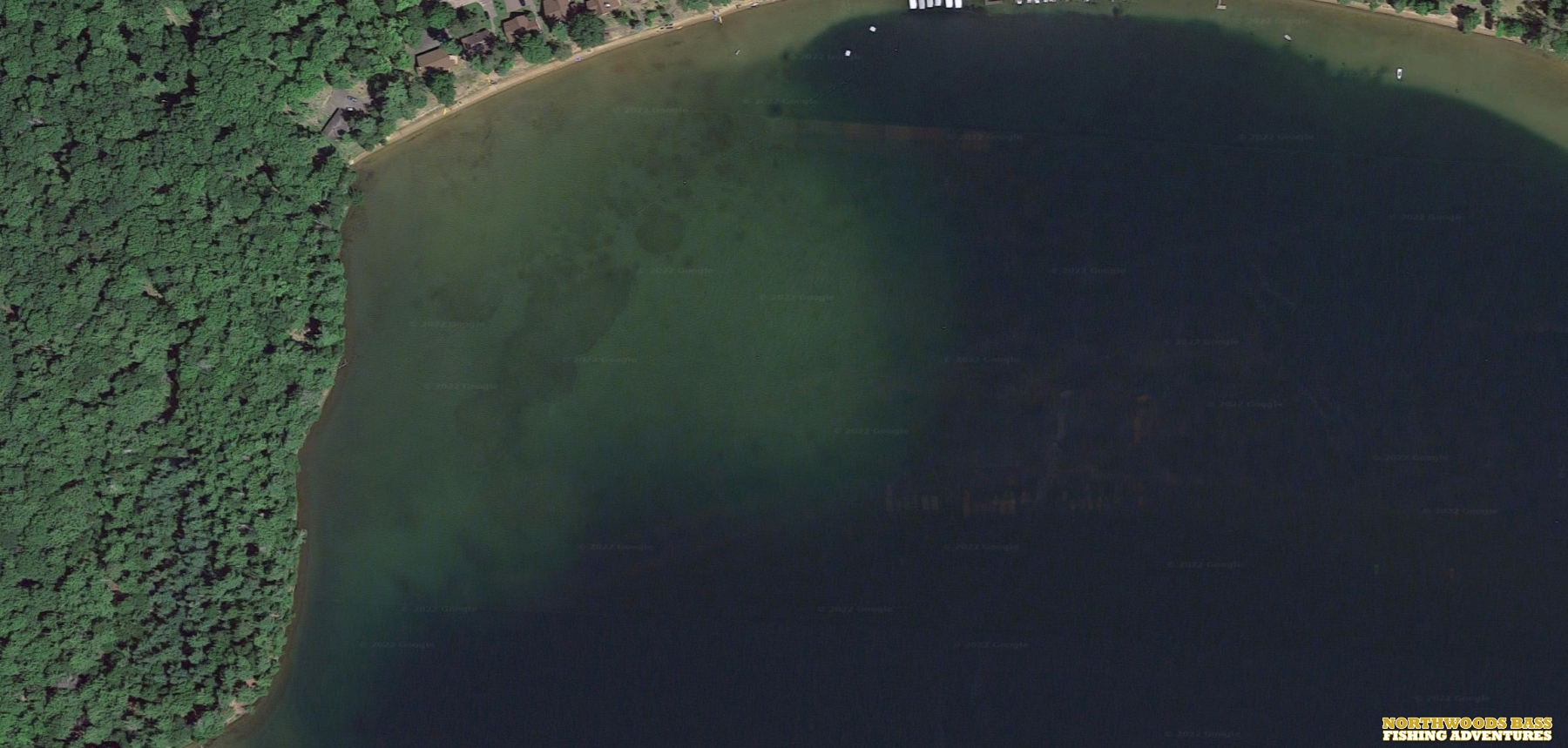
Flats and beaches with exposure to southern skies conduct heat. Smallmouths using these locations will proceed to lie on bottom, absorbing every ray like sun tanning babes do. We love to drift across them where depths can vary between 4 to 8 feet.
To best break-down the flat quickly and efficiently without wasting any precious time, long-casting horizontal presentations are relied upon in order to find fish and figure out their moods.
Swimbaits and paddletails are deadly in spring, matching the smelt, cisco, and log perch forage preferences. We fish a variety of 3-to-4-inch models in natural and translucent patterns, catching monstrous smallmouths. Whichever brands you fish, pay close attention to their plastic formulation, shapes, and styles. Be mindful that a thin tail segment will produce the necessary tail-kick and subtleness that is critical for success in colder water.
Swimbait heads will be your own personal preference. Be mindful that a heavier minnow head will produce the most action under slow speed retrieve requirements.
Flats fishing is enjoyable. Always be moving and searching with long casts. Once you catch a fish or two and bites are replicated, spend some extra time in that vicinity. Keep re-drifting until the entire flat gets burnt out.
Sand Beaches and Flats
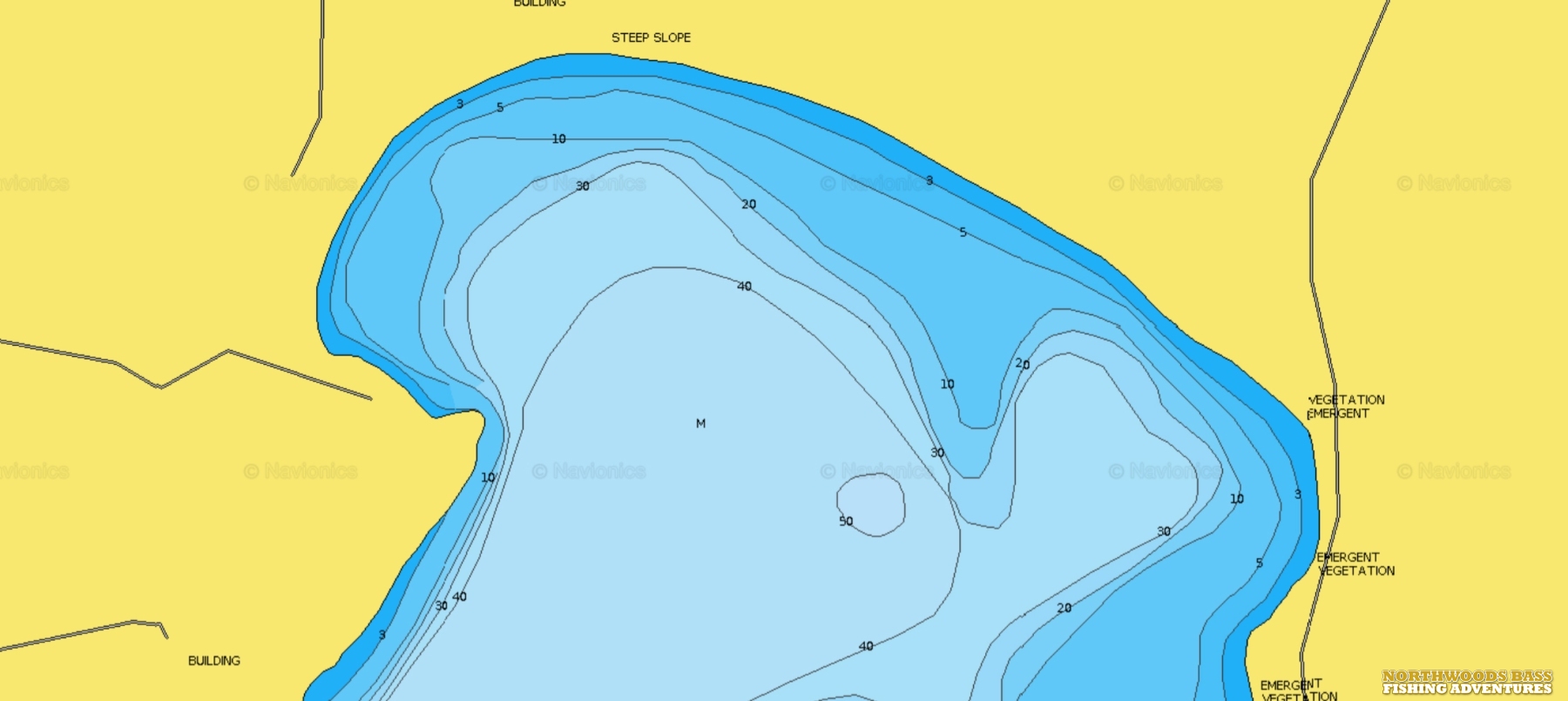
Navionics Hot Maps Platinum and Lowrance’s C-Map Reveal are both relied on for following or revisiting tracks and waypoints from previous drifts, and gives us the guidance where to fish next. When one productive drift gets completed, we can either drift across new sections and grids of the flat we haven’t yet covered, or we can revisit the same trail again to re-drift if the smallmouth we ran into haven’t conditioned.
Wood
On some lakes, it’s common to encounter several dozen inactive large smallmouths tucked up against shoreline wood for warmth and protection. Laydowns and wood are powerful heat conductors. Across some lakes, I’ve encountered schools of 20 to 30 smallmouths hovering and pinning up against single upright logs. It’s remarkable to observe how smallmouths congregate and pin themselves to barren sand and shoreline wood that lays in a foot of water just to absorb heat when nothing else is warming.
Slow horizontal presentations dominate in these shallows. The fluff of a marabou jig is dense, slowing its drop. These puff balls are unbeatable when fish are wary, finesse is required, and conditions are calm. 3/16, 1/8, 1/16, and 3/32-ounce hair jigs that achieve hang time and behave as a slow-falling glide bait will stay in the strike zone longest. Black is the most ideal color, but olives, browns, and purples catch fish too. I opt for 3G Smallmouth Solutions marabou jigs, and Jimmy D’s River Bugs.
With the proper tackle, allow the hair do all the work and slow glide for you. You need a long rod with a large capacity spool to get the fur-ball out there. I’ve previously favored 7 and a half foot medium light rods such as the Mojo Bass Hair Jig (MJS76MLXF), however St. Croix’s new introduction of the Legend Tournament Hair Jig (LBTS710MLXF) overtook it as being my favorite. It launches hair jigs a mile.
Wood
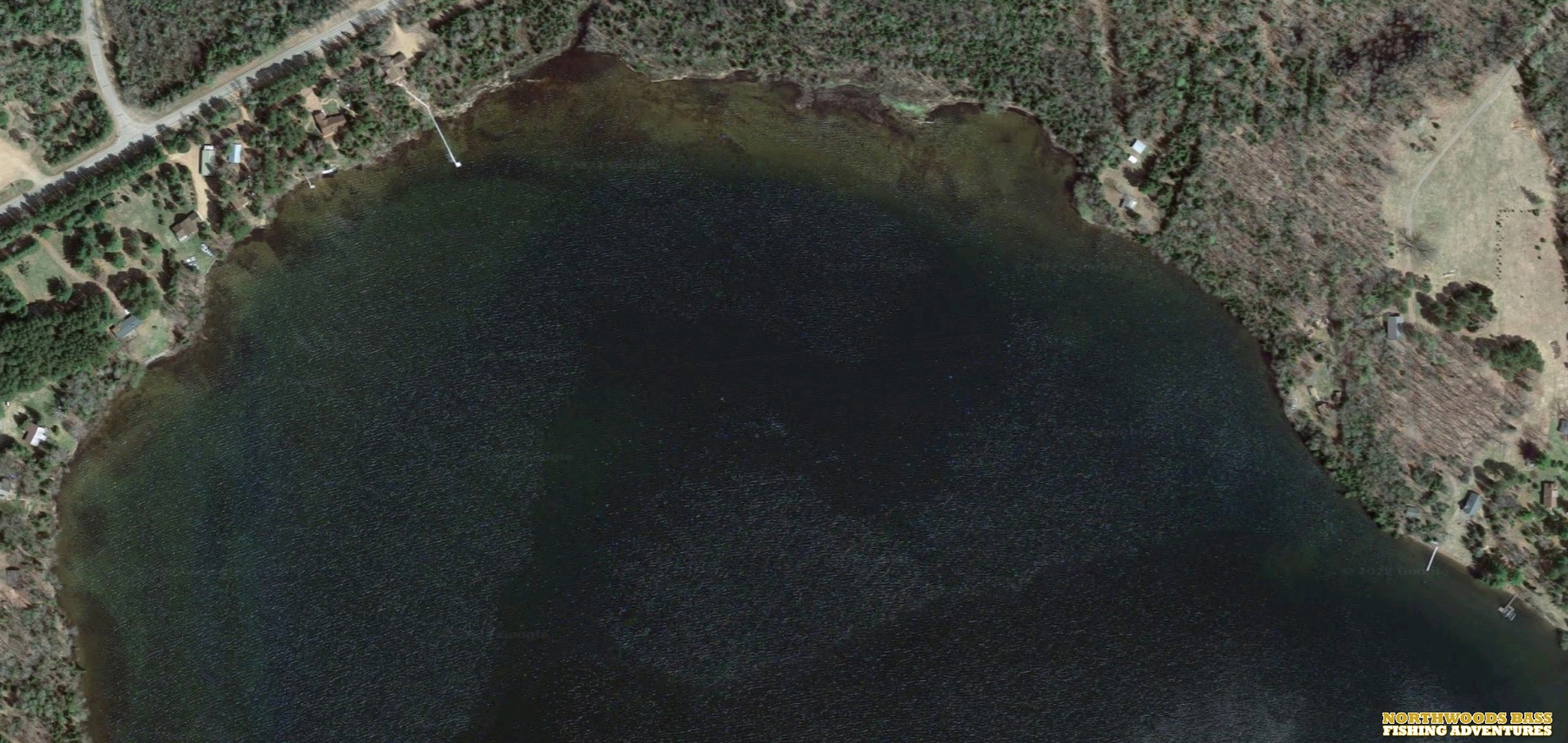
On some lakes, it’s common to encounter several dozen inactive large smallmouths tucked up against shoreline wood for warmth and protection. Laydowns and wood are powerful heat conductors.
Rock Shoals or Spawning Flats
Rock shoals get fished the most, simply because they are easiest for anglers to find with side imaging. Shoals that are displayed on most detailed lake charts and maps become popular community spots. Meanwhile, a good number of them are unmarked, unmapped, and are located in isolation from most other structure types. These, in turn, hold the most unpressured fish.
Several of my best smallmouth fisheries contain multiple shoals where fish show up early in spring to feed and commune together. They all top out at 2 to 3-feet, but provide sanctuary with a drop-off and access into deep water. Some days, smallmouths may be feeding heavily up top, while others staging off the edges. To best catch them, hang and suspend a jerkbait in their faces.
Fish them slow and methodically to coax lethargic bites. Work too fast, and smallmouths will lazily drift back down towards the bottom.
Try the deepest edges first, since water temperatures are still on the cold side. In these areas, I favor deep divers like the size-11 Shadow Rap Deep. It’s irresistible on a long pause in cold water, and will slowly sink deeper. Instead of jerking, give it more subtle pulls to achieve depth. I’ll wait patiently in between pulls, if necessary, upwards of 30 seconds. Rip downward to push it deeper.
As water temperatures approach the low to mid-50’s, smallmouths will progress shallower to the shoal. Now is when you’ll want to more aggressively, but still maintain that slow pace. I favor working with an X-Rap 08 and 10, Dynamic Lures J-Specs and Z-Specs, and the defunct 4-inch Matzuo Phantom Minnow – the wide tail kick and loud rattle of this bait continues calling them in.
Select bright, visible colors for clear water. Bright, unnatural colors such as hot heads, clowns, hot pinks, chartreuse and copper oranges consistently outperform realistic, natural colors for me.
Shoal smallmouth can condition quickly, if concentrated heavily. Try a soft jerkbait after the initial window expires. I work mine as a slow-sinking glide bait, but it can be fished with the same cadence as a hard jerkbait to draw strikes. Soft minnows trigger reluctant strikes from wary and conditioned fish your hard baits likely blew past fish moments ago. They will produce in these areas when the hardbait won’t.
Rock Shoals or Spawning Flats
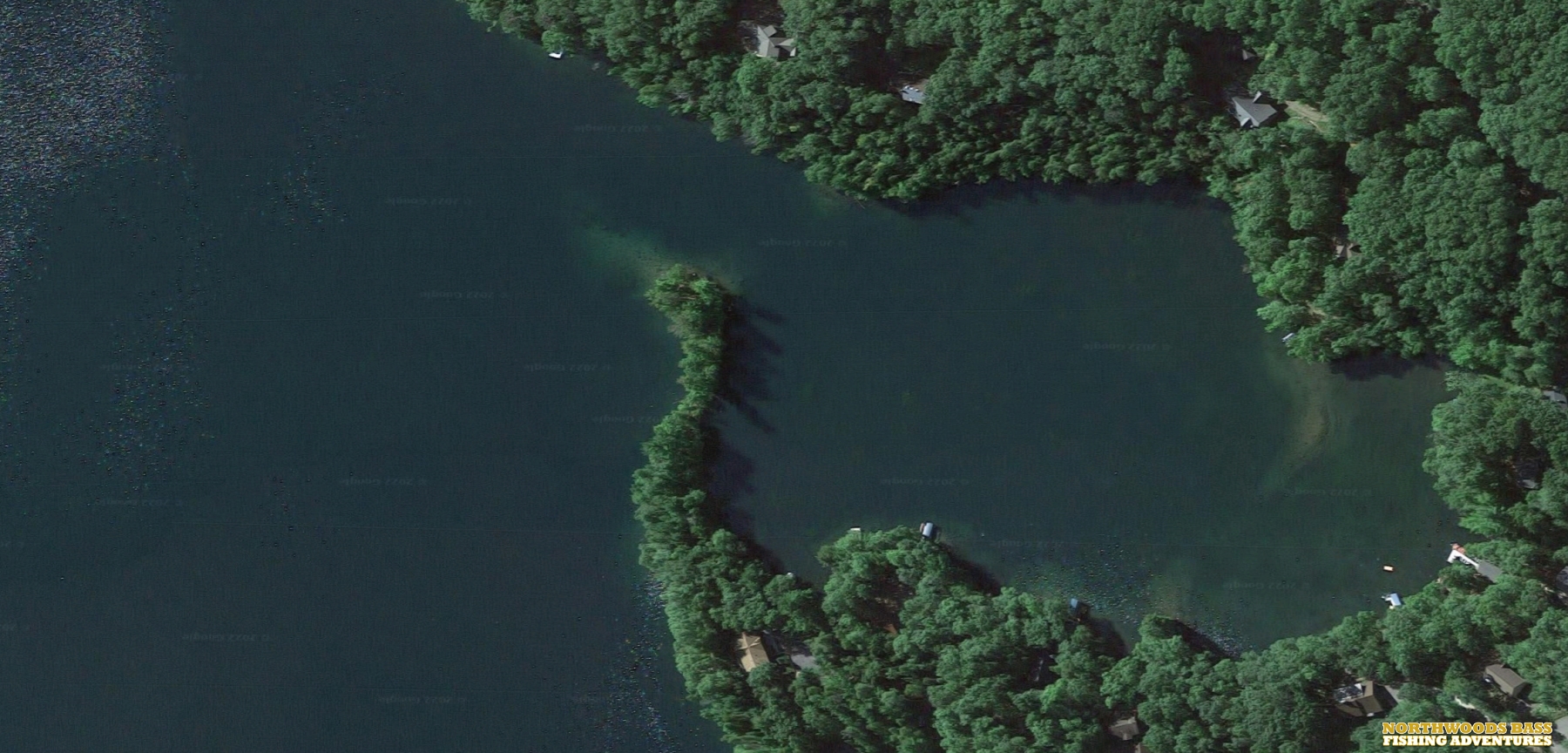
Several of my best smallmouth fisheries contain multiple shoals where fish show up early in spring to feed and commune together. They all top out at 2 to 3-feet, but provide sanctuary with a drop-off and access into deep water.
Smallmouths Heating Up
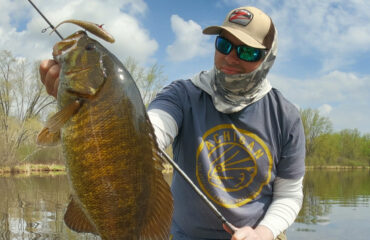
Exposure to sunlight, with wind collection, is paramount to the productivity of these areas and their attractiveness to smallmouths. Majority of the smallmouth you will catch in spring are located at, or near, microwaves. These spots can be up to 10 degrees warmer than anywhere else on the lake. Smallmouths can gather and loiter around in depths as shallow as 1 foot to as deep as 10 feet if that’s their edge. On some lakes, it’s common to encounter several dozen large smallmouths sun-bathing in the extreme shallows, laying belly-to-the-bottom and doing nothing.
Did you know that 90% of smallmouth are in 10% of the lake in early spring, too?
Most smallmouth anglers are bank beating and covering water in spring. While we target only these high-percentage locations and only a small fraction of every lake, most other boats don’t know of these hot spots.
Wherever you fish, it becomes crucial to gather as many key spots all over the lake and to plot out a milk run of spots that can be reached and revisited repeatedly throughout the day, depending on sunlight penetration and wind direction. Once on the spot, follow your electronics and gauges closely. If the water is warming, stick around and camp on the spot for as long as necessary, especially if the spot is known to collect smallmouths each spring. If fish haven’t yet moved in, move onward to the next spot.
Early season smallmouths tend to move onto microwaves in pods, but sometimes in heavy concentrations depending on that specific area’s size. For example, the bay we worked that afternoon was about 100 acres large – a huge piece of water for several schools of fish to use. Fan cast through every microwave before planning your next move. The key to catching these early season smallmouths feeding and laying in shallow water is to stalk them. It’s always tempting to cover as many spots as possible to maximize productivity but in early spring it’s unnecessary. Most early season smallmouths will get captured from specific lake regions where the water is warmest.
Regardless of chilly mid-40’s surface temperature, and under the right sun and wind conditions, spring migrations can be expedited and completed quickly. The most exciting bites of early spring will happen atop microwaves.
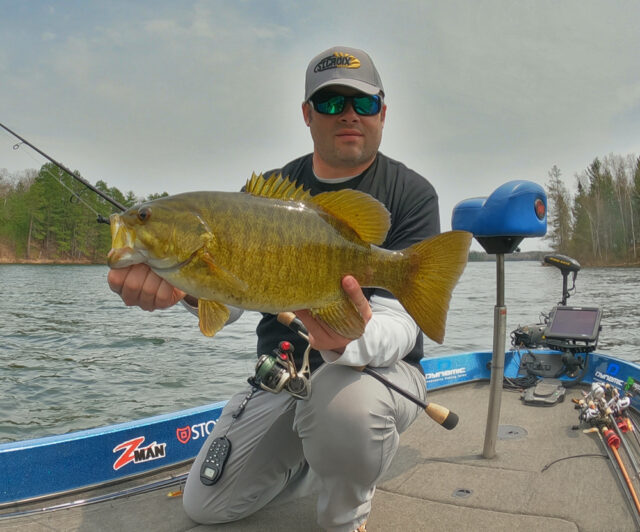
Andrew Ragas splits time between the Chicago area and Wisconsin’s Northwoods. Based in Minocqua, WI, he specializes in trophy bass fishing and offers guided trips from May thru October. While big bass is the passion, he dabbles in multi-species as well. He may be visited online at www.northwoodsbass.com


Articles
 Lakes to Fish and Avoid During Fall TurnoverIt was a hot summer and thermoclines on deep lakes were noticeably ......
 Top Lures for the Early Fall TransitionLate August to early September annually represents the early fall ......
 Fishing Algae Bloom LakesClear in spring and green by late summer, algae blooms are an ......
 Smallmouth Grind-OutsThere’s a great chance that every fishing guide out there has a ......
 Inside Edge LargemouthsLargemouths love edges, and the most desirable fish I catch during ......
 Northern Water Snake PatternsOpportunistic predators with voracious appetites, largemouth bass ......
 Dark Water SmallmouthsWhen thinking about the prototypical and perfect Northwoods ......
 Locating Rip Rap Shorelines on FlowagesWith the local flowages down several feet, use this current drought ......
 Fish CatchersSmallmouth bass fishing has changed immensely over the past decade. ......
 Minimalist Smallmouth Fishing with St. Croix RodsIf you want to catch more fish and learn to be efficient, ......