
Float Trip Muskies

Across the northern Midwestern states and Ontario, muskies have become the most popular sport fish and the highest growing angling demographic over the past two decades. In today’s era of exploitation due in large part to fishing guides, television & media, social media, and internet culture, many lakes and their historic muskellunge fisheries have become increasingly populated and pressured. Conservation enacted by special interest groups and state / province management luckily protects the overfished specimens from harvest. While stocking is able to restore historic fisheries to their former glory, supplement and maintain them, and expand the population range, it also comes with a high cost. Stocking is very tedious and expensive, and supply of fish has difficulty meeting high demand.
While muskies on pressured lake fisheries throughout Wisconsin and Minnesota encounter and ignore baits several times per week, small river muskie fisheries located in obscure, wilderness reaches have become neglected and forgotten. These fisheries were meant to be kept silent and mysterious.
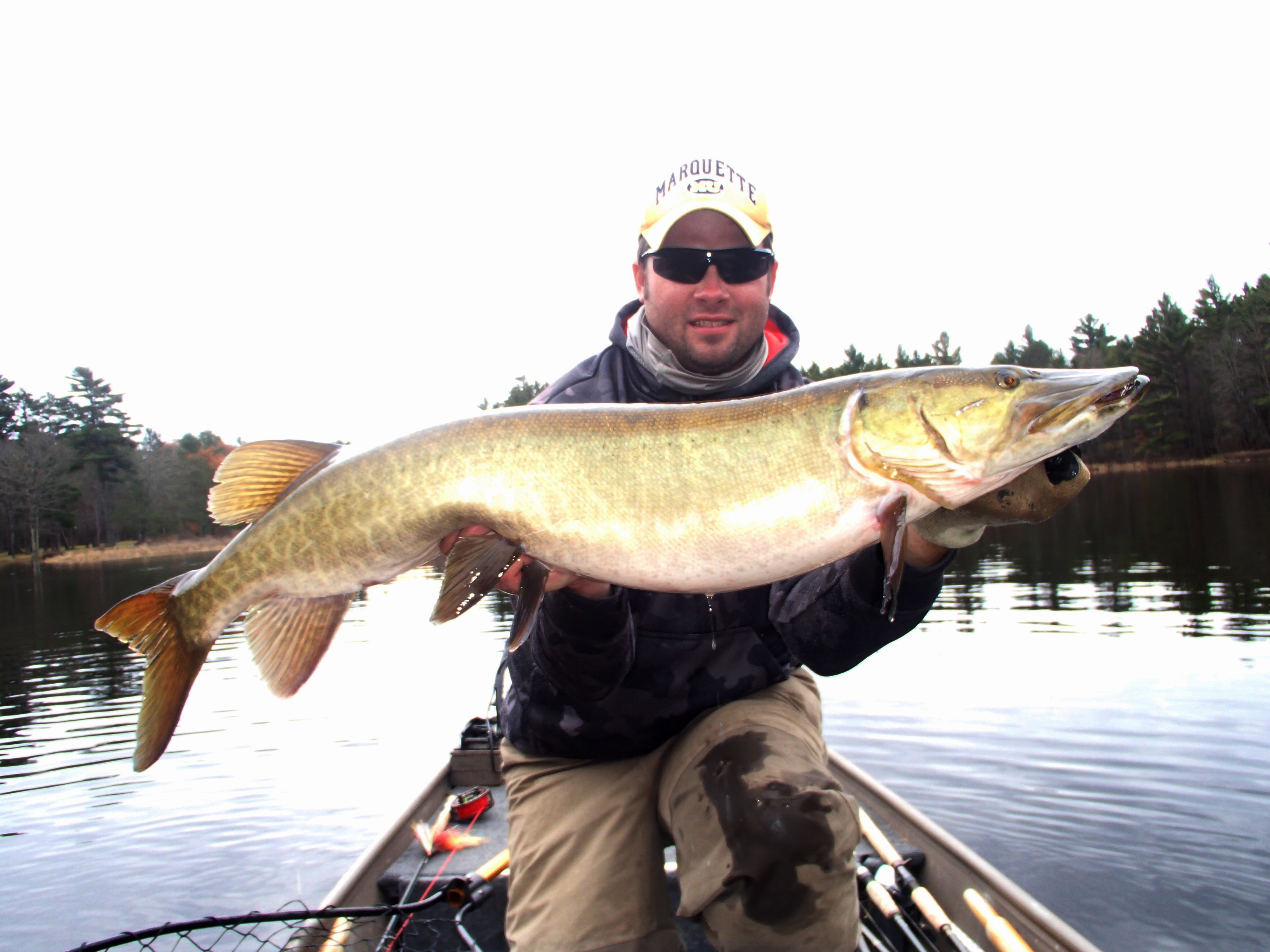
Rivers are the most accessible public waterways in the country, and continue to be the least under fished for this species. When I first started pursuing muskies in northern Wisconsin over 15 years ago, river fisheries were my alma mater. I cut my teeth fishing them, and caught my very first muskies from them. Fishing them by small boat and wading is a passion I pursue every day I can, God willing I have time and energy, and find a way to access them.
Muskies off the Grid
Look on the musky map. Rivers flow everywhere, forming an inter-connected network of creeks and watershed systems. The thrill of exploration, adventure, discovery, alone time, and an untapped fishery attracts me to them.
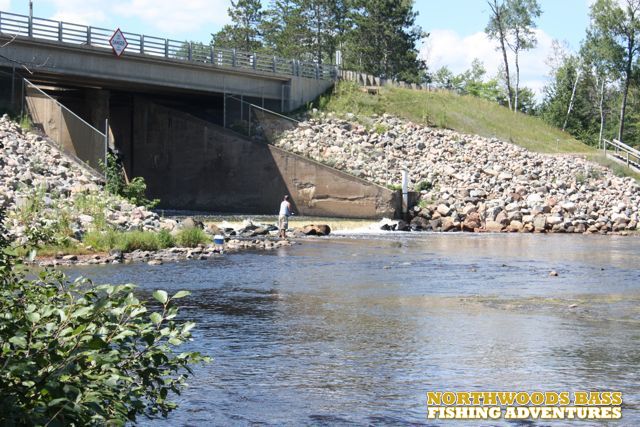
Accessible from roads, bridges, landings, dams, parks and public lands, rivers are far more approachable than lakes, offering anglers affordability, simplicity, and several options for success. It is the rarest form of muskie fishing that doesn’t require long distance traveling, a $60,000 boat, on top of thousands of additional dollars in baits and other equipment to successfully fish. Rivers are so much cool water that people won’t ever get to.
All trophy fish are susceptible to exploitation. Muskies are no different. They are at the top of the food chain in fresh water. Their populations are most affected by exploitation and angling pressure, which is why they are so elusive on the most pressured fisheries. River fisheries on the other hand are the least exploited, and their muskie populations are the most unpressured specimens remaining. While elusive lake fish lazily follow, river fish are mean and hungry to strike.
River fisheries are productive year round, and are located nowhere near busy towns & roads. The best river systems have vegetation, and lots of wood and laydowns for cover. Riffles, springs, and well-oxygenated current provides relief to fish in summer months, and the prevalence of holes, pools, oxbows, and backwaters give muskies homing areas. River muskies favor slow to medium gradient current, ½ mph or less. Another important characteristic to look for is wintering areas. Deep wintering holes are required for survival and year-round residency. In most northern rivers, 8 to 10 ft. is considered deep and suitable.
The best fisheries are high action with good catch rates. Muskies in them can be plentiful. Their many smaller fish are uneducated, but big specimens are wise. These high density fisheries contain numbers of fish and several year classes due to successful natural reproduction, high recruitment, and no harvest. On a typical float or wade, several fish might be contacted. On a 5 to 10 miles length float trip, dozens of followers might also be seen. Low density fisheries meanwhile come with lower expectations. On these flows, follows and sightings are few, but bigger fish are most common. They possess marginal natural reproduction, and their fishery merely exists due to migrations, or escapement from other connecting watersheds where stocking or natural reproduction occurs.
Not all rivers are created equally, and most are never stocked. Habitats and current gradients differ, as do fisheries. If you float and cover several stream miles per day, you can encounter several fish and catch a few of them or none at all. Some river systems in Wisconsin such as the Chippewa, Flambeau and Wisconsin Rivers and their tributaries are loaded, able to sustain themselves through natural reproduction and high recruitment. Other fisheries on the other hand, are not as fortunate as these signature systems.
Several years of experience of fishing many different stretches and pools, and reading the water will reveal their secrets. Trial and error, and time, has allowed me to determine where and when to go. Despite contrasting river types and fisheries, most river systems with muskies in them now are fishable populations and worthy of exploration.
Access is Half the Battle
Every season, I grow restless. I have my sights set on rivers and systems I mean to explore, and gather intel on how and where to float and fish them. Every river system and its muskie fishery have lots of unknowns that need to be answered. Nothing ever gets done by just thinking about it.
Rivers are state-owned. Whether boat landings are present or not, they can be approached and accessed from public lands in a variety of ways. Half of the battle is getting there.
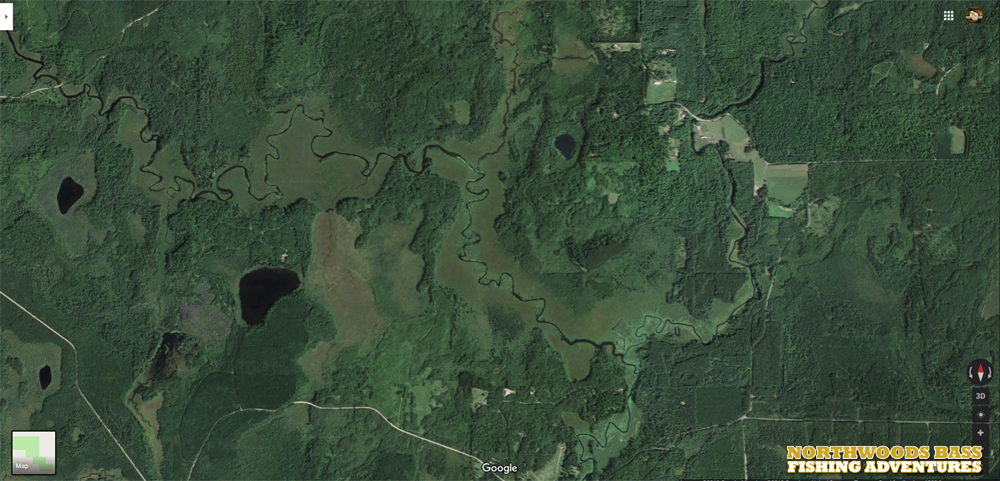
When researching a river and its fishery, lots of preparation in-season and during the winter offseason is done with a variety of resources. Gazetteers and field atlases showcase public lands and most river landmarks. DNR websites can offer fishery reports and stocking data. USGS websites and stream flow apps provide river flow and gauge height data, important for determining when and where to float. Mapping and satellite imaging on Google maps is the most important tool. I spend several hours each year studying various rivers to locate put-in and take-out sites for my boat and trailer parking, and determining distance and mileage of floats. Additionally, interpreting Google maps can also help identify depth of pools for my boat and outboard navigation, and will also give me clues to depth, current, and fish habitat.
An off the grid fishing adventure cannot be accomplished without detailed planning. Wisconsin locals are notorious for leaving fan mail on windshields, and occasional vandalism, especially if they don’t appreciate you fishing their rivers. Always be aware of your surroundings, even if you respectfully parked and accessed through public lands. Never trespass or access these waterways illegally from private lands.
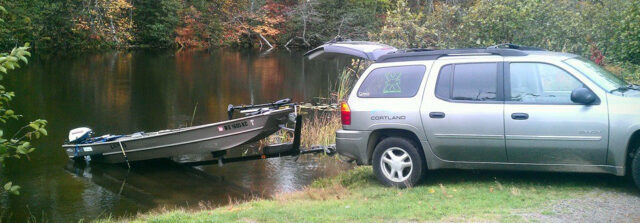
To get in, you will have to create your own boat landings some days. It’s 4-wheel drive or bust, as every river system I fish has approaches from unimproved or unmarked roadside access. Portaging through pools and dragging boats across land to reach water is common.
River Strategy
Most muskie anglers are talkers and not doers, preferring the easy way out, and fishing from the comforts of a $60,000 boat rather than endure the brutally physical nature of fishing from foot or small craft.
Many river systems are suitable for small aluminum boats, canoes, kayaks, or specialized river craft that includes jon boats and drift boats. The latter two are the best fishing platforms for small navigable rivers.
The ideal river rig is a 14 to 18 ft. jon boat rigged with a short shaft or jet drive outboard. Jon boats can float through inches deep water and riffles, and are best for stability, mobility, and all day casting & standing. Best of all, they are lightweight for the worst landings and portaging.
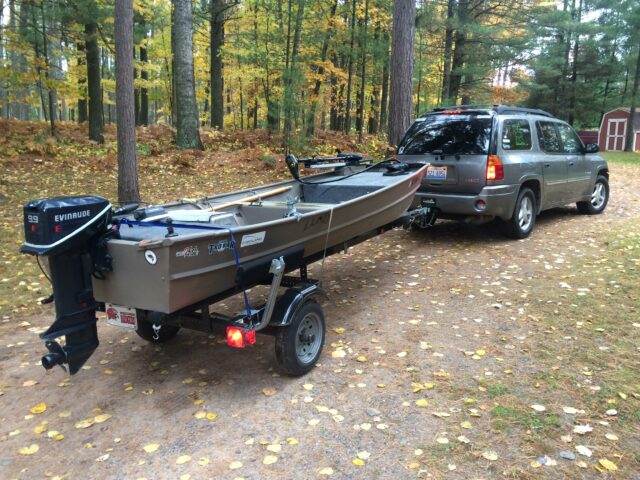
Prior to 2012, all of my river muskie fishing had been done by wading, or fishing from a small 12-foot v-hull boat. My gung-ho approach to river muskies quickly outgrew them. In 2013, I constructed my own customized river fishing rig. I found a 1448 jon boat sold along road-side for $300. After gutting it completely, I restored it and two stable casting platforms were built. It was then equipped with a 15 horsepower short shaft Evinrude, a few basic Lowrance HDS screens with GPS, and a 45 lb. thrust MinnKota Edge cable steer bow-mount trolling motor. I did it all for less than a thousand dollars.
Cable steer trolling motors are an absolute must for the meandering and awkward maneuvering on rivers. Beyond this necessity, 3-arm anchors are crucial to drop from the bow and hold position in current. A Talon is useful on larger jons, but not important. Hand powered oars are by far the best stealth and boat control there is. A set of breathable waders and wading pants are essential for portaging, wading, and weather protection. Don’t forget your life jackets and some basic survival tools either such as rope, bug spray, fire starter, and extra clothing.
If you have intentions of spending a few thousand dollars for a high-end kayak or drift boat, build yourself the perfect jon boat instead. It’ll be more affordable and practical for muskie fishing.
Due to the untrustworthy nature of the muskie fishing community, I float and fish rivers solo 99% of the time. I keep these discoveries to myself. This isn’t recommended unless you’re a high skilled angler with basic survivalist skill, and have navigational experience on that system. A full day float enables me to cover 4 to 8 miles per typical trip. Buddy trips are suggested for long distance floats if 2 vehicles are used for put-in and take-out sites, and if considering overnight trips with camping.
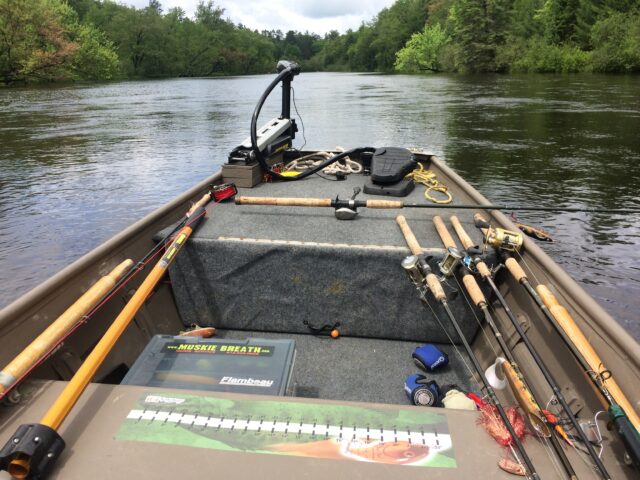
Does one float downstream or upstream? If pools are located upstream from the access site, I’ll motor several miles upstream until I cannot travel further, and then drift and cast my way back to the starting point. Meanwhile if pools are located downstream of the landing, I will drift and fish my way towards them. On most trips, I will float several miles upstream or downstream of the access site, only to motor back to it at the end of the day. These long boat rides can take an hour or longer.
Under normal water levels, ideal river current and float drift speed is .4 to .8 mph. To avoid spooking fish, try to drift from the opposite side and bank you are targeting. To maintain the best boat position and casting angles, always drift downstream with the bow facing upstream. Position the boat and trolling motor so you’re countering the current. This will slow your drift speed, and enables you to hit more targets and fish thoroughly. If drifting downstream, always anchor and hold boat position upstream of holes. Cast to downstream first, and then fish the downstream side of the same holes afterwards.
Many stretches of river often contain dead, shallow water between pools. For time management, avoid casting through these areas. Don’t use the big motor when drifting down river, especially if you don’t have to. Muskies in transit will hang in mid-river, and be most active. They will spook rather than strike. The prop will also cut up the river if there is lots of mid-summer eelgrass and weeds.
Never night fish, as navigation is a death sentence. Never float and fish during floods and other high water events. Before going off the grid, leave a note to loved ones of your whereabouts.
River muskies require minimal gear and tackle. The most important equipment is a landing net, release tools and cutters, or a release swiveling gripper if you are wading. Rods and reels are low key as well. Multi-purpose rod and reel set-ups in medium heavy and extra heavy action ranging from 7 to 8 ft. length are ideal. Short 7 foot rods like the St. Croix Mojo Muskie (MJM72XHF) are best for close quarters and awkward angle casting with gliders and jerkbaits. 8 ft length is best for boat side figure-eight maneuvers. Such sticks are the Mojo Muskie 76MHF, and Legend Tournament Switch Blade (LMTFC80HF). I always carry 2 or 3 set-ups spooled with 65 lb. to 80 lb. Cortland Masterbraid. When fish are following and not striking, a 10 or 12 weight fly rod with a handful of articulated streamers can help seal the deal.
Lure selection is minimalist as well. Dark water clarity requires high visibility oranges and contrasting darks. Clear water clarity calls for natural patterns such as perch, walleye, sucker, and shad. I carry a box or two with an assortment of topwaters & surface lures, bucktails, glide baits, crankbaits and jerkbaits, and plastics. Try to prioritize baits that stay in the strike zone longest.
River Strategy
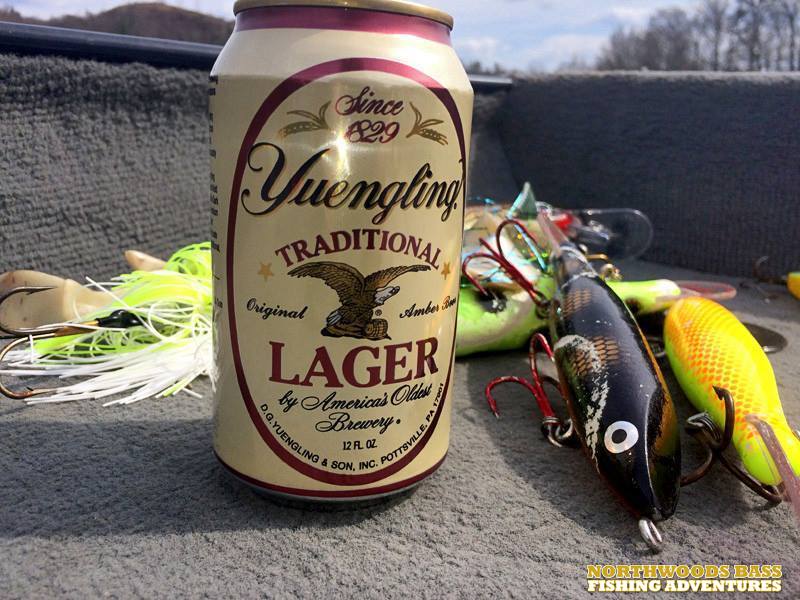
River muskies require minimal gear and tackle. I carry a box or two with an assortment of topwaters & surface lures, bucktails, glide baits, crankbaits and jerkbaits, and plastics. Try to prioritize baits that stay in the strike zone longest. The beer is optional....
River Fishing by the Seasons
To master any particular river system, muskie anglers must acknowledge and understand their intricacies such as migration patterns, countering ever-changing water clarity and current, observing feeding behaviors and forage preferences, identifying location and habitat, and taking advantage of peak seasonal periods. Where and when I fish a particular river system and pool throughout the year is determined by each of these factors.
By nature, river muskies are highly migratory species. When the season in northern Wisconsin opens on the 4th Saturday of May, muskies are migrating upstream for their spawning purposes.
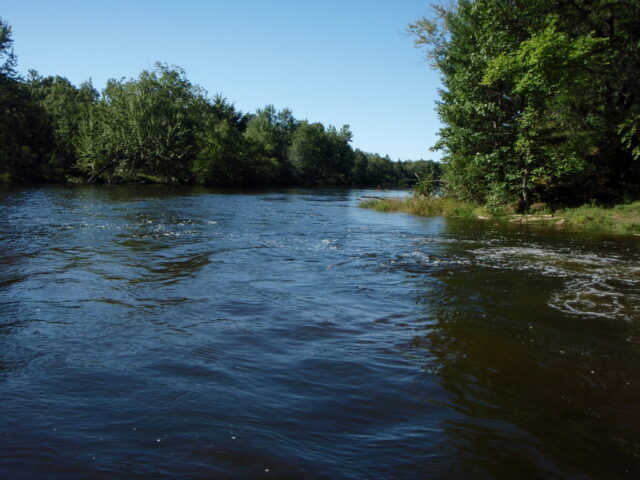
SPRING – The spring season takes place from season opener through mid June. This short, condensed 3 week period is characterized by post-spawn recovery and very lethargic feeding. Smaller male fish are usually most active and abundant. Female muskies meanwhile are elusive, lethargic, and in recovery, and often don’t reappear until the first major moon event in June. Water temps often range from the upper 50’s to upper 60’s, and receding high water levels with murky clarity represent the short season.
In spring, muskies primarily undertake feeding migrations, following abundant spawning redhorse and suckers upstream to the spawning sites located in mid-river riffles (rock and gravel bars). Muskies will also venture up into tributaries and creeks and towards dams, inflows, and spillways, becoming concentrated. If muskies haven’t yet completed spawn, they’ll be dancing in pairs against near-shore emergent vegetation and wood which is common around oxbows and slackwater pools. If muskies aren’t traveling upstream to follow the food, they’ll migrate downstream. After spawn, muskies will disperse to downstream locations for summer homing, and they will take up residence in pools and holes until autumn.
A few peak periods to consider are midday sunlight and warm fronts, June’s receding water levels, and any new moon or full moon event within the first two weeks of the month. Dark water rivers are best this time of season, they warm quickest and their muskies complete spawn earlier.
Sucker patterns dominate early season due to their spawn and this forage abundance. All black bucktails such as Mepps Musky Killers, black/nickel Showgirls, and “Goldielocks” pattern Buchertail 500’s and Tyrant Tackle Louies tempt aggressive strikes from fish migrating through current. 6 inch twitch baits retrieved erratically will get a fishes attention too. In addition, glide baits that include 6” Softail Phantoms and Shallow Mantas in a variety of sucker and black perch pattern will catch fish from all river locations. A sucker pattern articulated fly whipped around with a 12 wt will catch them when all else fails.
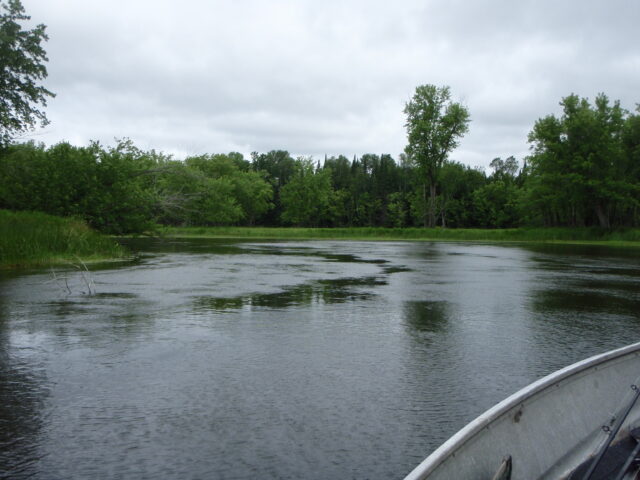
SUMMER – By now, muskies are well dispersed and established throughout the river system, inhabiting several stream miles of river. On northern Wisconsin river systems, the summer season takes place from mid June through Labor Day weekend. Low rainfall finally allows rivers to recede and clear, becoming the easiest time of year to float comfortably with best boat control.
Fish early and late, and take advantage of long daylight hours to float for several river miles. Fishing improves on overcast days with high humidity, and any incoming weather fronts and changes to the atmosphere. Mid summer confronts that cool water temps revitalize fish, often triggering bites. Prioritize new moon and full moon phases, and also anticipate the longest feeding windows of the year.
Water temperatures range from the upper 60’s to 80 degrees maximum. When water temps are warmer than 78 degrees, do not bother, as warm water translates to very poor fishing. River systems with clear clarity and prevalence of springs and feeder creeks will have the coolest temps, high oxygenated flows, and most active muskies. Dark water rivers on the other hand, and those with several dams, will be warmest, lifeless, and hardest to fish once summer peak and August rolls around. Floating algae and eel grass choking the surface is common on many river systems this time of year.
In June, muskies undertake homing migrations, setting up in their pools for summer where they will hold until early fall. Then in July and August, muskies migrate for survival if necessary, seeking mid-river current and riffles, and high dissolved oxygen areas to evade summer heat and warm water temperature. In dire straits summertime conditions when excessive heat raises water temps to lethal proportions, muskies will lay lifeless and hibernate along the bottom in high oxygenated riffles and rapids for their survival.
To seek summer muskies, target deeper pools and mid-river current areas. The downstream sides of riffles and rock runs, and boulder fields, are good starting points due to their depth and high oxygen content. Bucktails such as black nickel and red fluorescent Cowlgirls and Cowgirl Jr’s tempt muskies from mid-current. So too will topwaters such as Lake-X Fat Bastards and a Topraider. If a big fish is lured out into the figure-eight but won’t strike, a giant walk the dog black Weagle can help convert it. If weed growth has taken over the river bed, eel grass and cabbage beds will hold and conceal resting muskies. Keep the bucktail and topwater combo prepared. Many of the best river systems will contain an abundance of laydowns, log jams, and deep shoreline wood. Wood cover is a hiding place for active, ambushing muskies. Approach wood structure with pull baits that hang in the strike zone such as walleye and perch pattern Squirrely Burts, glide baits that include Manta Hang-Tens and Shum Gliders, and Red October shallow tubes.
Many creeks and tributaries throughout Wisconsin are a part of a larger network of river systems. They inter-connect, converging to form other rivers. Their confluences are an oasis teeming with migrant muskies, and other species. These often serve as migration stops and staging areas for autumn’s arrival.
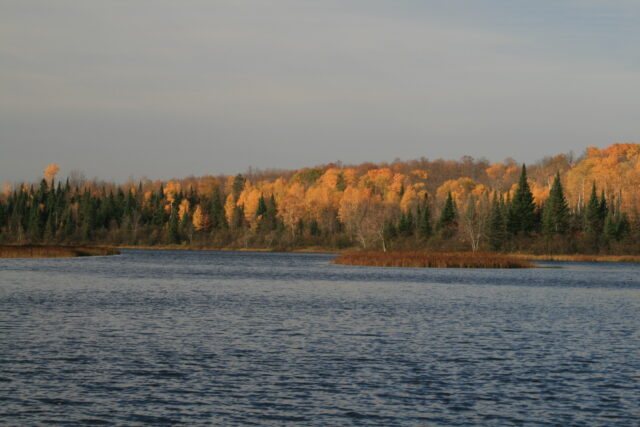
FALL – Focus on the deep pools of autumn, because by now 90% of all muskies are occupying 10% or less of the entire river system, or they’ve migrated out of it entirely. Muskies migrate to deep holes and wintering sites, and therefore much of the river becomes lifeless, unproductive water. Prioritize midday fishing and afternoon moon periods, as feeding windows are rapid and short.
The fall season officially begins after Labor Day weekend when water temperatures begin to cool from the low 60’s in September. The season lasts through late October or early November, depending on when water drops to 40.
Autumn is characterized by increased current flow due to rainfall and flowage drawdowns, resulting in reduced brown water clarity with lots of floating debris from decaying weeds and leaves. High water resulting from draw-down spurs muskie migrations to upstream or downstream, depending on wintering locations. Knowing when and where to float will make or break the trip in October. A number of rivers have USGS gauge sites providing real-time data online and through apps. During high water events, gather your pool’s real-time gauge height and flow rate per second. Do not fish the river if it is significantly higher than its seasonal average.
Fall muskies are driven by feeding migrations, following perch and suckers downstream where they winter as well. If not feeding, survival is on their minds, as they must migrate to wintering areas. In many northern Wisconsin river systems that aren’t dammed up, muskies migrate out of rivers and tributaries to their downstream flowages for wintering. Some river fish however remain in the river and are year-round residents if low-current deep holes and large pools are present, where several muskies can hold. A minimum depth of 8 to 12 ft. is required for overwintering survival.
In early Fall as water temps cool into the mid 50’s, muskies are on the move and relating to current and mid-river structure where they’ll set-up around deep wood and laydowns, and mid-river pools. As muskies are on the move, so should you. Position the boat upstream of pools, casting several times into them. Aggressive tactics enabling you to quickly cover water such as Topraiders and Lake-X Fat Bastards, and search baits such as 6” Softail Phantoms score great fish. Coldfronts, downstream sucker and perch migrations, and new moon periods trigger big fish, and intense September and early October feeding.
By late October and early November, muskies reach their wintering areas, becoming lethargic and less active. Muskies that remain in the river system will be bottom-dwelling and structure-oriented along the channel, deep holes formed by eddies, river bends, and slow-gradient pools and deep holes. To catch fish in late season, hole hop, bypassing all stretches of water in between every series of holes. Feeding windows shorten to mere minutes, and the tackle box closes. Baits that can be worked painfully slow, and hang in the strike zone longest, are best. Pitching and crawling Red October Tubes through holes and casting heavy pull baits and gliders such as a 12” magnum weighted Suick and Shum Glide Slim are top artificial producers. Last, when current allows, swimming suspended suckers on a quick strike rig through wintering holes at a clip of .5 mph or less will catch them when nothing else can. My best rigging method to date with 12” to 14” suckers is the Herbie Rig. Search online to learn about its physics, methodology, and rigging components. You will be compelled to use it too.
Exploration isn’t Exploitation
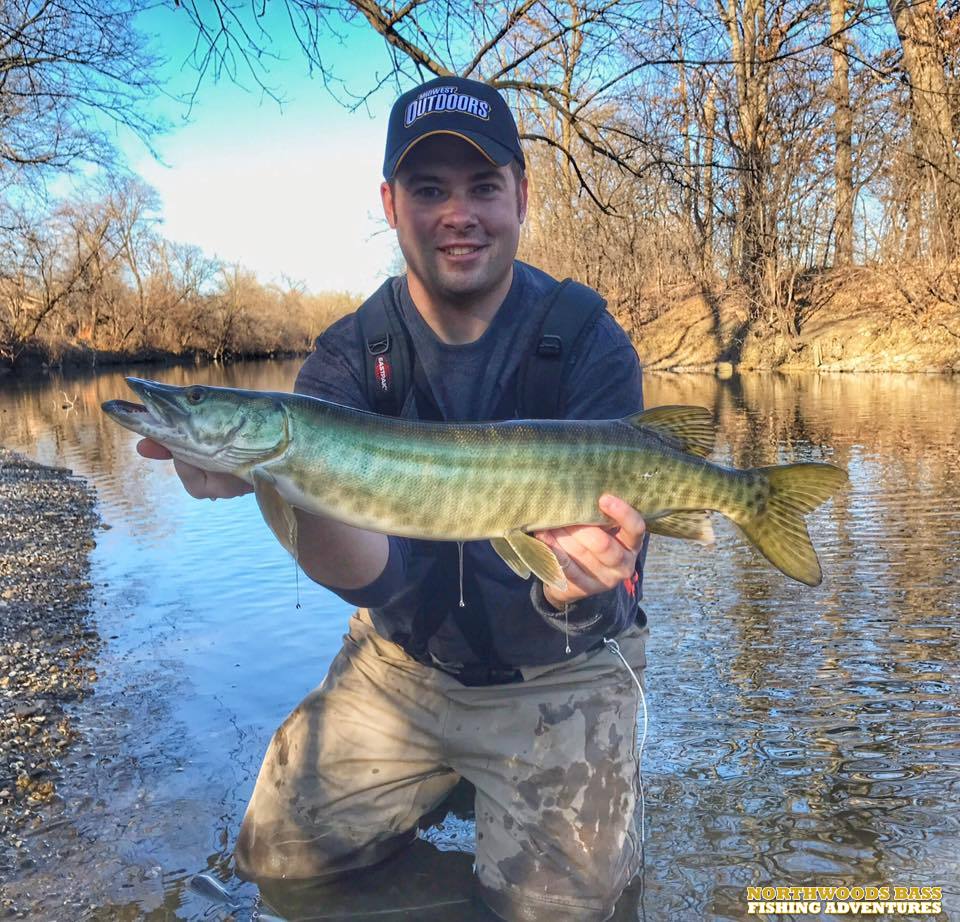
Catch muskies off the grid by accessing waters that are less traveled. Boat access put-in and take-out sites are most difficult to find and make usage of, but this difficulty is what makes it most productive.
Rivers flow in abundance throughout the muskie map, and their mileage is plentiful. Some days, you can float for miles without any fish to speak of, but she’ll eventually reveal herself and her secrets at the end of a hard, long day. While fishing small rivers, I continue my journey in seclusion in the middle of nowhere. It’s so much cool water that people will never get to. Making discoveries, exploring, fishing at destinations where other anglers cannot get to, and researching are the excitement and motivation behind this type of fishing.
Exploration is not exploitation. Never reveal names and location on social media or the internet. As explorers and adventurers, we must do our part to protect the integrity of these limited resources and sensitive fisheries. Once exploited, or pressured, that fishery will never behave the same again. Muskies will move on, and not be aggressive eaters like they presently are. This is how trophy fish become more elusive and rarer creatures.
River anglers often have a curiosity for what lies around the next bend. Discover the untapped potential of these small, off the beaten path fisheries. Small rivers and their muskies are what I live for, and half of my battle is getting to them.
Andrew Ragas splits time between the Chicago area and Wisconsin’s Northwoods. Based in Minocqua, WI, he specializes in trophy bass fishing and offers guided trips from May thru October. While big bass is the passion, he dabbles in multi-species as well. He may be visited online at www.northwoodsbass.com

What you can read next


Articles
 Lakes to Fish and Avoid During Fall TurnoverIt was a hot summer and thermoclines on deep lakes were noticeably ......
 Top Lures for the Early Fall TransitionLate August to early September annually represents the early fall ......
 Fishing Algae Bloom LakesClear in spring and green by late summer, algae blooms are an ......
 Smallmouth Grind-OutsThere’s a great chance that every fishing guide out there has a ......
 Inside Edge LargemouthsLargemouths love edges, and the most desirable fish I catch during ......
 Northern Water Snake PatternsOpportunistic predators with voracious appetites, largemouth bass ......
 Dark Water SmallmouthsWhen thinking about the prototypical and perfect Northwoods ......
 Locating Rip Rap Shorelines on FlowagesWith the local flowages down several feet, use this current drought ......
 Fish CatchersSmallmouth bass fishing has changed immensely over the past decade. ......
 Minimalist Smallmouth Fishing with St. Croix RodsIf you want to catch more fish and learn to be efficient, ......