
Locating Rip Rap Shorelines on Flowages

With the local flowages down several feet, use this current drought and low water year as an opportunity to find future hot spots for when the flowages are at full pool again.
Rip rap banks.
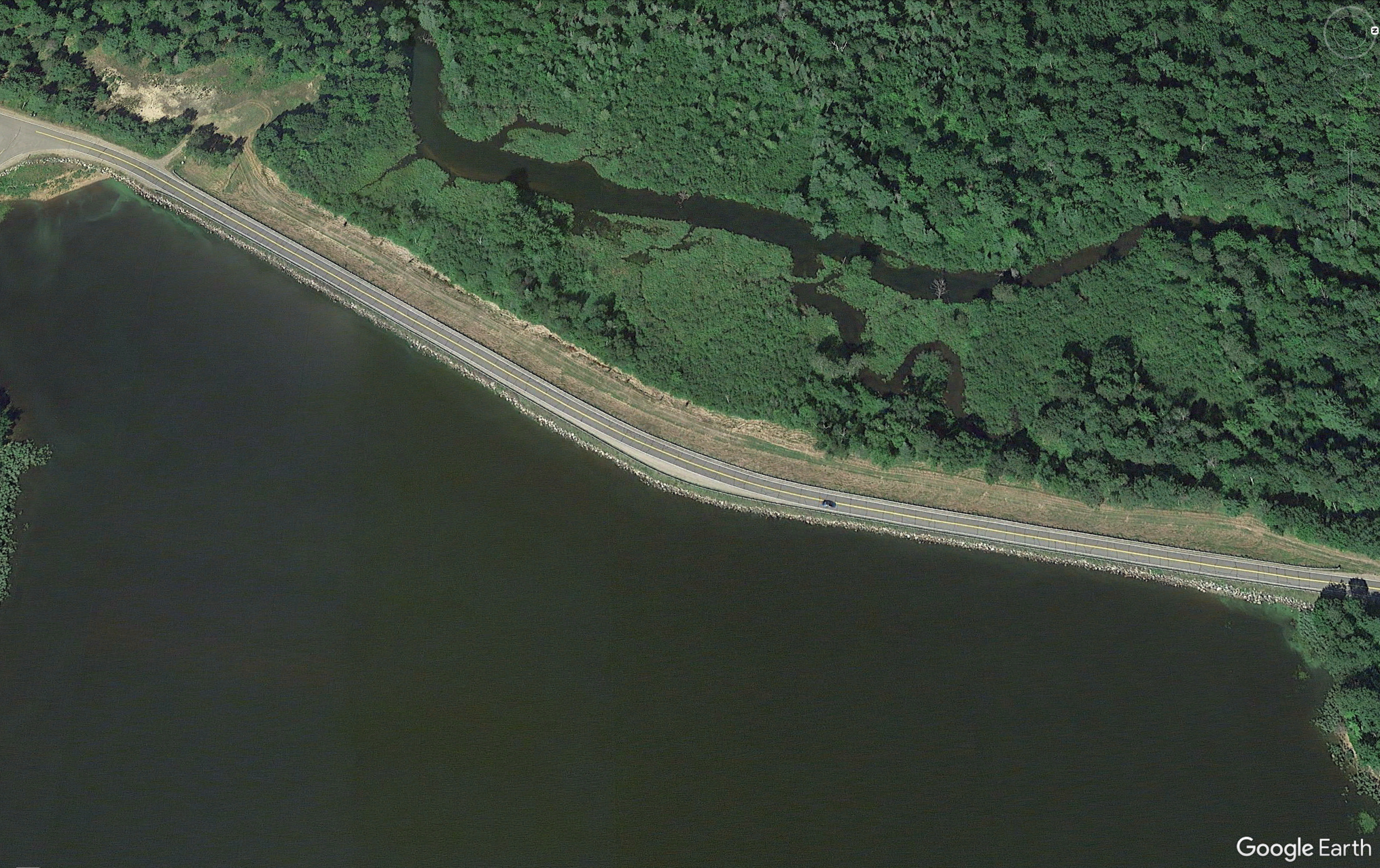
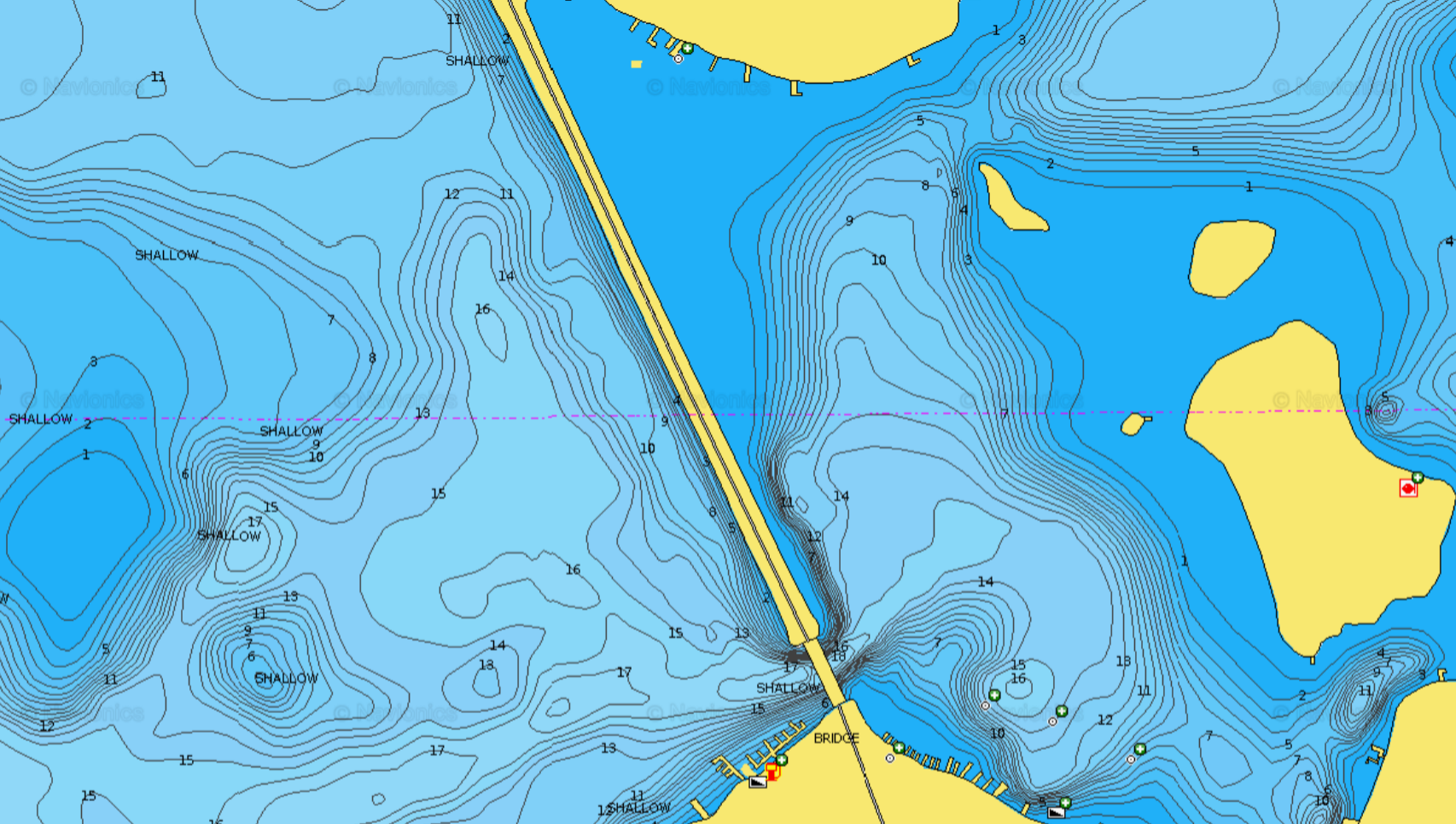
Riprap shorelines are rather simple to locate on navigation charts and overhead Google satellite imagery. While much of the reservoir’s shores are naturally irregular and meandering in shape, man-made shorelines will stand-out, as they are usually constructed in a straight-line or bowl shape. They can also run for lengths of several yards.
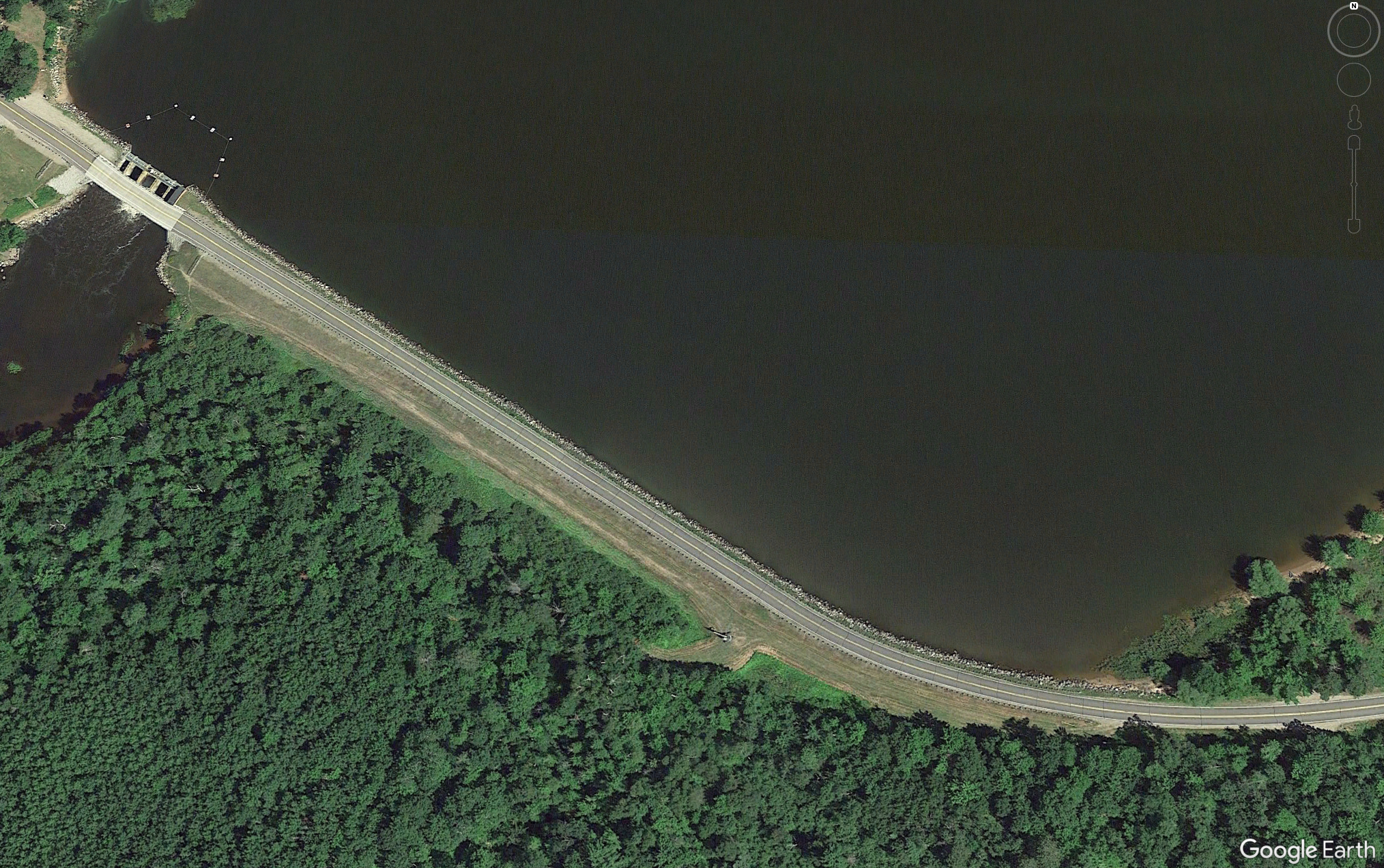
Across our northern reservoirs, their construction and placement are used to help fortify shorelines against wave erosion. Riprap is commonly used for fortification along dikes and berms, roadsides, around bridges, steep banks, and the shorelines along dam outlets. Big chunk rocks and boulders are most common across these fisheries.
Riprap placement is often along steeper than average banks that have been previously dredged out, or once eroded away. The most fishable and attractive areas commonly have an average depth of 4 to 8 feet, and a 45-degree angle slope towards the bottom.
Just like rock piles and boulders can do, riprap provides a lot of vertical structure, security, and feeding opportunities to smallmouths. If water levels hold at full pool throughout the year, smallmouths will hold closely to it throughout the year too.
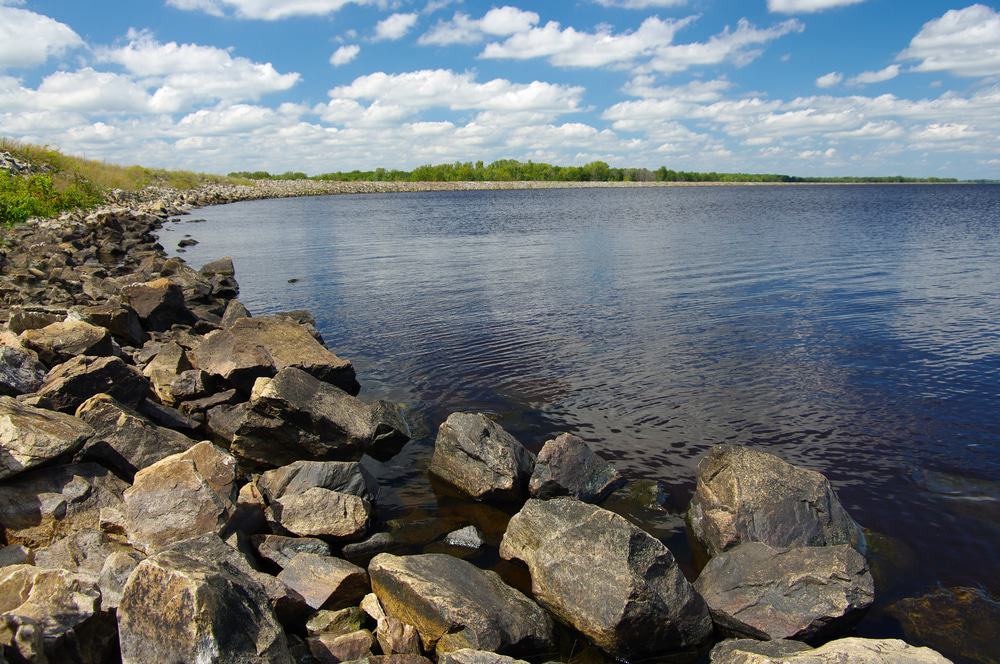
In spring, flowages warm considerably faster than natural lakes. This is aided by their numerous creeks and inflows, currents, the shallow basins, very dark brown water, as well as the riprap conducting significant heat. Riprap shorelines often contain the warmest water available in the system. Therefore, in early season, they are fish magnets.
Come spawning season, smallmouths are known to spawn in flowage regions where harder, compact gravel is available in combination of some rock protection. Across a few of my systems, smallmouths spawn comfortably and undetected along riprap shorelines.
Throughout the summer months, smallmouths continue utilizing the rock structures for feeding on crustaceans and homing. If the locations are windblown, more smallmouths will attract to them due to the well-oxygenated water. When waves crash into the shores, smallmouths are active. Be on alert for fish hiding behind any larger boulders emerging the surface.
Only daytime heat and high surface temperatures will turn them off, and temporarily displace fish by making them seek deeper, cooler waters to rest and relax in. Smallmouths often return to them in cold fronts and under cooling conditions.
Then later in the year, the bite may pickup again. Rocks will conduct heat once again during the cold months under sunny skies. Additionally, an influx of baitfish returns shallow that is greatly anticipated by smallmouths. Shiners, suckers, and yellow perch comprise the prey species. Fish will remain until it gets too cold, before migrating into their wintering holes.
Across any northern reservoir, starting along a riprap bank is one of the best options for catching smallmouths quickly. These areas fish to their best potential under full pool, and are even sweeter with current and wave action.
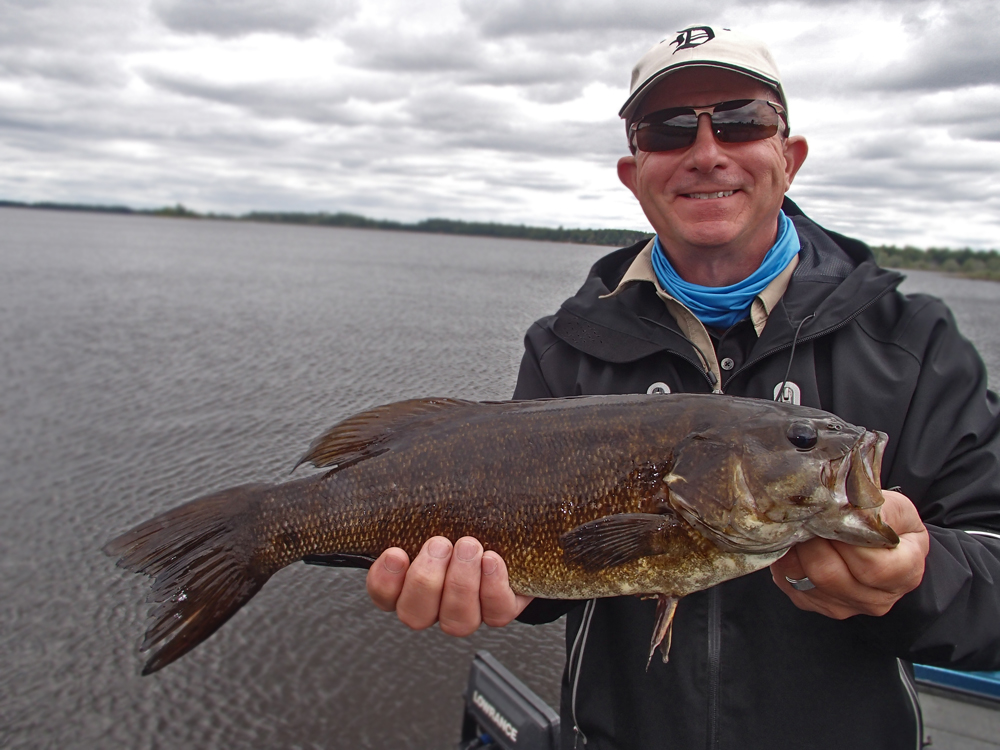
The Technology Don’t Lie
From a distance, most reservoir riprap looks the same. It can get more tedious and time-consuming to fish thoroughly if it runs for great lengths. You’ll want to get up close to it to learn more about these structures and to see how they attract smallmouths.
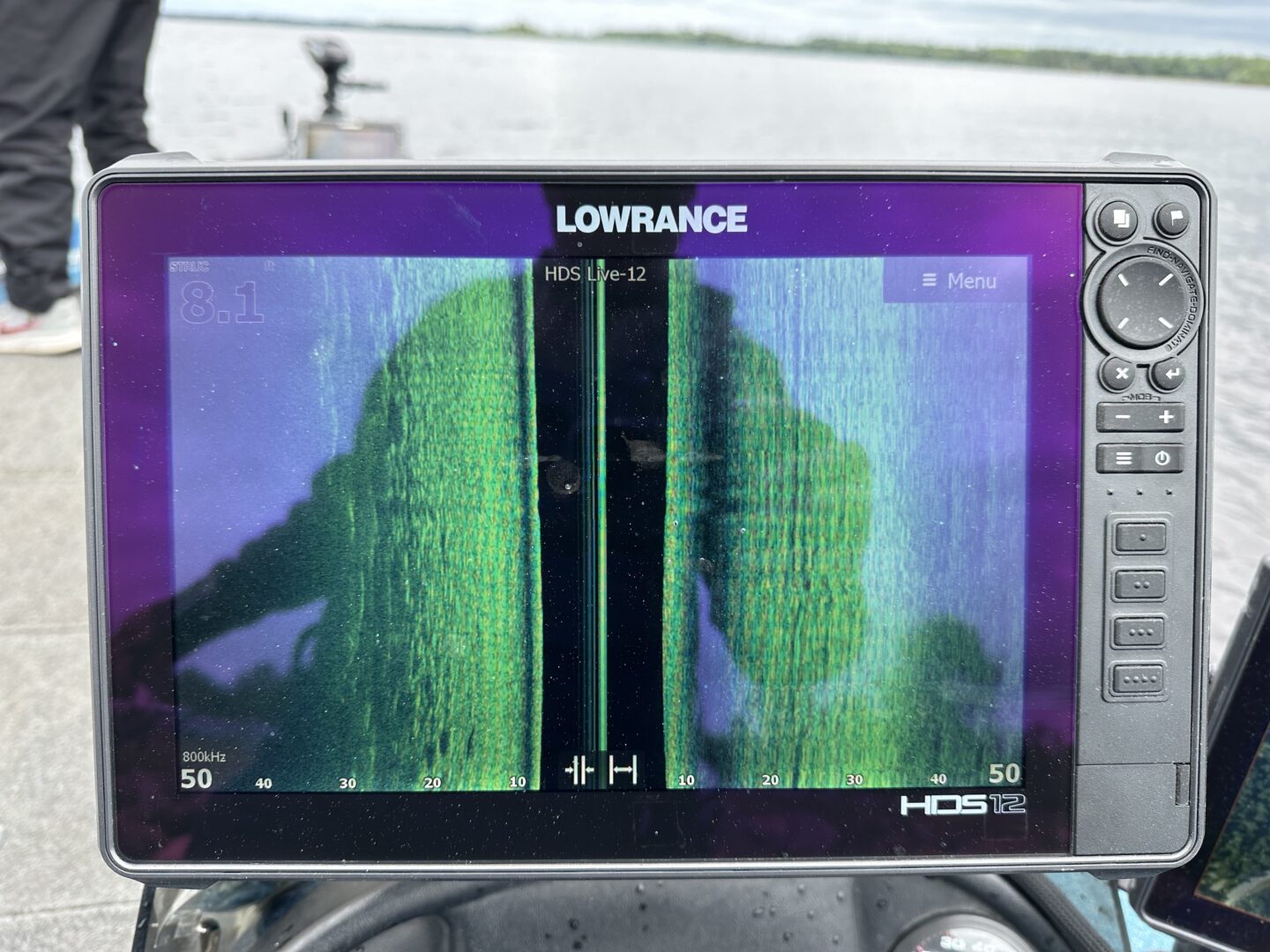
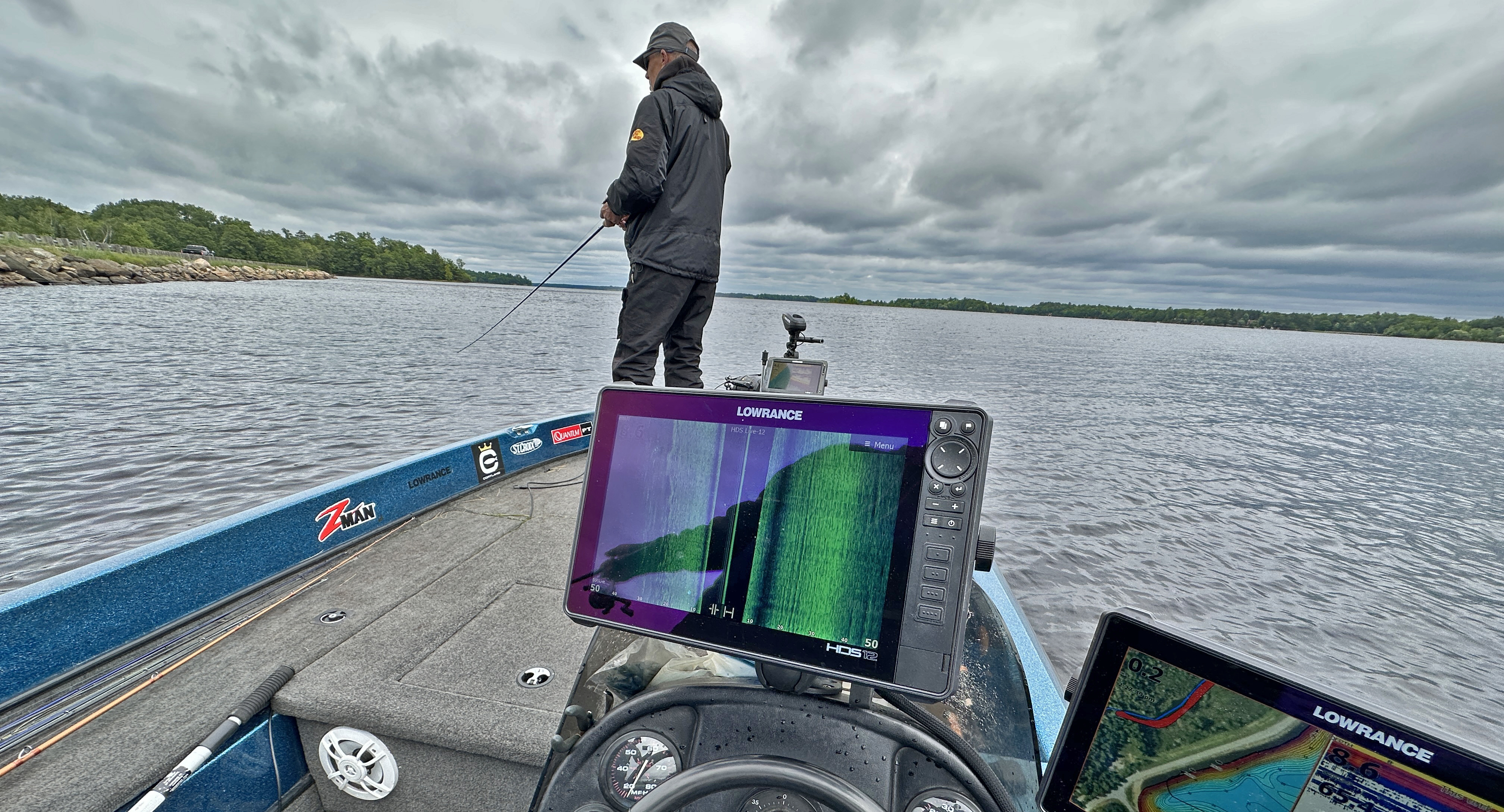
When idling along it, pay close attention to your side imaging to locate a sweet spot. Running a dual-screen set-up of Lowrance HDS-12 Lives on my console allows me to run one screen side-imaging-only. The Active-Target 3-in-1 transducer displays everything to the casting-side in incredible detail. Any differences that could be a rock outcropping, protrusion, mini-point, isolated boulder that slid down the slope, or open pocket are revealed in great clarity, and will be a spot-on-spot location that is more likely to hold smallmouths.
Deploying my Lowrance Active Target-2 forward facing sonar can reveal this structure and its features, and what inhabits it even further.
Any type of indentations in the rip rap where rocks have fallen off and piled up into a little point are attractive. So too are bottlenecks formed by bridges. Any riprap corner can be attractive to smallmouths too. Other man-made fish-attractors found along rip rap include fish cribs, drainage pipes and culverts. Naturally, driftwood and laydowns may be washed up as well.
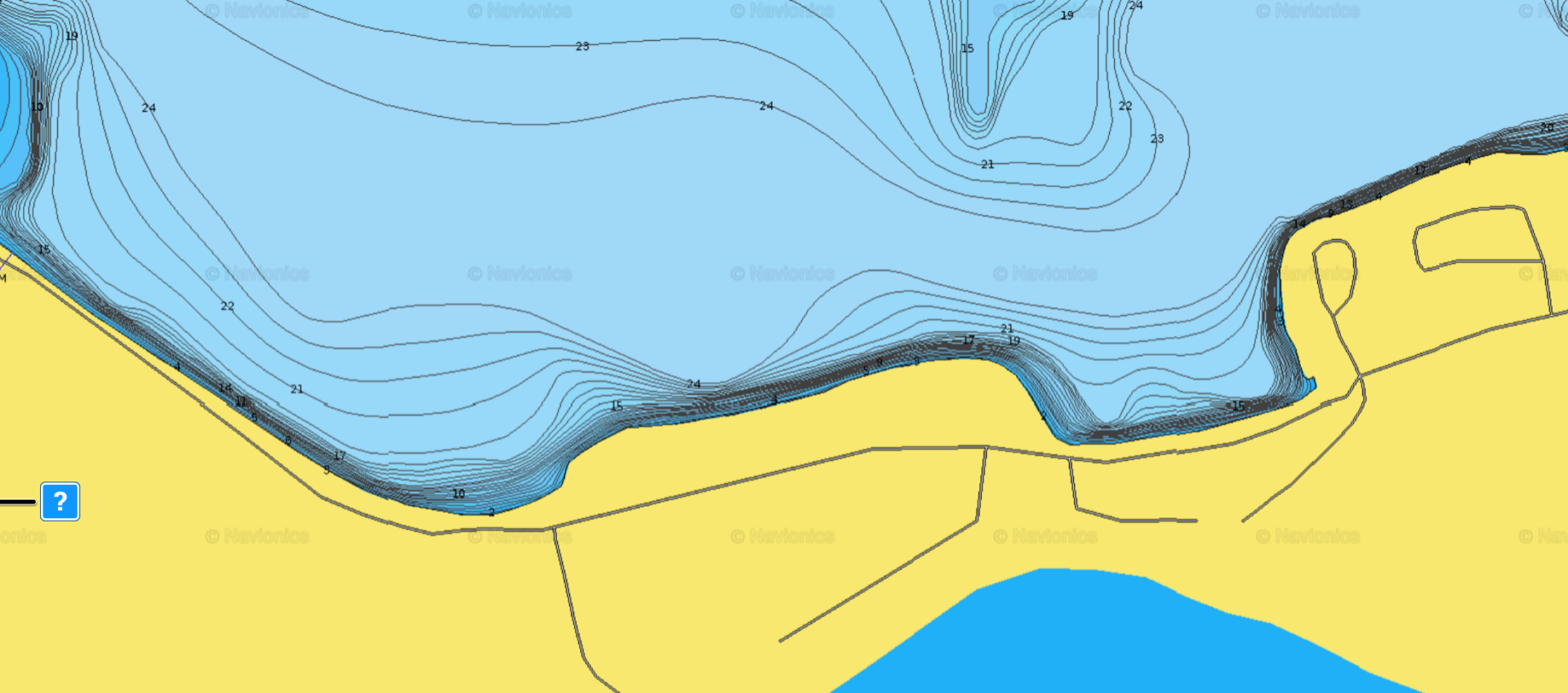
Besides the irregularities, smallmouths like access to deeper water. You’ll find this with your map chips, but be aware that not every riprap bank provides this option for fish. On some flowages, the river channel can swing in towards the bank or may parallel the riprap. The channel might not be the deepest water of the system, but depths can vary between 15 to 25 feet. Smallmouths are more prone to gravitate to these banks during summer and fall. These areas replenish with fish quickly, moving in to feed and pulling back out. Smallmouths can come and go as they please.
When smallmouths are present, they’ll stick out like sore thumbs on side-imaging. On my Lowrance units, they appear as dark bass-shaped blobs.
Riprap smallmouths are very aggressive and reliable-to-catch specimens. These man-made shores are more common than perceived. Not only are they a reservoir thing, but they are present in rivers and natural lakes too where man’s intervention was needed for shoreline buffering and repair. Most fisheries likely have a riprap shoreline or two that’ll hold smallmouths in specific seasons.
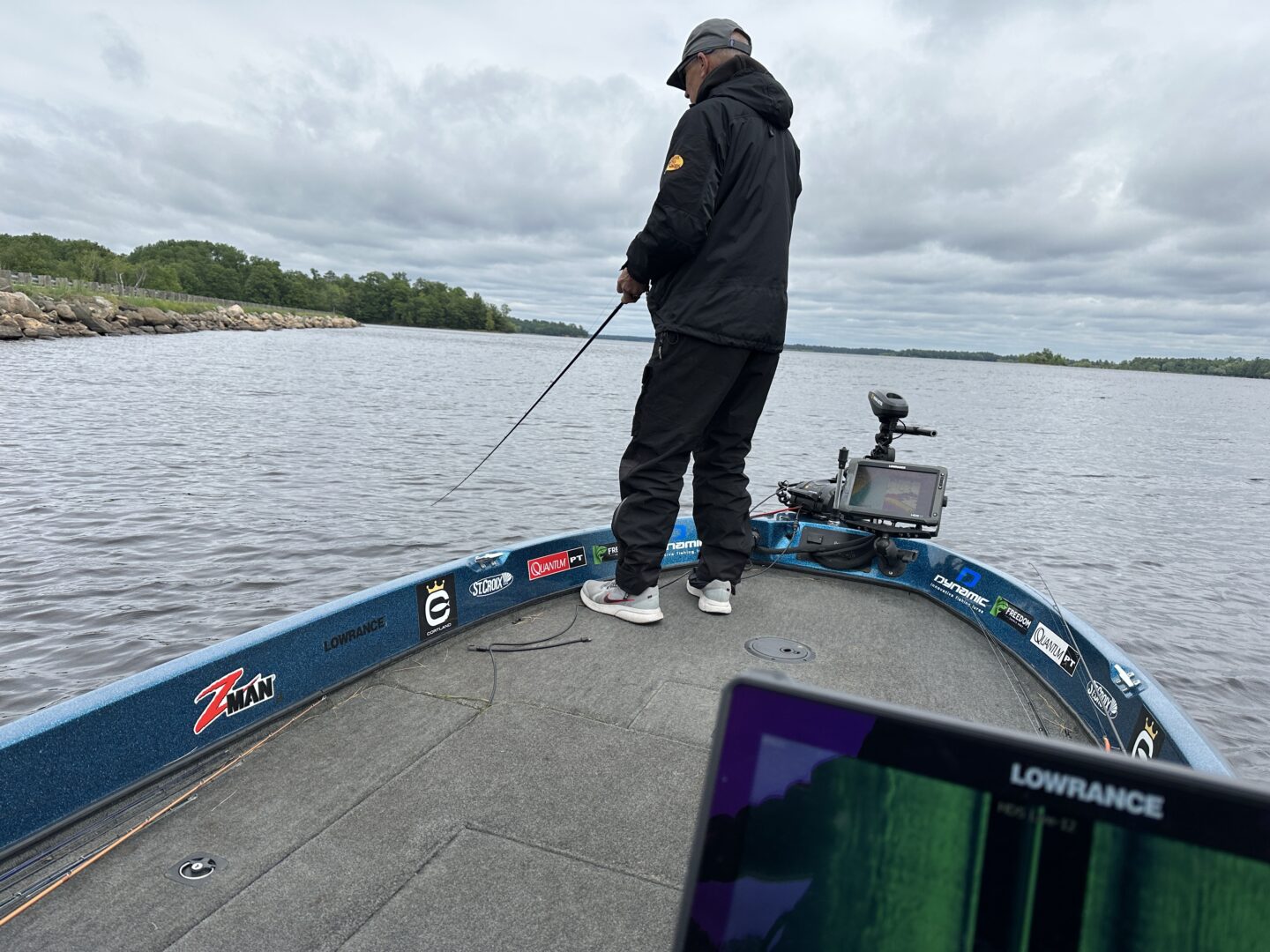
Most northern impoundments have no shortage of these man-made shores. In low water years, these areas can all reveal themselves, making finding their sweet spots very easy for future seasons. Take mental snap shots of these locations and also be sure enter their waypoints, returning to them in the future during full pool.
Rely heavily on side imaging as you will discover a lot of other deep or shallow rock habitats the naked eye cannot see below the surface.
Flowage rocks are a constant for smallmouths and I, with a lot of our flowage fishing revolving around these locations.
Structure is the key element in making sense of riprap. Reservoir smallmouths are structure oriented in all aspects of life, never occupying the featureless terrain of their massive acreage.
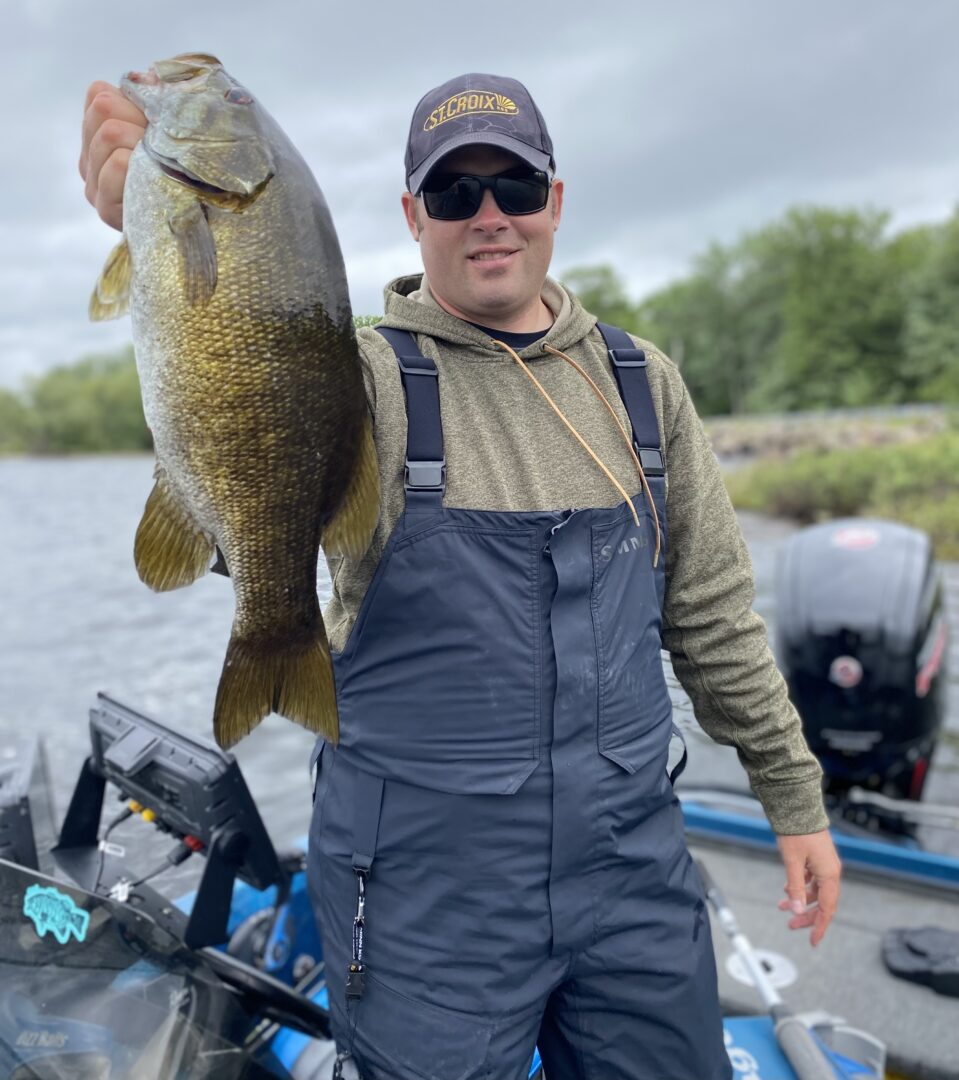
Andrew Ragas splits time between the Chicago area and Wisconsin’s Northwoods. Based in Minocqua, WI, he specializes in trophy bass fishing and offers guided trips from May thru October. While big bass is the passion, he dabbles in multi-species as well. He may be visited online at www.northwoodsbass.com

What you can read next

Articles
 Lakes to Fish and Avoid During Fall TurnoverIt was a hot summer and thermoclines on deep lakes were noticeably ......
 Top Lures for the Early Fall TransitionLate August to early September annually represents the early fall ......
 Fishing Algae Bloom LakesClear in spring and green by late summer, algae blooms are an ......
 Smallmouth Grind-OutsThere’s a great chance that every fishing guide out there has a ......
 Inside Edge LargemouthsLargemouths love edges, and the most desirable fish I catch during ......
 Northern Water Snake PatternsOpportunistic predators with voracious appetites, largemouth bass ......
 Dark Water SmallmouthsWhen thinking about the prototypical and perfect Northwoods ......
 Locating Rip Rap Shorelines on FlowagesWith the local flowages down several feet, use this current drought ......
 Fish CatchersSmallmouth bass fishing has changed immensely over the past decade. ......
 Minimalist Smallmouth Fishing with St. Croix RodsIf you want to catch more fish and learn to be efficient, ......