
Blades of Glory

Burn…. Grind…. Rip…. or slow-roll. Made to move, there is no wrong way of working a spinnerbait.
While spinnerbaits may have lost their luster in recent years due to the finesse phenomenon and other mainstream tackle movements meant to capitalize on more pressured and conditioned trophy fish, they remain standout selections in many smallmouth fishing situations when speed, power, and the run and gun are needed. Alas, they might be the most efficient, easiest to fish baits available in your box.
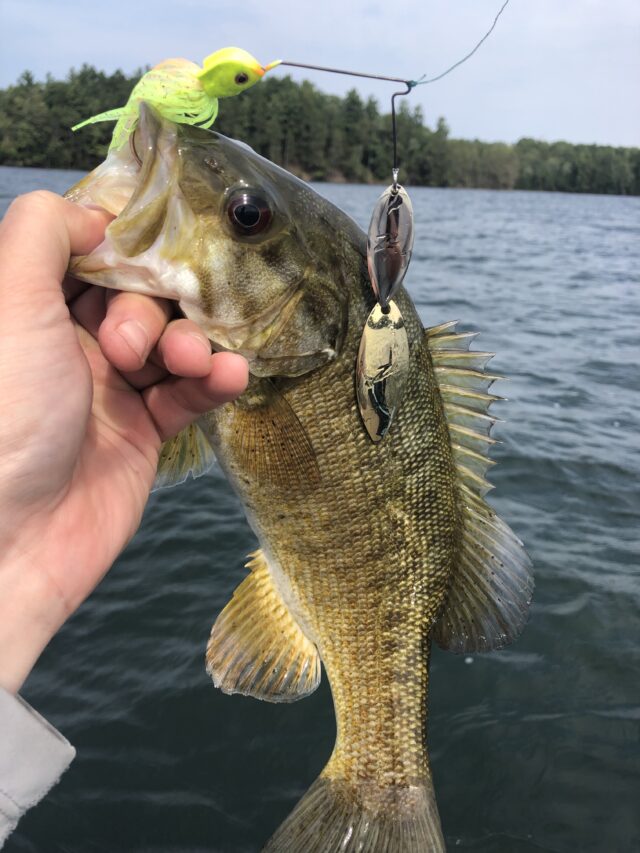
Last September, I got a first-hand look at the damage Z-Man’s SlingBladeZ is capable of doing. Fresh out of the package, I plucked a dozen fiery smallmouths off a 100-yard length wind-blown sand flat in less than an hour. It fished beautifully and true on each cast, cutting through the wind and water burned back to the boat. Every fish that found it drilled it exceptionally hard. Not once did I need to re-tune or fix the damage that commonly plagues spinnerbaits otherwise. Nor was a trailer hook needed, like it was once a requirement.
Not long after, I got word from Tom Chopin, manager of Freedom Tackle Corp. He instructed the staff to keep shush, until late December, of their new compact offering with kilter blade that can be worked even faster at Mach 10 speed – The Speed Freak (compact). At the new product reveal, we watched MLF pro Scott Dobson demonstrate a masterclass how-to with smallmouths on the Great Lakes.
One might wonder what is the most ideal smallmouth spinnerbait? While the prototypical bait is built larger and wider, more suitable for largemouths and other gamefish, the spinnerbaits for smallmouths nowadays are smaller, faster, lighter brighter and natural in color, and more compact. These were the angles of both Z-Man Fishing Products and Freedom Tackle Corp.
Super-tuning was the goal of both brands.
The Need for Speed
Bending wires back to form following the aftermath of a bass strike is the most frustrating aspect of maintaining a well-tuned spinnerbait. So too are head shapes that mean well, but will cause them to blow out under pressure and at retrieving speeds they can’t handle. The designs of today’s new lures have all but eliminated the uncooperative nature of spinnerbaits.
Luke Clausen was instrumental in helping Z-Man design the SlingBladeZ. “We had discussed the need for a better spinnerbait and went on to compiling the most important aspects of design. The biggest issues to us were vibration, tracking, hook to land ratio, and durability,” he says.
The design process was intricate and intense, confirmed Cory Schmidt, Z-Man’s marketing manager.
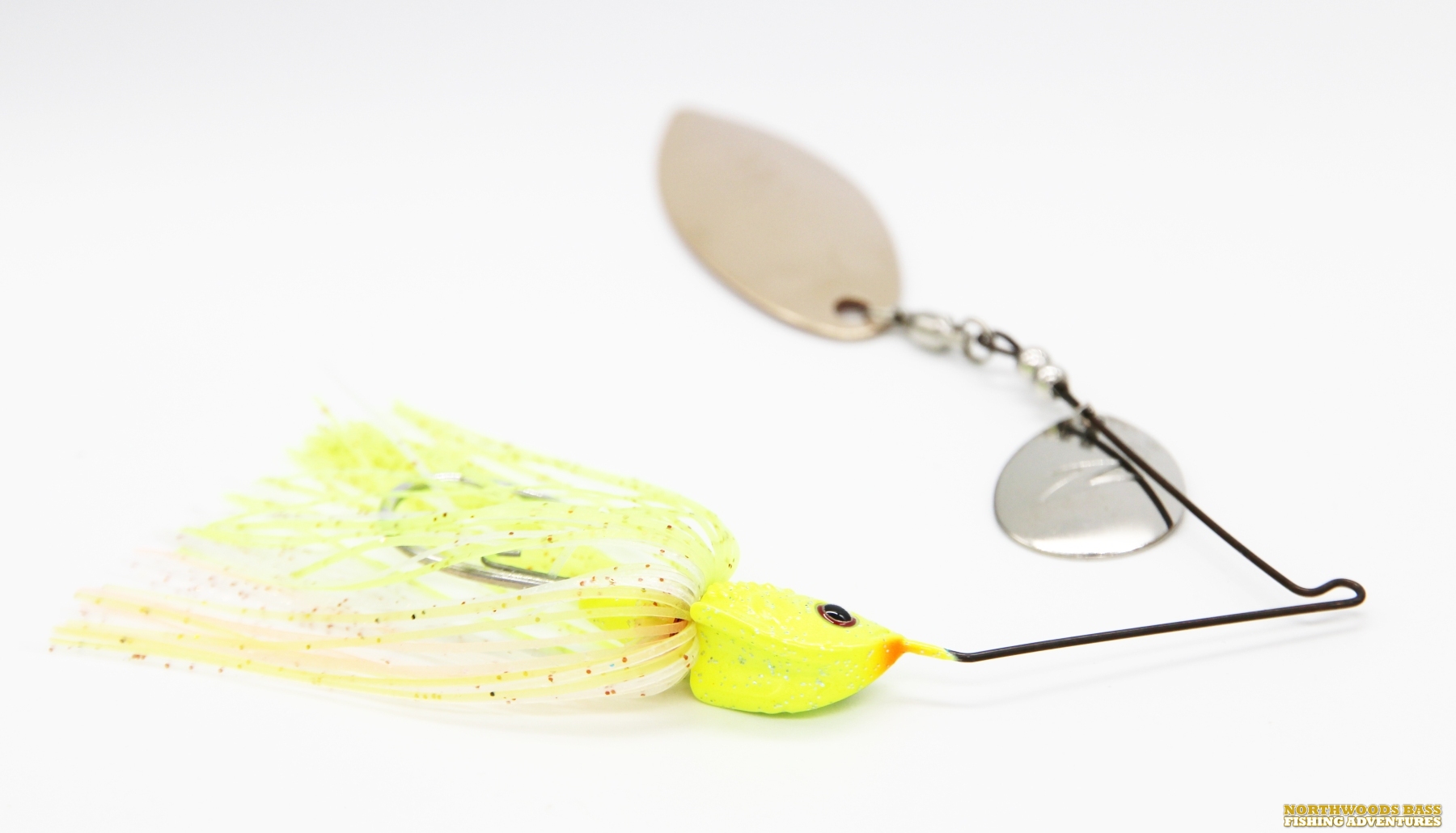
 “From the start, we wanted to put a super tuned spinnerbait in angler’s hands—a lure that ran and tracked true right out of the pack. We took a hard look at spinnerbait design and the reasons other lures fail to perform. Beyond maintaining a perfect parallel alignment between the upper arm, lower arm, head and hook shank, we started prototyping different head shapes. Ultimately, we crafted a head with a grooved underbelly that channels water in linear fashion. We also added matching side flanges, which act like mini rudders, further stabilizing the lure (we call the head StabilTrack.) Finally, we refined the wire bend just forward from the head, which helps deflect grass and provides additional stability.”
Clausen elaborated the design process even further, stating, “We hired a design company to work on a head design to track through the water true fighting blade torque at varying speeds. We then moved to wire testing which resulted in a bunch of prototypes that we tried to find the right balance between flex, return, and durability to get maximum vibration while still maintaining shape and surviving the fights of many fish. After settling on a 14-4 stainless wire, we went on to develop a custom blade that has a premium finish and less cup in than a standard willow leaf causing it to swing harder and in turn vibrate more.”
“The head was a concept that evolved through several prototypes after seeing results that indicated we were going in the right direction to achieve “maximum stability”, he adds.
“The goal was to address every issue and problem area with traditional spinnerbait design, and fix it and make it better,” concludes Clausen. It appears Z-Man has given anglers the highest performing spinnerbait they’ve ever fished.
Meanwhile north of the border, just outside of Toronto, Ontario Canada, Michael Tamburro of Freedom Tackle was prompted to concoct a speed burner as well. A lot of physics and engineering went into their development process.
“Living near the Great Lakes and with the exploding population of zebra mussels, the water has become extraordinarily clear. I wanted to create a bait that could move quickly and trigger reactionary strikes,” says Tamburro.
Preventing smallmouths from ever getting a good look of the bait is the name of Tamburro’s game.
Throughout 2021 and 2022, they consulted with their pros on staff, Jeremy Lawyer, Justin Hamner, and Scott Dobson for input and expertise.
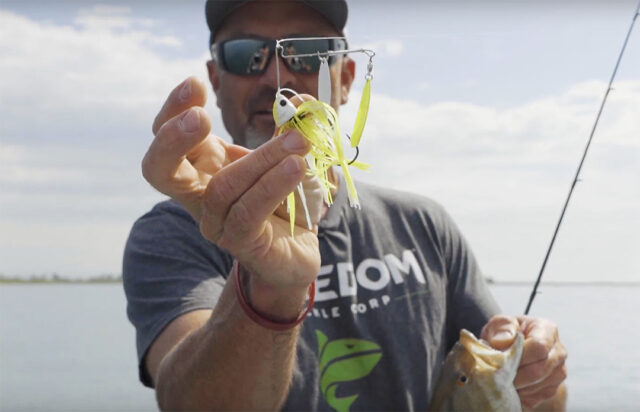
Freedom Tackle already had a more traditional spinnerbait catering best to largemouths, the Live Action Spinnerbait, that sports a larger frame and 5/0 hook. “I wanted to create a frame easier for smallmouths and spotted bass to engulf. The smaller frame (compact) spinnerbait along with its shorter arm has a smaller 4/0 hook.”
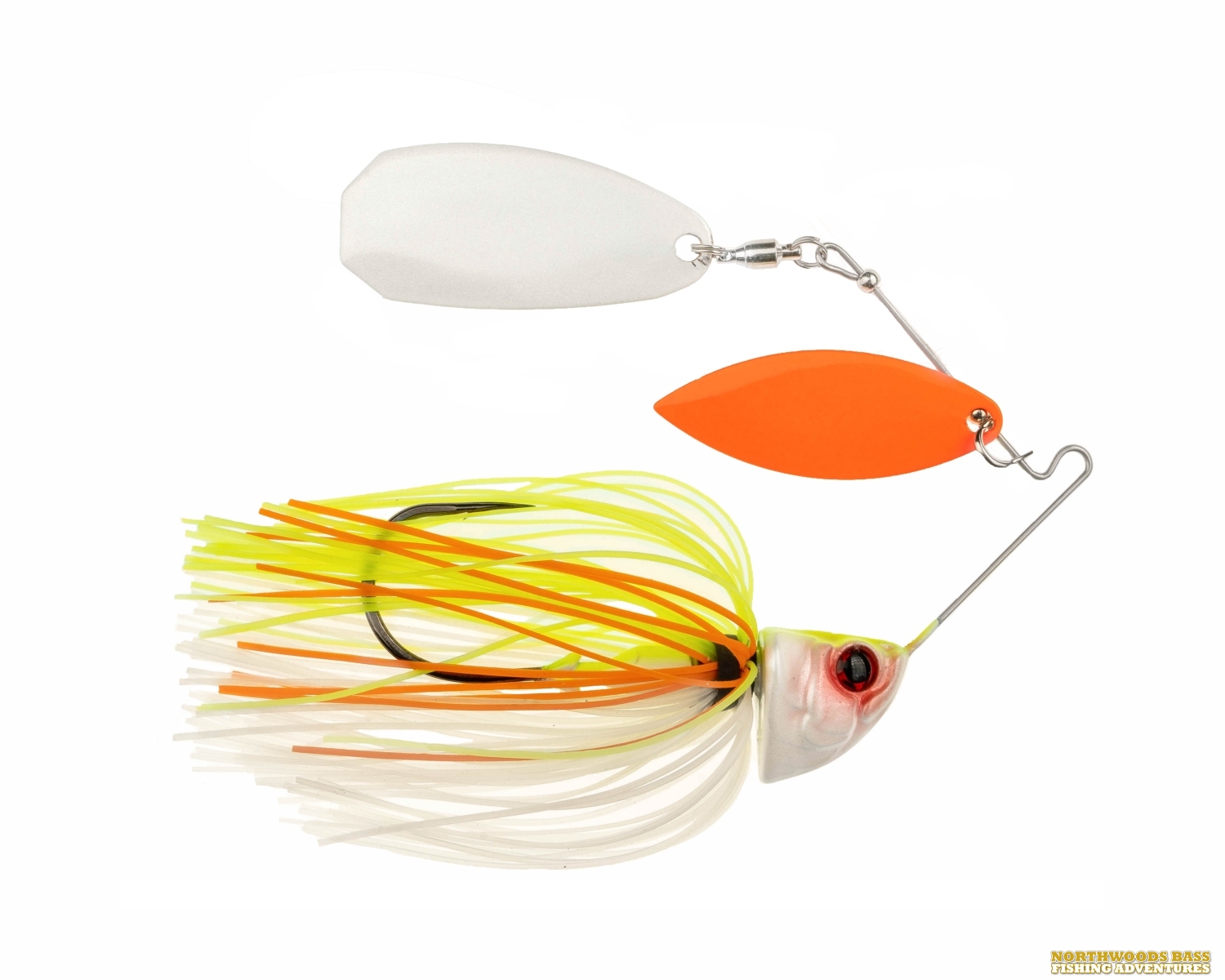
Tamburro reveals, “The head design is keeled to cut the water and cupped at the top to push the lure deeper, helping it be retrieved at higher speeds. The keel head acts a ballast just like the keel on the bottom of a sailboat making it more difficult to flip over.”
“We call it a ‘Speed Freak’ because of how fast you can retrieve. It will also accomplish everything a standard spinnerbait can but with a different signature,” concludes Tamburro.
Under fast loads, the head shape, short arm, and blade design prevents the bait from rolling and turning. The Speed Freak will never blow out when speed burning through the clear waters where smallmouths roam. And the shorter frame allows an even better hookup, catering to the behaviors and characteristics of the fish.
Details Matter
Little known fact, my first of several hundreds of 20-inchers was captured on a spinnerbait. Most of my fondest memories with them have occurred under windy conditions. That, in combination with sunlight, seems to be the trigger needed in getting smallmouths to react. However, Z-Man’s and Freedom Tackle’s designs encompass unique triggering mechanisms built-in to the baits. No longer does an angler need to rely upon ideal situations or conditions to help trigger bites.
Z-Man’s production team looked into science, physics, and underwater illusions.
“To amplify vibration, Z-Man and Clausen looked at various wire types,” confirms Schmidt. “Initially, we looked at piano wire, which was purported to transmit vibration better than others. But we also consulted with a metallurgist, who guided us toward 17-7 stainless steel wire. This type of wire, we found, offers exceptional strength and resiliency.”
Important to note, it was Clausen who captured over 30 sizable smallmouths on one lure, bending and reshaping after each fish before the wire finally succumbed.
“By intent, we also did not electroplate the wire, giving it a muted, neutral finish that blends in rather than standing out,” affirms Schmidt.
Details do matter.
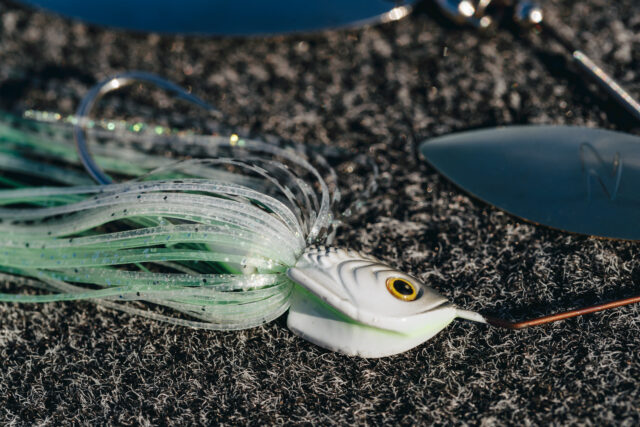
Schmidt reveals other noteworthy facts, aiding in its smallmouth appeal. “The SlingBlade’s 100-percent silicone skirt is hand-tied with copper wire for durability and the perfect “flare” effect. Beneath the skirt, a wire trailer keeper melds perfectly with ElaZtech and other plastic trailers.”
Clausen also insisted on a 5/0 O’Shaughnessy hook, which hooks more bass and keeps them button down better than a standard round bend hook sported by many other brands.
“We knew that we wanted a hand tied skirt in premium color schemes along with matching painted heads,” says Clausen. “The hook in the bait was a no-brainer for me based on past experience with wire baits and the effectiveness of the O’Shaughnessy style. We then took all of the information we learned and downsized it for the power finesse version.”
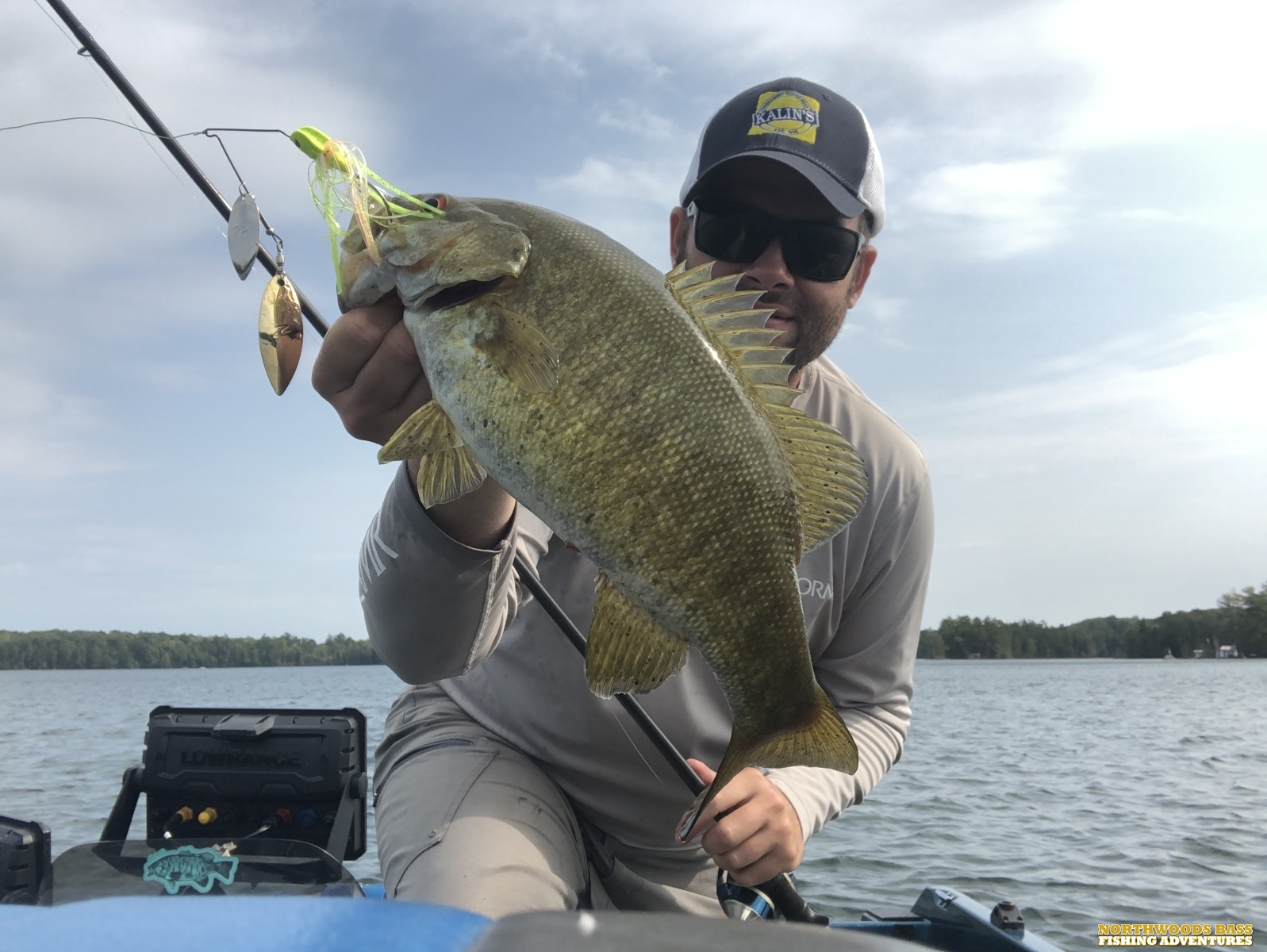
Freedom Tackle, meanwhile, utilized their engineering background to help shape the Speed Freak’s design and construction.
“With the success of our mischief minnow topwater, we observed smallmouths attacked our kilter blade with a vengeance,” reveals Tamburro.
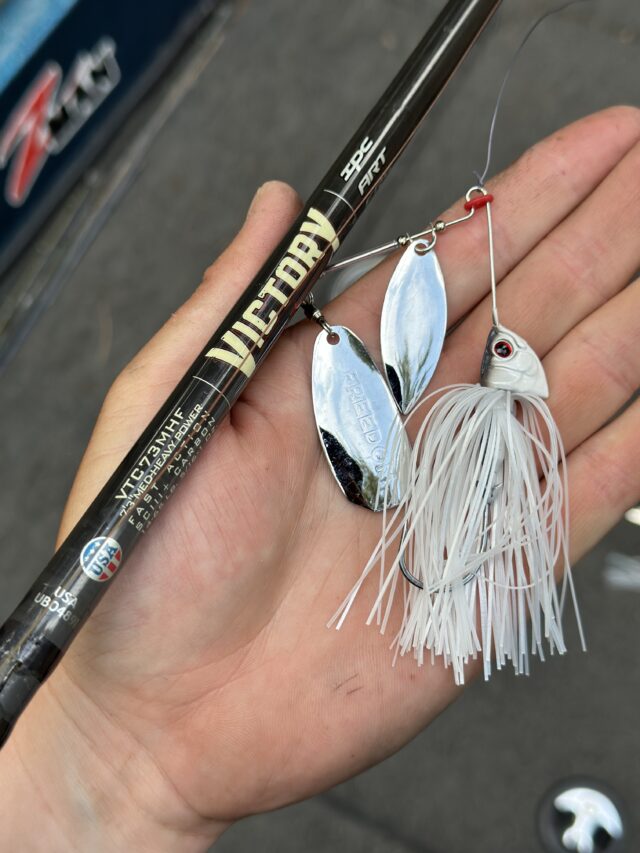 Smallmouths get conditioned to what they regularly see, but Tamburro feels his unique patented blade gives more thump and flash than a traditional willow blade.
Tamburro also incorporated the shape design and properties of his FT Swimbait Heads into the Speed Freak.
“The custom bait-keeper flares out the plastic trailer, if you choose to use one, which helps keep the skirt flared also for creating more action and illusion,” he says. Then concerning the head and hook style, he adds, “The hook shaft is strategically placed towards the top of the head to give the angler maximum hook gap for a better penetration.”
For convenience, like all of their other new FT series products, they stamped every spinnerbait with its weight on the side of the plastic keeper for quick-selecting.
Both brands were obsessively motivated to correct the flaws of most spinnerbaits. Vibration and tracking were two of the greatest challenges they knew existed. These are now problems of yesterday.
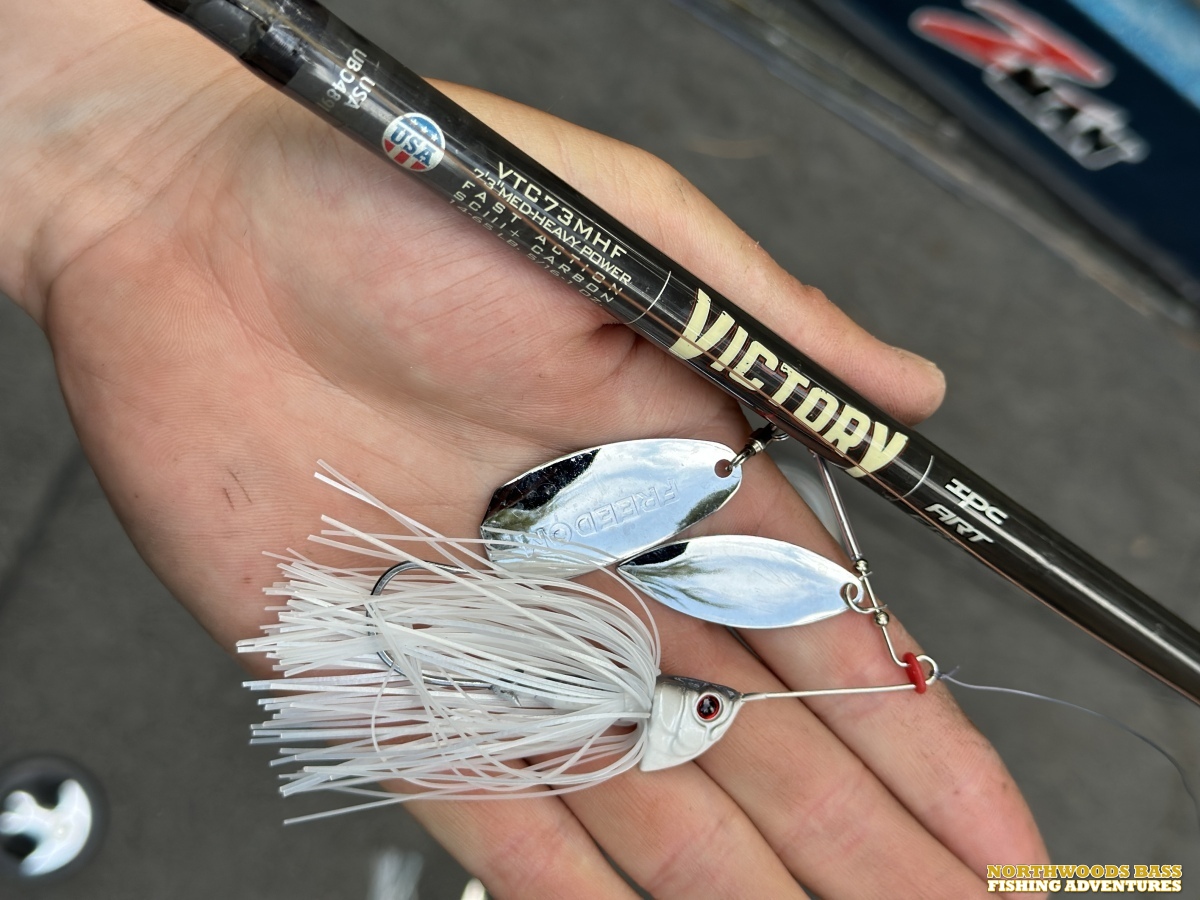
Blades of Glory
Z-Man and Freedom Tackle were motivated to address the shortfalls of smallmouth spinnerbaits. Under pressure, at very fast retrieving speeds, the head shapes, short arms, and blade designs of both baits appear to prevent them from blowing out.
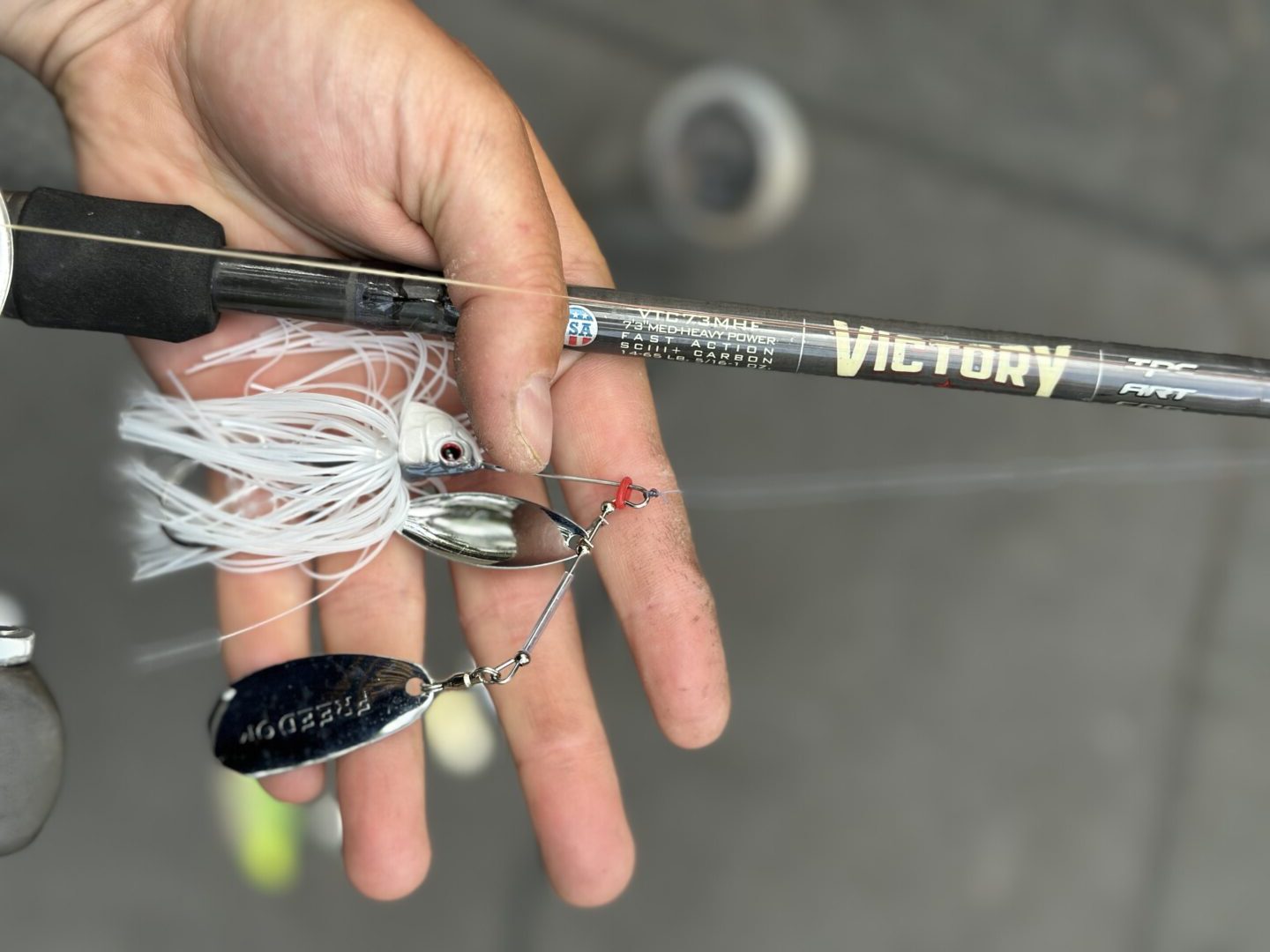
I am a blade burner. At very fast retrieve speeds with my 7.0:1 gear ratio caster paired with a St. Croix Victory Marshal (VTC73MHF), the cupped underside and belly groove prevents the bait from rolling and turning. The SlingBladeZ head shape is one of a kind, with there being nothing else like it. And the blades fly. I felt a sense of amazingness with it.
“I think you nailed it,” confirms Schmidt. “Not too many spinnerbaits maintain their composure and balance when burned. And as you know, burner retrieves can be incredible at certain times. Love burning the big ¾ ounce size for big smallmouths in summer.”
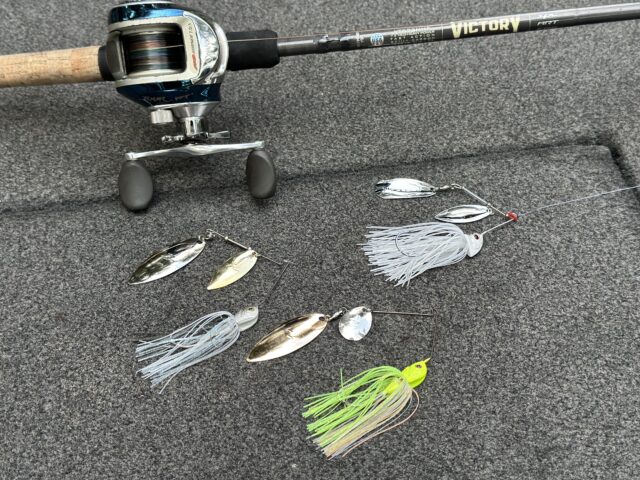
Schmidt was also kind enough to share a few secrets.
“Don’t know if you also noticed this, but the blades swing nice and wide on the retrieve, vibrating harder and flashing a bit more intensely than a lot of spinnerbaits. This also gives the lure balance at slower retrieve speeds. Miles Burghoff also likes the heavier sizes for slow rolling in deeper water, rigged with a DieZel MinnowZ paddletail trailer.”
To achieve a certain specific flash and vibration, Z-Man utilized a precisely ordered arrangement of blades and spinnerbait wire. They’ve tinkered with custom plated willow-leaf, Indiana and Colorado blades featuring jeweler quality electroplated finishes for max light reflection.
Smallmouths love illusions, and are willing to track down horizontal presentations to great lengths.
“After playing with a lot of spinnerbait blades we realized that there was a need for custom blades to achieve maximum vibration and increased flash due to the brighter finish,” says Clausen.
Most anglers seem to over-prioritize colors over blade choice. When they’re flying past smallmouths, the blade is what captivates and triggers. Some calculation goes into blade choice. On lakes, and if attempting to fish greater depths, the recommendation is double willows. On rivers and flowages, the suggestion is Indiana and Colorado.
“Double willows for faster retrieves and in dirty water where flash is key. Double willows are great on off colored rivers, too. Definitely a better question for Clausen,” delegates Schmidt.
“I personally use double willow most of the time after the bass spawn or anytime I am in clear water. I like silver blades in clear water and gold in dirty or tannic water. There obviously is a lot of combinations out of what I just mentioned but there is not an exact science. I still experiment with different combinations every day and there always seems to be one that stands out as being more productive than the rest,” answers Clausen.
Concerning Freedom Tackle’s blade shape, Tamburro offers insights.
“The kilter blade excels in dingy water when bright colors and increased vibration this unique shape delivers,” says Tamburro. “It behaves like a willow blade to represent fleeing shad and minnow forage, but also with the thump of an Indiana blade. This unique shape is very erratic. When it spins, it will reverse and spin in the opposite direction creating a change in its underwater signature. I feel that gives the fish the impression it is injured and an easy meal.”
The Speed Freak also comes available in painted blade models. These color choices will come handy in dirty water and dark days.
Most spinnerbait anglers would be most inclined fish fast, but several unique tricks and triggering mechanisms are possible to help put more smallmouths into the boat.
“Burner or slow roll. Infrequent quick pauses during burner retrieves can really be good for smallmouths. Just pause long enough to let the skirt and blades flare,” reveals Schmidt.
Clausen, meanwhile, takes a more detail-oriented and reactive approach. “A general rule of thumb is to work the bait faster the warmer and the clearer the water but every situation is different. The one thing I tell people that is a way to catch more fish with a spinnerbait is always have your bait contacting cover or impart action yourself. I’m always changing speeds of my bait but also twitch my rod tip every cast which causes the blades to change speeds and flash as we see baitfish or shad when they are startled.”
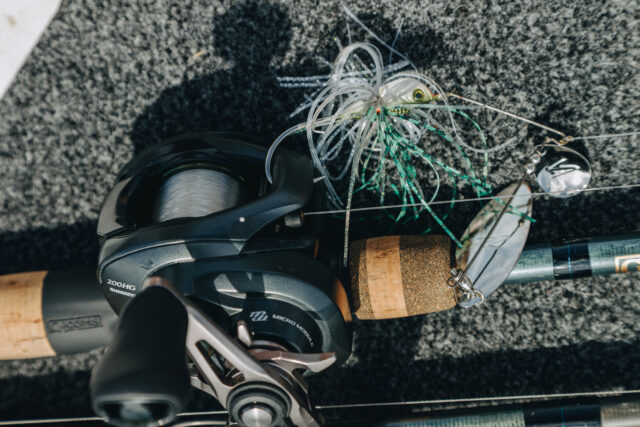
For Clausen, color matters too. “I use the power finesse in the chartreuse white (Colorado / Indiana blade) a lot in the spring all the way to the other extreme of the ¾ ounce double willow in green shad, burning it for smallmouths in the fall.”
“Speed burning in clean water,” concludes a very frank Tamburro.
“I like a quick retrieve on my bait caster (7.1 to 8.1). Typically, I do a steady quick retrieve but there have other situations where I reel and fast stop for second, and then retrieve quickly again at times. The pause triggers the strike.”
Tamburro also reveals his pros also slow-roll the Speed Freak along deep water ledges for great success too. “The shape of the kilter blade also excels when you kill the bait, as it will immediately helicopter on the fall.”
Hacks and Mods
It seems neither bait requires a trailer hook addition, but that could just be me and the ways my Northwoods smallmouths strike with fury.
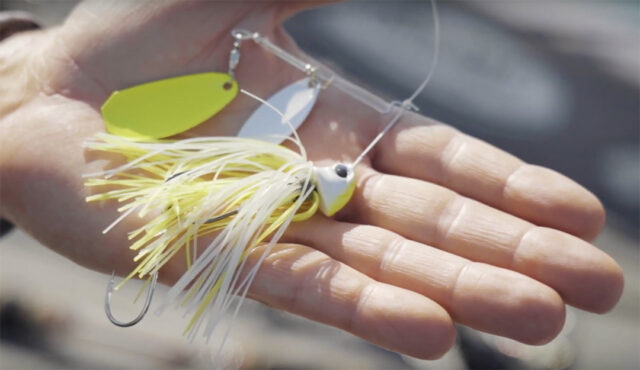
The general consensus is trailer hooks aren’t necessary for these short arm spinnerbaits, but could make a difference when it’s a game of inches and money is on the line.
“No trailer hook needed, usually,” confirms Schmidt.
The SlingBladeZ O’Shaughnessy hook is an effective fish hooker.
“I do use a trailer hook for smallmouth or in clear and open water situations where the fish can see the bait better and will be more likely to ear it less aggressively,” adds Clausen.
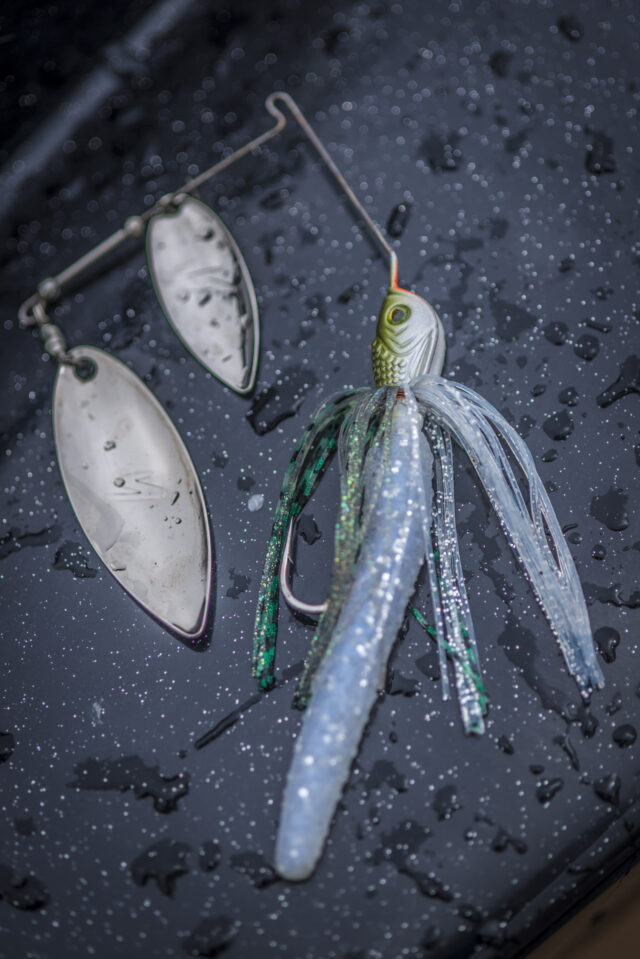 Plastic trailers can be great tricks as well.
“For trailers, the Z-Man Swimming Trout Trick is great, especially with the Power Finesse version. Nice subtle tail kick with low water resistance. The DieZel MinnowZ is probably the most versatile, offering great tail thump and a nice flat, thin profile. And for thumping hard with slow-roll retrieves, I also like the Scented PaddlerZ, which offers a bigger tail thump (underwater footprint.)” are just a few of Schmidt’s tricks.
Likewise, Clausen favors trailers in spring and colder water periods when attempting to slow roll the SlingBladeZ. The Z-Man Baby Goat, 3-inch Slim Swims, and 4-inch Scented Jerk ShadZ are his choices.
“Not only does the trailer slow the bait more and displace more water it also adds some realism when the bait is tracking though the water slowly and they can see it for a longer period of time.”
Tamburro personally likes pairing plastic trailers to the business end of his Speed Freak, but admits it’s not a requirement to catch fish.
“If I am speed reeling, I look for a trailer that doesn’t provide lift. For that reason, I use a split tail, grub or straight tail plastic trailer.”
He also doesn’t use a trailer hook, but absolutely affixes one if the fish are striking short.
Spinnerbait Systems
Rod and reel options, and line choice, can be intricate for these blade burners. All share the similar philosophies of a parabolic rod and fluorocarbon line.
“Fluorocarbon. Better vibration transmission than mono, with just a bit of stretch and abrasion resistance,” says Schmidt.
For his smallmouth execution, he relies on a St Croix Mojo Bass casting rod, the Jig-N-Baits model (MJC71MHF) accompanied by a Shimano Curado 200 spooled with 20-pound fluorocarbon.
Clausen was previously a believer in low-stretch mono-only for spinnerbaits, but as fluorocarbon lines have evolved and improved, he now uses it exclusively. “It offers the good abrasion resistance as some lines, castability, less stretch, and greater sensitivity.”
“I use 15-to-20-pound Seaguar AbraZX most of the time, depending on cover and how deep I want my bait to run.
He also has the mindset that a parabolic rod will increase landing ratio with any wire framed bait. “I use a 6-foot 9-inch to 7-foot medium heavy action rod with the shorty rod being my preference around targets so I can roll cast or sidearm more accurately.”
And he admits to using a slower gear ratio reel (6.3:1), as it is easy to overwork burning baits.
On the contrary, Tamburro is a user of braided line, even on the super-clear waters of The Great Lakes.
“I personally use braid with a 12-pound fluorocarbon leader on a 7-foot to 7-foot 4-inch Halo rod. With the use of braid, I like to use more of a parabolic rod since the line has no stretch. I find in clear water you need to make long casts, so braid in turn helps with the hook set.”
And I am the black sheep of this group, still working with antiquated 15-pound low-stretch monofilament. To each his own.
Fish fast and hang on. Big smallmouths can catch up and are ready to stomp.
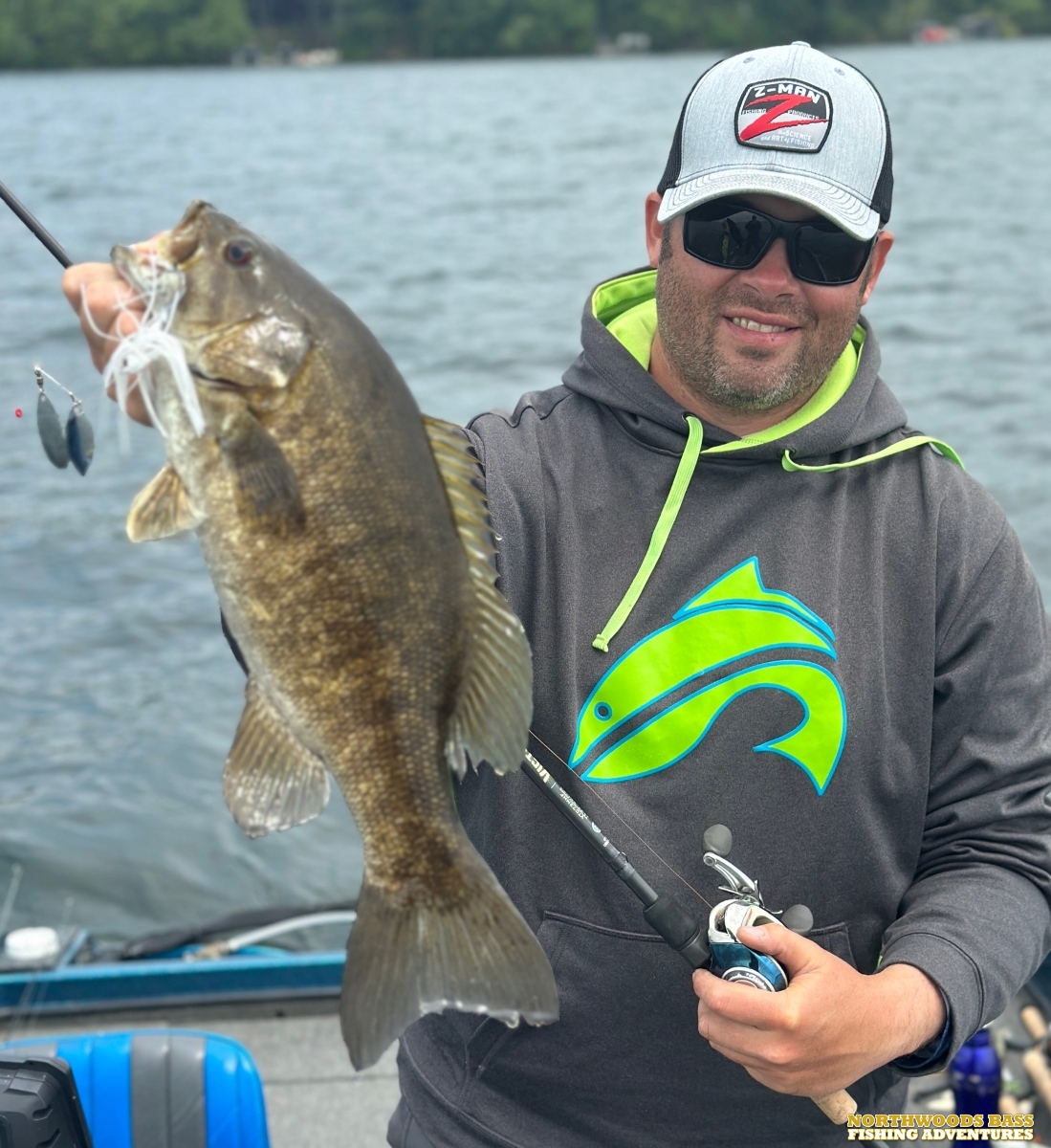
COMPANY CONTACTS – Z-Man Fishing Products (Cory Schmidt / Marketing Manager), Luke Clausen (MLF Bass Pro Tour Angler). Freedom Tackle Corp (Michael Tamburro / Founder & Owner)
Andrew Ragas splits time between the Chicago area and Wisconsin’s Northwoods. Based in Minocqua, WI, he specializes in trophy bass fishing and offers guided trips from May thru October. While big bass is the passion, he dabbles in multi-species as well. He may be visited online at www.northwoodsbass.com
What you can read next

Articles
 Lakes to Fish and Avoid During Fall TurnoverIt was a hot summer and thermoclines on deep lakes were noticeably ......
 Top Lures for the Early Fall TransitionLate August to early September annually represents the early fall ......
 Fishing Algae Bloom LakesClear in spring and green by late summer, algae blooms are an ......
 Smallmouth Grind-OutsThere’s a great chance that every fishing guide out there has a ......
 Inside Edge LargemouthsLargemouths love edges, and the most desirable fish I catch during ......
 Northern Water Snake PatternsOpportunistic predators with voracious appetites, largemouth bass ......
 Dark Water SmallmouthsWhen thinking about the prototypical and perfect Northwoods ......
 Locating Rip Rap Shorelines on FlowagesWith the local flowages down several feet, use this current drought ......
 Fish CatchersSmallmouth bass fishing has changed immensely over the past decade. ......
 Minimalist Smallmouth Fishing with St. Croix RodsIf you want to catch more fish and learn to be efficient, ......